
Most autistic people – myself included – have spent their lives ‘masking’, or trying to pass as non-autistic. We have elaborate strategies, developed over decades, which are designed to deflect awareness – that’s one reason why so many autistic people are accomplished actors and performers.
Let me offer you a window into some of my own everyday strategies, so that you can see how hard I work to avoid awareness.
If, Dear Reader, we were to meet in real life – perhaps at a conference, over coffee – I would be trying very hard to control your awareness of me, while at the same time being hyper-aware of you. First I would be aware of your mannerisms, and within a few seconds of meeting you I’d start mimicking them. Do you blink several times a minute? I’d do that. Do you jiggle your leg when you start talking? I’d start doing that too. Do you raise an eyebrow to indicate that you’re being sarcastic? Me too. Transformation can be a defence, as Ovid knew better than most. If I act just like you, it will take you longer to notice that I’m really quite different.
At the same time I’d be working on my facial expressions. My expression is naturally quite blank, but people find that disconcerting, so I have to arrange my face into the correct expression for the circumstances. That’s tougher than you might think, because it requires me to keep up with the content and tone of the conversation and react accordingly. I’m always just a beat behind, no matter how much I practise. Disguises aren’t easy to maintain – except maybe for Zeus…
I’d also be struggling to remember the small-talk rules. Don’t be too honest; don’t be too personal; don’t be too serious; don’t be too arrogant. If you mention the weather to me, you won’t be expecting me to look up the forecast on my phone, and you’ll probably feel awkward if I do so. If you ask me how my day is going, you’re anticipating a light and maybe flippant answer, not an itemised list. If you praise my work, you’ll expect me to say something humble or compliment you in return, instead of agreeing with you that I’m brilliant. I’ve always felt a lot of sympathy for poor Arachne – if I was good enough at something to rival the gods, I would have fallen into exactly the same mythical trap.
I do know how to say all the right things, but I live in fear that I’ll miss a social cue and something will slip past me. So throughout our conversation I’d be very tense, and I’d be concentrating very hard.
The last thing I would want is for that Autism Fairy to wave a magic wand over our table and cancel out all my hard work. My mask is how I function in a hostile world, and I’m not ready to lose it. Yes, it would be nice if the world were a less hostile place: but until that happens, ‘awareness’ is firmly off my wish-list.
If I did have access to a bit of magic, I’d have a few ideas on how to use it, and they would involve the very opposite of awareness. In fact, my problem during our hypothetical conference meet-up is too much awareness. I’m constantly aware of you being aware of me, and it’s exhausting. What I need, at that moment and in that place, is a quiet space where I can be unobserved for a while, to recharge my social batteries before taking on the world again.
Sadly I don’t have a magic wand – but I have discovered lately that some people and organisations are willing to listen to what autistic people in Classics want and need, and that’s pretty close to magic.
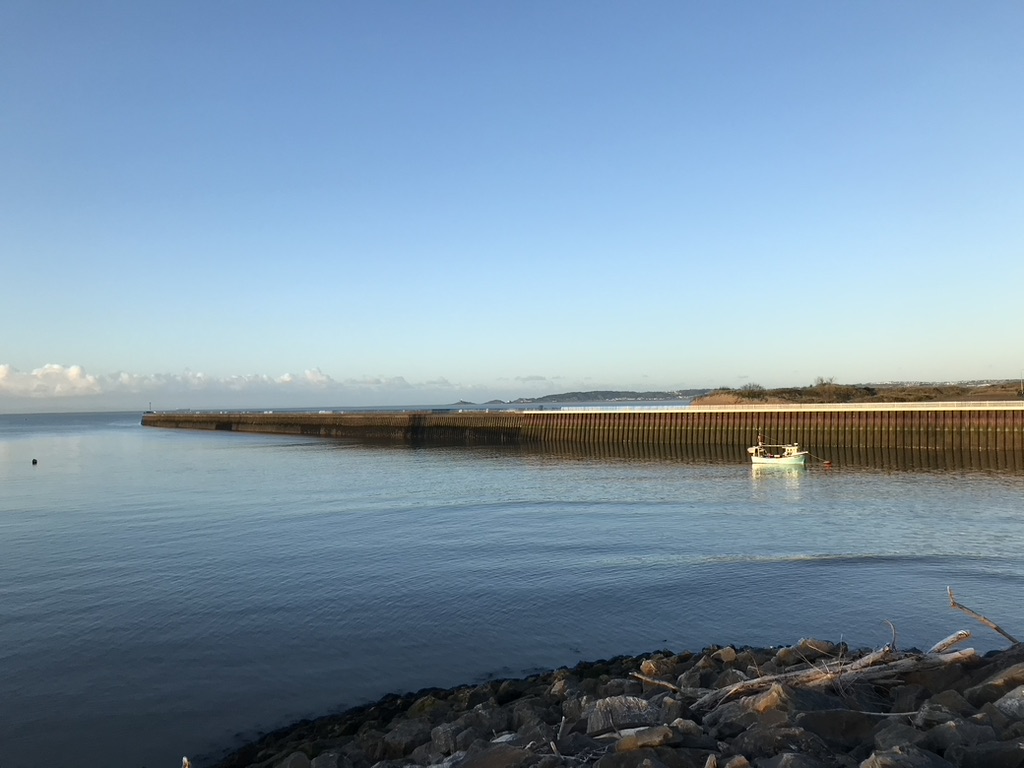
Last year I joined forces with other neurodivergent classicists – students, academics, school teachers and museum professionals – to put together a panel on Neurodiverse Classics at the Classical Association Conference in Swansea, with the objective of raising the profile of neurodivergent people in Classics. Our theme was ‘Constructive Connections’, and the connections we made there were very constructive indeed.
An important outcome of our activities was the opportunity to have some involvement in the organisation of future Classical Association Conferences, through Asterion, an organisation representing neurodiversity in Classics.
One of the accessibility adjustments which has been agreed upon for the in-person 2023 CA Conference is the provision of a Quiet Room.
Quiet Rooms are already standard at some conferences – although they haven’t found their way into accepted practice at UK Classics conferences yet – because like many other autism adjustments, they benefit plenty of non-autistic people too. A Quiet Room is simply a place to go when you need some time away from the social pressures of the event. There are many reasons why non-autistic people at a conference might need that too – anxiety, stress, migraines, even a simple aversion to chit-chat – but for autistic people in particular, a safe and quiet space can make all the difference to their conference experience.
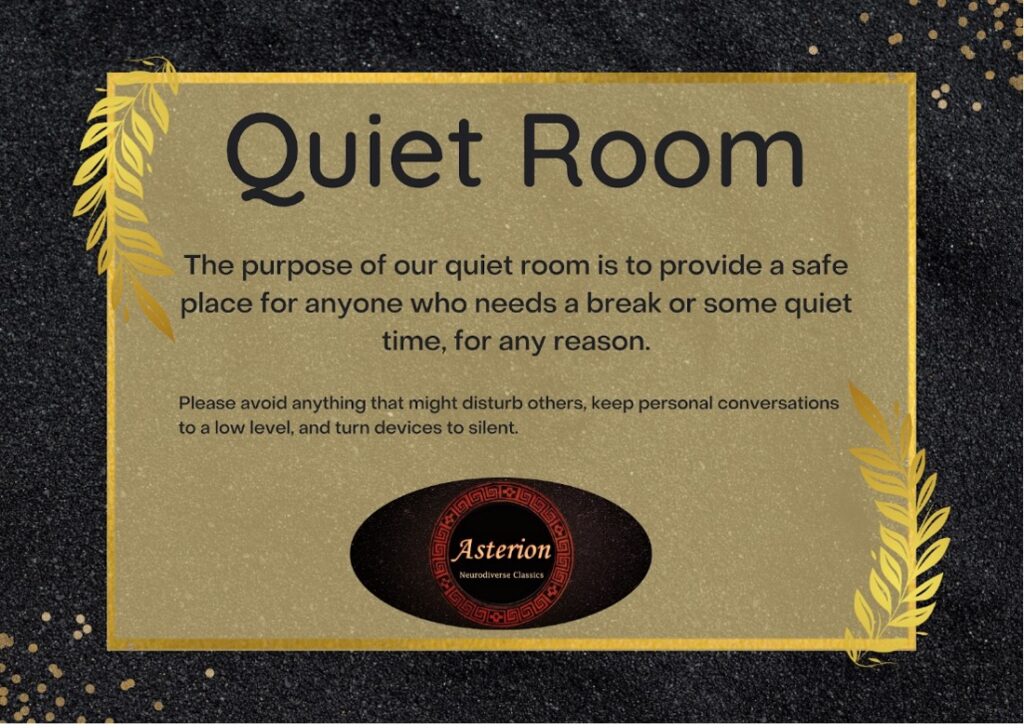
This year I’ll be attending the Classical Association Conference in Cambridge. If you’re going too, I’ll be happy to say hello and chat, and maybe even grab that coffee with you. And when it all gets too difficult and I can’t function any more, I’ll disappear for a while. You’ll find me comfortably ensconced in the Quiet Room, shutting out the world for a bit, in the company of a good book and anyone else who might be hiding from too much awareness.
So on this World Autism Awareness Day, I feel like I do have something to celebrate. I won’t be celebrating all of my wishes being granted, or the appearance of some sort of magical acceptance; it’s always dangerous to take myths too literally. Instead I’ll be celebrating something small but very real: a safe space in a scary world.
Recent Comments