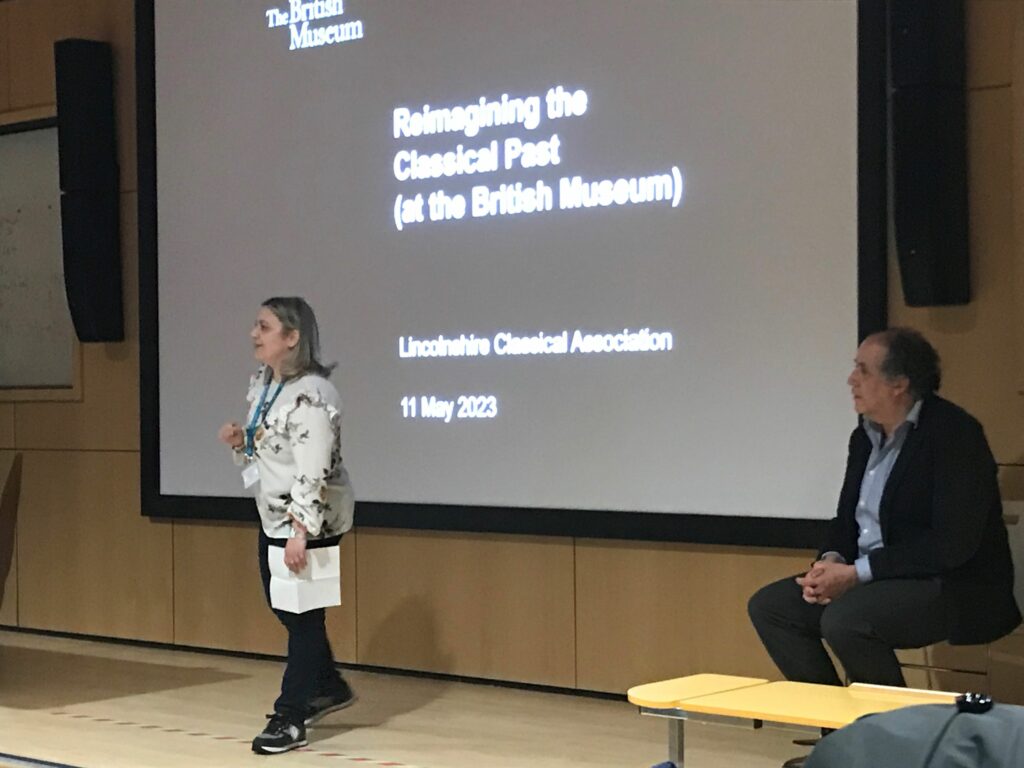
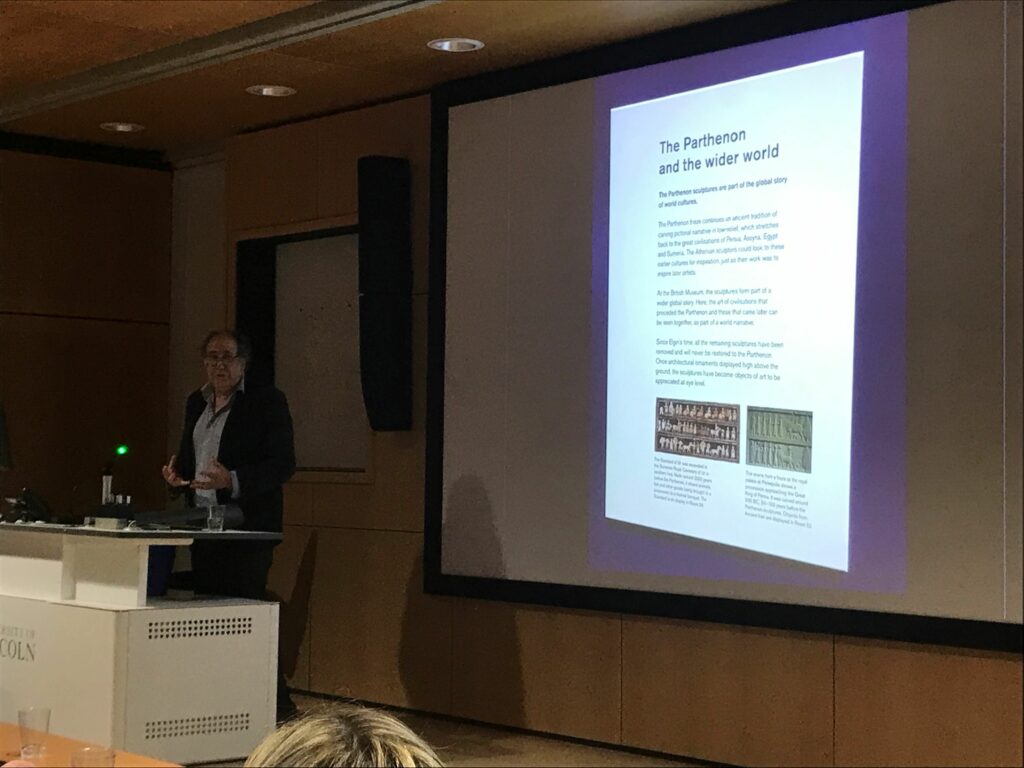
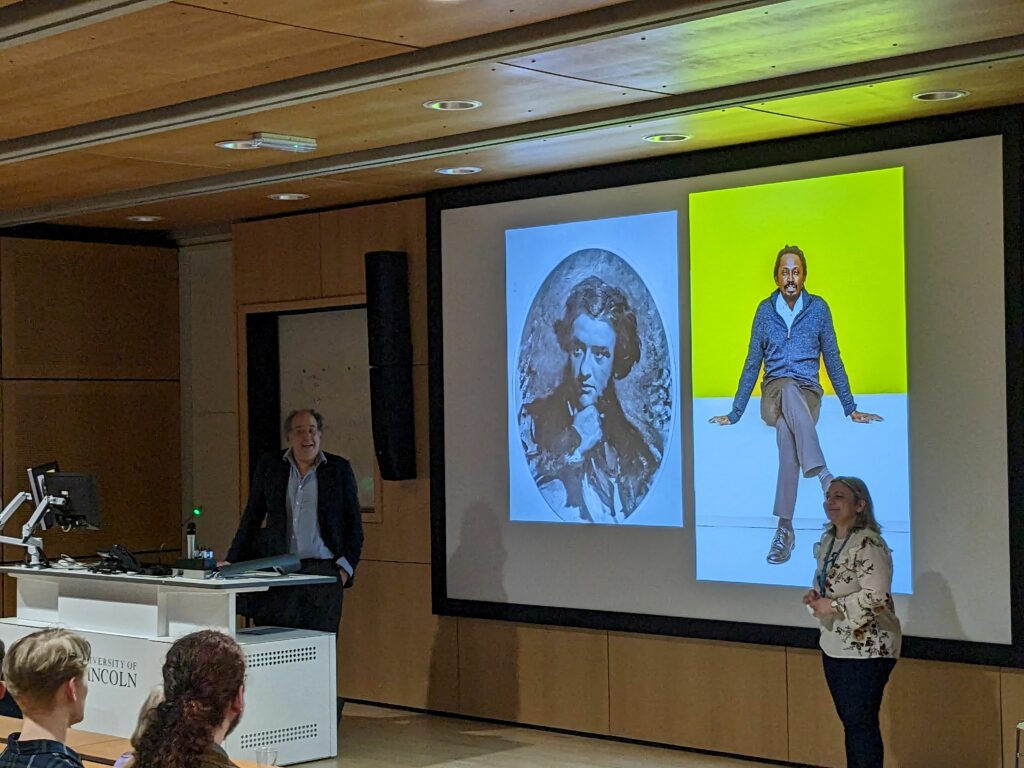
On 11 May 2023 the Classical Studies programme at the University of Lincoln was delighted to host Professor Thomas Harrison, recently appointed Keeper of the Department of Greece and Rome at the British Museum. Tom’s riveting presentation – on his vision of the past, present, and future of the nation’s premier historical institution – allowed us to launch the newly formed Lincolnshire branch of the Classical Association in style, bringing together dozens of keenly interested attendees from across the county to discuss the wonders of Antiquity in a welcoming and convivial setting.
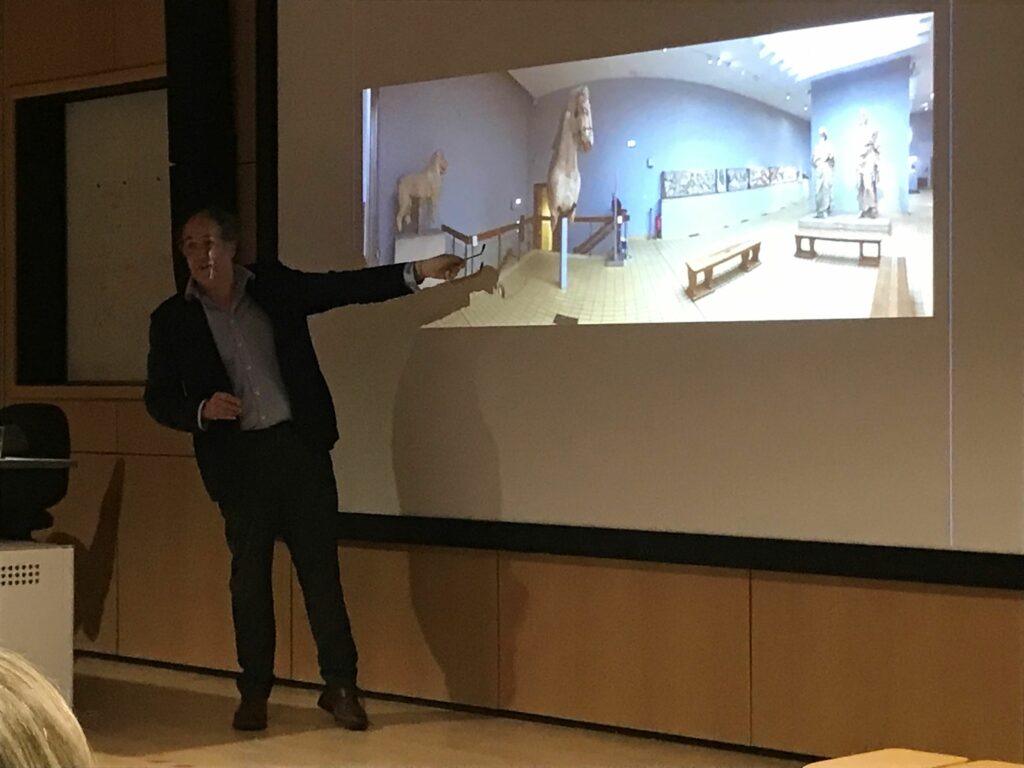
In his talk, Tom offered us a wealth of insights drawing on his journey from academia into the heritage sector, covering the challenges of working in an institution as large and high profile as the British Museum, and all the things he had learnt in his first few months in the job – from navigating the labyrinthine corridors to the pests that we heard infest various parts of the building and have to be kept contained! Especially interesting was Tom’s explanation of the massive reorganisation that the galleries are undergoing at the moment and the challenges he faces in dealing with issues such as restitution, making the Classical world more accessible and representative while retaining coherence and giving the public ‘what they want’, and the exciting possibilities that all of this opens up for redisplaying and reinterpreting some of the objects in the collections.
We look forward to our first full year of Lincolnshire Classical Association events in 2023-24, and we can only hope that these will live up to the high bar set by Tom in his inaugural talk! If you’re interested in joining the branch or finding more out about our work then please contact Giustina at gmonti@lincoln.ac.uk.
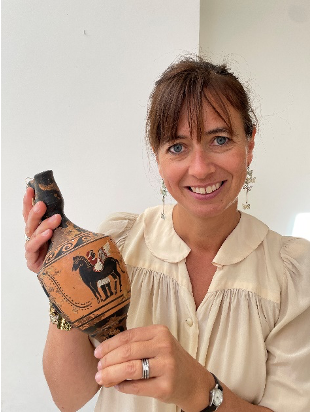
Classics teacher Chloe Lewis explains how her passion for teaching classics in interesting ways, with a focus on ancient objects, led her to start a new venture…
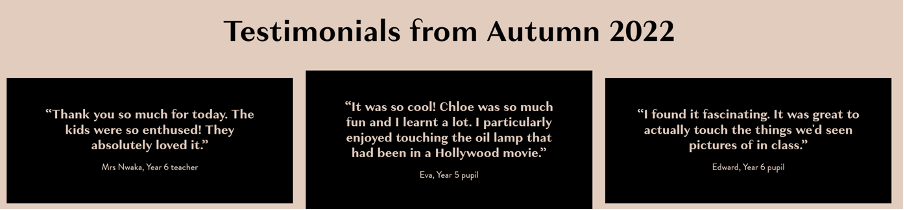
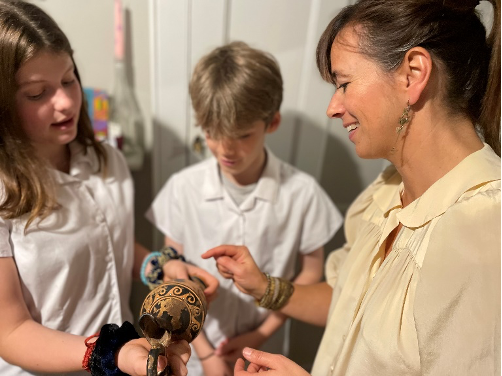
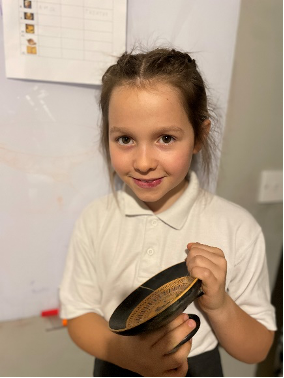
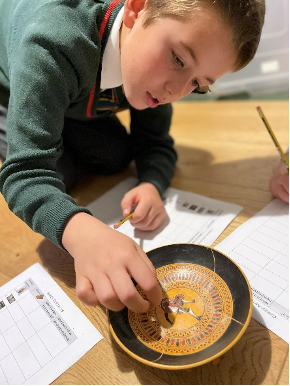
Artefacts in Action is a small business I have recently set up, offering in-house workshops to primary schools. I firmly believe in the power of objects to tell a story, and to bring alive a world that no longer exists – one without electricity and where children wrote on wax, not whiteboards. It was a lovely librarian at my sons’ school who suggested the idea to me, after she saw me in action, giving a mini handling session and presentation to the children in Years 5 and 6. The experience of enlightening a sea of faces brought me alive; it was a room full of children who had a thirst for learning, for gaining knowledge. Although I teach Classics at secondary level part-time, the workshop suddenly seemed a wonderful way to keep my passion alive on my days off, but more importantly, transmit that passion to others.
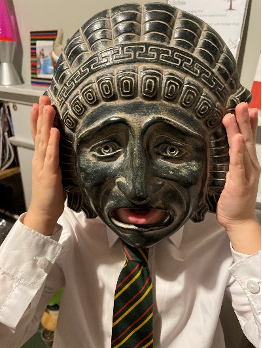
As a Classics teacher with experience in both the secondary and primary sector, I feel that I have the knowledge and enthusiasm to impart to children of all ages. I have always loved seeing pupils’ responses when they realise they are holding something that could be 2,000 years old. Encouraging pupils to look at objects and guess what they are made of, I relish hearing their findings as to what each item can tell us about the ancient world. Why did actors wear masks on stage? Did wealthy women really do the weaving? How could they make a dice out of bone? By allowing them to handle objects, I hope to transport them into another world, and to bring that world alive.
By offering the workshops to primary schools in London and the surrounding area, I hope to provide a service that can support teachers in their work. The workshops are intended to last only an hour, thus allowing pupils to continue their usual routine of timetabled lessons either side. It also means that the cost is cheaper than transporting pupils off-site to local museums, and more affordable than workshop providers who require a whole day.
I am passionate about Classics and have visited both Greece and Rome many times over the years, collecting artefacts and resources as I go. I studied Classical Civilisation as a degree at the University of Newcastle-upon-Tyne with the enigmatic Dr Peter Jones, before entering the world of publishing as an editor of illustrated non-fiction books. I quickly realised that the world of teaching was calling me, so I studied A-level Latin in the evenings while working, before embarking on my PGCE at King’s College, London. Since then, I have worked as a Classics teacher in Hertfordshire, Newcastle, London and Oxford. When my career took an unexpected turn to be a Form Tutor to Year 6 pupils, I used every opportunity to enthuse my pupils about the Classical world, running a weekly Classics hobby, ‘Groovy Greeks’, and dressing up as a goddess on regular occasions. I have run school trips to Greece and Rome, and closer to home I have taken pupils to museums, Greek tragedy performances and lectures, as well as to a pottery café to experience the world of Greek vase painting first hand. I firmly believe that getting involved in the world of the ancient Greeks and Romans in an active way is a wonderful way to enthuse, educate and instil memories.
I adored my own Classics teacher at school, and I hope that through my new venture I can hand down the knowledge and inspiration that she gave to me.
In our latest blog,Year 12 student Altan Mardin, who has a keen interest in archaeology, tells us all about his recent trip to Sardis.
Drone photography of Sardis. Credit: The Archaeological Exploration of Sardis
Atop the Acropolis, looking out at the expansive city before me, it was almost impossible not to picture the attacking Persians – Cyrus’ fierce hordes looming before the doomed Sardis. Sardis, the capital of the ancient kingdom of Lydia and the birthplace of coinage, was an immensely rich city both in wealth and history, populated by successive arrivals since the Bronze Age of many diverse peoples. As they settled there, they often recycled the building materials of the previous settlement, allowing for the rich backdrop that makes Sardis so alluring to archaeologists eager to analyse the inflections of many overlain civilisations.
“I have really enjoyed getting involved in archaeology over the past few years, and have been lucky enough to visit a number of sites while still in school. Guided by Expedition Director Professor Cahill, I had the chance to appreciate all Sardis had to offer first-hand. As we passed the remains of the Byzantine shops, the hubbub of merchants flogging their goods and the clinging and clanging of newly minted electrum coins echoed in my ears. As we drove over the Anatolian hills, Croesus’ forces appeared before me, having just launched a failed attack against Persia, and now suddenly intercepted on their retreat back to Lydia by their enemies. A vicious battle ensued, one that would topple Sardis completely.”
During my time at Sardis, I felt as if I was physically living the myths that I’d learned about in lessons. It was truly breathtaking to see drone footage of the very fortress that Croesus retreated to during the Persian invasion, and I even saw Mount Tmolus itself, who in classical mythology is said to have judged a musical contest between Pan and Apollo.
My time there was simply unforgettable, and unquestionably the most memorable site was the synagogue, which takes up a corner of the Roman bath-gymnasium complex. As we entered, a kaleidoscopic carpet of immaculately preserved mosaics greeted us. Deft patterns and blends of colour mazed around the floor, while panels in one corner depicting popular optical illusions introduced a playful complexity.
The stunning mosaics are sheltered by an expansive protective roof, recently built to solve the urgent need for an innovative method of preventing irreparable weather-induced damage. While we were there, many members of the archaeological team were busy replacing lost segments of mosaics with arrays of new, locally produced tesserae – a delicate and absorbing craft we could have watched for hours, and only one example of highly skilled anastylosis being practised by the Excavation team throughout the site.
Mosaics on the floor of the synagogue. Credit: www.thebyzantinelegacy.com
The whole team at the Sardis compound is deeply knowledgeable, warm, and energetic. Everyone I met was extremely welcoming, and keen to share the fascinating discoveries at the site. A tremendous amount of historical objects has been unearthed and delicately restored, from a time-period spanning all the way from the Bronze Age to the Byzantine, and at an amazing pace thanks to the innovative use of new methods and technologies, such as photogrammetry and 3D printing.
Mealtimes were a treat – we’d all meet at a huge table to enjoy regional Turkish dishes and chat about recent local findings, and their context and meaning.
For any other students eager to get involved, I’d suggest first trying to determine specific areas of interest. For instance, on a visit to the British Museum a few years ago, I vividly remember being struck by the incredible precision and life-like qualities of the classical sculptures – thereafter I became very interested in the site of Aphrodisias, once home to renowned schools of sculpture, and still boasting many splendid marble pieces. I was fortunate enough to visit a few years later.
Archaeological sites tend to be friendly and accessible – in my experience, the team at Sardis was most open to sharing their knowledge and allowing others to enrich their appreciation of Classics. Sardis harbours innumerable fond memories for me, and I hope to return soon to again experience all it has to offer.



Recent Comments