This report found that just 2.97 percent of A Levels taken in 2024 were for modern languages, Welsh and Irish, and classical languages, and that language learning faces huge challenges, with fewer pupils choosing the subjects, persistent difficulties in teacher recruitment, and undergraduate enrolments in ‘Language & Area Studies’ down 20 percent in five years.
The Classical Association acknowledges the findings of this report and heartily supports the recommendations it set out that could reverse this decline. However, it’s not all bad news for classical languages and there are lots of positives to celebrate:
Exam entry figures suggest that GCSE Latin is growing in the state sector, with non-independent settings now making up just shy of 45% of all entrants – and this figure has been increasing year on year.
The success of community initiatives, such as the Intermediate Certificate in Classical Greek, enable access to classical languages to those who may not have access to it in the schools. Entries for the ICCG are increasing rapidly, with nearly half of these coming from state schools.
A seven-year longitudinal study conducted by Prof Arlene Holmes-Henderson concluded that Latin acts as an English Literacy boost for disadvantaged primary school pupils. SEND, EAL and FSM pupils made significant progress in reading and writing, with demonstrable continued positive impact after 1, 2, 3+ years of Latin.
Unlike modern languages, classical languages didn’t experience a drop-off during the pandemic. The numbers of students at both GCSE and A Level have remained relatively stable over the last five years.
As acknowledged by the report, the Latin Excellence Programme made a huge impact on widening access to Latin in state schools outside London and the South East.
It is essential that classical languages maintain parity of esteem with modern languages in curriculum policy, teacher training bursaries and input in government research and missions. You can follow the links to learn more about our mission and our work.
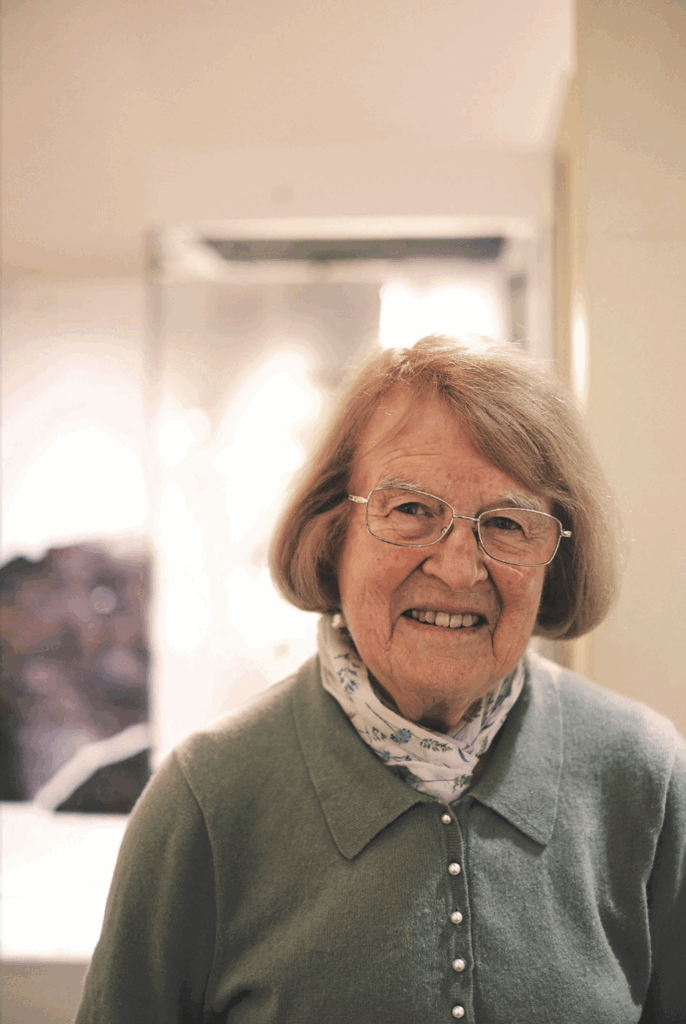
Classical Association member, Margaret Thorpe, formerly Principal Examiner for Latin at WJEC, has shared why Classics is important to her, as part of our #CelebratingClassicsCampaign. Now retired, Margaret enjoys reading Latin Literature with a group of adults at Shrewsbury Museum and Art gallery.
The Classics have enriched my life beyond measure. Not only have they given me a rewarding career but they have added to my appreciation of so many other aspects of my life.
If I struggled with the Latin language initially – and at the age of 13 or 14 my homework was to learn Horace’s Ode III.30 Exegi monumentum aere perennius by heart, without understanding very much of it, and to be prepared to recite it from memory in class the next day – there followed the thrill of learning Greek, a language with a different alphabet.
For me the language became a means to an end, to read the literature. I came to love those odes of Horace and their influence on poets like Housman, and to read the Iliad and the Odyssey in Greek and to learn about the tradition of composing oral poetry, which has survived down the centuries in more remote parts of the Balkans and places like the island of Crete.
But it is not just the languages and literature that continue to give pleasure and instruct. The Classics enhance so many other areas of life. For the final year of my degree I specialised in ancient history and was fortunate to have the wonderful Joyce Reynolds as my supervisor for Roman History. She taught about the empire during the reigns of Trajan and Hadrian from the surviving inscriptions, mainly those in North Africa, which she visited every year until well into her eighties. What a revelation this was after the history books we had used at school! I acquired a lifelong interest in inscriptions and what they tell us about the people they commemorate. Now I introduce visitors to the inscriptions in the Roman Gallery at Shrewsbury Museum, one of which, the Wroxeter forum inscription, is unique to the UK. It commemorates the visit by the emperor Hadrian to Shropshire and is the only inscription found to date which stood over a public building in Britain.
Photograph of Margaret at Shrewsbury Museum and Art Gallery
The areas of modern life where the Classics have made a major contribution are too many to list, as most of western culture owes a debt to the Greeks or the Romans. To the Greeks and Romans we owe the classical style of much in world architecture. You can see classical architecture in Newcastle-upon Tyne as well as Rome, and through the architect Palladio it can be seen in some of our great country houses such as Holkham Hall in Norfolk and Harewood House in Yorkshire.
Then there is the Greeks’ contribution to science and philosophy. The early Greek philosophers were also scientists and mathematicians. We all learnt Pythagoras’ theorem at school and further investigation showed us that his followers were vegetarians because of a belief in the transmigration of the soul. I remember the fascination of Thales’ calculation of the distance of ships out at sea using similar triangles. Those early Greek philosophers correctly predicted an eclipse of the sun and first described a world consisting of indivisible atoms. Later philosophers such as Plato and Aristotle have had a much greater influence on European thinkers and continue to do so right down to the present day.
We should not forget the way a study of the Classics can enhance our appreciation of archaeology. At the start of my teaching career I attended a course run by the then Ministry of Education at the British school of Archaeology in Rome for teachers of History and Classics. For two enjoyable and instructive weeks we studied the history, art and archaeology of that city from the Etruscans to Mussolini. We were taken beneath St. Peter’s Basilica by Professor Jocelyn Toynbee to see the tomb of St. Peter himself, we watched Etruscan tomb paintings being carefully lifted for restoration and I also fulfilled a long held wish to visit Horace’s villa in the Sabine countryside. I was accompanied on this visit by a fellow member of the course, later my husband.
Subsequently we had many holidays together in Italy and Greece exploring sites of historical interest as well as the wider culture of those countries. Then in retirement came the opportunity to visit lesser known provinces of the Roman Empire, some of which sadly can no longer be visited easily today, including Tunisia, Syria, and Libya. How wonderful to see the ancient harbour at Carthage and to remember Dido and Aeneas, who according to Virgil both landed there as refugees, or in Cyrene where we gazed towards colonel Gadaffi’s summer palace and remembered the silphium-bearing Cyrene of Catullus’ poem.
In my career as a teacher I found so many interesting topics to which I was able to introduce my students. Apart from the Latin and Greek language and literature there was ancient history and the huge variety of topics included in Classical studies. Most interesting of all however were the two years when I taught Roman technology across the entire year of a comprehensive school, one group at a time, as one of five different modules for GCSE information technology. Students chose a modern building and a comparable Roman structure and then looked at the problems which engineers had to solve.in constructing each building. This was more than twenty years ago but the course did not survive governmental rules, which said that an entire GCSE could not be based on course work, even though it was supervised entirely in class.
Now however I shall return to the most important point, which concerns the language. There is a lot of discussion today about the usefulness of studying Latin, quite apart from all the accompanying pleasures. The knowledge of Latin grammar and vocabulary is a great help in writing our own language and especially in understanding the precise meaning of words. About forty per cent of the words in the English language are derived from Latin. Greek is at the root of many medical and scientific terms and will often help you understand your doctor’s notes. Latin not only gives us access to five further European languages, French, Italian, Spanish, Portuguese and Romanian, which are all derived from Latin, but as an inflected language it makes the learning of other inflected languages such as Greek, German and Russian very much easier. Why would you not learn Latin if you were given the chance? And this is why everyone today should have that chance.
Our Honorary President for 2024-25, Professor Stephen Halliwell, shares his thoughts on why Classics is important and reveals his own journey to discover the ancient world, as part of our #CelebratingClassics campaign. Become a Member to listen to Stephen’s Presidential Address.
“This is the unfinished story of Classics itself, and the vital mission of the Classical Association is to enable as many people as possible to contribute to the story by making it part of their own lives.”
There is a passage in Plato’s Laches (a dialogue which develops from the idea that no subject is more important than education) where the Athenian general Nicias, now most familiar to us from Thucydides’ harrowing account of the disastrous failure of Athens’ Sicilian expedition in 413 BCE, tells one of the other characters that he clearly does not know Socrates very well: if he did, he would realise that whatever you start discussing with him, he always ends up forcing you to confront questions about yourself and your own life.
There is a sense in which that image of Socrates could be adapted to make a useful symbol for Classics itself. Anyone who becomes drawn to the world of Greco-Roman antiquity (whether its literature, politics, mythology, archaeology, philosophy, religion, visual art, social history …: Classics is not, after all, one subject but a whole ‘family’ of interlocking studies) will find themselves constantly required to move backwards and forwards, in their minds and imaginations, between the distant past and their starting-point in the present. While the study of classical reception, i.e. of all the ways in which Greek and Roman texts and ideas have been interpreted in later periods, is rightly treated as a rich area of study in its own right, we might also say that everything in Classics is a kind of ‘reception’: we ourselves, in what we make of it, are always implicated in the whole process, perhaps stimulated and challenged in equal measure, like the interlocutors of the Platonic Socrates.
And once the process is underway, the fascination of Classics is inexhaustible. The traces of Greek and Roman antiquity are ubiquitous, sometimes surprisingly so. Let me illustrate this with a somewhat quirky personal anecdote. During a bout of insomnia one night in 2011, I was switching stations on my radio when I heard a song by a Scottish rock band whose lyrics struck me as strangely familiar: they sounded, weirdly but irresistibly, like a poem of Sappho’s (about music and the pathos of old age) which had been identified on a piece of mummy cartonnage and published by two German papyrologists as recently as 2004. I was not hallucinating. The song-text, as I established the following morning, was in fact part of a translation of Sappho made by the Scottish poet Edwin Morgan, who had meanwhile died in 2010. I didn’t, as it happened, especially like the music … But I’ve always remembered the startling experience of finding echoes of Sappho in Scotland in the middle of a winter’s night.
I’m pretty sure that when I started secondary school, in 1960s Liverpool, I had never heard of Sappho. Nor, for that matter, did I know anything at all of ancient Greece or Rome. I came from a home with few if any books. Both my parents had left school – this was before World War II – without any educational qualifications; and none of my four older siblings had been to university (though one would do so later as a mature student). I was simply very lucky, at what was then a grammar school, to have teachers who slowly but surely engaged my intellect and imagination with Greek literary and philosophical texts, and with both the excitement and the difficulty of making sense of them in relation to life in the present. There was, of course, Homer – at that stage primarily the Odyssey, which immediately appealed by the intricate way in which Odysseus’s years of wanderings become a sort of journey of discovery in the mind of the poem’s audiences. There was both Greek tragedy and comedy, including some bowdlerised Aristophanes (my own later translations of the playwright would compensate for that): reading these two paradigmatic forms of theatre side by side, which is akin to how they were originally performed in the Athenian theatre, forced one to wrestle with their starkly opposed perspectives on life. There was also Thucydides, who particularly gripped me by the shocking way he chose to juxtapose Pericles’ vaunting idealisation of Athens with a remorseless account of the plague in which dead bodies were left lying even in the city’s temples. And last but not least, there was Plato, who in many respects made his philosophical writing into a sort of endless rivalry of values with Homer (‘Plato versus Homer: complete and perfect antagonism’, as the German philosopher Nietzsche put it) but in doing so made philosophy itself a form of supremely creative writing. I could never have guessed at the time that all these authors, and the fundamental questions they pose in their different forms, would obsess me for the rest of my life.
Classics – both as an academic discipline and as a larger cultural force – is the history of a perpetually evolving engagement with the Greco-Roman past. The multiple threads which connect past and present are constantly being unpicked and rewoven into new patterns. A striking illustration of this is provided by a work with which I have been much preoccupied during my career, Aristotle’s Poetics. It has undoubtedly become one of the most famous texts of Greek antiquity yet it is scrappy and incomplete, having lost its second ‘book’ on comedy (see Umberto Eco’s novel The Name of the Rose for a fictional version of this event). It also seems to have been known to only a handful of people in antiquity itself, and that paradox is the first of the numerous twists and turns of its fortunes over the centuries. Even many professional classicists are surprised to learn that the first language into which the Poetics was translated was Syriac, probably in the 9th century. In the following century it was translated from Syriac into Arabic as part of the great wave of interest in Aristotle on the part of Islamic philosophers and scholars; later still, the Arabic was translated into medieval Latin. That was all before the Renaissance made the Poetics a key reference-point, invoked both pro and contra, in debates about not only ancient poetry but also new genres of literature, including even the novel. While it remained a sort of bible for neoclassicists, the book was repudiated by those who thought modern literature should not be tied to ancient standards. Yet even in the twenty-first century the Poetics is cited with reverence on screenwriting courses in Hollywood and elsewhere for its supposedly fundamental insights into how to construct plots and tell a story to maximum effect.
From Aristotle’s ‘seminar room’ to Hollywood is quite a journey! But the point of this little fable is not to recommend you to consult the Poetics next time you watch a film, but to underline the complicated ways in which the Greco-Roman past has been repeatedly reinterpreted, and argued with, by later ages. This is the unfinished story of Classics itself, and the vital mission of the Classical Association is to enable as many people as possible to contribute to the story by making it part of their own lives.
Professor Stephen Halliwell, a world-leading scholar of ancient literature and thought, is an Emeritus Professor at the University of St Andrews, where he was Professor of Greek (1995-2014) and later Wardlaw Professor of Classics (2014-2020). He was elected a Fellow of the Royal Society of Edinburgh in 2011 and of the British Academy in 2014. His twelve books range widely across texts and topics in Greek literature and philosophy from Homer to late antiquity, and also include a complete translation of Aristophanes for Oxford World’s Classics, whilst his own work has been translated into nine languages. A frequent contributor to broadcast media, he is an outstanding ambassador for the study and reception of classical languages.
This post, posted on her Coffee & Classics blog, explores Anika Murali’s journey to discover the ancient world, as part of our #CelebratingClassics campaign.
My entry into the Classical world was pretty unconventional. It all started with a TV series: Downton Abbey. The period drama follows the lives of the aristocratic Crawley family and their servants in the early twentieth century. In the second episode of the show, the sharp and spirited Lady Mary Crawley verbally spars with Matthew Crawley, the new heir to the Downton estate and her would-be suitor, over Greek mythology. The tale of Perseus and Andromeda, to be precise. It’s a phenomenal scene where you can almost see the sparks flying between them, the chemistry bubbling underneath the half-veiled insults. They level pointed barbs at one another using the myth as an allegory, each holding their own and demonstrating to the audience that they are more than a match for each other. I was hooked by the witty dialogue and the simmering tension in their banter, which was what pulled me deeper in.
I didn’t know then just how far this show would carry me. As I sailed through the rest of the series, these two characters intrigued me further with each passing episode. I wanted to be clued in to the allusions they made, to be familiar with the works that they would have been. I think I’d almost forgotten they were entirely fictional! And so, I jumped into read Mythos by Stephen Fry (former CA Honorary President, who chatted all about Greek mythology in thisCA Film) This was a good decision; his style is easy to read and very engaging. The book assumes you have no prior knowledge of Greek mythology and introduces it to you from scratch. Gradually, I became familiar with several myths featured in Ovid’s Metamorphoses, which made it much easier when transitioning to the primary sources. However, I think what really propelled me even further into the world of Classics was the Iliad.
Three weeks into starting university, I happened to walk past a shelf in the library (my favourite haunt). And there it was, sandwiched between The Collected Plays of Euripides and The Odyssey. I had the usual preconceptions about the Iliad – that it was long, difficult, and that my brain was in for a good hard slog. I picked it up and began reading, and I remember thinking, This isn’t as difficult as I thought it was going to be. The language didn’t seem to be too heavy, and it helped that I was familiar with the Greek gods. That said, I did find it a little challenging at first. I came very close to abandoning it after about a hundred pages. And then I arrived at one of the most famous scenes in the Iliad – Hector’s bittersweet farewell to his wife, Andromache, and and baby son Astyanax. I found myself blinking back tears. He wasn’t just a warrior leaving to protect his city, knowing he might never come back; he was a husband and father bidding his family goodbye. That was the moment they ceased to be characters; they had transformed into humans. That was when I began to grasp the emotional carnage that all wars cause, and to see the vortex of emotions in the epic – anger, love, loss, grief, rage, pain, and death. Themes that will characterise our own lives at some point. Themes that are universal and always will be. This was my turning point, the pivotal moment that set the stage for everything to come.
From that time on, I could not put the book down. I winced at the gory descriptions of the battle injuries, held my breath and curled my toes at suspenseful moments, and wiped away tears at the climactic battle between Achilles and Hector. There were moments when I had to put the book down and take a deep breath to process what I’d just read. Above all, it was the astounding intricacy of the characters that reeled me in; I spent a long time working them out, and I still am. I think I was shellshocked for a day or so after reading it. It scarred me in the best possible way – it made me want to explore it further and devour more texts like it. If the Iliad hadn’t been as seductive as it is, I wouldn’t have wanted to continue down this path. I read the Odyssey and the Aeneid in quick succession, followed by Metamorphoses and a few plays by Sophocles, Euripides and Aeschylus. I intend to read Cicero, Aristotle’s Poetics and Plato’s Republic next, as well as a great many others.
Classics need not be intimidating, or only accessible to an exclusive, elite group. Trying to understand a time and place so far removed from our own can at first seem pointless and irrelevant. It isn’t, and doesn’t have to be. It feels daunting, I know, to attempt to navigate this labyrinth of interconnected families and marriages and murders. The good news is, like Theseus, we have string to help us along the way. Authors like Rick Riordan, Madeline Miller and Stephen Fry have certainly done their part in making it much more accessible to contemporary audiences.
Furthermore, classically inspired creative media are very much present in the modern world, from literature such as Shakespeare’s Romeo and Juliet (based on the Greek myth of Pyramus and Thisbe) to Harry Potter and Game of Thrones. Whilst Troy (2004) brought the Iliad to life, making for a memorable – if not completely accurate – retelling of Homer’s epic, we have both The Return and Christopher Nolan’s upcoming movie to look forward to, bringing the Odyssey on to the big screen. In the art and architecture we enjoy, the television we watch, the lyrics that resonate today, we’ve been dipping our toes into Classics all along without realising it. We’ve all engaged with it in some shape or form, which means we’re all classicists in a way. Classics is a pentimento – a masterpiece that’s been painted over, but the traces of which are discernible if you look closely enough. They aren’t mere relics whose significance began and ended thousands of years ago; they are alive and well in the media we consume today. They laid the foundation stone for modern pop culture and thereby retain their relevance, which is why they are still just as important as they were when the bards first invoked their Muses and composed their works.
Anika has also written about her first reading of Virgil’s Aeneid and particularly his treatment of female characters, which you can read here, and enjoy a brief extract below:
“As such, Lavinia’s characterisation, or lack thereof, corresponds to the values of the time period. She is the embodiment of the ideal Augustan woman – someone who’s got to be morally spotless, beyond reproach; someone worthy of the honour of giving birth to the Roman race. Lavinia is the only mortal woman in the Aeneid to survive, come to that; every one of the others die because they are impediments to Aeneas in one way or another…”
Northern Ireland sits in a rather isolated position: not only geographically but also academically. It has been 23 years since I began my masters degree at Queen’s University Belfast. The 2002-03 academic year welcomed the last intake of Classics students. It has been even longer still since Ulster University closed its Classics department.
Nonetheless a small group of dedicated individuals is tireless in its efforts to keep Classics and Ancient History alive in the province. The Classical Association in Northern Ireland(CANI), chaired by Dr Katerina Kolotourou, works with schools to promote our subject as well as providing a lecture programme. We’re very grateful to Natalie Haynes for being CANI’s honorary patron.
CANI convenes an annual schools conference and work hard to keep up engagement with the schools which still teach Classics. Classical Greek in schools is rare, but there are a small number of schools which still offer Latin, Classical Civilisation and Ancient History. The challenges are many: lack of funds ensures that distance from the conference venue is an issue, both with regard to transport costs, and length of time students and teachers can be away from school. In addition, the low number of pupils likely to be interested and the willingness with which the school releases pupils to attend such an event are difficulties which we face every year. For these schools events, we are attempting to broaden appeal by providing lectures and activities relevant to politics and religious studies/theology school students and first year undergraduates.
Helen McVeigh and Sam Newington
I should at this point pause to mention Dr John Curran and Dr Peter Crawford, both founding members of the Classical Association in Northern Ireland formed in 2015. Dr Curran is both retiring from his post in Ancient History at Queen’s University Belfast and his position on the CANI board. John has been at the forefront of CANI’s success, holding the position of Chair and Treasurer. We are grateful for his leadership and for everything he has done to promote Classics and ancient History in Northern Ireland. Meanwhile Dr Peter Crawford has worked tirelessly, posting regularly on CANI’s social media accounts, writing blogs, and ensuring that the website is kept up-to-date. He leaves big boots to fill. Both John and Peter will be missed but we look forward to seeing them at CANI lectures.
In tandem with the work that CANI is doing in Northern Ireland, I continue to build a worldwide network of Classicists through my Greek, Latin and Classics online tutoring. I used to teach evening classes and provide 1:1 tuition in Belfast. But since moving online in 2020, I have discovered that interest in the ancient world and the ancient Mediterranean is global. H.M. Classics Academy is proud to have taught Classics to students in Europe, Africa, North and South America, Australia and New Zealand, and Asia. The only continent missing from my student list is Antarctica! For those students located time zones far away from GMT, we provide recordings of classes, and guidance via email.
Our Greek and Latin online classes seek to plug the gaps that exist such as insufficient provision in school and perceived lack of encouragement towards university study. Many of my students have chosen to return to the study of classics in retirement. Last year one of my students received his GCSE Greek result on his 82nd birthday!
During the next few months, my daughter Naomi will be applying to university. While I’ve tried to encourage her away from Classics so she can find her own journey, a combination of Classics, Ancient History, and Classical Archaeology is what she has set her heart on. She has particularly enjoyed tagging along at the Classical Association conferences in Warwick (2024) and more recently the conference at St Andrews.
Naomi McVeigh at St Andrews Dept. of Classics
I’ve been attending CA conferences since I was a postgraduate student. Now as a teacher and independent scholar, it is particularly important for me to attend events such as the CA conference. Especially for those based in the harder-to-reach parts of the country, it provides a wonderful opportunity to catch up with friends and make new ones, and to meet Classics colleagues whom I’ve only ever met before online. As usual, the breadth and diversity of panels was outstanding: pedagogy, classics and class, reception, literature and history. Of particular interest to us were the panels on Alexander, Homer and ancient fiction. I hadn’t visited St Andrews before, but had been told that it was rather off the beaten track. Yes, it is, but so worth the journey. What’s not to love: the striking architecture of the town and breath-taking North Sea views. We left inspired by the academic papers, and by the town of St Andrews itself.
Sophie Johns, CA intern, describes attending the CA’s #CelebratingClassics reception at the Houses of Parliament this September.
For a recent graduate juggling job applications and the prospect of living with her parents again after four years of university, the invitation to ‘A Celebration of Classics’, a parliamentary reception hosted by Dr Peter Swallow MP earlier this month, was an exciting opportunity to come to London and meet some new and inspiring classics enthusiasts. The Reception marked the sixtieth anniversary of Classical Civilisation as a qualification subject in England, a milestone recognised by Prof. Arlene Holmes-Henderson and Prof. Edith Hall in their seminal 2025 publication, Classical Civilisation and Ancient History in British Secondary Education, which we also celebrated. It was brilliant to come together to celebrate the study of the entirety of the classical world, not just ancient languages, and the ongoing work of the All-Party Parliamentary Group for Classics, chaired by Peter and administered by Gráinne here at the CA.
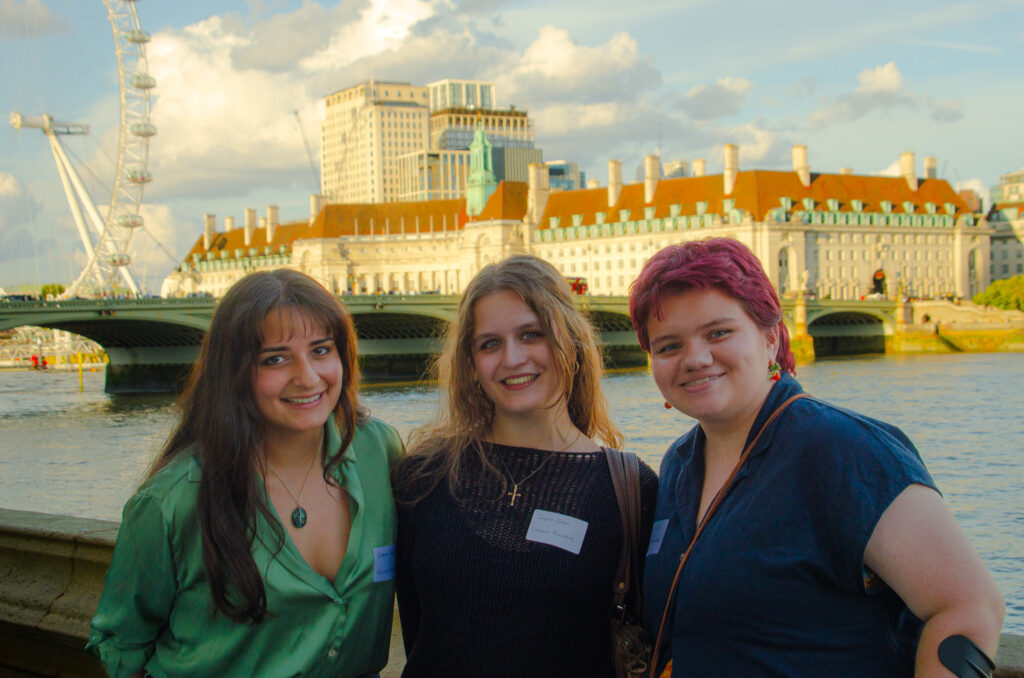
Embarrassingly early due to Tube strike anxiety, I waited in Parliament Square and watched pigeons fly between the stone heads of various parliamentarians until it seemed appropriate to start queuing at the visitors’ entrance. Some initial networking came from an unexpected source in the queue (at 22, usually I am the enthusiastic instigator) – a friendly Welsh engineer thought I was also attending the twentieth anniversary celebration of the Nuclear Disarmament Agreement; instead, we chatted about his teenage daughter and parted ways at security. Heading through the cavernous Westminster Hall to the picturesque Thames Pavilion, with its views of Westminster Bridge and the London Eye, I was greeted, in what I can only describe as the fanciest and warmest marquee I’ve ever been in, byKatrina, the CA’s Engagement Co-ordinator and my manager during my time as an intern this summer, as well as my fellow interns Jasmine and Claud.
Having previously only seen each other in tiny boxes on a screen, we were delighted to discover that we were all almost exactly the same height, and we soon become firm friends. Canapés were handed around, and there is a wonderful photo of the CA’s Honorary Secretary, Prof. Sharon Marshall, and myself laughing as we realise that Jasmine is snapping pictures of us as we shove bits of fish on crackers into our mouths. The highlight of the event for me was meeting so many inspirational and fascinating people, like Sharon, who have succeeded in making their passion for Classics their career. As a woman in her early twenties trying to do the same, it was encouraging to feel the support and understanding of those who, in my mind, have ‘made it’, including academic editors and museum professionals.
It was great to meet Prof. Katherine Harloe and Dr Kathryn Tempest from theInstitute of Classical Studies (pictured here with Prof. Claire Gorrara, Pro Vice-Chancellor (Research and Public Engagement) and Dean of the School of Advanced Study) and other members of the Classics Development Group, and find out more about their joint work to advocate for classical subjectsI was particularly excited to meet my academic hero, Prof. Edith Hall, whom I shocked into silence by talking incessantly about how much I liked her translation of line 742 of Aeschylus’ Agamemnon. You can enjoy Edith’s ‘Life in Classics’video as part of the CA’s Campaign.
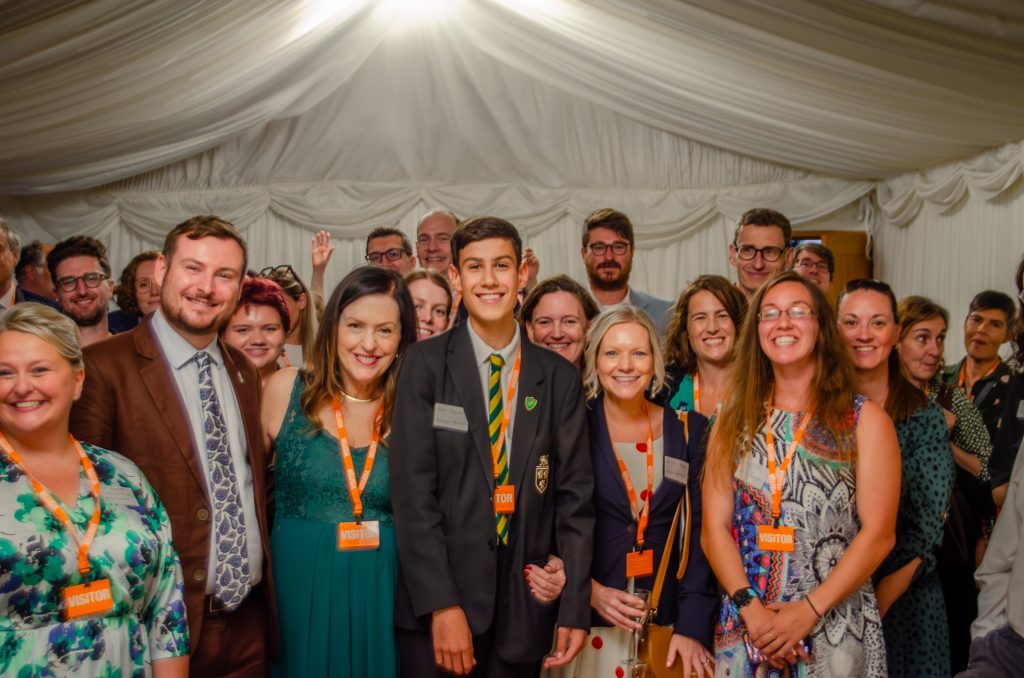
After speeches from Peter and Katrina, we all posed for a group photo (see above!). Although I was lucky enough to study Latin in secondary school, I am certain that I would not have chosen to study Classics at university had I not taken Classical Civilisation A Level at college. Declensions and ablative absolutes are important, yes, but they do not solely a classicist make. More often than not, young classicists are inspired by myth, religion and culture, not just the complexities of ancient grammar, and an engaging, well-rounded classical education necessitates that we interact with material culture and literature (in translation too!) as well as language.
Prospective young classicists are devouring Natalie Haynes, Emily Hauser, Madeleine Miller and other authors who write about ancient cultures in all their complexity. If we want to produce classicists who are both excited by their discipline and are thoughtful, open-minded and productive members of their community, Classical Civilisation is undoubtedly an essential part of the curriculum.
We received so many wonderful entries in our 2025 Mythology Competition. Previously known as the Minimus Mythology Competition run by the Primary Latin Project, this year, it was brought under the aegis of the Classical Association. Catherine Tildesley has been instrumental in the smooth running of the competition and has written the following report – scroll down to enjoy some of the winning entries and find out more about next year’s competition here!
Huge thanks to all the schools and individuals who took part in this year’s Mythology Competition; to the Jowett Trust for their generous funding and to the judges for their time and expertise, especially to Jayne Treasure, without whose tireless efforts the competition would not be running, and to Katrina Kelly for her support during the competition’s first year with the Classical Association. There has been a tremendous response, which illustrates the timeless quality of story and its ability to inspire young minds – helped along no doubt by some equally inspirational teachers!
There were over 400 entries altogether, almost double our usual number, which has certainly made the judging far tougher. KS3 Creative Writing was the most popular medium overall followed by Art, at both KS3 and KS2 levels. We welcomed many new schools to the competition this year, but it was also lovely to see so many schools, and students, returning again after our absence. It has been a truly international competition, with entries from Malawi, China, India, New Zealand, Denmark, America and Italy as well as the UK.
Art entries were a fabulous mix of media this year, from embroidery to life-size shields and horses; from 3D models to oil paintings. Creative Writing had talented contenders for retellings, raps, poems and playscripts. The most successful took a particular moment from the myth and imagined a narrative from a different point of view. There were parents’ evenings with a slightly nonplussed teacher attempting to explain the rather aggressive behaviour of Romulus and Remus to their ‘wolf-mother’, and a particularly delightful lentil-munching vegan priestess! Animation entries were a complete delight to watch; the variety of props and toys used showed such imagination and engagement with the myth.
Congratulations to all prizewinners. Some of this year’s winning work has been reproduced below, where possible due to formatting and space, so please enjoy browsing through them. There is enormous creative talent on display in these, and also in the other entries, which, sadly, cannot be included, and which made the judges’ job, as ever, an extremely difficult one. Due to the large number of entries this year, we will be making some changes to the categories next year, and we would encourage teachers to read the guidelines carefully to avoid disappointment. We will also be making a stipulation that no AI is to be used in the creation of entries; they must be original work only.
Myths for 2026 are…
KS2 – The Monster in the Maze: Theseus and the Minotaur







Recent Comments