
Month: March 2026
Protected: Saturday Access
Protected: Sunday Access
The Ancient Black Sea – by our new Expert in Residence
Dr Richard Kendall, our Expert in Residence, shines a light on his specialist topic, the ancient Black Sea. To explore more, tune in to his online Member Lecture on Wednesday 27 May – sign up here! You can ask Richard a question here.
On 4 November 1857, an article in The Times said:
‘To the vast majority of readers, indeed, antiquities are the most wearisome study in the world, and to all mankind there is something very dismal about anything Cimmerian’
Hopefully, most of the readers of this blog post disagree with the first part of this statement (although anyone swotting for their Classical Civilisation A-Level or degree exams might have some sympathy), but maybe The Times was onto something with the latter part. After all, unless you are a particularly diligent reader of Herodotus (or Italo Calvino) you’re probably wondering who or what Cimmerians are, and even if I replaced that word with ‘antiquities from the northern Black Sea’ I doubt very many more pairs of eyes would suddenly light up. Panticapaeum, Phanagoria, Hermonassa and Berezan aren’t exactly household names so far as Ancient Greek cities go, and a google search for Olbia will take you to Italian travel websites far sooner than it will give you information about the Ukrainian archaeological site (trust me – I wrote a PhD on the place!). How did we get here? Has it always been like this? And what actually happened in this part of the world over two thousand years ago? Stick around and I’ll provide some answers.
First and foremost, no: once upon a time the ancient history of the Black Sea was a big deal. A very big deal indeed, at least as far as the Louvre were concerned. After all, they spent two hundred francs (the equivalent of nearly €2 million today) for just one artefact supposedly from Olbia, the so-called ‘Tiara of Saitaphernes’. This gold hat was covered with beautiful decorations and a fabulous (in all senses of the word) inscription that linked it to Saitaphernes, a ‘barbarian’ king known from another (genuine) inscription from the ancient world. The fact that almost all of the images and the inscription itself were completely undamaged should have set off alarm bells, but the museum went ahead and announced its purchase on, of all days, 1 April 1896. It was quickly revealed to be a forgery, but that sort of investment still shows us just how interesting Black Sea archaeology was seen as in the late 19th century.
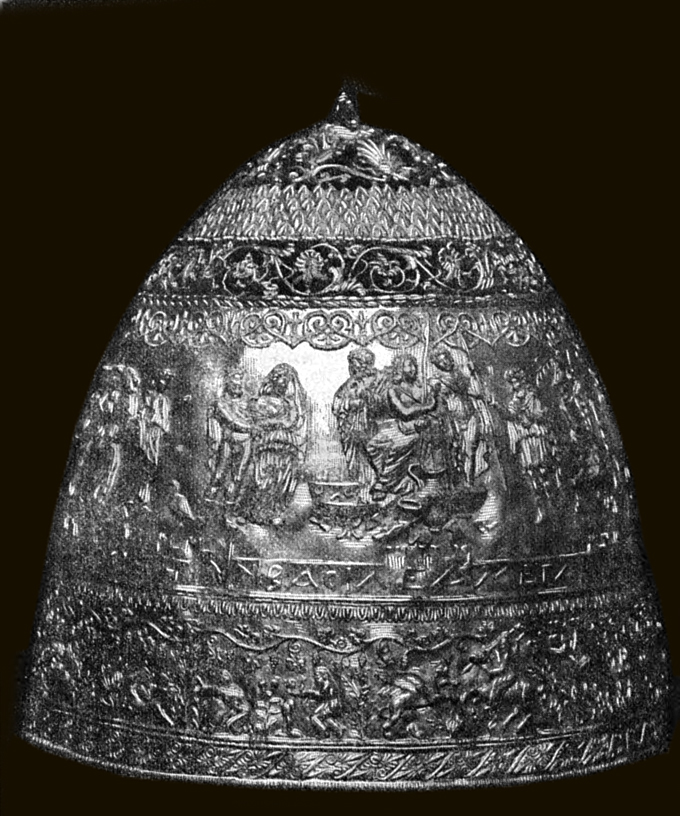
Figure 1: The ‘Tiara of Saitaphernes’ whose purchase the Louvre quickly came to regret. Source: WikiCommons
All this was because of the kurgans of course. The what now? The kurgans: massive manmade hills built on top of the graves of dead kings, queens and warriors and containing, hidden deep within their chambers, some of the most incredible gold objects ever made. These monuments dot the landscape of what is now Ukraine and the Caucasus region and during the 19th century many were opened up and their treasures revealed. Stunning jewellery and awe-inspiring gold weapons were unearthed, often covered with elaborate scenes from myth and reality, alongside remarkable representations of deer, birds, snake-legged women and a variety of other creatures depicted in a way that quickly acquired the name ‘Animal Style’ artwork. No one could have imagined that an area so far from the Mediterranean heartlands of Greece and Rome could have had such incredible objects, and the entire understanding of this part of the ancient world was turned on its head.
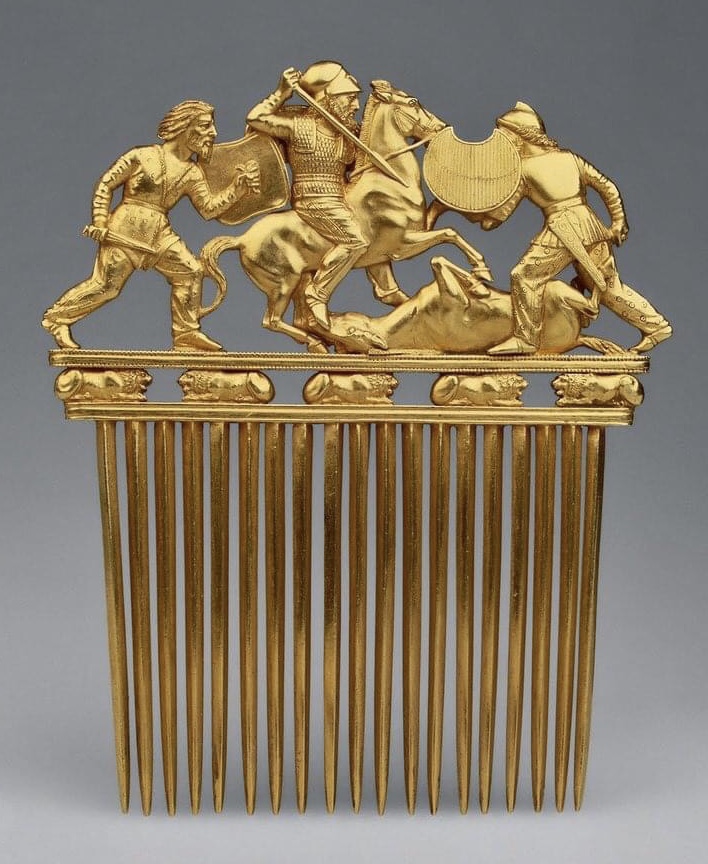
Figure 2: A gold Scythian comb from the Solokha Kurgan, Kherson Oblast, Ukraine (excavated in 1913). Source: WikiCommons
So what was this place in antiquity? Well, Herodotus (for once) gives us some reliable information about the people living here, at least in the 5th century BC. Well, naturally, you had the Greeks – no one would bothered writing anything down if there hadn’t been some Greeks there. But the Greeks settled on the coastline, they were never very interested in settling further inland into the grassland plains of the Eurasian Steppe. No, that was the domain of the Scythians, a people who lived essentially on horseback, criss-crossing the landscape in seasonal migrations: nomads, or at least semi-nomadic, and uninterested in founding cities, studying philosophy, or really doing anything except fighting, drinking, and smoking weed (yep – see Herodotus Book Four, 74-75 for ancient Scythian stoners).
Or at least that’s what we think we know about the Scythians. But one of the things that’s so fascinating about this people, and the whole history of the northern Black Sea region, is all the contradictions and complexities of the evidence. Because yes, Scythians don’t seem to have settled cities, but even Herodotus mentions one that was founded deep deep into Scythian territory: Gelonus, a huge trading centre, with a wall, large population, and temples to boot. We might even have found it archaeologically (give Bilsk a google). And what about Anacharsis, the Scythian prince who, after taking what we might call a gap year and finding himself in Asia Minor, became celebrated as one of the great sages of Ancient Greek philosophy. Granted, he was killed by his own brother for worshipping Greek gods, but his story, and the remarkable craftsmanship seen on those gold artefacts, should really make us think twice before we split everything up into ‘civilised’ Greeks and their ‘barbarian’ neighbours.
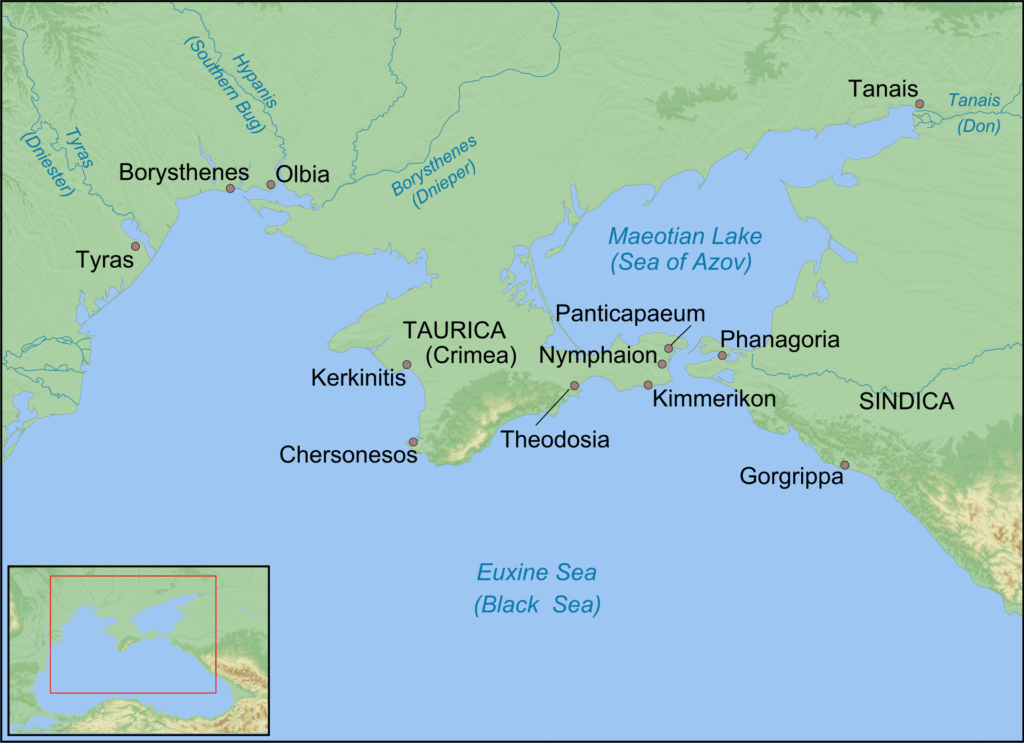
Figure 1 Map of the major Greek colonies on the northern coast of the Black Sea
Source: By Amitchell125 – Own work, CC BY-SA 3.0, via Wikimedia Commons
After all, the Greek cities on the Black Sea were never 100% Greek to begin with. From the beginning, Greeks had to work, trade, and live with the other peoples in the area, otherwise no Greek settlement would have lasted very long. In fact, by the early centuries AD at the very latest, we see Greeks and non-Greeks worshipping the same gods, funding the same buildings, and even taking on the same roles in the government of allegedly ‘Greek’ cities. There’s even a man with the decidedly non-Greek name of Rhoirmaros, son of Sipelagos, working as an engraver of Greek inscriptions at Olbia in the late 1st/early 2nd century AD: so much for ‘barbarian’ illiteracy!
Of course, in modern times, politics has often restricted access to these sites and the material where these fascinating stories are kept. In the early twentieth century, the enthusiasm of 1890s in Western Europe was soon stemmed by the Russian Revolution and eventual fall of the Iron Curtain. This prevented eastern and western scholarly cooperation for over fifty years. In our own times, the brief window of dialogue that opened after the collapse of Communism was slammed shut by the escalation of the Russian invasion of Ukraine in February 2022. The tragedy of this event cannot be overstated; its impact will define all of our lives for decades to come. Heritage and history are always combatants in such conflicts, and the rich past of the northern Black Sea region is at risk like never before.
I hope this short post has taught you something about this uniquely valuable part of the ancient world and has encouraged you to want to learn more. I am always delighted to talk about Black Sea antiquity with anyone interested (and many who probably aren’t!), so do send me any questions you might have by using this question box and I’ll look forward to answering them.
Thank you for reading!
Canadian Women Authors and Antiquity
Canadian Women Authors and Antiquity
An article by ©DrAlexandraMeghji
Canada has never been able to tell a simple story about its identity. As it reckons with a vast geography, a troubling colonial past, the historical influence of imperial Britain and the cultural dominance of the United States, Canadian nationhood can be, as political sociologist Mildred Schwartz writes, ‘an enigma and a cause for concern’ (2022). Unlike nations that anchor their identities in singular revolutionary moments or ancient, linear histories, Canada exists as a site of ongoing negotiation.
The Canadian Parliament was not built in a neoclassical fashion but in Gothic Revival or Canadian Gothic, unlike other nations whose government buildings incorporate classical architecture.
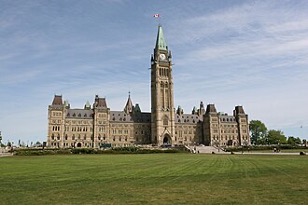
© Mark Lautenbacher / Wikimedia Commons / Creative Commons Attribution-Share Alike 4.0
This identificatory aporia is brought into sharp relief when we compare Canada to other nations that have mobilized and politicized the Graeco-Roman classics to consolidate their power and scaffold their national discourse. The British Empire, for example, exported classical education as a tool of imperial domination, while the USA incorporated into itself classical imagery and vocabulary to solidify its identity and cultural authority (Quint 1993). Antiquity was crucial in securing narratives of legitimacy for both these powers.
And while Classics has been taught in Canadian education systems shaped by the British Empire, they do not constitute a unifying or founding Canadian myth. Instead, Canada’s relationship to antiquity is quieter, more uneasy. This tentative inheritance has shaped the presence of antiquity in Canadian literature, especially in the work of women writers who turn to Greece and Rome not to reinforce Canadian power but to explore themes of colonial history, patriarchal oppression, and cultural fragmentation in the Canadian context. This exploratory use of antiquity is manifest in the writings of Margaret Laurence, Alice Munro, and Margaret Atwood, three of Canada’s most influential authors. In their work, antiquity is a mechanism for asking the enduring question of what it means to be Canadian, rather than a legacy upon which to construct identity or project authority.
Margaret Laurence is a pillar of Canadian literature. She never received a formal classical education but she was interested in the Greek world. She names Antigone as her favourite play and reflects in her memoir about her encounters with antiquity during her travels to Greece. This interest figures prominently in her fiction, where her subtle engagement with Classics becomes a mechanism for postcolonial and feminist critique in Canada.
Laurence makes her opposition to imperialism clear in her memoir: ‘my feeling about imperialism was very simple – I was against it’ (Laurence 1960). She cites her upbringing in Canada as a source of this opposition when she writes that she ‘had been born and had grown up in a country that was once a colony, a country which many people believed still to be suffering from a colonial outlook’ (1960). But Laurence’s understanding of antiquity’s role in political struggle and postcolonial critique emerged in the 1950s, a time which she spent living and writing in Somalia and Ghana. In Long Drums and Cannons (1968), a work of Nigerian literary criticism, Laurence observes how Nigerian authors John Pepper Clark and Wole Soyinka engaged with Greek literature. Through this criticism, Laurence notices that the British Empire used antiquity as a means of consolidating colonial power in Nigeria and in their broader imperial project, but that Clark and Soyinka also engage with Greek epic and tragedy in their own way, bringing it into dialogue with Yoruba and Ijaw mythology to reclaim antiquity and loosen its imperial ties (1968). Laurence thus recognizes that Graeco-Roman literature has a kind of dual relationship with the imperial project.
Laurence brings the recognition that antiquity can both assist and resist colonization into her Canadian fiction, which she wrote upon her return from Africa. Her subtle engagement with antiquity allows her to interrogate what it means to be at home in a settler-colonial state marked by historical and identificatory fragmentation. Laurence’s The Diviners is an example of this dialogue. The journey of the protagonist, Morag Gunn, follows a pattern hat evokes the Odyssey, but Laurence uses this evocation of epic to expose the contingency of Canadian identity rather than to fashion her heroine as a contemporary Odysseus. Morag’s departure from and return to the Canadian prairies is marked by dispossession and persistent unease, rather than the triumphant restoration that Odysseus experiences upon his return to Ithaca. By mustering the Odyssey only to subvert its conclusion, Laurence highlights that the ancient world brings to the Canadian context a frame through which to reflect, but not to resolve, the anxieties and ambivalences of Canadian identity.
Alice Munro’s short fiction treats antiquity as a site of introspection on gendered experience in Canada. In her ‘Runaway’ trilogy, Juliet is a young classicist who interrupts her doctoral research at the University of Toronto to teach Latin at a girls’ school in Vancouver. Juliet’s professors value her talent and appreciate her passion for Classics but fear that her womanhood and the domestic pressures placed upon women will lead her to abandon her studies for marriage, which would ‘waste all their hard work and theirs’ and ensure she ‘los[t] out on promotions to men.’ The tension between traditional femininity and classicism highlights the persistent limits imposed upon women’s ambitions in late twentieth- and early twenty-first century Canada, where being a classicist was viewed as an eccentricity tolerated more easily in men. Juliet knows she cannot ‘slough off that prejudice’ of her classicism, a discipline known for its ‘irrelevance and dreariness,’ as a man could because ‘[o]dd choices were simply easier for men.’ Her academic pursuits are even blamed for her ‘inability to run a sewing machine’ or ‘wrap a parcel neatly,’ two tasks that emblematize the feminine domestic sphere.
This tension between femininity and intellectualism reaches its zenith on the train to Vancouver, where, while reading E.R. Dodds’ landmark The Greeks and the Irrational (1951), Juliet is interrupted by a young man. While Juliet wants to read, she feels a gendered obligation to be polite and engage with the man. In this portrait of the classicist as a young woman, so to speak, Munro critiques the patriarchal dynamics that endure in the discipline and in Canadian society at large.
In the ‘Runaway’ trilogy, antiquity is not a scaffold for Canadian national identity but a lens for understanding Juliet’s personal experiences, relationships, and affect. Juliet views her relationship with her husband’s ex-girlfriend through that of the Iliad’s Briseis and Chryseis, and uses the Aethiopica to make sense of her complicated relationship with her daughter, Penelope. Classical knowledge thus shapes Juliet’s perspectives but it does not grant her a sense of social or identificatory certainty. The authority once associated with classicism is shaken when placed in the hands of a young woman navigating professional uncertainty and vulnerability. Munro therefore transforms the ancient world through the context of ordinary lives, where the loftiness of Classics is thwarted by the contingencies of private experience.

Margaret Atwood © Rudolph H. Boettcher / Wikimedia Commons / Creative Commons Attribution-Share Alike 4.0
In The Penelopiad, Margaret Atwood retells the story of the Odyssey from the perspective of Penelope and the twelve enslaved women who are executed in Odyssey 22. While Atwood does not transplant antiquity into the Canadian setting like Munro and Laurence, she does offer a critique of gender politics relevant to the Canadian context. Atwood casts Penelope as an agent of patriarchy by exposing her abuses of aristocratic power and complicity in the exploitation of the enslaved women. This approach evokes Atwood’s claim that the liberal feminisms dominant in Canada are often overly reductive, insufficiently intersectional, and inadequately cognizant that ‘women are human beings with the full range of saintly and demonic behaviours that entails, including criminal ones’ (2018). Atwood, further, has criticized Canadian literature for reducing women characters to tropes and motifs rather than developing them as ‘real’ and ‘individual.’ In her retelling of the Odyssey,Atwood disrupts the longstanding characterization of Penelope as a patriarchal paragon of virtue and critiques the literary and political tendencies to oversimplify women characters and acquit women of the capacity for wrongdoing. Furthermore, Atwood shows how the voices of the enslaved women evoke the tragic chorus but refuse a narrative of restored order, and how this tension between speech and silence intersects with histories of marginalization in Canada. The murdered enslaved women unsettle epic closure and expose the costs of patriarchal restoration, thereby transforming antiquity into a relevant mechanism for contemporary critique.
Antiquity in Canada has not functioned as a secure foundation for national myth, as it has in Britain or the United States. Instead, it has been inherited with ambivalence, shaped by colonial history and by the presence of older Indigenous sovereignties. Canadian women writers reveal how Greece and Rome can be reworked in such a context: not as guarantors of empire, but as resources for thinking about gender, memory, and responsibility. Their work expands the field of classical reception by showing what happens when antiquity travels north and is asked to respond to a different set of histories.
References
Atwood, Margaret (1972). Survival: A Thematic Guide to Canadian Literature. Toronto: House of Anansi Press.
— (2018). Am I a Bad Feminist? The Globe and Mail. <https://www.theglobeandmail.com/opinion/am-i-a-bad-feminist/article37591823/>. Accessed 2nd March 2026).
Laurence, Margaret (1963). The Prophet’s Camel Bell: A Memoir of Somaliland. Chicago: University of Chicago Press.
— (1974). The Diviners. Toronto: McClelland and Stewart.
— (2001). Long Drums and Cannons: Nigerian Dramatists and Novelists, 1952-1966. Edmonton: University of Alberta Press.
Munro, Alice (2004). Runaway. Toronto: McClelland and Stewart.
Quint, David (1993). Epic and Empire: Politics and Generic Form from Virgil to Milton. Princeton: Princeton University Press.
Schwartz, Mildred A. (2022). Public Opinion and Canadian Identity. Berkeley: University of California Press.
Recent Comments