Dr Richard Kendall, our Expert in Residence, shines a light on his specialist topic, the ancient Black Sea. To explore more, tune in to his online Member Lecture on Wednesday 27 May – sign up here! You can ask Richard a question here.
On 4 November 1857, an article in The Times said:
‘To the vast majority of readers, indeed, antiquities are the most wearisome study in the world, and to all mankind there is something very dismal about anything Cimmerian’
Hopefully, most of the readers of this blog post disagree with the first part of this statement (although anyone swotting for their Classical Civilisation A-Level or degree exams might have some sympathy), but maybe The Times was onto something with the latter part. After all, unless you are a particularly diligent reader of Herodotus (or Italo Calvino) you’re probably wondering who or what Cimmerians are, and even if I replaced that word with ‘antiquities from the northern Black Sea’ I doubt very many more pairs of eyes would suddenly light up. Panticapaeum, Phanagoria, Hermonassa and Berezan aren’t exactly household names so far as Ancient Greek cities go, and a google search for Olbia will take you to Italian travel websites far sooner than it will give you information about the Ukrainian archaeological site (trust me – I wrote a PhD on the place!). How did we get here? Has it always been like this? And what actually happened in this part of the world over two thousand years ago? Stick around and I’ll provide some answers.
First and foremost, no: once upon a time the ancient history of the Black Sea was a big deal. A very big deal indeed, at least as far as the Louvre were concerned. After all, they spent two hundred francs (the equivalent of nearly €2 million today) for just one artefact supposedly from Olbia, the so-called ‘Tiara of Saitaphernes’. This gold hat was covered with beautiful decorations and a fabulous (in all senses of the word) inscription that linked it to Saitaphernes, a ‘barbarian’ king known from another (genuine) inscription from the ancient world. The fact that almost all of the images and the inscription itself were completely undamaged should have set off alarm bells, but the museum went ahead and announced its purchase on, of all days, 1 April 1896. It was quickly revealed to be a forgery, but that sort of investment still shows us just how interesting Black Sea archaeology was seen as in the late 19th century.
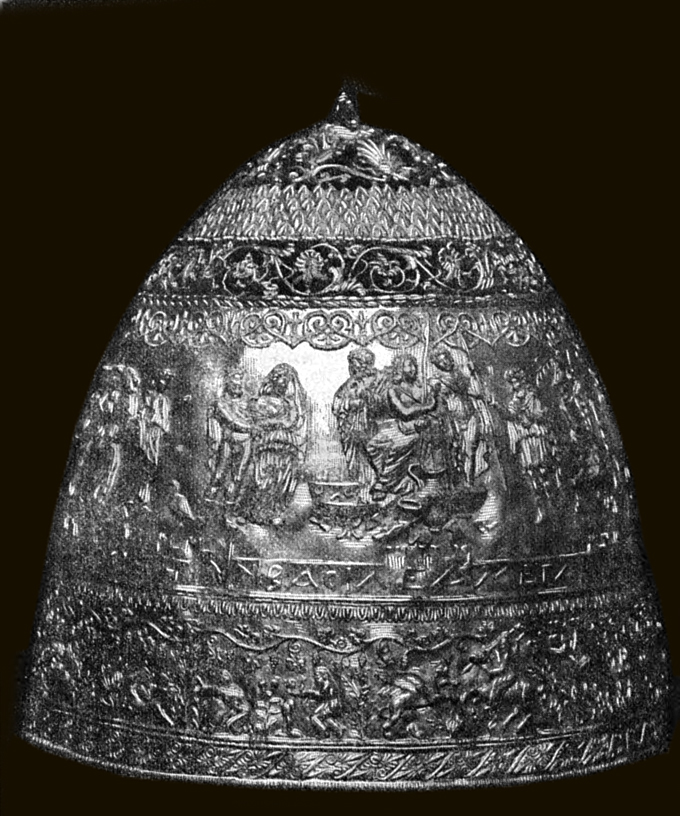
Figure 1: The ‘Tiara of Saitaphernes’ whose purchase the Louvre quickly came to regret. Source: WikiCommons
All this was because of the kurgans of course. The what now? The kurgans: massive manmade hills built on top of the graves of dead kings, queens and warriors and containing, hidden deep within their chambers, some of the most incredible gold objects ever made. These monuments dot the landscape of what is now Ukraine and the Caucasus region and during the 19th century many were opened up and their treasures revealed. Stunning jewellery and awe-inspiring gold weapons were unearthed, often covered with elaborate scenes from myth and reality, alongside remarkable representations of deer, birds, snake-legged women and a variety of other creatures depicted in a way that quickly acquired the name ‘Animal Style’ artwork. No one could have imagined that an area so far from the Mediterranean heartlands of Greece and Rome could have had such incredible objects, and the entire understanding of this part of the ancient world was turned on its head.
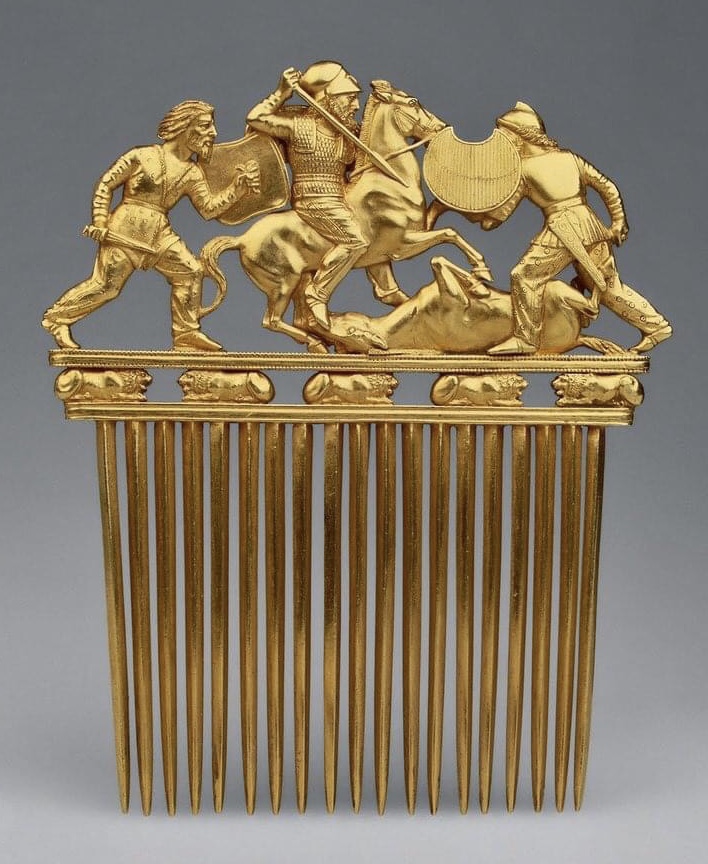
Figure 2: A gold Scythian comb from the Solokha Kurgan, Kherson Oblast, Ukraine (excavated in 1913). Source: WikiCommons
So what was this place in antiquity? Well, Herodotus (for once) gives us some reliable information about the people living here, at least in the 5th century BC. Well, naturally, you had the Greeks – no one would bothered writing anything down if there hadn’t been some Greeks there. But the Greeks settled on the coastline, they were never very interested in settling further inland into the grassland plains of the Eurasian Steppe. No, that was the domain of the Scythians, a people who lived essentially on horseback, criss-crossing the landscape in seasonal migrations: nomads, or at least semi-nomadic, and uninterested in founding cities, studying philosophy, or really doing anything except fighting, drinking, and smoking weed (yep – see Herodotus Book Four, 74-75 for ancient Scythian stoners).
Or at least that’s what we think we know about the Scythians. But one of the things that’s so fascinating about this people, and the whole history of the northern Black Sea region, is all the contradictions and complexities of the evidence. Because yes, Scythians don’t seem to have settled cities, but even Herodotus mentions one that was founded deep deep into Scythian territory: Gelonus, a huge trading centre, with a wall, large population, and temples to boot. We might even have found it archaeologically (give Bilsk a google). And what about Anacharsis, the Scythian prince who, after taking what we might call a gap year and finding himself in Asia Minor, became celebrated as one of the great sages of Ancient Greek philosophy. Granted, he was killed by his own brother for worshipping Greek gods, but his story, and the remarkable craftsmanship seen on those gold artefacts, should really make us think twice before we split everything up into ‘civilised’ Greeks and their ‘barbarian’ neighbours.
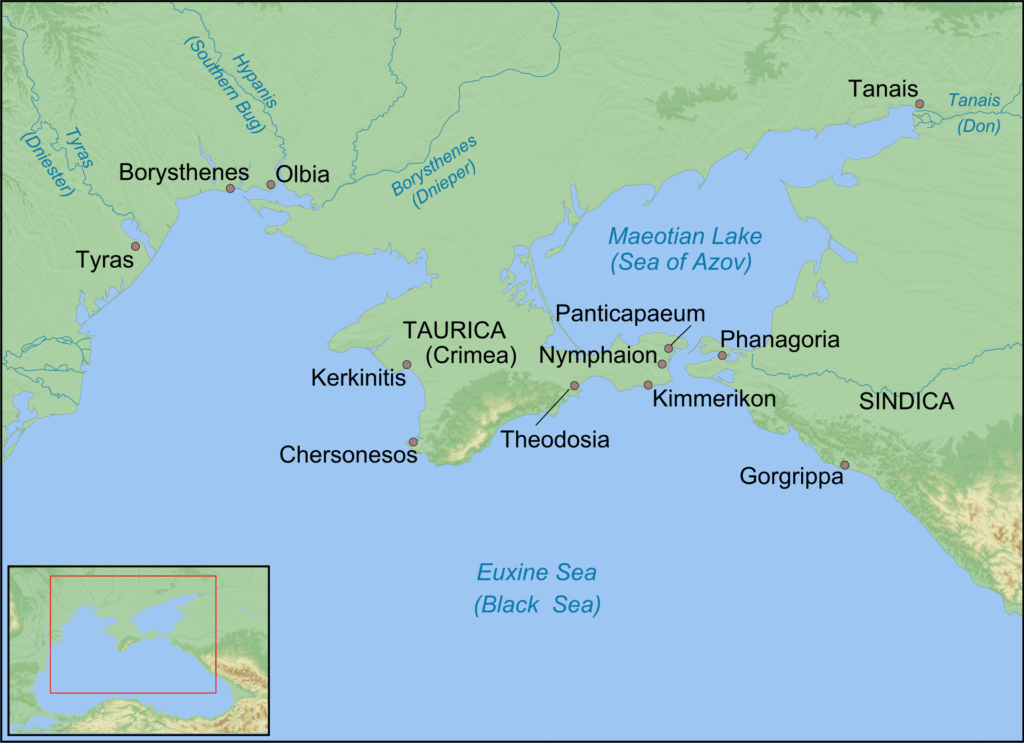
Figure 1 Map of the major Greek colonies on the northern coast of the Black Sea
Source: By Amitchell125 – Own work, CC BY-SA 3.0, via Wikimedia Commons
After all, the Greek cities on the Black Sea were never 100% Greek to begin with. From the beginning, Greeks had to work, trade, and live with the other peoples in the area, otherwise no Greek settlement would have lasted very long. In fact, by the early centuries AD at the very latest, we see Greeks and non-Greeks worshipping the same gods, funding the same buildings, and even taking on the same roles in the government of allegedly ‘Greek’ cities. There’s even a man with the decidedly non-Greek name of Rhoirmaros, son of Sipelagos, working as an engraver of Greek inscriptions at Olbia in the late 1st/early 2nd century AD: so much for ‘barbarian’ illiteracy!
Of course, in modern times, politics has often restricted access to these sites and the material where these fascinating stories are kept. In the early twentieth century, the enthusiasm of 1890s in Western Europe was soon stemmed by the Russian Revolution and eventual fall of the Iron Curtain. This prevented eastern and western scholarly cooperation for over fifty years. In our own times, the brief window of dialogue that opened after the collapse of Communism was slammed shut by the escalation of the Russian invasion of Ukraine in February 2022. The tragedy of this event cannot be overstated; its impact will define all of our lives for decades to come. Heritage and history are always combatants in such conflicts, and the rich past of the northern Black Sea region is at risk like never before.
I hope this short post has taught you something about this uniquely valuable part of the ancient world and has encouraged you to want to learn more. I am always delighted to talk about Black Sea antiquity with anyone interested (and many who probably aren’t!), so do send me any questions you might have by using this question box and I’ll look forward to answering them.
Thank you for reading!