A Trip to Parliament
Sophie Johns, CA intern, describes attending the CA’s #CelebratingClassics reception at the Houses of Parliament this September.
For a recent graduate juggling job applications and the prospect of living with her parents again after four years of university, the invitation to ‘A Celebration of Classics’, a parliamentary reception hosted by Dr Peter Swallow MP earlier this month, was an exciting opportunity to come to London and meet some new and inspiring classics enthusiasts. The Reception marked the sixtieth anniversary of Classical Civilisation as a qualification subject in England, a milestone recognised by Prof. Arlene Holmes-Henderson and Prof. Edith Hall in their seminal 2025 publication, Classical Civilisation and Ancient History in British Secondary Education, which we also celebrated. It was brilliant to come together to celebrate the study of the entirety of the classical world, not just ancient languages, and the ongoing work of the All-Party Parliamentary Group for Classics, chaired by Peter and administered by Gráinne here at the CA.

Embarrassingly early due to Tube strike anxiety, I waited in Parliament Square and watched pigeons fly between the stone heads of various parliamentarians until it seemed appropriate to start queuing at the visitors’ entrance. Some initial networking came from an unexpected source in the queue (at 22, usually I am the enthusiastic instigator) – a friendly Welsh engineer thought I was also attending the twentieth anniversary celebration of the Nuclear Disarmament Agreement; instead, we chatted about his teenage daughter and parted ways at security. Heading through the cavernous Westminster Hall to the picturesque Thames Pavilion, with its views of Westminster Bridge and the London Eye, I was greeted, in what I can only describe as the fanciest and warmest marquee I’ve ever been in, by Katrina, the CA’s Engagement Co-ordinator and my manager during my time as an intern this summer, as well as my fellow interns Jasmine and Claud.
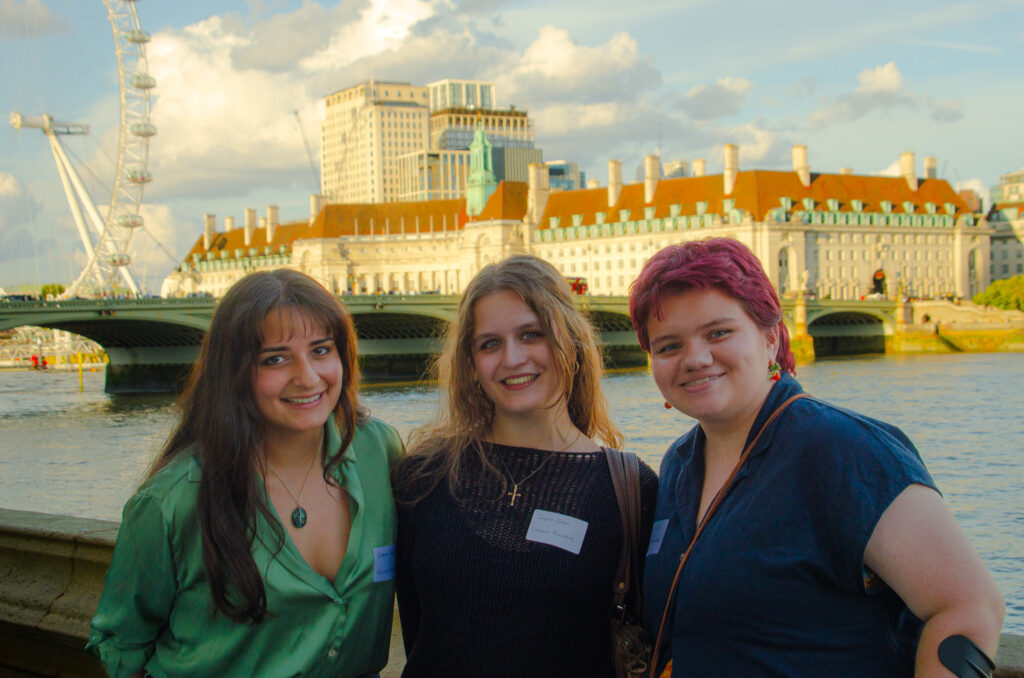
Having previously only seen each other in tiny boxes on a screen, we were delighted to discover that we were all almost exactly the same height, and we soon become firm friends. Canapés were handed around, and there is a wonderful photo of the CA’s Honorary Secretary, Prof. Sharon Marshall, and myself laughing as we realise that Jasmine is snapping pictures of us as we shove bits of fish on crackers into our mouths. The highlight of the event for me was meeting so many inspirational and fascinating people, like Sharon, who have succeeded in making their passion for Classics their career. As a woman in her early twenties trying to do the same, it was encouraging to feel the support and understanding of those who, in my mind, have ‘made it’, including academic editors and museum professionals.

It was great to meet Prof. Katherine Harloe and Dr Kathryn Tempest from the Institute of Classical Studies (pictured here with Prof. Claire Gorrara, Pro Vice-Chancellor (Research and Public Engagement) and Dean of the School of Advanced Study) and other members of the Classics Development Group, and find out more about their joint work to advocate for classical subjectsI was particularly excited to meet my academic hero, Prof. Edith Hall, whom I shocked into silence by talking incessantly about how much I liked her translation of line 742 of Aeschylus’ Agamemnon. You can enjoy Edith’s ‘Life in Classics’ video as part of the CA’s Campaign.
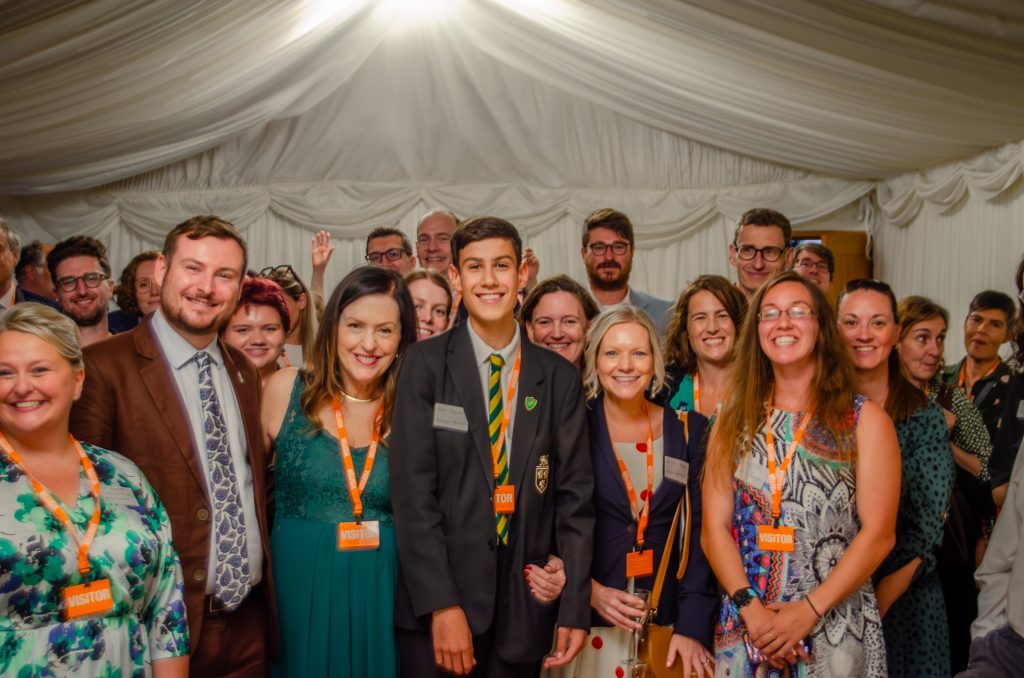
After speeches from Peter and Katrina, we all posed for a group photo (see above!). Although I was lucky enough to study Latin in secondary school, I am certain that I would not have chosen to study Classics at university had I not taken Classical Civilisation A Level at college. Declensions and ablative absolutes are important, yes, but they do not solely a classicist make. More often than not, young classicists are inspired by myth, religion and culture, not just the complexities of ancient grammar, and an engaging, well-rounded classical education necessitates that we interact with material culture and literature (in translation too!) as well as language.
Prospective young classicists are devouring Natalie Haynes, Emily Hauser, Madeleine Miller and other authors who write about ancient cultures in all their complexity. If we want to produce classicists who are both excited by their discipline and are thoughtful, open-minded and productive members of their community, Classical Civilisation is undoubtedly an essential part of the curriculum.
©SophieJohns
All photos thanks to Jasmine Klein