Classical Review
OUR JOURNALS
The Classical Review publishes informative reviews, subject profiles and notices from leading scholars on new work covering the languages, literature, history, archaeology, philosophy and reception of ancient Greece and Rome and Asia Minor. Producing hundreds of high-quality reviews every year, The Classical Review is an indispensable reference tool, essential for keeping up to date with current classical scholarship.

About the Editors
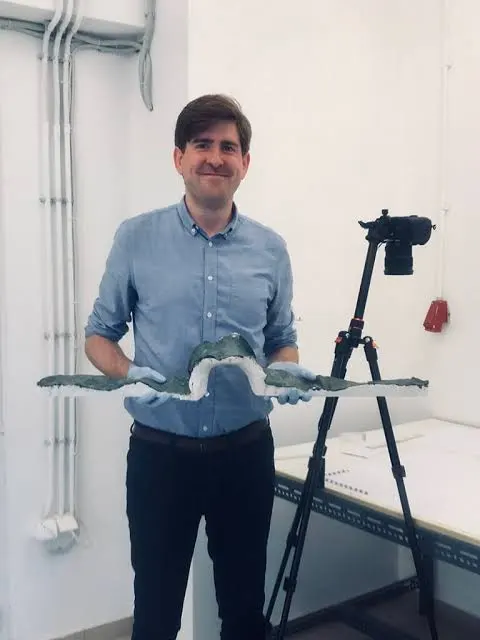
Dr Cezary Kucewicz
Cezary is an Assistant Professor in Ancient History at the University of Gdańsk and Bye-Fellow at Wolfson College, Cambridge. He is the author of The Treatment of the War Dead in Archaic Athens: An Ancestral Custom (Bloomsbury 2021), which won the Early Career Researcher prize awarded by the Polish Academy of Sciences.

Dr Greta Hawes
Greta Hawes is DECRA fellow and Senior Lecturer in Classics and Ancient History at the Australian National University. Her research interests lie in the area of Greek myth and ancient uses of narrative.

Dr Blanka Misic
Blanka Misic is a Marie Skłodowska-Curie Actions Postdoctoral Fellow in the department of Classical Archaeology at the University of Vienna. She specializes in applying interdisciplinary Cognitive Science of Religion and Sensory Archaeology approaches to the study of religious rituals in the Roman Empire.
The latest issue of The Classical Review is out now!
375
pages
140
books reviewed
12
open access pieces
Find out about just a few articles from CR 76.2 and click on their titles to read more:
Since its brutal foundation myth, the story of Prometheus who steals fire from Zeus, gives it to humankind, thus turning them into something different from animals, and is perpetually ravaged by an eagle as punishment, technical knowledge has been about crossing boundaries of right and wrong, human, superhuman and subhuman, as well as temporal dimensions. Prometheus eponymously knows what lies ahead; technology is about artfully producing something that did not exist before and thus, in a sense, changing the future. Each one of these three beautifully produced collective volumes is focused on an aspect of ancient Greek and Roman technical knowledge.
Serafina Cuomo
A theatre company choosing to present a Greek play in the twenty-first century faces many choices, and decisions made must inevitably involve compromises of one kind or another. In different ways, the books under discussion stake out how specific choices have been made, and offer models from which a contemporary production can learn.
C.W. Marshall
Recent Hellenistic scholarship has moved decisively away from models emphasising Greek cultural supremacy or positing rigid East–West dichotomies. The three volumes under review exemplify this methodological shift while addressing three distinct historiographical problems values. Despite their varied approaches, all three emphasise cultural negotiation, institutional complexity and the inadequacy of binary frameworks for understanding the Hellenistic world.
Vincenzo Micaletti

Get access today
Sign up for online access to the lastest edition (and the whole back catalogue) for just £20 via our website once you’re logged in as a member.
Submission Process
If you have an idea for a review article on recent books in a particular area of classical scholarship, we’d be please to hear from you. Find out more here:

Keep up with The Classical Review on social media
Find out more about our other publications