By Steven Hunt
Euroclassica 2026 was hosted by the Institute of Classical, Byzantine and Modern Greek Studies, Faculty of Humanities, Ivane Javakhishvili Tbilisi State University (TSU), with support from the Otar Lordkipanidze Vani Archaeological Museum, the Georgian National Museum, and the Academia Europaea Tbilisi Knowledge Hub.
Delegates attended from: Armenia, Austria, Azerbaijan, Belgium, Bulgaria, Croatia, Estonia, France, Georgia, Germany, Greece, Hungary, Italy, Latvia, Netherlands, North Macedonia, Norway, Romania, Russia, Slovenia, Sweden and the UK (the author). Professor Christian Laes (University of Manchester) in his role as President provided the introduction for the conference.
Strengthening the European Classics Community
The Euroclassica General Committee reaffirmed its commitment to expanding membership to reflect the full European landscape of Classics educators better. Outreach from Euroclassica continues to embrace Albania, Czechia and Montenegro, and this year the General Assembly welcomed a prospective delegate from Armenia, who offered a short presentation on the state of Classics in his country. We hope to be able to publish this in the Journal of Classics Teaching or on this website in the future.
19 August — Excursion to Mtskheta
The conference opened with a memorable excursion to Mtskheta, the ancient capital of Georgia and one of the oldest continuously inhabited cities in the world. Delegates were expertly guided by TSU students Beka Gelashvili‑Chorgoliani and Giorgio Barnabishvili, two students from the University. Their knowledge and understanding brought much reassurance to the tour.
Highlights included:
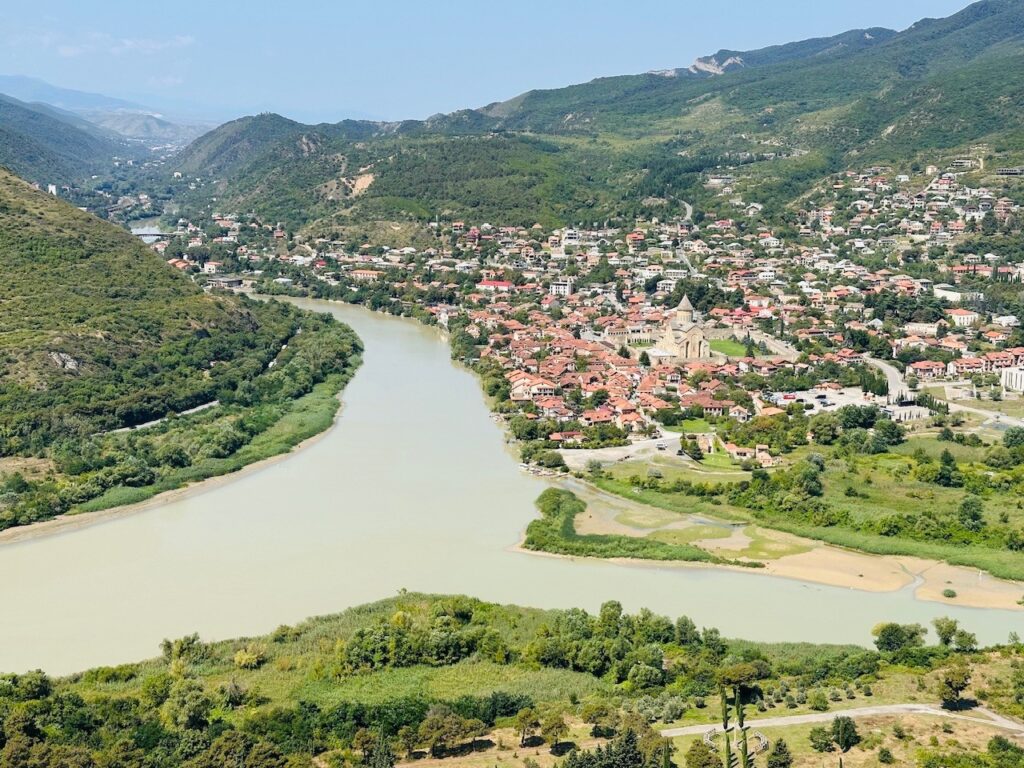
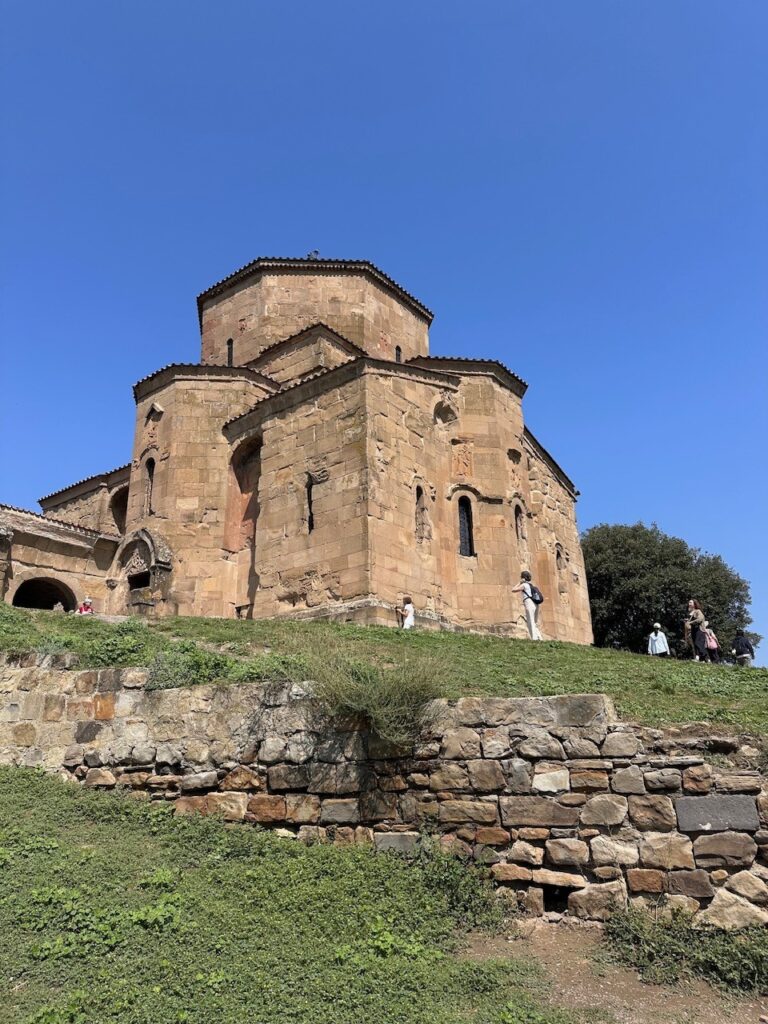
The Jvari Monastery (dating from the 6th century) provided amazing and panoramic views over the confluence of the Kura and Aragvi rivers. Delegates were introduced to the layers of Georgian identity, from Bronze Age habitation in the curve of the river, through to the legends of Jason and the Argonauts, and the accounts of Alexander the Great’s supposed passage through the region. The slow, sluggish and muddy rivers ‘must’ bear the tiny flakes of gold that make the region famous in antiquity!
Svetitskhoveli Cathedral (dating from the 11th century) is the coronation site and burial place of Georgian kings, and home to the relics of Saint Anthony and others. The visit explored Georgian national history and the development of Georgian Orthodox Christianity.
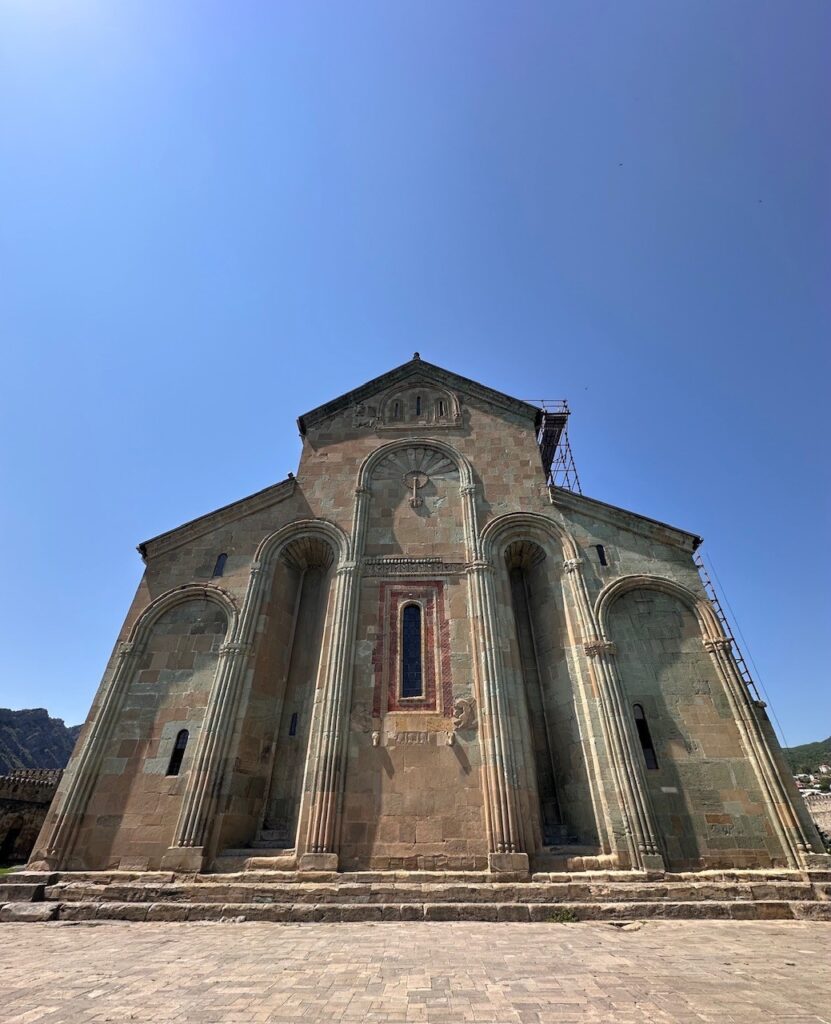
The excursion set the tone for the days ahead: a reminder that Classics is thoroughly embedded in place, memory and living cultural heritage.
20–21 August — Academic Programme
The academic sessions were held at TSU and opened with very warm welcomes from Dr. Irine Darchia (Associate Professor, Deputy Head of TSU Institute of Classical, Byzantine and Modern Greek Studies), Dr. Levan Gigineishvili (Professor, Head of TSU Institute of Classical, Byzantine and Modern Greek Studies) and Dr. Nino Lordkipanidze (Chief Scientist, Otar Lordipanidze Institute of Archaeological Studies, Georgian National Museum).
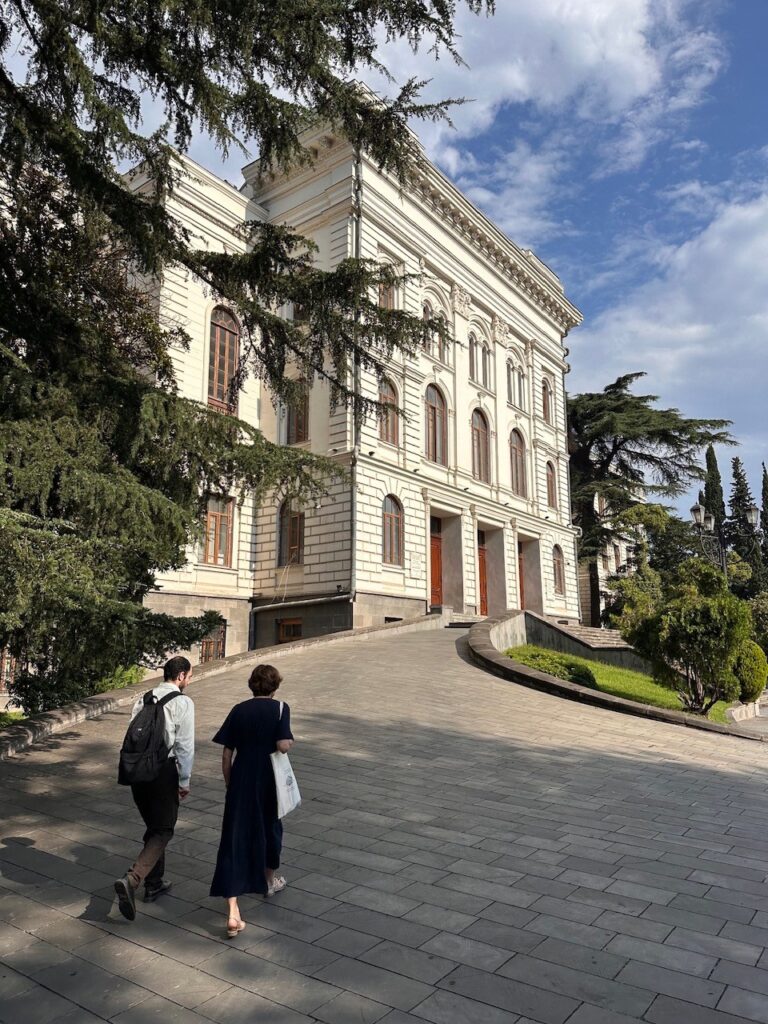
Key Lectures and Presentations
- Christian Laes (UK & Belgium) — Why We Need to Teach Greek: a compelling argument for the humanities as formative disciplines, drawing on recent publications including Teaching Classics Worldwide.
- TSU Students — A remarkable bilingual presentation (Latin, Ancient Greek, with English translation) on Georgia as the homeland of the Golden Fleece, wine and its unique alphabet.
- Peter Glatz (Austria) — Updates on Cursor – the Euroclassica journal – and the launch of the redesigned Euroclassica website. It can be found here.
- Irine Darchia (Georgia) — Classical Languages in Secondary and Tertiary Education in the Context of Global Politics: demonstrating how Bologna Process frameworks can be leveraged to advocate for Classics at university level (see here).
- Maria Vasiloudi (Germany) — A pedagogical analysis of Kantharos, showing how the course, which was designed for a younger age group, can still be used with university students, but that inconsistencies within the textbook have teaching implications for teaching.
- Gabriel Danzig (Israel) — Strategies for navigating first‑year Greek, with particular attention to vocabulary frequency lists and alternative pathways through traditional textbooks.
- Florence Turpin (France) — Presentation of Humanités dans le texte, a collaborative project linking school and university teachers to produce shared resources.
- Šime Demo (Croatia) — Cultural layers in Early Modern Latin inscriptions from Istria, revealing shifts in subject matter and epigraphic conventions.
- Edward Ross (UK) (online) — Ethics and Efficacy in an AI World: reflections on teaching ancient languages amid generative AI, with emphasis on hallucinations in image generation and the ethical responsibilities of educators.
After the lectures, delegates enjoyed a walking tour of Tbilisi’s old town, including the historic sulphur baths that originally may have prompted Roman foundations.
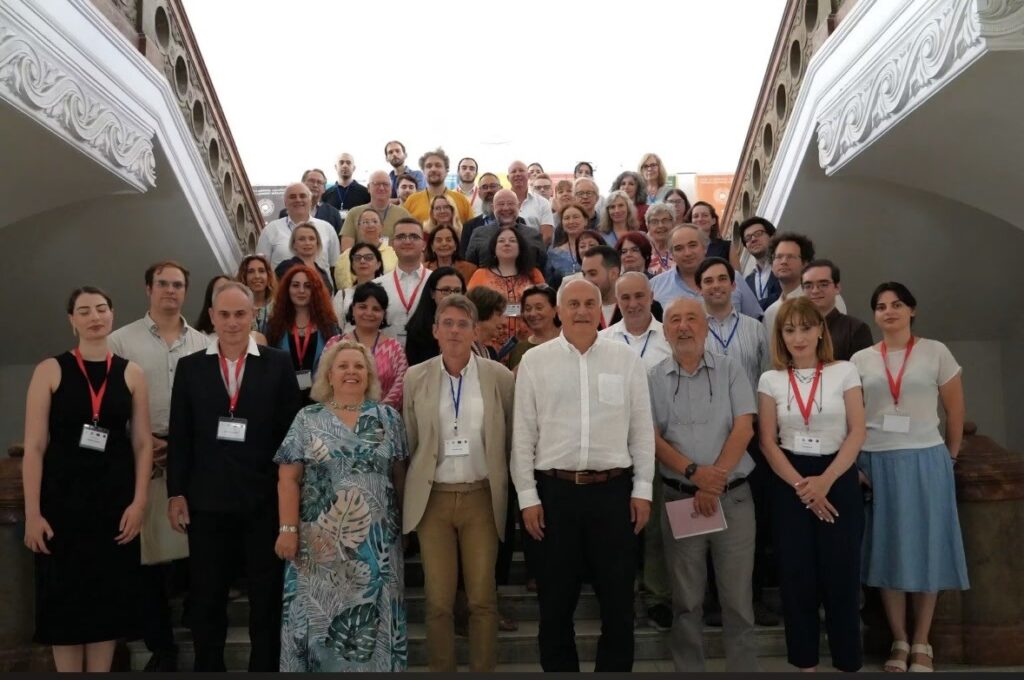
21 August — Latin Day
Friday was devoted entirely to Latin:
- Luigi Miraglia (Accademia Vivarium Novum, Italy) — On the importance of spoken Latin and the distinctive vitality of ancient languages: linguae immortalitatem adeptae de peculiari sermonum antiqorum vita.
- Ignacio Armella (Accademia Vivarium Novum, Italy) — A linguistic and stylistic exploration of Caesar’s narrative technique, focusing on vocabulary choice and word order: stilus diendi magister: quomodo scriptorum genera dicendi in scholis tradi possint.
- Musical workshop by Tyrtarion and TSU students — Rhythmic and choral performance of ancient metrical patterns, an energising demonstration of embodied Latin pedagogy.
General Assembly
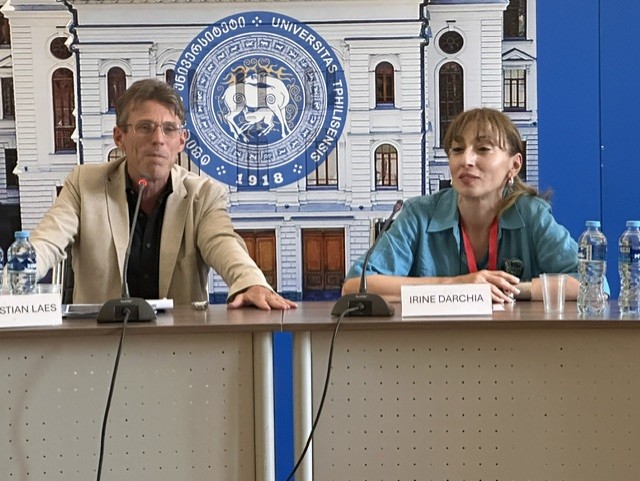
The afternoon assembly covered:
- Financial reports and approval of accounts
- Renewed encouragement for member participation
- Discussion of social media strategy
- Reports from Academia Homerica (Chios) and Academia Ragusina (Dubrovnik).
- Examination updates: Egex and Elex now published in Cursor, with Level 1 Latin to be simplified in 2027 and full vocabulary provided
- Confirmation of Euroclassica 2027, to be held 27–29 August in Rabat, Malta, with a theme focused on outreach to schools
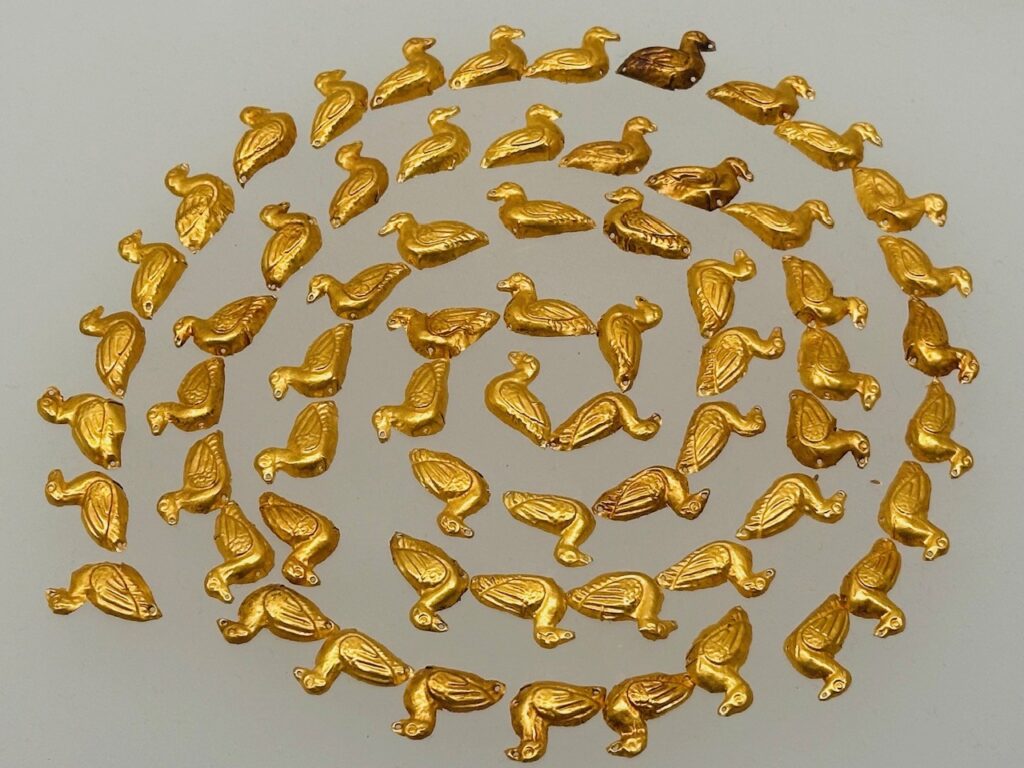
There followed a visit to see the incredible Georgian gold artefacts at the Georgian National Museum – perhaps some of the origins of the legend of the Golden Fleece. The day concluded with a celebratory dinner featuring generous Georgian hospitality and many toasts with delicious Georgian wine in honour of Classics, TSU, and the host country.
22 August — Excursion to Vani
Saturday offered a full‑day excursion to Vani, organised by the Otar Lordkipanidze Vani Archaeological Museum. Although the author was unable to attend due to homeward travel arrangements, delegates reported an excellent visit. Meanwhile, a smaller group, including Peter Glatz, explored Tbilisi further and discussed future collaborative work on examinations and assessment practices – an initiative with promising potential for publication and shared benefit across the Euroclassica network.
Closing Reflections
The 2026 Euroclassica meeting in Tbilisi was marked by intellectual generosity, cultural immersion, and a shared commitment to strengthening Classics across Europe.