Multi-Sensory Ancient Greece
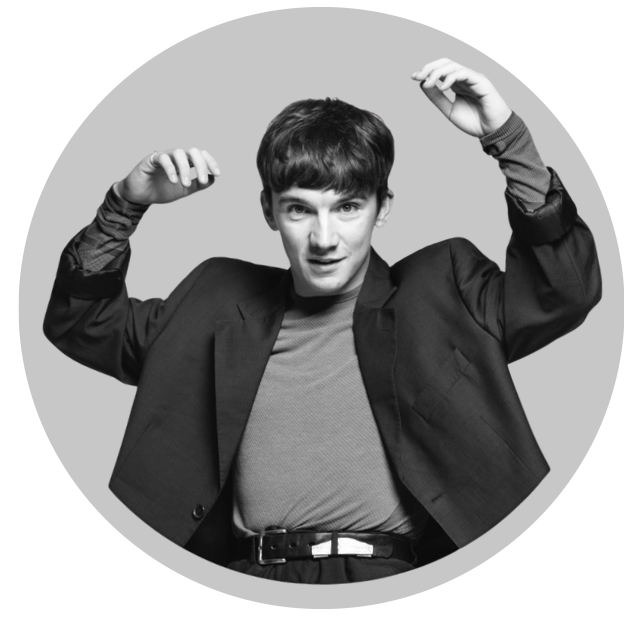
Matthew Rawcliffe
Dancer & Choreographer
In September 2024, Matthew Rawcliffe was awarded an outreach grant by the CA for a project which aimed to design and create sensory packages for use in a series of dance performances retelling ancient Greek myths for young people with profound and multiple learning disabilities (PMLD). Matthew describes the development of the project below.
I am a dance artist from Manchester specialising in creating performances for neurodivergent young people and young people with different disabilities. I love the ancient world and recently have been very excited about bringing Greek Mythology to people with profound and multiple learning disabilities (PMLD). People with PMLD experience the world in a primarily sensory way and therefore my main question has been:
How to express the Greek myths through the sensorium?(without losing their considerable emotional and dramatic content!
With the support of a grant from The Classical Association, I was able to focus on three areas of the Greek World – SMELLS, TEXTURES and SOUNDS.
This grant allowed me to collect a rich sensory world to be used in three performances over the past few months:
Hades & Persephone, which premiered in Manchester at The Yard Theatre in February. See the trailer here:
Narkissos, which premiered in Copenhagen at Dansekapellet in April.
The Garden, The Styx and The Underworld, which premiered at Now Northwich in April.
SMELLS
Our olfactory sense is extremely powerful and is processed in the same part of the brain as memory and emotion. Unlike the other senses, smell is used sparingly in my work, so it becomes even more important to be selective and purposeful with it.
In Hades & Persephone, we decided to use scent within the River Styx, our transitional space between Persephone/Demeter’s Garden and The Underworld. Given its link to memory and emotion, it felt exciting to highlight the journey to the underworld by adding olfactory stimulation. We used an essential oil with a sweet honey scent to mirror the first libation Odysseus pours in his journey to the land of the dead.
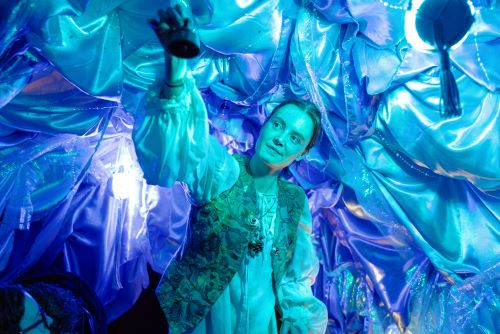
Anastasia Sheldon as Persephone in the River Styx.
Photography by Elly Welford.
Sweet smells like honey often trigger a feeling of pleasure, activating dopamine in the brain. In our production, Persephone offers the audience a jar filled with the honey scent, and perhaps at a more academic level we are linking the pleasure of this journey with feminist readings of Persephone’s story – one whereby she decides to reach for the Narcissus flower and actively branches into the world of adulthood. Maybe the pleasure of the sweet-smelling honey on the way to the underworld could also be the first sweet smell of adult freedom away from her mother?
TEXTURES
The sensory world can often be perceived as ‘babyish’ and as an artist it is important for me to find sensory engagement possibilities that are age-appropriate, relevant and appropriately stimulating.
To express Demeter’s heartbreak, we used broken fragments of pottery, thereby taking something genuinely broken and fragile to emphasise the emotional turning point in our story. This was a great example of using materials from the ancient world to emphasise a crucial part of the narrative.
For some of our audiences it would be unsafe to explore objects that are easily breakable, so we instead used handmade felt hearts that were loosely stitched together. For an audience enjoying a rougher stimulation, these could safely be thrown and torn.

Lili Holland-Fricke as Demeter in The Garden, holding a pottery fragment.
Photography by Elly Welford.
SOUNDS
Sound is very important for many of our audiences, and it has therefore become vital to understand how the sensory items we work with can inhabit the sonic world – from which leaves crinkle the best, to which metal trinkets make nice harmonies with each other.
One of the best purchases we made with this grant was a series of wind chimes tuned to an ancient Greek pentatonic scale. I really cannot recommend these enough since on a sensory level they create such a magical otherworldly atmosphere.
Wind chimes offer excellent accessibility options, they can be hung at multiple heights to account for audiences being either wheelchair users or ambulant, they can be enjoyed with or without the motor function to activate them (as the wind will do that) and they also provide a clear visual reference as to where sounds are coming from.
We liked the wind chimes so much that we structured the music for the rest of the Hades & Persephone performance around this main chord. In Narkissos we created a small maze of wind chimes outside the performance space to create stimulation for audiences that arrived early, to clearly indicate where our performance was taking place and to act as a slow transition into our sensory world.
The wind chimes from Narkissos can be seen here:
CLOSING THOUGHTS
Having these resources to emphasise the broad sensory world of ancient Greece has felt extremely important. After spending lots of time debating what sensory items to use and why they were relevant, meaningful and impactful, I feel that the worlds we have created landed in a much simpler and profound manner. When I first read these myths as a child, they were transportive little time machines that had this immense power to stimulate my imagination. I hope the success of what we have created comes from not losing sight of how magical these stories can be – and ultimately how joyous it can be to visit the stories of the past.
You can listen to Matthew talking about his work and his career in dance and classics, on our podcast, The Classics Podcast.
©MatthewRawcliffe