by Catherine Tildesley
This year’s competition is completed, the results are in and certificates and book tokens are out, so it only remains for me to say a huge ‘thank you’ to all the schools and individuals who took part this year. My thanks go also to the Jowett Trust for their generous funding; to the CA for their support of the competition; and, most of all, to the judges for the time they spend meticulously judging each entry and the expertise they bring to the task. I know from schools’ responses to results that the judges’ individual remarks are really important to the students, and I am very grateful that the judges are willing to ‘go the extra mile’ to provide these.
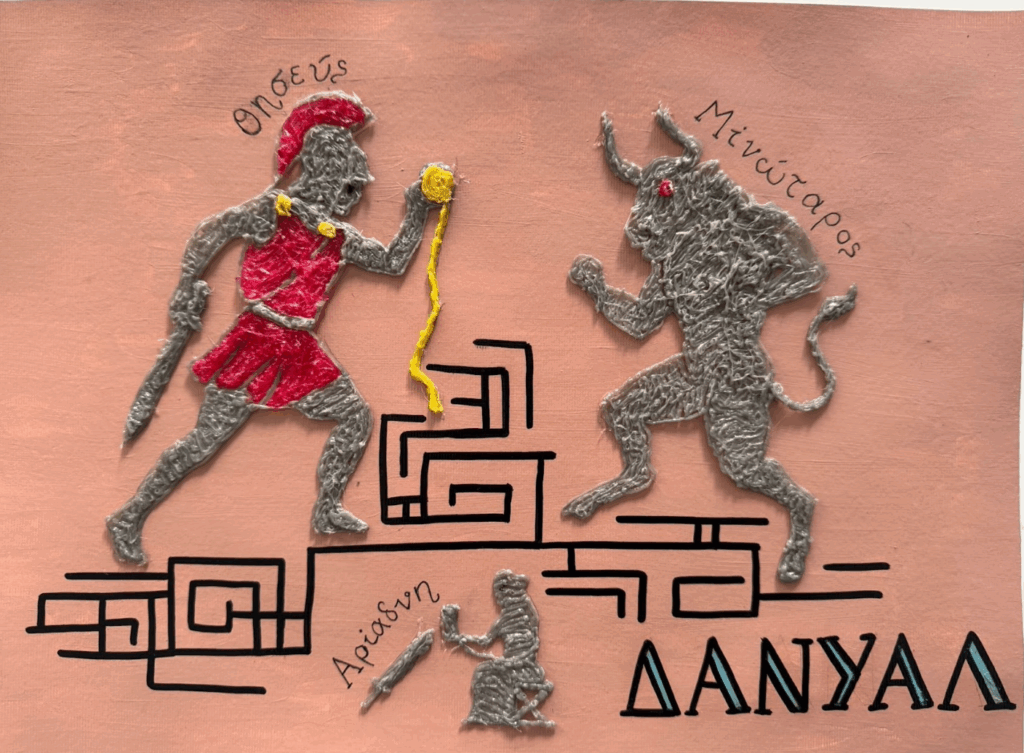
Danyal, Westbourne School, KS2 3rd Prize
It was another record-breaking year in terms of numbers of entries, with the KS3 Creative Writing proving the most popular category. The Art judges commented that they really enjoyed reading the explanations in the ‘Brief Description’ column as it often gave an insight into the thought process of the student involved.
It is always a complete delight to see and read the entries of the students. Their ability to take a myth in a different direction, perhaps by modernising it; to shine a light on an area of a myth that may be slightly more obscure or forgotten; and to breathe new life into the characters of myth never fails to amaze me. The power of these stories continues to resonate down the ages, and the skill and imagination of the students, supported by equally skilful teaching, ensures the competition is a joy to be involved with.
Please find lists of all prizewinners below. Some of this year’s winning work has also been reproduced, where possible due to formatting and space, so please enjoy browsing through them. There is enormous creative talent on display in these, but also in all of the other entries, which, sadly, cannot be included, and which made the judges’ job, as ever, an extremely difficult one.
I very much hope you will all be able to enter again next year; the myths, deadline and guidelines will be available in September. If you have any queries or comments, please do not hesitate to contact me on tildesley20@gmail.com.
KS2
Animation
1st prize – Alex (Wellington College Prep)
2nd prize – Chris (Royal Grammar School Guildford Prep)
3rd prize – Emily (Beechwood Park)
Highly Commended – Harry (The Hall); Iosif (Wellington College Prep)
Art
1st prize – Arjun (The Hall)
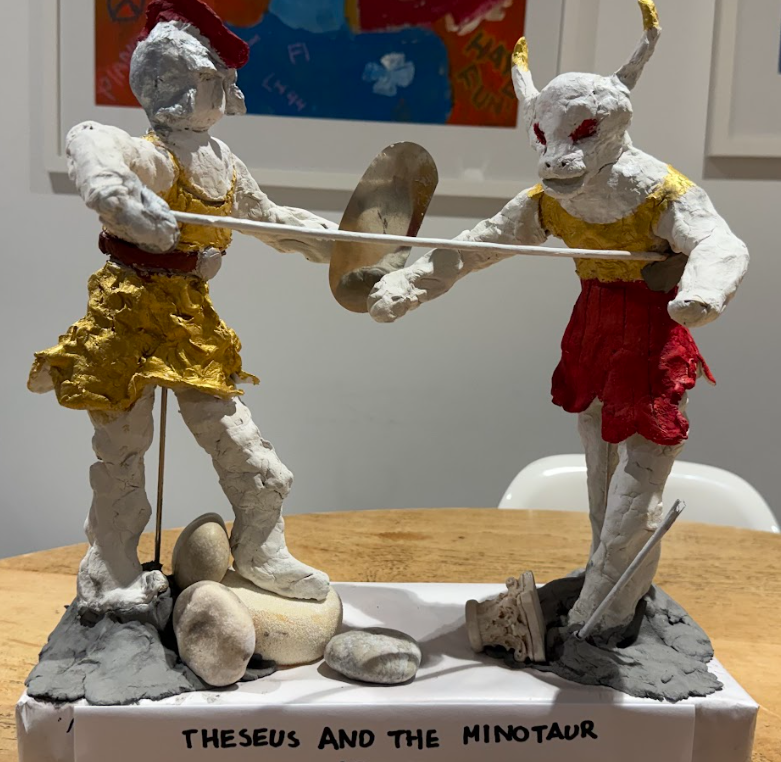
2nd prize – Freddie (Ffynone House School)
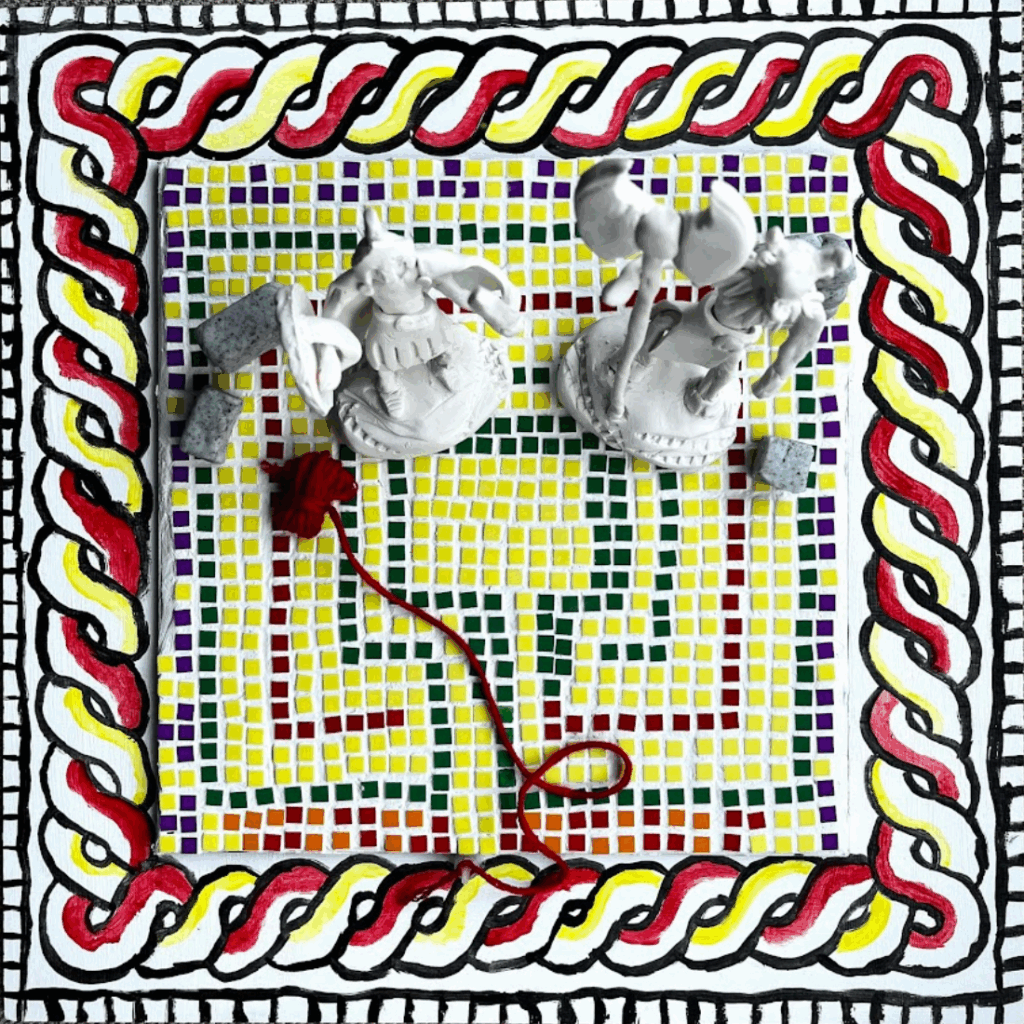
3rd prize – Danyal (Westbourne School)
Highly Commended – Allegra (Beechwood Park School); Eva (Cadogan House); Lucie (Haberdashers’ Girls’ School); Holly (Malvern St James); Dylan (The Manchester Grammar School); Rhys (Trinity School); Hugo (Wellington College Prep School)
Creative Writing
See examples at the bottom of this page!
1st prize – Evie (Malvern St James)
2nd Prize – Teddy (Brockhurst and Marlston House)
3rd Prize – Rayyan (Manchester Grammar School)
Highly Commended – Aleesha (Haberdashers’ Girls’ School); Radhika (Haberdashers’ Girls’ School); Tertius (Independent); Uma (Independent); Sabine (Westbourne); Rafe (Port Regis); Uhvraaj (Twycross House School); Sam (St Paul’s School)
Best set of Entries at KS2
Wellington College Prep School
KS3
Animation
1st prize – Amalia (South Hampstead High School)
2nd prize – Livia (St Alban’s High School for Girls)
3rd prize – Angela (Port Regis)
Art
1st Prize – Emilia (Woodbridge School)
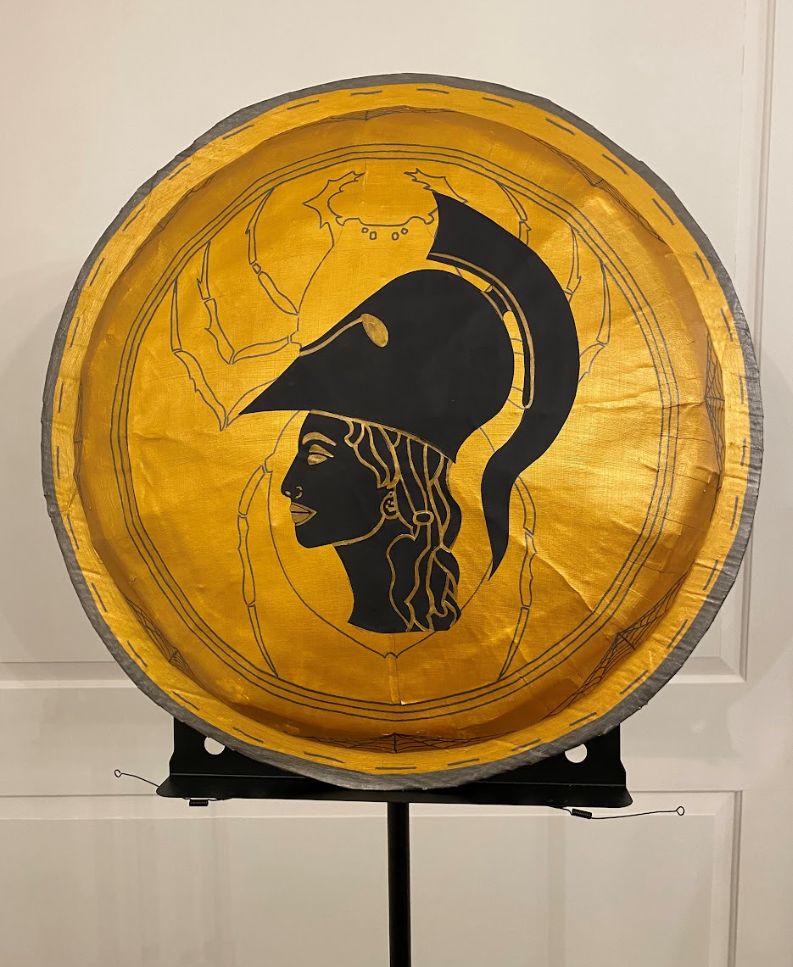
2nd Prize – Freddy (The Hall School)
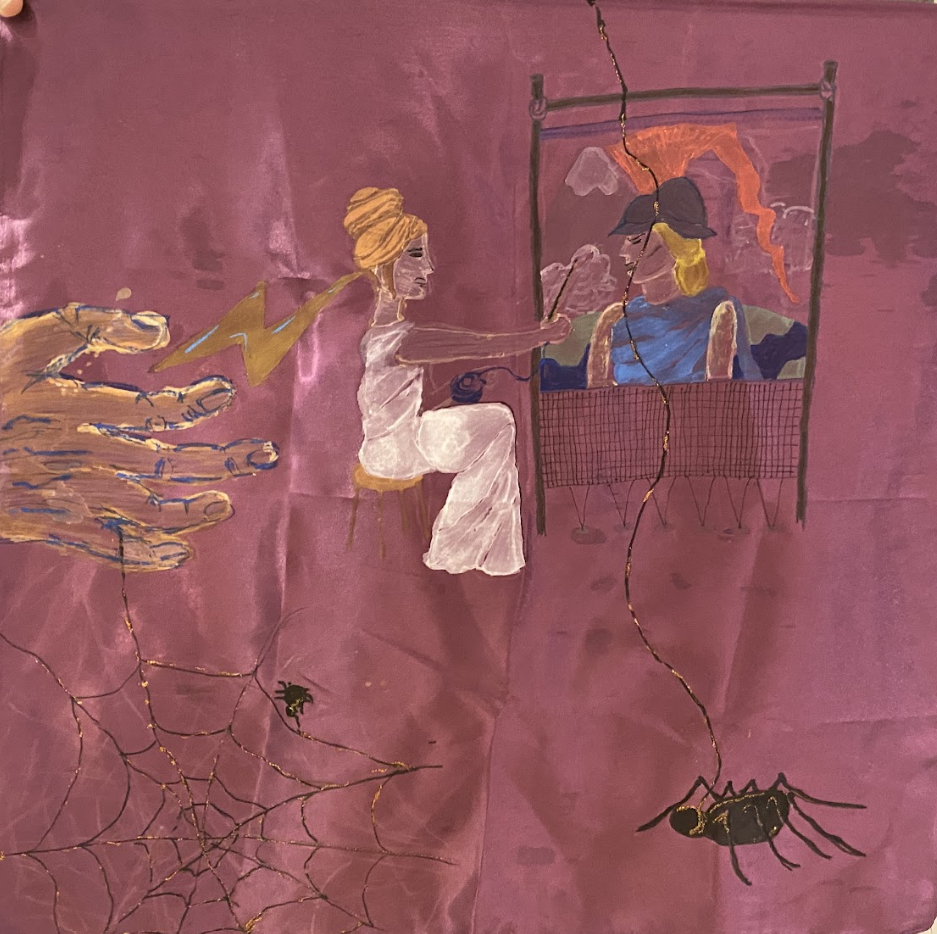
3rd Prize – Stella (Haberdashers’ Girls’ School);
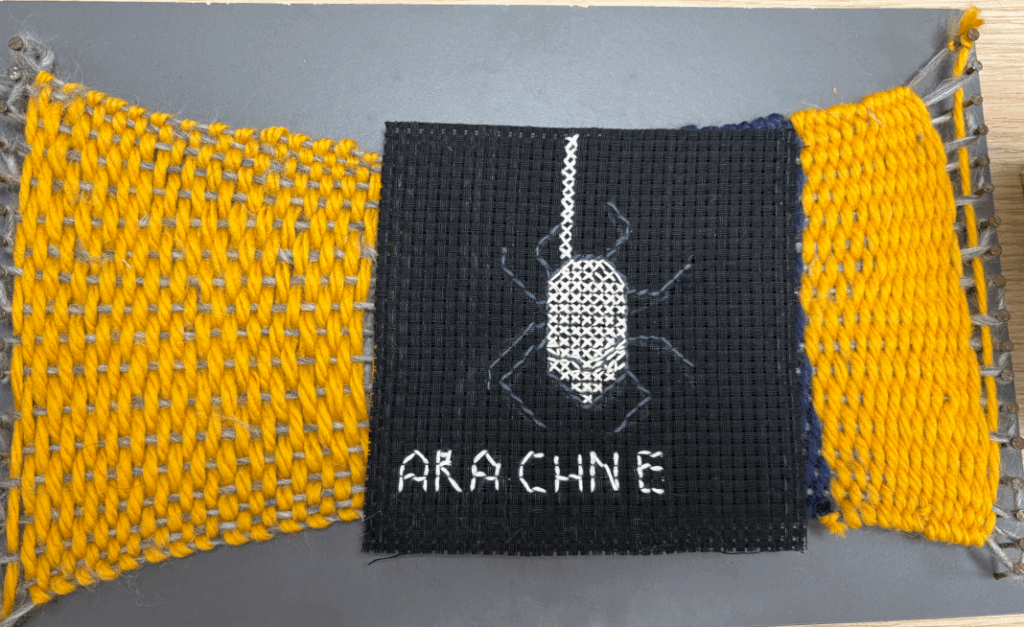
Sinchana (Haberdashers’ Girls’ School);
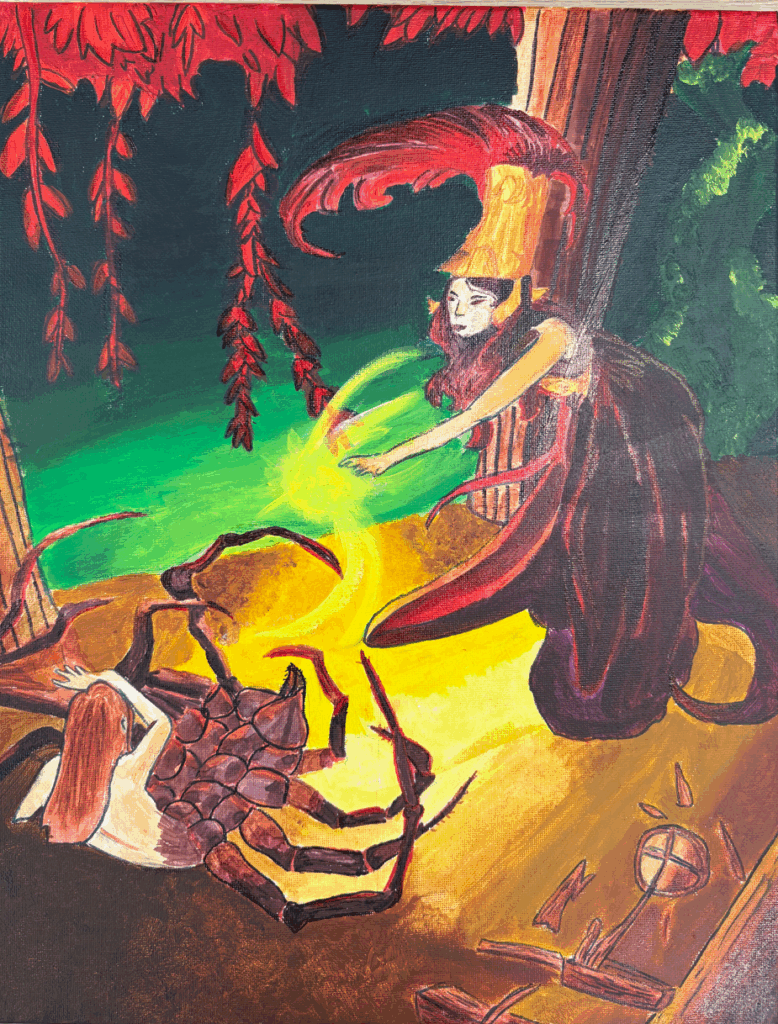
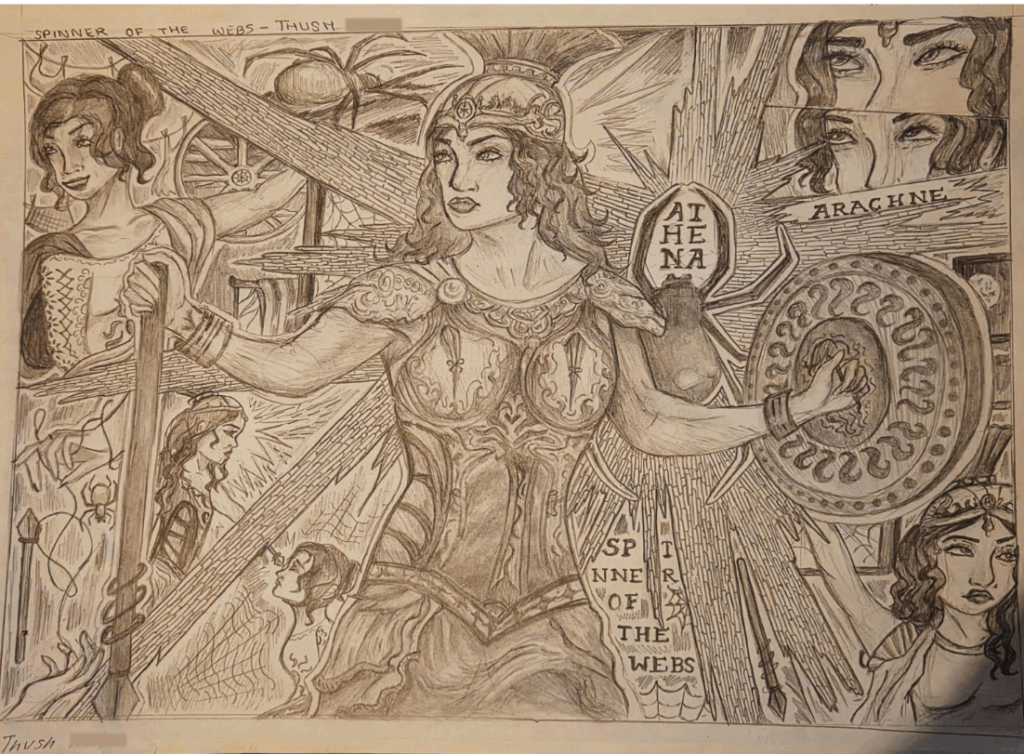
Thush (Nonsuch High School for Girls);
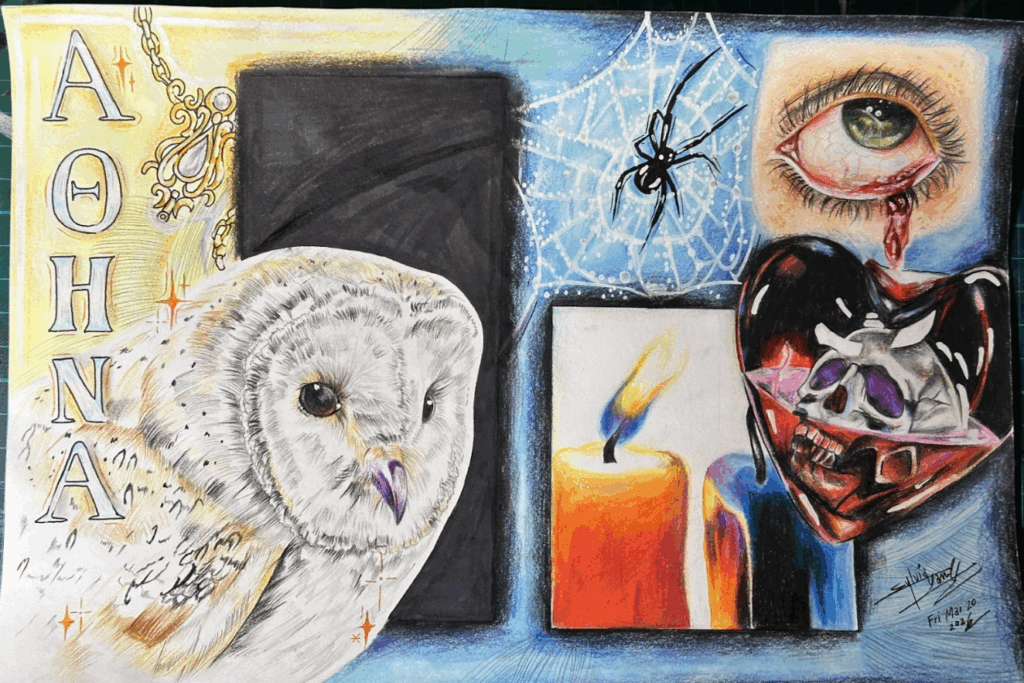
Sylvia (Pinehurst School)
Highly Commended – Ishana (King Edward VI High School); Patrick (King’s School Gloucester); Kilmeny (Kossow Homeschool); Sophie (Townley Grammar School); Amelie (Wellington College Prep); Savannah (Wellington College Prep); Ivana (Hill House School); Kim (South Hampstead High School); Lilly (King’s Ely School); Rayaan (St Paul’s School)
Creative Writing
See examples at the bottom of this page!
1st prize – Isabella (Bristol Grammar School); Sophie T (Godolphin and Latymer); Robert (Wellington College Prep)
2nd prize – Ellie (Berkhamsted); Emily (Godolphin and Latymer)
3rd prize – Iliana (KIngs Ely); Jisoo (Nonsuch High School for Girls); Layne (Independent)
Highly Commended – Milly (Channing); Matthew (Christ Church); Gigi (Godolphin and Latymer); Ella (Godolphin and Latymer); Mishka (Haberdashers’ Girls’ School); Chloe (Kings Ely); Hannah (St Albans High School for Girls); Oscar (The Hall); Zach (The Marlborough Science Academy); Theo (Wellington College Prep School); Zara (Westbourne); Kenan (St Paul’s School)
Best Set of Entries at KS3
Wellington Prep
Key Stage 2 Creative Writing
Adrenaline rushing, Theseus gallantly entered the labyrinth, trying to appear braver than he really was. He reluctantly took a step forwards, he didn’t know what was lying ahead, or what would become of him if he failed. Always a disappointment, Theseus was hungry for a chance to finally prove himself to his father. His heart pounding, Theseus forced himself to carry on, knowing that this was the price he had to pay to become a hero.
Suddenly, the sound of eerie moans echoed throughout the labyrinth. Theseus whirled around, expecting to see a monstrous creature staring at him with a despicable smile, but there was nothing there. Theseus shivered, the aura around him was of vengeance and ire. He darted round the corner, meeting yet another dead end. The long, decrepit, winding paths would haunt his nightmares forever.
The stench of blood filled his nostrils, and he wanted to run back and forget this whole event had ever happened, but he stood his ground. Looking back now, Theseus didn’t know what made him choose this path. Perhaps it was the thought of the children, white-faced, their lives depending on him, or perhaps it was the look of shame he pictured on his father’s face if he chose to be cowardly and run away.
A terrible cry awoke him from his thoughts. He scolded himself; this was the path fate had chosen for him, and he wasn’t going to give up now. He heard it again. It was a cry of pain and despair; it echoed throughout the labyrinth. Shaking all doubt from his mind, Theseus walked on.
His head was dizzy with fear. He had heard the legends of the beast within the maze but only knew as much as everyone else. The children were given as a sacrifice to the monster, to prevent the monster from causing destruction to the almighty civilizations of Greece. Yet Theseus did not know what to expect. There were rumours that the beast was half man, half bull. Just the thought of it made Theseus shiver in disgust.
Theseus jumped. He had seen an ominous shadow looming over him. He smelt the overpowering stench of raw meat as the minotaur breathed down his neck. Sweat trickled down his brow. He turned to see a hairy beast as high as a man and as broad as cart! He bolted round a corner as fast as his legs could carry him. Panting, Theseus gasped a lung full of air, feeling more frightened than he had ever felt in his life.
He leant on the rough walls of the labyrinth that had imprisoned this monstrosity so long. He felt something brush past his arm; it was the minotaur! He felt a sharp claw pierce his sword arm and he felt hot blood trickle down. He saw the minotaur lick his lips and he came to a sudden realisation. Thank the gods, Theseus thought. He took something out of his satchel. He knew what he had to do.
Evie, Malvern St James, 1st Prize
A huge discovery at Knossos Palace has shed new light on one of Greece’s most famous myths. You think you know the story of Theseus and the Minotaur? Think again!
A sinkhole appeared at the ancient Knossos Palace site, which meant they had to call builders in to repair the damage. The builders found some bones when working and called in a team of archaeologists. The archaeologists did a dig and found 28 skeletons in total. The skeletons all had dagger wounds and no teeth marks, which means they were killed by men and not eaten by the Minotaur.
Further digging revealed scraps of papyrus. The archaeologists put them back together and it revealed a letter from the Goddess Athena to the Minotaur. The letter said:
“To the Minotaur, I am going to help you escape. Next time the guards come to kill the Athenians, kill the guards and put on their clothes, then sneak out of the maze. Athena”
This evidence led to further investigations by historians and they found out the truth about the Minotaur. The Minotaur did not eat humans and it was King Minos’ guards that killed the Athenian tributes.
The myth tells us that Poseidon punished King Minos after he refused to sacrifice his best white bull. The punishment was that the Minotaur was born to the King and his wife and the King imprisoned him in a labyrinth beneath the palace. He told everybody that the Minotaur ate humans and forced the Athenians to send 7 young women and 7 young men to be fed to the Minotaur. Athens and Crete were always at war with each other.
Historians now believe that the King knew that the Minotaur was harmless, but locked him away because he was embarrassed, and used the threat of the Minotaur to keep control of his people and the Athenians. The belief is that Theseus discovered the truth from Ariadne, King Minos’ daughter, when she fell in love with Theseus and he begged the Goddess Athena for help. Athena told them to work together to kill the guards and take their clothes as a disguise and sneak out of the Labyrinth. The Minotaur ran away and went to live in a cave on a cliff over the sea so that no one ever bothered him again. Theseus lied to protect the Minotaur and told everybody the story that we’ve always known.
What a crazy ending to the story! The Minotaur in it’s cave and Theseus returning to his hero business!
Teddy, Brockhurst and Marlston House, 2nd Prize
The sun is setting over Crete, casting a deep red glow across the horizon. All I see are the tall, cold stone walls of the Labyrinth. They tower over the city like a grim reminder of despair, their shadows stretching to consume the ground beneath me. Tomorrow, the heavy bronze doors will creak open on rusty hinges, and I will be pushed into the suffocating darkness.
The other thirteen Athenians are crying, their sobs bouncing off the limestone. They grew up hearing stories about the Minotaur, and in their minds, they already picture their own blood on the floor. I must remain strong for them; I am their prince, their only protector. Yet, under my tunic, my hands won’t stop shaking. Is it really a man with the head of a bull, a cruel trick of the gods, or something far worse? A hunger that can never be satisfied, a nightmare made flesh. They say the maze shifts and changes, a twisted creation of Daedalus that no one has ever escaped.
Earlier today, during the procession, King Minos’s daughter, Ariadne, locked eyes with me. Amid the jeering crowds and the cold looks from the Cretan guards, she stood out as a calm presence. She looked at me not with pity, but with an intense, fierce kind of hope. In the chaos of the march, she got close and slipped something into my hand, a simple, heavy ball of red silk thread.
“Unwind it as you go,” she whispered, her voice barely reaching me above the wind. “And you will find your way back to the light.”
I have hidden the thread deep in my tunic, pressed against my heart. It feels small and delicate against the crushing weight of the Great Labyrinth, a tiny spark of color in a world of gray stone. Yet, it is the only thread of fate I have left to hold onto. I think about how the silk will trail behind me like a lifeline, marking my path through the impossible twists of Daedalus’s design.
Tonight, I will try to sleep on this cold floor, but I know I will only dream of the sound of heavy hooves striking stone and the hot, angry breath of a monster lurking in the dark heart of the maze. I can almost hear it now, a low, rumbling growl that shakes the ground.
If the gods are cruel and I do not return, I hope the sea spray carries word back to Athens. I hope my father, King Aegeus, knows I entered the beast’s lair with my head held high. But if Ariadne’s gift is true, I will not be a memory. I will be the one who walked out.
Rayyan, The Manchester Grammar School, 3rd Prize
Key Stage 3 Creative Writing
A fine dusting of shattered glass covered the room I now stood before. Evidently someone – something – had got here before me. I carefully navigated my way through the sharp, shimmering sea of glass and located what I came for. I looked upon it with a bittersweet gaze. Gaze – for I could not smile. I could see the image that I had come to hate, after so many centuries of searching and finding, finding then failing. I smoothly scuttled up the silken surface of this Holy Grail – the amphora – and plunged inside.
Once I took in the rich terracotta tones of the amphora, I began to feel the magic enclosed within this one amphora. This amphora, so loved and awed and treasured and worn. I closed my eyes and heard – felt – the spirits trapped within the warm clay walls of the amphora singing songs of gods and mortals, of the heroic and the punished. This song instilled in me such vibrancy of thought and emotion, the likes of which I hadn’t felt since I could smile and cry. I opened my eyes, and then at last I could open my soul. I could feel the pure power of the myths and memories now coursing through my veins. I could almost feel myself transforming—
The ethereal voices ceased. Was the process complete? Had I transformed? I looked down at my body. Still eight legs. Something was off. Why hadn’t it worked? I burst out of the amphora and returned home. There were times for breaking into museums and trying to reclaim my soul, and times for replanning when things go appallingly wrong.
Once back at my web, I began to think about what could have gone wrong this time. I thought about who I was – Arachne – and what I was now – an immortal spider. I needed to return to my previous incarnation. But to do it without a body? Impossible. So find memories – always the memories. The way I could get to my memories was sucking others’ memories from objects associated with me, or even better yet, objects that belonged to me. The latter was obviously out of the question, since my kingdom had been passed between different empires for eternity. So I had to break into museums. Look for the weaver – always the weaver. Then claim what was mine.
Isabella, Bristol Grammar School, joint 1st Prize
Arachne’s fingers raced across the loom like sparks jumping from a fire. Each thread she drew sang softly, a thin, silver note, and the tapestry beneath her hands glowed with impossible life. She did not look up—not when the sun drifted across the sky, not when the villagers paused in her doorway to marvel, not even when the wind shifted to let in a stranger.
Only when the silence grew too watchful did she speak.
“You can come closer,” she said. “I don’t break.”
The figure stepped forward, hood shadowing her face. But Arachne felt the weight of her gaze, sharp as a needle.
“You weave beautifully,” the stranger murmured, “but beauty is a fragile thing.”
Arachne laughed—light, careless, too loud.
“Fragile? No. My work is strong enough to make gods jealous.”
The stranger’s hood slid back. Grey eyes shone like storm clouds over marble cliffs.
“Jealous?” Athena whispered.
The room seemed to shrink around them.
Arachne swallowed, but pride stiffened her spine. “I only speak the truth.”
“So prove it.”
A loom shimmered into existence, its frame wrought of moonlight and ancient oak. When the two women sat, the world seemed to hold its breath. Threads hissed through the air; colors bloomed like flowers. Hour after hour, they wove.
Athena’s tapestry was a hymn: Olympian glory, divine triumph, the ordered majesty of the heavens. But Arachne’s was a question—no, an accusation.
Her woven scenes showed gods disguised as beasts, pursuing mortals through forests, through shadows, through helpless dreams. Beautiful, yes. But terrible, too. And true.
When Arachne tied off the final knot, she knew she had gone too far. Yet she raised her chin, fierce and trembling.
Athena rose. Her face was unreadable marble.
“You leave me no mercy to give,” she said.
But when she reached out a hand, Arachne flinched—not from the goddess, but from the sudden tug at her back. The air thickened, pulling her inward, folding her small. Bones lightened. Limbs thinned. Her fingers—those brilliant, daring, miraculous fingers—split into delicate legs.
When the transformation ended, Arachne clung to the frame of the loom, tiny as a droplet of midnight.
Athena knelt, eye level with the trembling creature.
“You would not bow,” the goddess whispered, “so I give you what you asked for. You will weave forever. And your work will be yours alone.”
Arachne felt the tremor of her new body—the quickness, the precision. She reached for a thread of dawnlight and pulled. Silk spilled from her like breath.
It was finer than any cloth she had ever made.
Above her, Athena vanished in a swirl of wind, but Arachne scarcely noticed. Already she was spinning: a spiral, a ladder, a map of the sky. A home made of shimmering questions. The villagers, when they dared to look in on the abandoned loom, found only a small spider weaving a web that caught the light.
And some swore—when the breeze was very soft —that they heard laughter from its silver threads.
Soft, defiant, and unbroken.
Sophie, Godolphin and Latymer, joint 1st Prize
Arachne, the Coder
Everybody on the internet knew Arachne. She was no ordinary coder. She was the coder. Especially when it came to pixel art. The kind of pixel art where you can zoom in real close and everything is perfectly placed together. People are always sharing her stuff on TikTok, YouTube. “Has someone taught you how to do this?” “Did you learn from Athena?” Athena, obviously, was the big name when it came to coding. She worked on enormous projects, created incredibly clean code. No bugs, no mistakes, no mess. She was a legend. But Arachne didn’t like that. Every time they said something about Athena, she would respond by saying: “I didn’t learn from her. I’m better than her.” People thought she was joking at first. Soon, her videos went viral. People argued, compared, stating she was “the new generation,” others said “You can’t just say you’re better than Athena.” Soon she received a DM. It was brief. It simply said she should back it up properly. No arguments in comments, no video clips — just a proper competition. The same task, the same conditions, just pixel art. Arachne read it and smirked slightly, before answering almost immediately – accepting it.
They agreed to meet in person at a tech studio. It was a proper environment — proper equipment, proper audience of people who knew what they were doing. Not fans — more like judges. The people weren’t there to create hype; they were there to observe. Athena was already there when Arachne arrived. She wasn’t dramatic; she was confident. The rules were simple: pixel art, coded from scratch. No help, no pre-made assets. Just skill. They decided on a theme: “power.” The two sat down at their separate stations. Same tools, same time constraint.
Athena coded with such a level. There was no hesitation. She was efficient and precise. Arachne did it differently. She was quicker. It did not look as organised, but it was not random either. She relied more on her instincts, making the image as she went along.
Athena showed her work first. Every pixel was exactly where it should be, the colours were perfectly controlled, and the structure held together. The people observing nodded slightly. Then Arachne showed hers. It took longer for people to react, not because it was worse, but because it made them look harder. Technically, there were no clear mistakes. But the message behind it was less straightforward, and that made it harder to judge. Without warning, Arachne’s system froze. At first, she thought it was just a technical issue. She tried to move her cursor—but nothing responded. Then parts of her project started disappearing. Not crashing, not corrupting— removed piece by piece. She immediately panicked as Athena stood by watching. Suddenly, Arachne froze. She was a black, sucked up inside herself disappearing, just leaving her crosshair. Arachne had gone, beyond reality, somewhere deep. Panic arose in the crowd. Athena stood and watched, perhaps she was the one who caused this… or was she?
Robert, Wellington College Prep, joint 1st Prize
Athena vs Arachne – The ultimate weave off:
Narrator: Once, a long time ago, there was a girl named Arachne and she was amazing at …
Pierre: Fighting, saving people, was she brave?
Narrator: Weaving
Pierre: That’s a bit disappointing
Narrator: Anyway, back to Arachne’s downfall
Pierre: Downfall, this is getting interesting now!
Arachne: I’m so good at weaving look at me go
Fans: Wow that’s so amazing!
Arachne: I’m so good at weaving nobody is better than me
Fan: You must thank Athena for your talents
Arachne: Eww, no, this talent is pure Arachne
Fans: Ooh burn!
God: Ooh Athena’s not going to be happy about that
Athena: Did she say that or did she not? Do we really mean what we say or are we simply making ourselves feel better?
God: Oh dear she’s in one of her Philosophical moods
Athena: I must go and check, but make sure she doesn’t know who I am
(Athena transforms herself into an old lady in a poof of glitter)
Pierre: Why doesn’t Athena want Arachne to know who she is
Narrator: Nobody knows Pierre, but don’t question her, she’s a goddess
Pierre: Sorry
Athena: You should thank Athena for your slightly mediocre talent at weaving
Arachne: Um no, I don’t need some goddess’s praise
Athena: (transforms into a god) Uh, rude
Arachne: Oopsies
Athena: You think you are so good at weaving, but you can never beat me.
Arachne: Oh yeah?
Athena: Yeah, I challenge you to a weave off
Pierre: This is getting tense
Narrator: Arachne weaved a tapestry which depicted the gods as stupid and childish, while Athena weaved a tapestry showing the might and glory of the gods
Arachne: Ha, maybe for the first time in your foolish and shallow life this tapestry shows who you really are
Athena: No, this is who we are you impertinent toad, glorious and superior compared to you mortals
Arachne: Well, that doesn’t matter because, me the only one who has dared to challenge a god has quite obviously won
Athena: No, you haven’t
Arachne: Yes I have
Athena: No, you haven’t
Narrator: After a long time arguing, Athena concluded it was a draw
Pierre: What!
Narrator: She decided they had equal talent at weaving, Pierre, keep up. However, she got a little bit sensitive over what Arachne had woven.
(Athena punches Arachne)
Athena: This is what you get for being disrespectful, mortal
Arachne: let me go!
(Arachne runs away)
Arachne: I guess pride comes before a fall, but I don’t want to see anyone ever again, my honour is destroyed
(Arachne goes to hang herself but Athena appears, her anger turning into sadness)
Athena: Foolish girl, I will not let you perish but you will be destined to weave forever more
(Arachne is turned into a spider)
Pierre: Plot twist!
Narrator: And so the moral of the story is …
Pierre: Don’t challenge immortal beings to weaving competitions?
Narrator: No! Pride comes before a fall, Pierre
END OF PLAY
Ellie, Berkhamsted, joint 2nd Prize
From morning skies Athena sweeps
a stoney look and a calm grace
A cause of fear where judgment sleeps
Nothing softens her stern face
Victor of the previous day
But what is fair, and who can say?
Arachne’s tapestry hangs by the fire
The true winner, alive with breath
A mortal girl driven by desire
Portrayed the gods in war and death
Emotion in every threaded row
Could have been friends but now they are foe
She challenged perfection thread by thread
Through a gift that came from her soul
For her daring she’s been condemned
Endless success has taken its toll
Now weaving will become her cage
An unseen bargain, wage for rage
Athena pauses, she’s already won
A goddess forged of mind and might
She glows and drowns in the rays of Sun
But shadows haunt her in the night
Is justice what she truly sought?
Or punishment to quickly wrought?
Their eyes both meet in a deep gaze
A hunger for a perfect art
She mirrors her younger days
A caring, giving and kind heart
Does triumph taste broken and rue?
When all that’s left is what you knew?
As she turns up to the sky
A single tear escapes her eye
A tremor shakes, she gives a sigh
The drop not small enough to hide
Heavy with words and truths unspoken
In winning something else was broken
For gods break they do not mend
The hurt they cause they can’t comprehend
Arachne in her thread-bound form
Still weaves endlessly past dawn
A story which shows talent’s cost
To pride reclaimed and mercy lost
Emily, Godolphin and Latymer, joint 2nd Prize
I hear a muffled shout from down below in Athens, as my head rests on my owl-feather pillow. The shouts get louder and louder. Honestly, those humans are only alive to us when they offer… competition, so to speak. When they think they’re… better. They’re not, of course. I mean, who is? Us Olympians are the strongest, bravest, and gloriously immortal. The shouts echo through my tapestry lined chambers. That is it. I have had enough of this. I gaze down above my city, named after me, Athena, the best goddess ever. I see her: the tradesman’s daughter. Arachne. I turn off the peaceful music playing from my brother’s golden lute, and listen carefully to her ever irritating voice.
‘ I am the most skilled weaver in the world,’ she boasts, calling across my city square. ‘People on land, or gods up in Olympus, I am the best!’
Right. Who does this mortal think she is? She wanders here with her shiny silk and marches into my city claiming she is better than me! Time to pay this intruder a visit…
I grab a bottle of nectar and take a quick swig. Gorgeous. I rise through my ceiling, out of Olympus, above the dense carpet of clouds, looking over the city of Athens. I plummet down, swooping like an eagle, before gracefully landing in the midst of Arachne’s undeserving crowd. She doesn’t know what she has got herself into; she’s going down.
I grab a few battered clothes from the Athenian market stalls, and throw a handful of coins onto each stall table, the shouts of shopkeepers following after me. I step forward, and in a split second, I am disguised as an elderly woman. As Arachne continues her foolish work, I start to yell at her.
‘How dare you put yourself above the holy Gods of Olympus! Show some respect!’ I say, in front of her unworthy audience. She barely looks up, smirking. With a swish of my borrowed cloak, I transform. In my rage, I challenge her to a competition. She, in obvious surprise, accepts. If she insists she is better than the gods, I will beat her. As we start to weave, more and more people gather to watch me. I weave using the clouds from above; I weave using grass from below. My masterpiece depicts the power of the Olympians and how much more talented they are. Hers shows…us. But as cruel beings who mistreat mortals. Somehow, it’s… well… better than mine! Impossible! A surge of jealousy fills my body. With my powerful anger, I transform her into a hideous beast. Eight eyes, eight legs, with only one spool of thread. My face hardens. I have given her a reminder of her treachery. A reminder of her past. A reminder of how the gods will always win.
Ilina, King’s Ely, joint 3rd Prize
THE STAIN
We watched Arachne, mesmerised by her slender fingers coaxing the shuttle through the weave with a grace more divine than mortal. Her hands were stained a deep, permanent purple—the mark of a life spent dyeing wool she would never be rich enough to wear.
In Lydia, the Banausoi were banished to the city’s edge, ensuring respectable citizens never inhaled the putrid stench that fuelled their luxury. Yet, travellers journeyed from across Greece to witness her alchemy, the way she transformed raw strands into windows to another world.
‘A gift from the grey eyed one!’ they would proclaim, but Arachne would retort: ‘She never carded my wool; never dirtied her marble hands. I alone toiled for every thread of perfection.” She voiced the bitter thoughts of those with loom-leant spines and her mother’s ghostly gasps, like dry reeds in the wind. This city would happily wear our last breaths, yet we were unclean.
Secretly, Arachne’s talent was a scandal of excellence in which we labourers delighted. While the noble Arrephoroi ceremoniously wove stiff patterns for the sacred Peplos, Arachne wove the pulsing, messy reality of humankind. Most dangerously, she embodied the truth; she did not need the priests to bless her hands, nor did she need the gods to ‘gift’ her with what she had bled to earn.
When the old woman revealed herself as Athene, we fell on the floor, subservient in our cowardice. Athene swept across the floor, nodding at our prostrate forms. The disdain in her eyes mirrored those of the temple officials who collected our cloth with pinched noses at the city walls. Arachne saw her for what she was. Just as the city officials lived off the broken lungs of dyers, the gods lived off the smoke of human sacrifice and desperate cries of worship.
Wordlessly, the goddess set up her golden loom, glowing next to Arachne’s modest one. Scenes were conjured to life under deft hands, scenes of hubris, of mortals and men’s misdeeds.
In the end, the results were painfully clear. Though Athene’s technique was mathematically perfect, Arachne’s work possessed a soul the goddess could not replicate. Athene examined the tapestry, but envy cannot criticise the perfect.
Suddenly, with whip-like swiftness, she tore the work into pieces, striking its creator with the shuttle. She roared with the anger of a storm, and her eyes flashed.
Arachne scuttled away, casting a makeshift rope of wool over the rafters. We watched as Arachne wound the colourful strands around her neck, a deadly necklace of injustice. Not one of
us dared intervene – this was her choice, a defiance for her alone. She refused to be another moral example, a tragic victim of their rigged game. No, she would be a permanent stain.
But Athene, striding across the room, seized her, and –under the pretence of pity- sprinkled the herbs of witchcraft over her victim. We watched Arachne shrink. Her once nimble hands turned into eight unrecognisable legs.
Athene turned on her heel, satisfied.
Jisoo, Nonsuch High School for Girls, joint 3rd prize
In a humble home in the small village of Hypaépa, a girl of low birth gained a high reputation—not from her father, but solely from her art of weaving. The loom sang beneath her fingers, each string as taut as a lyre. Her tapestries were not mere cloth but living stories: silken rivers flowing across the weave, forests rustling in the warp, figures so vivid they seemed ready to step from the fabric into the world. Nymphs gathered to watch, gaping and praising, whispering that her talent rivalled the owl-eyed goddess, Athena.
This could not remain unanswered. Athena descended from the shining heights, her beauty disguised in mortal fragility. She came upon the bold mortal and challenged her to a contest of threads. Arachne’s hubris would not let her refuse. Athena laughed as she shed her disguise, and as dawn lit the sky crimson, the contest began. Two looms stood like rival altars, waiting for offerings of pride.
Threads clashed like warriors, colours striking against colours in silent battle. The looms became an arena, beauty the weapon and strings the combatants. Athena wove tales of the immortal ones—enemies defeated, titles claimed, gods enthroned in majesty. She depicted Olympus in glory, but mortals too: the queen of the Pygmies defeated by Hera, Antígone transformed into a white-feathered stork, and Cínyras weeping for his lost daughters. Her tapestry sang of triumph over humankind.
Arachne’s cloth told another story. Beneath her brilliance lay shadows of grief—tales of gods who toyed with mortals as pawns. Threads heavy with sorrow depicted Európa, taken by Zeus in the guise of a bull, and the many women he wronged: Astérië, Leda, Antíope, Alcména, Dánaë. It showed the hideous affairs of Poseidon, and Apollo, and Dionysus, and Cronus. Her tapestry stretched across the grass yet still could not contain all the pain the gods had sown.
Arachne looked upon her work and was satisfied; not even the goddess of envy could criticise her work. But hubris is a dangerous dye; it stains deeper than crimson, richer than Tyrian purple. Athena tore the tapestry, unravelled its truths, and struck Arachne down. The girl wept as her body shrank, limbs multiplied and fingers became legs that
could spin forever. The nymphs no longer gathered, but the world itself became her audience—dew catching on her webs like jewels, wind strumming her threads into music.
And so, Arachne endures, suspended between curse and gift, weaving stories in silence. Every spider’s web is her tapestry, a reminder that art can defy gods, that truth can be spun from the smallest hands, and that pride, though punished, may yet leave behind beauty that cannot be destroyed.
Layne, Independent Entry, joint 3rd Prize