Head of Classics, Saziye Ahmet, recaps the Classics Celebration Day held at Kelmscott Secondary School, which was proudly sponsored by the CA.
The Classics Department at Kelmscott Secondary School held its first annual Classics Celebration Day on Tuesday, 27th February 2024. This state school, situated in the heart of East London, has seen exciting growth, with more students choosing to study Classics at both GCSE and A-Level. This event, supported by the generous financial backing of the Classical Association, provided a fantastic opportunity to celebrate the richness of Classics and its far-reaching benefits. The aim was to highlight the broad range of opportunities that studying Classics can offer, particularly as students considered their GCSE and A-Level options.
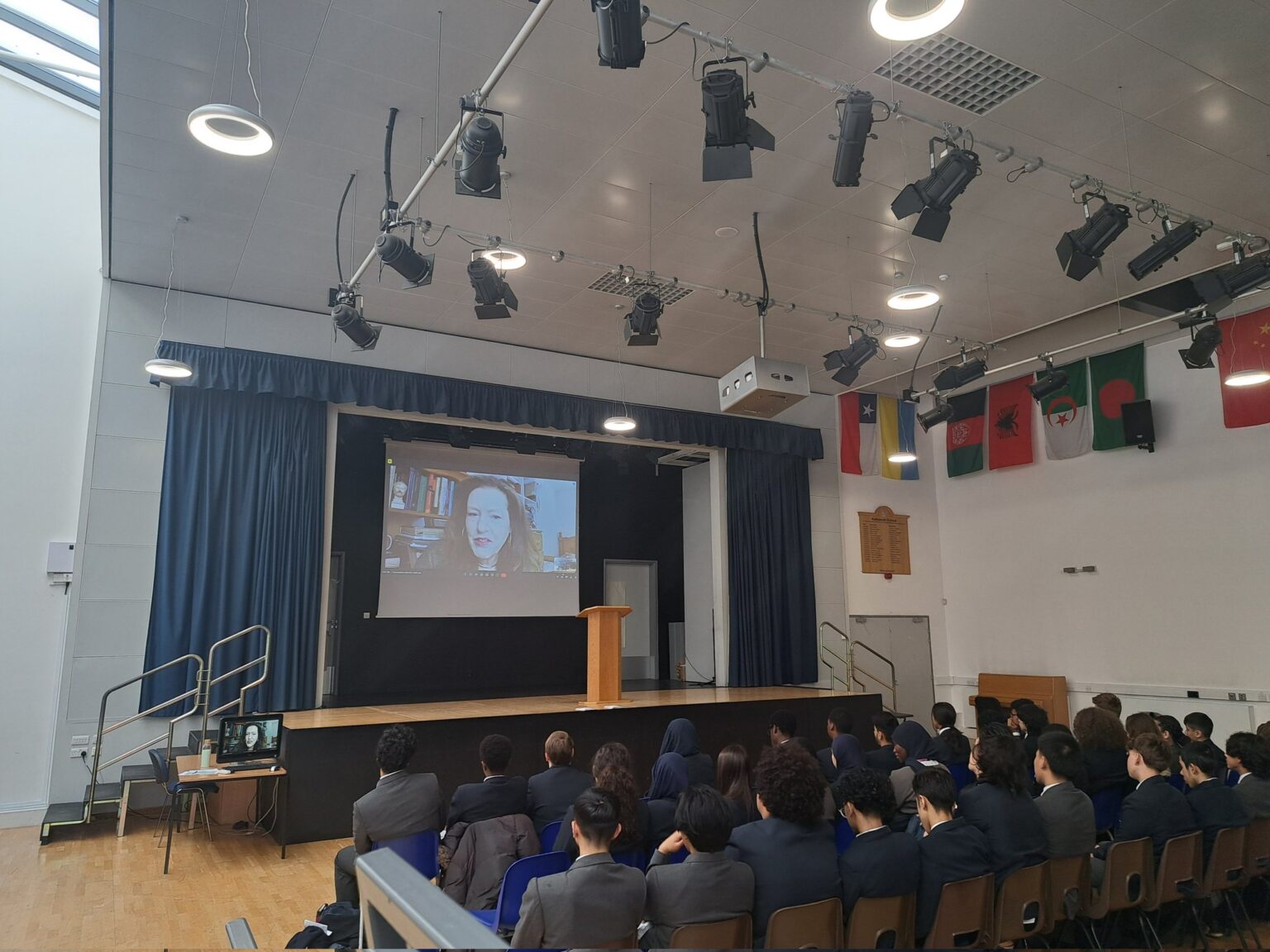
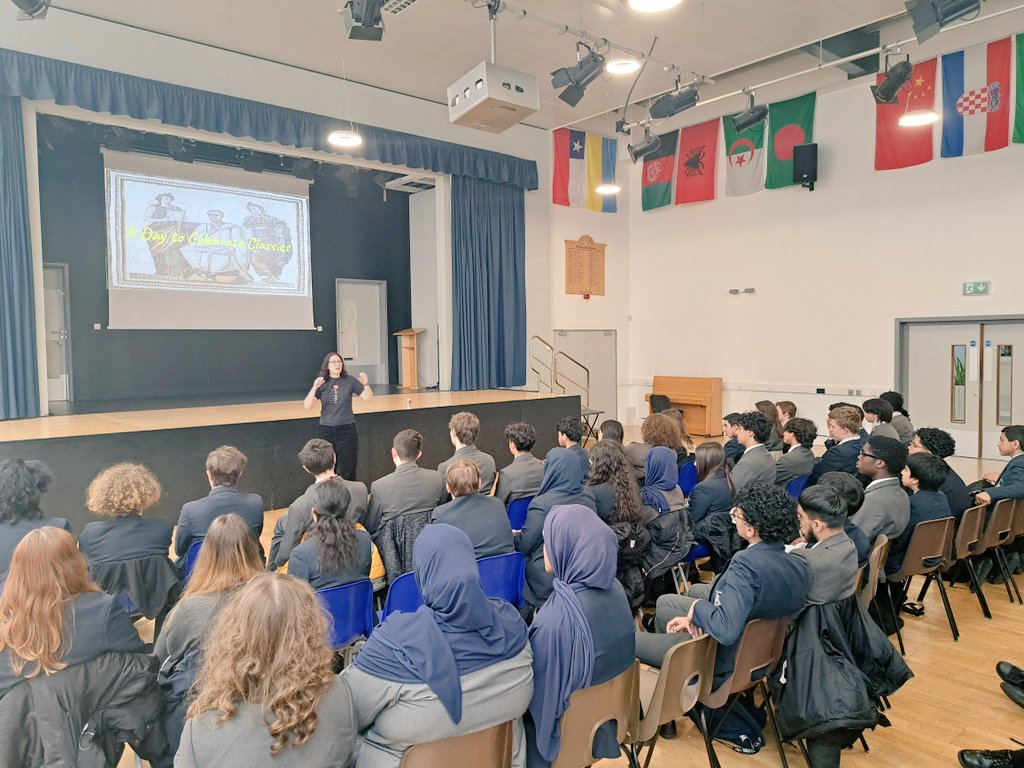
The day featured a series of fascinating talks from a diverse group of university lecturers and authors, including Prof. Edith Hall (above, delivering online) and Caroline Lawrence (below). These speakers not only shared their own experiences of studying Classics at university but also gave insight into the many different careers and life paths that a Classics degree can lead to. Through their inspiring talks, students were able to envisage how studying Classics could open doors to various fields, from academia and archaeology to creative writing and public speaking, showing them the wide-ranging potential of a Classical education.
In addition to the talks, Saziye also hosted interactive workshops, including ‘Out of Chaos’ and ‘Gladiatrix,’ which brought the ancient Greek and Roman worlds vividly to life for selected KS3 Greek and Latin students. These hands-on sessions allowed students to immerse themselves in the historical and cultural aspects of the ancient world in an engaging and exciting way.
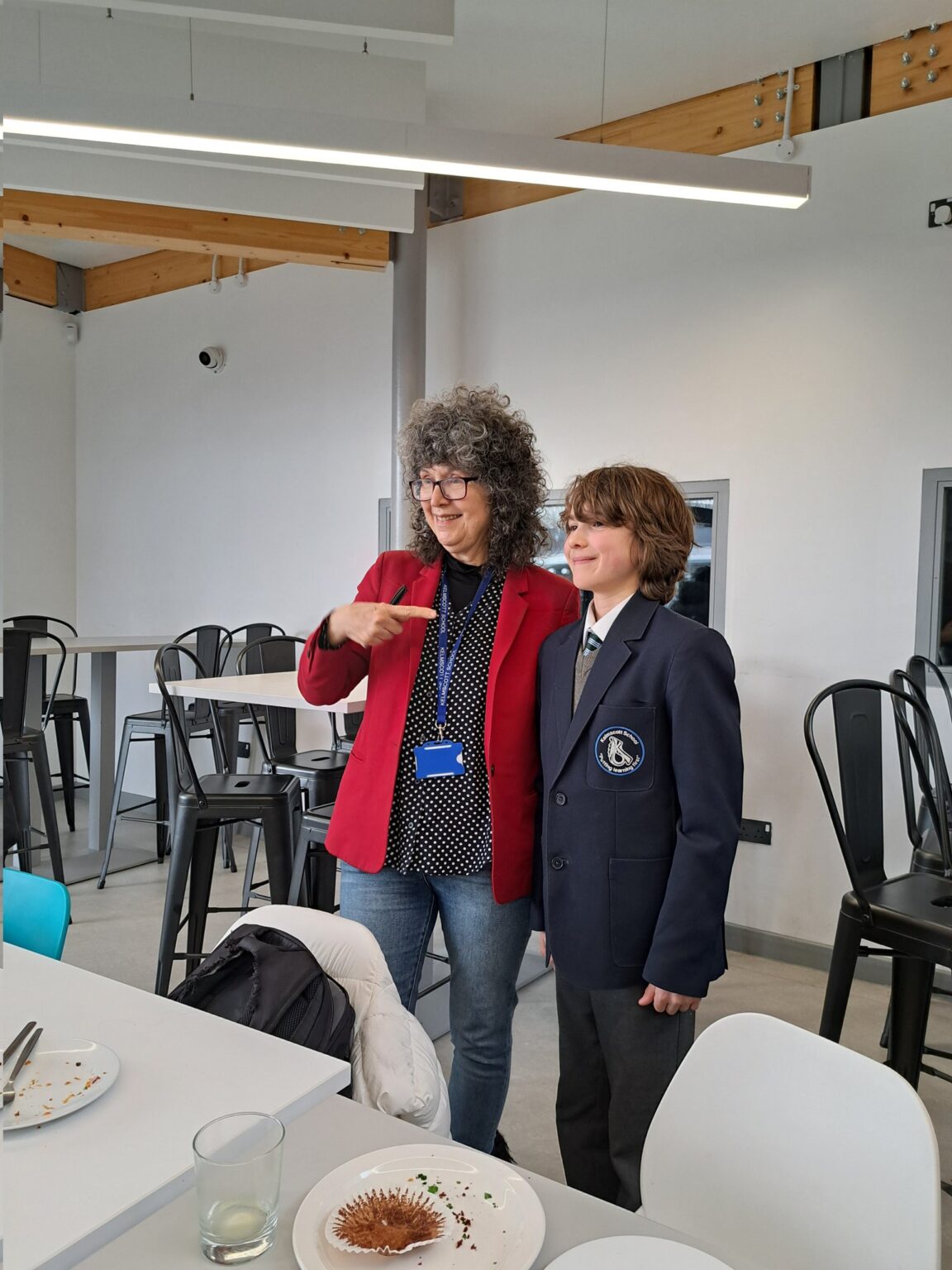
This celebration of Classics would not have been possible without the financial support of the Classical Association, whose contribution we greatly appreciate. We also extend heartfelt thanks to our incredible speakers and actors: Professor Edith Hall, Professor Dame Mary Beard, Dr. Mai Musie, Jasmine Elmer, Dr. Alexandra Hardwick, Caroline Lawrence, Paul O’Mahony, Alisa Vanlint, and our dear friend, Natalie Haynes (pictured above), for making the day truly memorable.
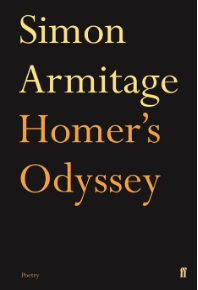
Early January in a busy, urban school and I’m lucky enough to be watching lessons centred around Simon Armitage’s earthy translation of The Odyssey. Having worked closely with our trust-wide English team, this is the first time I’m seeing it in action. Sitting at home writing these units on evenings and weekends, I was hopeful that we’d hit on something special, which would enliven our Year 7 curriculum, inspire pupils and persuade teachers to take a chance on our new curriculum. I’m about to find out if I was right.
My colleague and I enter the classroom as quietly as possible. A year 7 ‘nurture’ set – a group of children who normally struggle to access mainstream lessons – are entirely focused on their teacher as she stands at the front of the classroom, arms aloft, a copy of The Odyssey clutched in her hand. As we arrive, the class are reading the play together, deciding how key lines should be delivered and changing their tone or pace or volume to match. There’s a brief discussion about Odysseus’ character and how Penelope might speak as a Queen to a beggar in the palace and then the class chorus together, bringing this oldest of stories to life again. Penelope is cautious, Odysseus charming and eloquent and we are all caught in the spell of Homer’s tale.
For anyone working in education in the past fifteen years, the slogans ‘Ambition’ and ‘Challenge’ will be all too familiar. But enacting that ambition and challenge in our day-to-day teaching and curriculum is very difficult, and it’s all too easy to fall into the mistaken belief that ‘Challenge’ means ‘boring’ or lecturing students or making it too hard for some.
We began writing our new English curriculum in 2021 under the leadership of David Didau, our senior lead for English. Our primary goal was to enable our schools – all of which are in predominantly deprived areas – to deliver a curriculum in English that truly was ambitious and challenging, but which was also interesting and exciting and alive. One of the best ways we have found to do this has been through Classical texts.
Our KS3 curriculum starts with Year 7 exploring our ‘Ancient Origins’, as we saw, taking in Gilgamesh and The Odyssey, as well as myths such as Icarus and Daedalus, Theseus and the Minotaur, and Persephone. We deliberately start students on familiar territory; with Ancient Civilisations in the KS2 History curriculum, as well as the abiding popularity of Greek myths in children’s literature, many of them have at least heard of the myths and associated worlds. From here we can explore the bigger and more abstract concepts such as heroism, story structure and imagery as very much an introduction to English at ‘big school’.
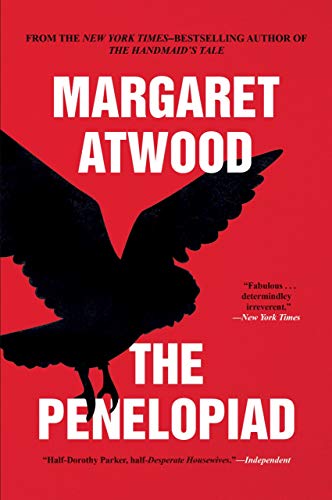
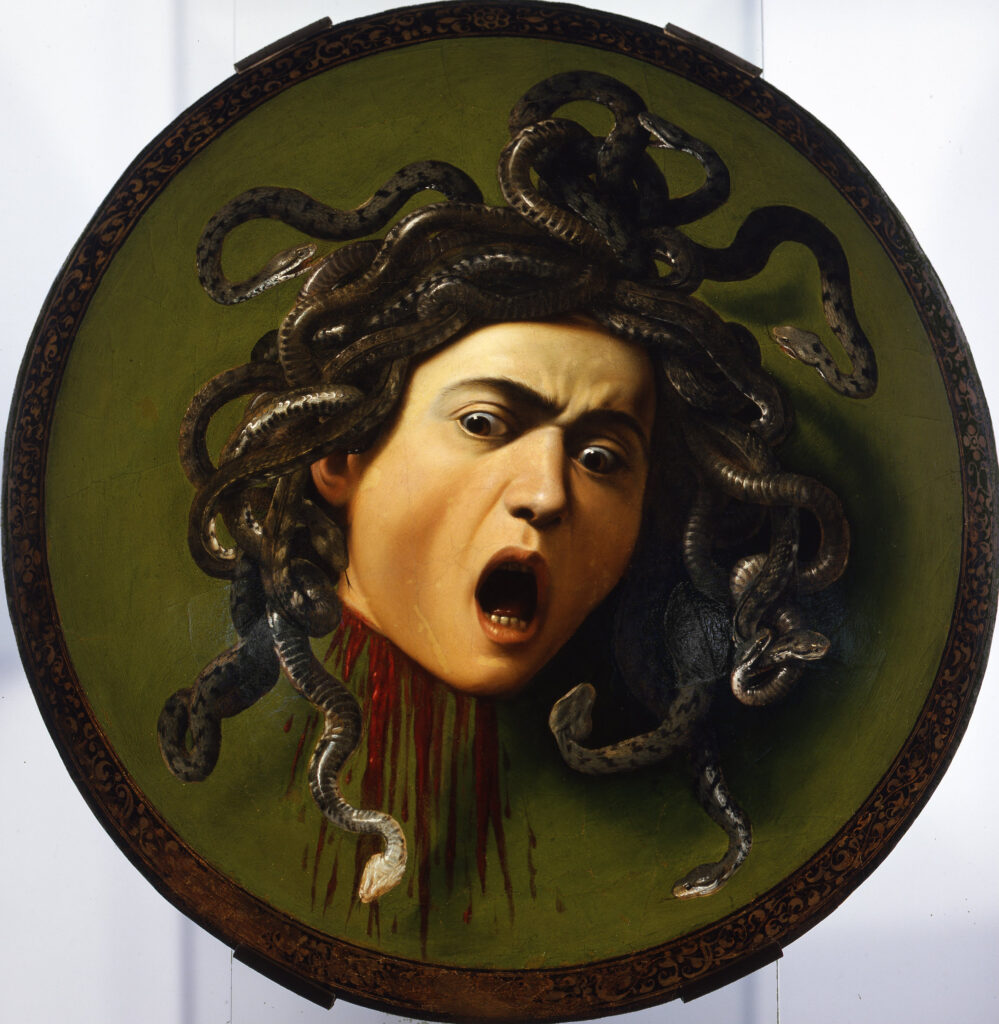
But it’s not just the heavyweight standards. We also interweave more modern, disruptive readings of Classical stories – we include extracts from Atwood’s the Penelopiad, as well as Duffy’s infamous ‘Medusa’ poem. We want students to see that these ancient texts are not just dry, dusty tomes but living, vibrant stories that writers are still rewriting and rethinking. It’s also a fantastic opportunity for students to try out their own creative writing and ability to think critically about these ‘foundational’ stories. A key aspect of our curriculum is to empower students as critics and scholars, to question and discuss how women are treated, how Penelope might have felt, whether we think Odysseus really is an admirable man. Modern discussions and reimaginings of classical stories are an excellent way to do exactly this.
Ancient stories and writers are the backbone of our curriculum: we study Cicero and Rhetoric in Year 7, Aristophanes in Year 8, Sophocles and Sappho in Year 9. If we seek to induct students into the conversation of English Literature, then we must include the texts that inform that conversation. Indeed, our feedback from teachers has been how useful and enlightening they have found it, deepening their own appreciation of Shakespeare, and illuminating references, characters, and ideas for their students.
And this isn’t just about enjoyment and engagement, although those are certainly important. A cornerstone of our approach has been disciplinary equity – giving all students the equitable opportunity to study ‘great’ literary texts, because so often so many groups of students are erased from our discipline, whether English or Classical Civilisation, before they even have the chance to get started.
Before writing this curriculum, I’d never studied classical texts in detail. I’m a medievalist by training so the stories and characters are very familiar, but it was like listening to conversations through a wall – I got the gist, but I missed the nuance. With the incredibly generous bursary from the Classical Association to study an A level in Classical Civilisation, via the National Extension College, the door to this vibrant, fascinating world has finally opened for me. For those of us who teach, it is imperative that we open that door for our students so that they too can add their voices, opinions and words to the great debate.

Recent Comments