Christopher Nolan’s film brings Homer’s Odyssey to the big screen and, entirely shot on IMAX, it is truly epic in its proportions and, paradoxically, in its naturalism. We’re travelling back through the annals of our Omnibus magazine to highlight some of the articles on this beloved text which can help you to delve deeper into the myth – but beware spoilers!
Like Father, Like Son
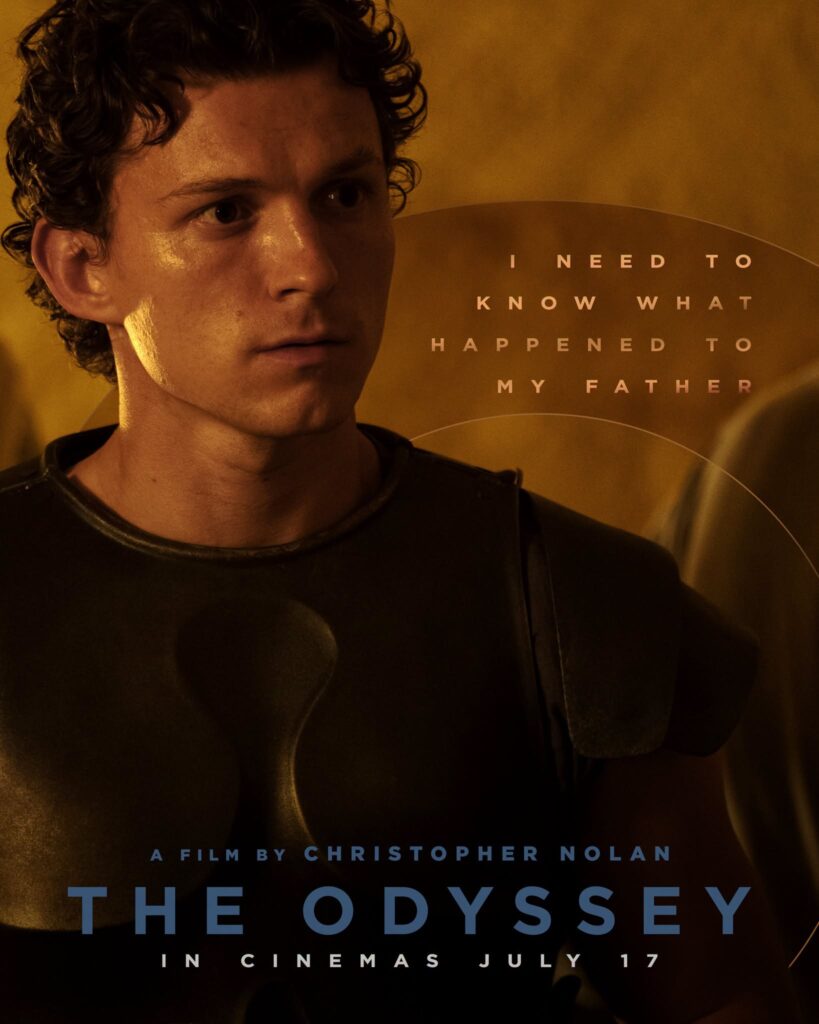
Will the movie begin, like the ancient poem, with Telemachus (Tom Holland), seeking word of his long-lost Dad, invisibly guided by Athene (Zendaya) and plotted against by the suitors (led by Robert Pattinson’s Antinous)?
‘Telemachus spends the first books of the
Dr Emma Greensmith, Omnibus 78
poem (often called the Telemachy, so
focused is the narrative on him) on a vast
quest in search of news of his father…
As Telemachus comes of age
throughout the epic, Odysseus does not
just celebrate the man that his son has, in
his absence, become. Instead he curtails
his heroic advancement, revealing, in
subtle ways, how uncomfortable and
threatened is he by Telemachus’ role in the
household, and in the epic.”
Was Homer composing a new story?
“Homer” is the name we have assigned to the individual poet (traditionally depicted as a blind male bard) or group of writers that, in the eighth century BCE, wrote down the story of Odysseus, which evolved from versions originally sung by itinerant performers across the ancient Mediterranean. So how much of what Homer did was new? Dr Henry Spelman writes in Omnibus 81:
“Almost every line of the Odyssey bears witness to the poem’s prehistory. Homer had at his disposal an extensive arsenal
of traditional language well adapted to his theme. He had inherited, for example, an impressive variety of ways to refer to his protagonist. Odysseus may be ‘of many wiles’ or ‘of many devices’ or ‘godlike’ or ‘divine’ or ‘born from Zeus’ and more: different epithets like these have different metrical shapes which allow them to be slotted into the structure of the dactylic hexameter at different points. Homer did not invent these epithets or devise the coherent system into which they fit; rather, such traditional epic language had gradually developed over time as bard after bard sang of Odysseus on countless occasions.
When Homer’s audiences heard these well-worn words again applied to the hero, it summoned to mind the version of Odysseus which they knew from other poems which had relied on the same traditional language. We naturally think of Homer as the first Greek poet, but in fact he stood near the end of a long process.”The Odyssey is meta: poets and singers appear throughout the story, providing Homer with the chance to add plot elements or flashbacks, highlight heroic behaviour and provoke emotional reactions from the characters, underscore the importance of bards within contemporary society, and even give himself a break! The original bards would have been singing very long sequences from memory, so adding in a famous digression or an easy-to-remember section of poetry, is like when a long running sitcom needs a mid-season filler and airs a flashback compilation episode.
Read more about the Homeric question and ancient bards in Dr Sam Gartland’s article from Omnibus 70:
Was Odysseus a well-known hero to the ancient Greeks?
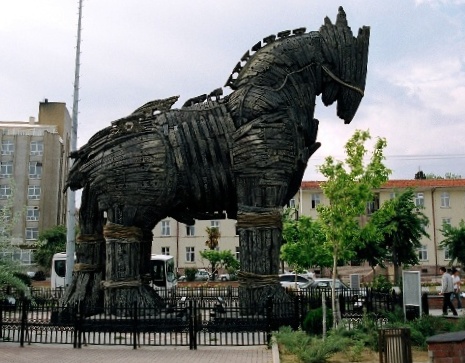
Dr Spelman continues: “When bards sing in the Odyssey, they sing of what is already familiar. Thus the Muse inspired Demodocus on Scheria to perform ‘a path of song whose fame then reached the wide heaven’. Later Odysseus asks Demodocus for a different story which he knows and which he correctly assumes that the bard knows, too: ‘sing of the wooden horse which Epeius made with Athena and which noble Odysseus led as a trick into the Trojans’ citadel’. Demodocus takes up this prompt and starts to recount the famous deed which earned Odysseus his traditional epic designation as ‘sacker of cities’.”
So, Odysseus, even though he is in disguise and remains unrecognised for much of the poem/film, is a famous epic hero in his own right, not just to a modern audience, and his kleos (‘fame’ or ‘glory’) preceded him.
Why does Odysseus visit the Underworld?
James Darnton, winner of the 2016 Gladstone Memorial Essay Prize, reflected on the literary tradition of the hero’s journey to meet the spirits of the dead in the Odyssey and in Virgil’s Aeneid. Read the whole piece here in Omnibus 73. If you’d like to learn more about the Aeneid, you might enjoy our podcast series on Virgil’s Latin epic.
The knowledge that
James Darnton, Omnibus 73
Odysseus receives in the Underworld is
unsettling. Yes, he ‘may reach Ithaca yet
despite many hardships’, but at what cost?
Is the Odyssey funny, or too serious for a laugh?
Though humour is a key component of the
Dr Angus Bowie, Omnibus 58
Odyssey, it is mostly the bad guys who do
the laughing.
Penelope’s Plot: Weaving and Female Power

To read our latest articles on the Odyssey, including Emily Hauser’s brilliant “Penelope’s plot: weaving and female power in the Odyssey” from Omnibus 90, become a CA member to access our online editions.