Julie Mills
I have had a passion for ancient history all my life, but my career took me into the army and police and when I retired from the police in 2017 I was finally able to indulge my passion. I successfully studied for and passed an A Level in Classical Art and Architecture and put this to good use when I attended a summer school and archaeological dig at Thouria in the Greek Peloponnese. I followed this up by visits to Delphi, Thermopylae, Mycenae, Olympia and Athens, and, subsequently, Santorini, Rome, Pompeii and Herculaneum. I am passionate about everything concerned with Greece and Rome of the Classical Period and have been a member of the Classical Association for 5 years.
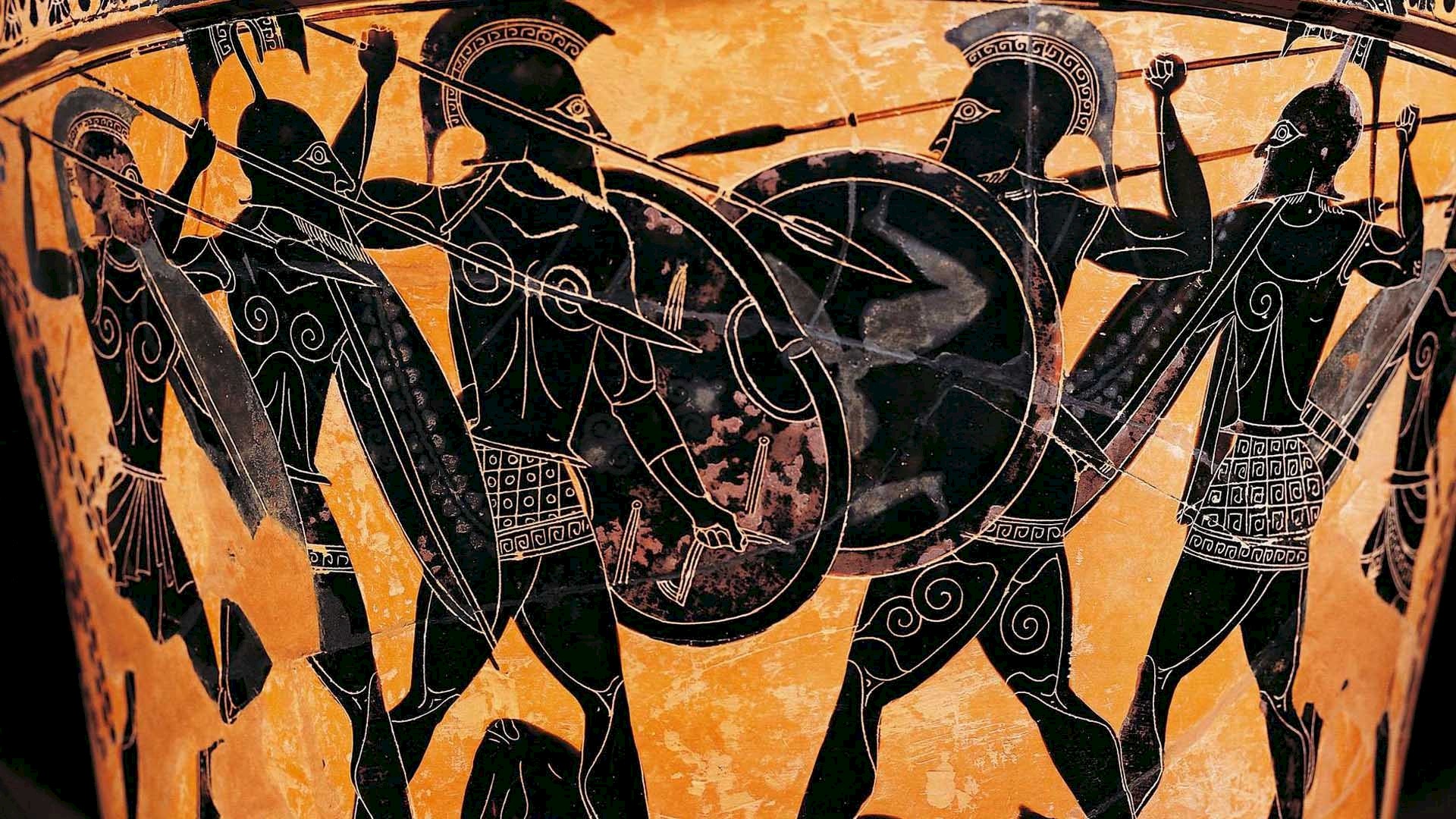
I am particularly interested in hoplite warfare, weapons and tactics, as I was intrigued and rather amused to discover that, in my past life as a Public Order officer in the police, I had used tactics and equipment that had really changed very little in 2,500 years! I am currently (sporadically!) attempting to teach myself ancient Greek, having been inspired by inscriptions seen on my travels, and an excellent epigraphy lesson during the 2019 Summer School.
Mireya González Rodriguez
Classics, and the humanities in general, placed in opposition to the sciences, continue to be relegated for their alleged lack of use or value compared to other knowledge, the ‘useful’ knowledge, of higher social esteem. As a Classics teacher I often have to engage with the ‘why study Classics’ question, a recurring one during Open Days and Parents’ Evenings. Follow-up questions usually lead to conversations about careers and financial gain. As soon as we begin to shine a light into how this multifaceted discipline covers linguistics, literature, art, philosophy, history, archaeology, and politics, we see how Classics instantly catches the imagination of students, parents, and colleagues.
The Classical Association enables my students to embrace the opportunity they have been given to enter the 2000-year-old conversation with the Greeks, the Romans and their scholarship. My Sixth Form students are avid readers of the Omnibus magazine and keen participants in the Association’s annual student competitions, such as the Gladstone Memorial Prize and Sam Hood Translation Prize, marked in their calendars as opportunities to explore ideas, topics and translations beyond the curriculum. My students also benefit from the Association’s annual conference as it sparks my own imagination and curiosity and then becomes the topic of conversations about everything there is still to learn, know, and understand about the ancient world.
The Classical Association is pivotal in widening participation and outreach by funding summer schools, workshops, and outreach events. Its consistently reassuring support to the numerous regional branches allows for engagement with historical and archaeological societies and local communities. It thus enables regional branches to reach out to those who might not have had access to Classics in school and are notwithstanding curious about the discipline’s capacity to reignite interest in the ancient past to safeguard a better future.
One of the challenges of Classics education today is to overcome the reductionist view of education as mere training, a transmission of data or techniques, and promote, instead, wisdom and critical thinking.
Advocating for the study of Classics and how it can teach us to understand the essence of our shared humanity encourage a broader perspective on human diversity, promoting tolerance and empathy. The community of academics, teachers, and students that is the Classical Association shines a light on the value and use of Classics against all odds.
Paul Andrews
I am 75. I‘ve studied Latin since the age of 9 and did Greek for O level, but only really began to appreciate Classical literature after I left school and found Classics a welcome relief from my dry law degree course.
I love the history, the stories, the philosophy and the drama. Aristophanes and Virgil are my favourites. Since retiring, I’ve made a point of watching the Cambridge Greek plays. My latest project is to read the four Plautus plays with published Cambridge university commentaries.
Classics are an inspiration, an escape and a relaxation. I relax when I have to concentrate, and reading classical texts usually wipes away anything I’m worrying about at the time and helps me to address them in a relaxed and calm way. When the world seems to be collapsing about my ears, and it seems to be futile to do anything about it, I think of Virgil’s Aeneas and the Greeks at Salamis. Then I feel much better about addressing the seeming impossible and finding a solution. Reading classical authors also helps one to appreciate traditional and conventional values and their use as criteria for evaluating modern progressive ideas.
Professionally, as a lawyer and public official (and later an elected councillor), Classics has helped with written work, particularly with writing letters and memos and newspaper articles, where a little bit of Classical-type rhetoric often helps to grab the readers’ attention. One problem with modern public administration is an obsession with big and bold ideas without evaluating details, which often leads to entirely predictable unintentional consequences. I’ve found the discipline of translating difficult texts has given me the skill both to look behind the “big picture” and to see the wood for the trees. This is also very important when considering legal contentious matters.
Lorna Lee (@unexpectedlearningjourney)
The CA has been a huge part of my journey studying classics remotely. I’m not able to engage with the subjects I love in person; so having access to the LSA branch’s amazing lectures online, posting mini summaries of these on Instagram, discussing the ancient world and its reception at the virtual book club, and being able to tune into the CA Conference opens up my world and (together with my Instagram account and Open University degree) expands the possibilities for what I can achieve bedbound with a chronic illness.
David Scourfield
If memories could be turned into film clips, my set of images from more than a quarter of a century of attending CA conferences could easily generate a three-minute promo, a two-hour video, and a shelf-full of outtakes best left suppressed! Friendships made in the bar, stimulating panels (including the best presented paper I have ever heard anywhere—by a PhD student—and no, I’m not going to disclose), receptions and dinners, Presidential addresses witty or provocative, would all be there, typically rooted in a strong sense of place as the conference moved through splendid venues in England, Scotland, and Wales.
But Classics these days is naturally a global affair, and one major theme of the CA Council’s work during the six years when I had the privilege of being its Chair was furthering internationalisation. In line with this focus we were able to offer significant charitable support to projects outside as well as within the UK, in particular to the University of Canterbury, New Zealand, following the damage done to its wonderful Logie Collection of ancient artefacts by the earthquake of 2010, and to our sister association in the US, the Society of Classical Studies, in connection with its Gateway Campaign, which sought, among other aims, to put the funding of the American Office of L’Année philologique (on which we all rely so heavily) on a surer footing.
In that context I found myself in January 2008 in an assembly room in a large hotel in Chicago, making an announcement at a plenary session of what was then still the APA. Conticuere omnes … I began to read the text of the formal CA statement. And then, on reaching the words ‘two hundred thousand US dollars’—an enormous cheer. It felt a bit like the announcement of the result of the first sub-four-minute mile—a luminous CA moment, preserved not only in my memory but in the name ‘The Classical Association Fund for Bibliography’ bestowed by the SCS in a warm gesture of appreciation.
Cora Beth Fraser (Hadrian’s Wall CA)
Sharon Marshall
My involvement with the CA began in earnest in 2012 when I was charged with co-organising the CA conference in Exeter. There’s no getting away from the fact that organising the conference involved an awful lot of hard work and I remain full of admiration for those who take on the task. In those days, we handled all the bookings ourselves rather than through a conference services team, and processing each one gave me such a clear sense of the CA’s reach and the breadth of its membership, from PhD students to established academics and members of the general public. It was my first real glimpse of the value of the CA’s work in bringing these constituents together.
The programme reflected Exeter’s research strengths and specialisms, with panels on the Impact of Greek Culture and Roman Ethics and Exemplarity, and a fitting keynote by Chris Carey on athletic success in classical Greece as we eagerly looked ahead to the London Olympics. We were keen for the conference to reflect the best of everything that Devon has to offer, so we kicked things off with a cream team (cream first, of course), included optional excursions to Castle Drogo and Knightshayes Court, and held the conference dinner in the University’s Great Hall where the Exeter University Jazz Orchestra kept us dancing until the small hours. My only regret, perhaps, was the decision to extend the run of our student Classics Society’s production of Euripides’ Bacchae especially for conference delegates. I say regret because a colleague and I had been cajoled into joining the chorus of maenads and waiting for the curtain to go up to perform in front of the great and good of Classics was an experience I won’t forget in a hurry, however hard I might try!
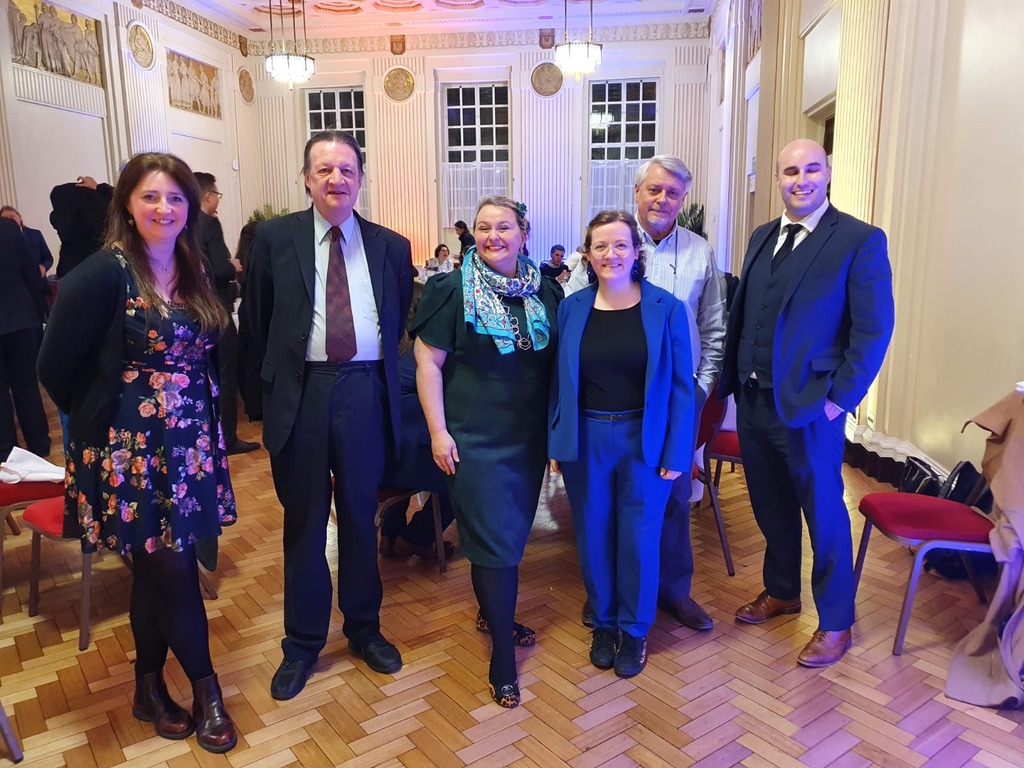
When we welcomed delegates to Exeter it was a time of real transition for the department as many of our most senior colleagues were nearing retirement. Our own Peter Wiseman opened the conference with an address on the history of the department that ended with him quoting the closing words of Rosemary Sutcliff’s novel The Eagle of the Ninth: “They are rebuilding Isca Dumnoniorum.” The success of the conference played a large part, I think, in that rebuilding of Classics and Ancient History at Exeter, encouraging us to embrace our future with confidence and pride.
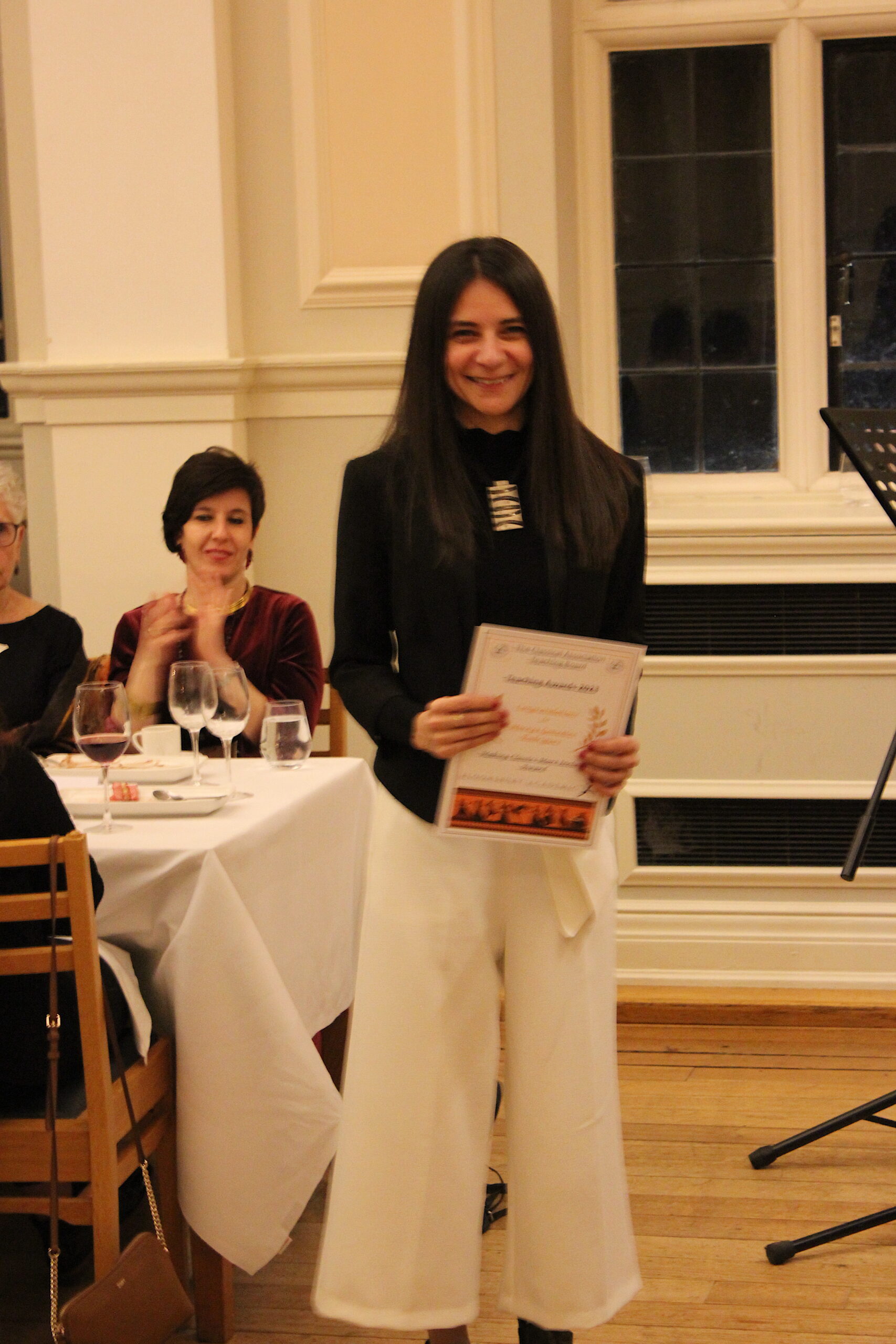
The conference remains a highlight of my calendar and, as Chair of CATB, it’s been a source of pride to see the CA’s commitment to education reflected in the strong pedagogical thread running through each conference and the ever-increasing number of teacher attendees. I’m a firm believer that teachers are heroic, and it was a delight to be able to inaugurate the annual CA Teaching Awards in 2021 to recognise the exceptional dedication and ingenuity of the Classics teaching community. Playing this small role in the CA’s 120-year history has been a real privilege and I look forward to seeing the CA’s support for the teaching of Classics flourish when I hand on to my successor.
What does Classics and/or the CA mean to you? Tell us on social media, or submit your story in written (or voice note) form to Katrina at engagement@classicalassociation.org