Our response to Cambridge OCR’s recent decision to withdrawal AS Latin and Greek qualifications
Author: Gráinne Cassidy
The Classical Association, together with the Hellenic and Roman Societies, is urgently engaging with Cambridge OCR following the sudden announcement of the withdrawal of AS Level Latin and Classical Greek. We have been contacted by many of you regarding this decision. We know this has caused significant concern across the teaching community, and we want to reassure colleagues that, as the Subject Association for the discipline, we are advocating on your behalf.
We have written formally to Cambridge OCR, to express our concerns that this withdrawal:
– Makes access to Latin and Greek even harder, particularly for state-sector schools and regions already facing limited provision. – Risks damaging the pipeline into A Level Latin and Greek, where the AS provides an essential entry point for many students. – Creates uncertainty about the long‑term security of A Level qualifications in classical languages.
The AS qualification is vital for many centres. We know many of you plan AS courses over two years. At the very least, we are pushing for the final assessment window to be extended to 2028 to protect students intending to begin the AS this coming September – but we are also urging Cambridge OCR to reconsider this decision entirely.
We will shortly be meeting with Cambridge OCR to ensure the concerns of the teaching community are heard and addressed.
The Classical Association remains committed to safeguarding the future of classical language education, and will continue to advocate strongly on your behalf.
On Tuesday 27th January, three of us PGCE students from the University of Cambridge attended the Classical Association’s CPD Day for Ancient History teachers. While we have varying experiences of teaching and learning Ancient History, we all found it to be a highly valuable day that will contribute to our teaching practices across all Classical subjects. Below is a bit about us and our individual and combined reflections on the day.
Olivia: Having never studied Ancient History at school, I came to the subject as a complete newcomer this year. I have had the joy of teaching not only about my beloved Romans (I have always been a Latinist through-and-through) but also expanding my subject knowledge into teaching the Persia module at GCSE. Given my relative inexperience with the structure of the course and some of its content, I was particularly keen to attend talks on the non-Roman modules. Our PGCE cohort had also recently had a talk from Caroline Bristow on trauma-informed teaching, so I was keen to build on this through another seminar on teaching difficult topics in the Ancient History classroom.
Rory: In spite of my school offering Ancient History as a GCSE option and Latin quickly becoming my favourite subject, at age 14 I wasn’t sufficiently convinced to study the Ancient World outside of Rome and instead opted for Modern History. Seven years and a Classics degree later, having spent the majority of my undergrad picking modules specifically focused on Ancient History, I was intrigued by the CPD day’s opportunity to look into what the course involved and what experienced teachers had to say about it.
Diya: As someone who had the joy of both doing the Ancient History GCSE and having the opportunity to teach some Ancient History lessons at my first placement, I was eager to continue developing my understanding of this wonderful subject and how to teach it. The content of the course is exciting and engaging – despite my current placement school not offering Ancient History, I have already had so much fun bringing the content into other settings such as the school’s Classics Club. However, Ancient History has its own challenges for students and teachers alike and so I was eager to understand how best to maintain levels of excitement and challenge for students whilst also preparing them for their final exams.
Olivia: My first talk was given by Milan Jayasuriya, who explored how Ancient History topics can be introduced at Key Stage 3 through student-led creative projects. The seminar focused on providing structure, since the quality of student work tends to be variable without clear guidance. Suggestions included providing planning sheets and workshops on research skills (particularly for Year 7), modelling expected outcomes and treating the project as a formal assessment. As I will be working with a Year 9 class on a similar creative project later this year, this seminar provided me with some great ideas for providing the right balance of freedom and support to ensure students produce their best work while priming them with the skills they need for Ancient History GCSE.
Rory & Diya: The first talk we went to was given by Tara Atkinson (Diya’s old school teacher!) and looked at supporting SEND and low-attaining students with the dense source and knowledge requirements as well as the often technical exam-technique of GCSE Ancient History. There was very clearly a consensus from teachers about key areas of difficulty including learning names of people and places; knowing how to structure answers effectively; and knowing which information to bring into essay questions. The talk then moved to solutions including providing glossaries for set texts, reading passages out loud to improve pronunciation, consistently reminding students of topics covered to keep information fresh and modelling exam responses. The collaborative structure was incredibly useful for comparing experiences with other teachers and appreciating what the real challenges are for students, and many of the suggestions given were applicable to other Classical subjects and our pedagogy more broadly.
Tara Atkinson, Diya Dasgupta, Olivia Page & Rory Savage
Olivia: The next seminar was delivered by Alex Ziegler and focused on teaching the Alexander the Great module, although the strategies discussed were applicable to all modules. The seminar discussed common student pitfalls and offered practical class exercises and revision tools to address these, including a ‘Who Said What’ chart and annotating visual sources in workbooks. Moreover, the suggestions for additional events to cover beyond the curriculum were particularly useful, and suggestions for points of comparison and discussion were provided to help us, as teachers, better enrich our students’ curriculum.
Rory: My second seminar of the day was delivered by Danny Pucknell and focused on using additional material sources for the Roman Period Study at A level to better communicate the historical narratives involved. A series of prescribed sources of Roman emperors were shown alongside images not featured in the specification, with differences between them providing springboards for discussion about changing attitudes and motivations. The use of images of emperors at different points in their life, whether Tiberius’ shift towards a Julio-Claudian appearance or Nero’s move away from one, was a powerful visual aid to understand events and to support students’ critical thinking. I felt that these additional sources could help students to strengthen their own approaches and insights and are again something I will integrate into my teaching in general.
Diya: The second seminar I attended was delivered by Dave Midgley on Adaptive Teaching, something which has been a major focus of our PGCE course. There’s a variety of ways to practice adaptive teaching in-class and I was eager to learn how it can be put into practice specifically for ancient history. In the seminar, I found the tiered topic recall exercise really useful. The activity involved students generating ideas about a particular source, topic, or event in tiers: one for specific information about the topic, one for wider topic areas it fits into, and one for the even wider picture it fits into. The key is in the delivery: a teacher, with the aid of a visualiser, can fill out the tiers together with their students. This seems like a great way to actively respond and adapt to the ideas of students and model the process at the same time. Plus, a task like this can be integrated into a variety of lessons, whether for revising content or considering points for longer essays.
Next, we all came back together to listen to a talk from Dr Campbell Price on interpreting Egyptian art. The talk was full of thought-provoking statements about the origins of Egyptologists’ scholarly interests in Egypt and about the imposition of modern standards of artistic excellence on the ancient world. Yet, the part that most stuck with us was Dr Price’s discussion of Hatshepsut. We have all seen how girls’ faces light up when they learn about powerful, famous women from history, so we are so keen to share the information from this lecture with our students. We also thought there was an interesting point of discussion to be had regarding the shift from female- to male-coded representations of Hatshepsut during her reign, and what it can tell us about perceptions of the fixity of gender in Ancient Egypt. This is again a topic our students are very interested in, so we found this to be a deeply insightful and valuable discussion.
All three of us then elected to join the discussion on teaching traumatic events in Ancient History led by Sarah Rix-Drummond and Gill Haugvik as our final seminar. This session was a combination of suggestions for wider pedagogical practice, direction towards key resources, and focusing on how to teach the rape of Lucretia. We then ended with a discussion where all attendees were encouraged to share how they manage difficult topics in the classroom – very valuable for us as developing teachers.
Finally, at the end of the day, we were invited to consult on redeveloping the GCSE period studies and question types in light of upcoming examination reforms. While we, with our relatively little experience, did not end up contributing to the discussion all that much, it was pleasing to know that teachers are being consulted on these changes, and the discussions were helpful in highlighting the questions and areas where students struggle the most, so that we can adapt our future teaching practice to focus on developing these key skills.
Overall, this was a great day for all of us! It provided a fascinating insight into the subject, communicating lots of useful advice, much of which will hopefully improve our teaching practice even beyond Ancient History. The day was also a lovely opportunity to meet lots of fantastic teachers (including some from our old schools) with a really motivating love of the subject and of education. Thank you so much to Harrow for hosting, catering and showing us all around your beautiful campus and to the Classical Association for providing such an insightful and well-organized day. We look forward to next year!
The Cambridge Greek Academy is not just about learning ancient Greek: it is about building friendships, sharing experiences and discovering the joy of learning about the ancient world together. On Saturday 29th November, Charlotte Cane, MP for Ely and East Cambridgeshire, came to visit to see for herself what the students were up to and to learn from the organisers how the Academy worked. Charlotte used to be an archaeologist and has a keen interest in the ancient world. She is an officer of the Classics All-Party Parliamentary Group and is a supporter of Classics Education.
Learning Together, All Year Round
Every week, students log on for 90 minutes of online lessons, with 35 sessions spread across the year. It’s a big commitment, but one that brings real rewards. Every half term, the Academy gathers in person at the Faculty of Classics in Cambridge. These half-term meetups in autumn and spring (plus a final summer celebration after exams) are a chance to connect face-to-face and learn in new ways.
Greek Academy Intermediates: in the background, Alice Case (CfA), Charlotte Cane (MP), Angela Nash (CfA) and Grace Conolly Linden
The activities are as varied as they are fun: scavenger hunts in the Fizwilliam Museum, potsherd painting, storytelling, timed translation practice and mini lectures. The most recent session featured Dr. Rosanna Omitowoju speaking on Homer’s Odyssey. Greek drama has also taken centre stage, with drama workshops supported by Actors of Dionysus.
Dr Rosanna Omitowoju (Cambridge University) gives a talk on Homer’s Odyssey
Making Classics Accessible
The Academy gets most of its funding from the charity Classics for All (here represented by Alice Case, its Programme Director and a keen Hellenist) and also from the Plato Foundation, the Cambridge Schools Classics Project and the Classics Faculty at Cambridge itself. For the students, the Academy is free to attend. Teachers are funded, the Faculty provides space, and students can focus on learning without worrying about cost.
Growing Numbers, Lasting Bonds
This year, 58 new students signed up, with 48 sticking with the programme. This is a strong turnout given the demands of the course, especially when students have so many other commitments. Altogether, 82 learners are part of the Academy in 2025. While some naturally drop off, many stay and form lasting friendships across age groups and regions.
One group, affectionately known as the Batrakhoi, has been with the Academy for five years. They come from East Anglia and even London, helping with drama productions and mentoring newer students. They are proof that the Academy is not just about lessons — it’s about belonging.
Achievements Worth Celebrating
Students take on real challenges: last year, 8 sat the Intermediate Certificate in Classical Greek (ICCG), 8 completed GCSE Classical Greek, and 2 pursued AS, joining another 8 students from London in the new online AS offered by Classics For All. While the Academy prefers not to offer A levels to avoid clashing with school exams, it still provides a strong pathway for learners who want to push themselves further.
Beyond exams, students shine in competitions and events: the local Classical Association’s Greek Reading Competition, the Classics Olympiad, and the Cambridge Greek play. One student even received their ICCG award from Charlotte Cane MP, a proud moment for the whole community.
Charlotte Cane MP presents an ICCG certificate to an Academy student
Creativity in the Classroom
Teaching online is not always easy. It can be a challenge in encouraging students to speak up while their teacher and their fellow students are at their screens. But the Academy meets this with creativity: interactive games like Kahoot, collaborative tools like Padlet, and resources sent digitally to work with. It creates its own resources, tailored to the needs of its learners. Teaching is spread among Angela Nash (who is the CFA East of England Network Coordinator), Lisa Hay (CSCP) and Grace Connolly Linden (City of London School for Girls). Alastair Harden teaches the AS level course, administered by Ottilie Cheetham (CFA London).
As well as meeting the students and teachers themselves, Charlotte Cane also visited the cast gallery and had a whistle-stop tour of the exhibits, guided by Professor Carrie Vout of the Classics Faculty.
Charlotte Cane MP talking to Professor Carrie Vout in the Cast Gallery
More Than a School
At its heart, the Cambridge Greek Academy is about connection. Students of all ages come together, not just to study, but to share stories, support each other and celebrate the classics. A similar Academy also exists in Liverpool, again supported by Classics for All, but it meets in person rather than online in Liverpool College, a local school.
We were saddened to learn of the recent death of Tony Harrison, poet, playwright and our former CA Honorary President (1988). Our Partnerships Officer, Dr Lottie Parkyn, shares her memories of Tony here.
Tony Harrison’s work, especially his radical use of Ancient Greek theatre, has spoken to me in ways I still struggle to fully articulate, however, from early in my academic life, even before I realised it, he was a constant companion.
While studying at the University of Birmingham, the brilliant Niall Livingstone generously lent my friendship group his much-loved VHS copy of Harrison’s The Oresteia, first staged at the National Theatre in 1981. I vividly remember sitting in awe as the performance unfolded. Until that point, my experience of Greek tragedy had been shaped by Victorian translations and the refined tones of Received Pronunciation. Harrison’s The Oresteia shattered that mould.
Hearing the cast deliver his translation in unmistakable Yorkshire accents – with its striking rhythms and lyricism -was revelatory. For many, it was a groundbreaking reinterpretation – although not without its critics. I still recall the electric moment when Clytemnestra defiantly revealed the bodies of Agamemnon and Cassandra, spitting out alliterative, brutal descriptions of their murders. To me, the horror was elevated in his poetry -cutting, visceral, unforgettable. Now, I see that same sense of wonder reflected in my own students as they watch the production recording, transfixed just as I was.
I was first introduced to Tony in the late 2000s at one of Edith Hall’s excellent events at Royal Holloway, where he was serving as artist in residence. He struck me as a man of deep humility, thoughtfulness, and intelligence. But beneath that modest exterior lay a fierce and unwavering passion for democratising the classical world -bringing it to those far beyond the academy or the elite. It came as no surprise to me that he was named President of the Classical Association in 1988. He was a tireless advocate for the field and for those often excluded from it.
Nowhere, in my view, is this commitment more powerfully expressed than in his remarkable play The Trackers of Oxyrhynchus, first performed at Delphi in 1988 and later at the National Theatre. Drawing on Sophocles’ fragmented satyr play Ichneutai, Tony interrogates the very idea of ‘culture’: who defines it, who owns it, and who is allowed access. Through the figure of Apollo, who hoards the lyre, and reprimands the satyrs for using it, Tony crafts a blistering critique of cultural gatekeeping by the elite in society, especially when it comes to the Classical World. Behind the production is a deeply personal tension – between his own working-class roots and the classical education he accessed through grammar school selection.
During my research into Trackers, I had the great privilege of meeting Tony several times, and of speaking with people from all walks of life who had been deeply moved by his work. Academics, actors, broadcasters, students, politicians- even young people from Eastern Europe and as far away as Australia- spoke of how his poetry and plays resonated with their lives.
What connected all these stories was Tony’s ability to channel the voice of the working-class experience – neither romanticised nor patronised, but unflinching and profoundly human. He held a mirror up to society, forcing audiences to see what they might otherwise ignore. I think especially of that final scene in the Trackers, where he incorporated images of the homeless living on the Southbank – individuals the audience had likely walked past on their way into the National Theatre, only to have them reappear, unignorable, within the ‘sacred space of high art’.
There is no doubt that Tony Harrison’s legacy will continue to inspire generations of poets, playwrights, and theatre-makers. But more than that, I hope his unwavering commitment to making classical education accessible and to giving voice to those so often excluded continues to grow and take root. It is perhaps the most powerful tribute we can offer: to carry forward his belief that culture belongs to everyone.
The 2025 Euroclassica Annual Conference unfolded at the University of Sofia, under the expert coordination of Dimitar Dragnev. The opening ceremony on 19 August took place in the university’s aula, featuring welcome addresses from the Bishop of Sofia, the Minister for Education, the Principal of the University, and Associate Professor Tsvetan Vasilev, Head of the Department of Classics.
The academic programme began with two important lectures: Professor Arlene Holmes-Henderson (Durham University, UK) presented on initiatives to reintroduce and expand Classics Education in the UK, while Professor Guido Milanese (Università Cattolica del Sacro Cuore, Brescia-Milano) explored alternative methods for assessing proficiency in ancient languages beyond traditional translation (see IN-EULALIA for details).
Euroclassica delegates at the University of Sofia
Following lunch, Luigi Miraglia (Accademia Vivarium Novum, Frascati, Italy) delivered a compelling talk on the revival of Comenius-inspired Latin pedagogy in the modern era, emphasizing the importance of spoken Latin. Associate Professor Steven Hunt (University of Cambridge, UK) then led a discussion on Euroclassica’s evolving role in fostering collaboration among educators—particularly in light of emerging technologies such as artificial intelligence.
In the afternoon, participants toured the Roman remains of ancient Serdica, embedded within the modern cityscape of Sofia. Highlights included the restored city gate and a stretch of Roman streets and shops integrated into a Metro station, where tombstones and altars line the descent to the platforms. The visit was framed by Constantine’s oft-quoted declaration: Roma mea, Sardica est—“My Rome is Serdica”—a testament to the city’s historical significance. The fourth century church of S. Sofia still stands central to the city.
The following day, 20 August, began with Euroclassica’s General Assembly. After an address by President Professor Christian Laes (University of Manchester, UK), the meeting covered financial updates, outreach proposals to Albania and Moldova, and plans for a new website to enhance networking and event dissemination. Discussion also focused on the journal Cursor, including an article by Steven Hunt on PGCE didactics, and a vote confirmed continued use of Twitter/X for communication.
Afternoon sessions featured presentations by students from Dimitar’s school and Sofia University, alongside Bulgarian educators, who shared insights into the current state of Classics in Bulgaria—where only two schools currently offer Latin and Greek. The day concluded with a guided tour of the National Archaeological Museum, showcasing Thracian and Roman artefacts of exceptional craftsmanship and historical depth.
A celebratory concert followed, featuring Latin works by Buxtehude and Bach performed by Collegium Lapis Lazuli (University of Sofia students), and original compositions inspired by Virgil’s Aeneid and Carmina Burana, performed by pupils of the 9th French Language High School ‘Alphonse de Lamartine’ and members of the Accademia Vivarium Novum’s Tyrtarion ensemble.
On Thursday, delegates visited Plovdiv—ancient Philippopolis—for a guided tour of its Roman heritage, including the Eastern Gateway, the theatre, and the Great Basilica with its extensive 4th-century mosaics.
The great mosaic from the Bishop’s Palace, Plovdiv, fourth century CE
A walk through the Turkish old town on the hill top culminated in a reading from Lucian’s Fugitivi, with Dimitar Dragnev voicing Heracles and Hermes overlooking the Thracian plain:
Heracles: You see those two magnificent mountains (the big one is Haemus, and the other Rhodope), and the fertile plain that spreads between them, running to the very foot of either? These three grand, rugged crests that stand out so proudly over there form as it were a triple citadel to the city that lies beneath; you can see it now, look!
Hermes: Superb! A queen among cities; her splendours reach us even here. And what is the great river that flows so close beneath the walls?
Heracles: The Hebrus, and the city was built by Philip. Well, we have left the clouds behind us now; let us try our fortune on terra firma (Lucian, Fugitivi, 25, trans.).
Looking over the Thracian plain from ancient Philippopolis
As ever, the true value of Euroclassica lies in the conversations—formal and informal—that unfold across sessions, dinners, and coach journeys. The Classical Association’s participation in this vibrant network promises fruitful exchanges and renewed energy for our discipline, wherever we are based. Next year’s conference will take place in Tbilisi, Georgia, and we look forward to continuing this shared journey of classical education and cultural dialogue.
For further details, see this news report with Professor Laes, and the Ministry of Education’s press release (both in Bulgarian, but easily translatable).
The current Euroclassica website is here. Be aware that the address may shortly change when the new website becomes operative.
The Faculty of Classics at the University of Cambridge hosted a conference onComprehensible Input in Ancient Languages Teaching, bringing together educators and researchers from schools and universities across Europe to discuss current developments in Latin and Ancient Greek pedagogy.
Organized bySteven Hunt, Associate Teaching Professor in Classics Education at the Faculty of Education, University of Cambridge, the conference attracted a large and diverse audience of teachers, scholars and students, both in person and over 230 online, reflecting the growing international interest in renewing methods of classical languages instruction.
Figure 1: Location of online delegates to the conference
The programme examined the application of comprehensible input (CI) and related approaches in different teaching contexts, from primary education to higher education and online learning environments.
Speakers and Topics
Professor Christian Laes (University of Manchester) “Viva voce rather than Latine loqui. From a Case in Flanders to the International Context.” Professor Laes traced the evolution of Latin and Ancient Greek teaching in Flanders and beyond, discussing how language immersion and fluent reading have begun to replace translation and grammar-based instruction in international settings.
Dr. Mair Lloyd (Cambridge School Classics Project) and Professor James Robson (The Open University) “A Game of Two Halves: Enhancing Student Learning with Comprehensible – and Incomprehensible – Input at the Open University.” Their joint presentation explored how the OU’s Classical Latin module integrates language acquisition with cultural study, emphasizing the role of listening comprehension and authentic materials in supporting reading fluency.
Eugenia Manolidou (Elliniki Agogi, Athens) “Ancient Greek: A new Approach to Classical Methods.” Eugenia Manolidou presented the experiential, arts-based approach of Elliniki Agogi, School of Ancient Greek, and demonstrated how music, drama, and AI-enhanced materials can provide engaging input for primary and secondary school students.
Dr. Cressida Ryan (University of Oxford / Wolfson College) “Comprehensible Input as a Tool for Flexible and Inclusive Teaching by Design.” Dr. Ryan discussed how CI can support inclusive pedagogy by design, particularly for neurodivergent learners, drawing on case studies from New Testament Greek.
Ana Martin (Latin Tutor Online; University of Barcelona alumna) “On Optimal Input and Actual Input: How Can We Turn Rote Memorizers into Readers?” Martin shared practical examples from her online Latin teaching, showing how storytelling, images, gestures, and digital interactivity can enhance vocabulary acquisition and comprehension within examination constraints.
Helena Walters (Haileybury College, Hertford) “From Classroom to Cambridge: A Case Study in Comprehensible Input Teaching.” Walters presented a longitudinal case study of a pupil’s journey from first-year Latin to successful university admission, demonstrating how CI can sustain engagement and academic achievement.
Polly Philp (Emanuel School, London) “Reading Tacitus with A Level Students: Prioritising Latin over Translation.” Philp’s MEd research examined how focusing on Latin reading rather than translation deepens literary understanding, offering practical classroom and assessment strategies.
Jude Hedges-Robinson (University of Cambridge PGCE alumnus) “Tiered Reading and Learner Confidence in Unseen Translation.” Hedges-Robinson presented findings from his PGCE research on the effects of tiered reading in developing student confidence and comprehension.
Steven Hunt (University of Cambridge) As organizer and subject lead for the PGCE in Classics, Steven Hunt contributed to several discussions, highlighting the integration of classroom practice with current research in second-language acquisition.
Shared Outcomes
Across the sessions, speakers emphasized the importance of aligning ancient language pedagogy with findings from modern linguistics and educational psychology. The tone of the conference reflected a shared willingness among educators and institutions to re-examine traditional methods and adopt evidence-based strategies that make classical languages accessible without compromising rigour.
Future Steps
Video recordings of the presentations will be made available through the Faculty of Classics to facilitate continued dialogue among international colleagues.
This report found that just 2.97 percent of A Levels taken in 2024 were for modern languages, Welsh and Irish, and classical languages, and that language learning faces huge challenges, with fewer pupils choosing the subjects, persistent difficulties in teacher recruitment, and undergraduate enrolments in ‘Language & Area Studies’ down 20 percent in five years.
The Classical Association acknowledges the findings of this report and heartily supports the recommendations it set out that could reverse this decline. However, it’s not all bad news for classical languages and there are lots of positives to celebrate:
Exam entry figures suggest that GCSE Latin is growing in the state sector, with non-independent settings now making up just shy of 45% of all entrants – and this figure has been increasing year on year.
The success of community initiatives, such as the Intermediate Certificate in Classical Greek, enable access to classical languages to those who may not have access to it in the schools. Entries for the ICCG are increasing rapidly, with nearly half of these coming from state schools.
A seven-year longitudinal study conducted by Prof Arlene Holmes-Henderson concluded that Latin acts as an English Literacy boost for disadvantaged primary school pupils. SEND, EAL and FSM pupils made significant progress in reading and writing, with demonstrable continued positive impact after 1, 2, 3+ years of Latin.
Unlike modern languages, classical languages didn’t experience a drop-off during the pandemic. The numbers of students at both GCSE and A Level have remained relatively stable over the last five years.
As acknowledged by the report, the Latin Excellence Programme made a huge impact on widening access to Latin in state schools outside London and the South East.
It is essential that classical languages maintain parity of esteem with modern languages in curriculum policy, teacher training bursaries and input in government research and missions. You can follow the links to learn more about our mission and our work.
Classical Association member, Margaret Thorpe, formerly Principal Examiner for Latin at WJEC, has shared why Classics is important to her, as part of our #CelebratingClassicsCampaign. Now retired, Margaret enjoys reading Latin Literature with a group of adults at Shrewsbury Museum and Art gallery.
The Classics have enriched my life beyond measure. Not only have they given me a rewarding career but they have added to my appreciation of so many other aspects of my life.
If I struggled with the Latin language initially – and at the age of 13 or 14 my homework was to learn Horace’s Ode III.30 Exegi monumentum aere perennius by heart, without understanding very much of it, and to be prepared to recite it from memory in class the next day – there followed the thrill of learning Greek, a language with a different alphabet.
For me the language became a means to an end, to read the literature. I came to love those odes of Horace and their influence on poets like Housman, and to read the Iliad and the Odyssey in Greek and to learn about the tradition of composing oral poetry, which has survived down the centuries in more remote parts of the Balkans and places like the island of Crete.
But it is not just the languages and literature that continue to give pleasure and instruct. The Classics enhance so many other areas of life. For the final year of my degree I specialised in ancient history and was fortunate to have the wonderful Joyce Reynolds as my supervisor for Roman History. She taught about the empire during the reigns of Trajan and Hadrian from the surviving inscriptions, mainly those in North Africa, which she visited every year until well into her eighties. What a revelation this was after the history books we had used at school! I acquired a lifelong interest in inscriptions and what they tell us about the people they commemorate. Now I introduce visitors to the inscriptions in the Roman Gallery at Shrewsbury Museum, one of which, the Wroxeter forum inscription, is unique to the UK. It commemorates the visit by the emperor Hadrian to Shropshire and is the only inscription found to date which stood over a public building in Britain.
Photograph of Margaret at Shrewsbury Museum and Art Gallery
The areas of modern life where the Classics have made a major contribution are too many to list, as most of western culture owes a debt to the Greeks or the Romans. To the Greeks and Romans we owe the classical style of much in world architecture. You can see classical architecture in Newcastle-upon Tyne as well as Rome, and through the architect Palladio it can be seen in some of our great country houses such as Holkham Hall in Norfolk and Harewood House in Yorkshire.
Then there is the Greeks’ contribution to science and philosophy. The early Greek philosophers were also scientists and mathematicians. We all learnt Pythagoras’ theorem at school and further investigation showed us that his followers were vegetarians because of a belief in the transmigration of the soul. I remember the fascination of Thales’ calculation of the distance of ships out at sea using similar triangles. Those early Greek philosophers correctly predicted an eclipse of the sun and first described a world consisting of indivisible atoms. Later philosophers such as Plato and Aristotle have had a much greater influence on European thinkers and continue to do so right down to the present day.
We should not forget the way a study of the Classics can enhance our appreciation of archaeology. At the start of my teaching career I attended a course run by the then Ministry of Education at the British school of Archaeology in Rome for teachers of History and Classics. For two enjoyable and instructive weeks we studied the history, art and archaeology of that city from the Etruscans to Mussolini. We were taken beneath St. Peter’s Basilica by Professor Jocelyn Toynbee to see the tomb of St. Peter himself, we watched Etruscan tomb paintings being carefully lifted for restoration and I also fulfilled a long held wish to visit Horace’s villa in the Sabine countryside. I was accompanied on this visit by a fellow member of the course, later my husband.
Subsequently we had many holidays together in Italy and Greece exploring sites of historical interest as well as the wider culture of those countries. Then in retirement came the opportunity to visit lesser known provinces of the Roman Empire, some of which sadly can no longer be visited easily today, including Tunisia, Syria, and Libya. How wonderful to see the ancient harbour at Carthage and to remember Dido and Aeneas, who according to Virgil both landed there as refugees, or in Cyrene where we gazed towards colonel Gadaffi’s summer palace and remembered the silphium-bearing Cyrene of Catullus’ poem.
In my career as a teacher I found so many interesting topics to which I was able to introduce my students. Apart from the Latin and Greek language and literature there was ancient history and the huge variety of topics included in Classical studies. Most interesting of all however were the two years when I taught Roman technology across the entire year of a comprehensive school, one group at a time, as one of five different modules for GCSE information technology. Students chose a modern building and a comparable Roman structure and then looked at the problems which engineers had to solve.in constructing each building. This was more than twenty years ago but the course did not survive governmental rules, which said that an entire GCSE could not be based on course work, even though it was supervised entirely in class.
Now however I shall return to the most important point, which concerns the language. There is a lot of discussion today about the usefulness of studying Latin, quite apart from all the accompanying pleasures. The knowledge of Latin grammar and vocabulary is a great help in writing our own language and especially in understanding the precise meaning of words. About forty per cent of the words in the English language are derived from Latin. Greek is at the root of many medical and scientific terms and will often help you understand your doctor’s notes. Latin not only gives us access to five further European languages, French, Italian, Spanish, Portuguese and Romanian, which are all derived from Latin, but as an inflected language it makes the learning of other inflected languages such as Greek, German and Russian very much easier. Why would you not learn Latin if you were given the chance? And this is why everyone today should have that chance.
Our Honorary President for 2024-25, Professor Stephen Halliwell, shares his thoughts on why Classics is important and reveals his own journey to discover the ancient world, as part of our #CelebratingClassics campaign. Become a Member to listen to Stephen’s Presidential Address.
“This is the unfinished story of Classics itself, and the vital mission of the Classical Association is to enable as many people as possible to contribute to the story by making it part of their own lives.”
There is a passage in Plato’s Laches (a dialogue which develops from the idea that no subject is more important than education) where the Athenian general Nicias, now most familiar to us from Thucydides’ harrowing account of the disastrous failure of Athens’ Sicilian expedition in 413 BCE, tells one of the other characters that he clearly does not know Socrates very well: if he did, he would realise that whatever you start discussing with him, he always ends up forcing you to confront questions about yourself and your own life.
There is a sense in which that image of Socrates could be adapted to make a useful symbol for Classics itself. Anyone who becomes drawn to the world of Greco-Roman antiquity (whether its literature, politics, mythology, archaeology, philosophy, religion, visual art, social history …: Classics is not, after all, one subject but a whole ‘family’ of interlocking studies) will find themselves constantly required to move backwards and forwards, in their minds and imaginations, between the distant past and their starting-point in the present. While the study of classical reception, i.e. of all the ways in which Greek and Roman texts and ideas have been interpreted in later periods, is rightly treated as a rich area of study in its own right, we might also say that everything in Classics is a kind of ‘reception’: we ourselves, in what we make of it, are always implicated in the whole process, perhaps stimulated and challenged in equal measure, like the interlocutors of the Platonic Socrates.
And once the process is underway, the fascination of Classics is inexhaustible. The traces of Greek and Roman antiquity are ubiquitous, sometimes surprisingly so. Let me illustrate this with a somewhat quirky personal anecdote. During a bout of insomnia one night in 2011, I was switching stations on my radio when I heard a song by a Scottish rock band whose lyrics struck me as strangely familiar: they sounded, weirdly but irresistibly, like a poem of Sappho’s (about music and the pathos of old age) which had been identified on a piece of mummy cartonnage and published by two German papyrologists as recently as 2004. I was not hallucinating. The song-text, as I established the following morning, was in fact part of a translation of Sappho made by the Scottish poet Edwin Morgan, who had meanwhile died in 2010. I didn’t, as it happened, especially like the music … But I’ve always remembered the startling experience of finding echoes of Sappho in Scotland in the middle of a winter’s night.
I’m pretty sure that when I started secondary school, in 1960s Liverpool, I had never heard of Sappho. Nor, for that matter, did I know anything at all of ancient Greece or Rome. I came from a home with few if any books. Both my parents had left school – this was before World War II – without any educational qualifications; and none of my four older siblings had been to university (though one would do so later as a mature student). I was simply very lucky, at what was then a grammar school, to have teachers who slowly but surely engaged my intellect and imagination with Greek literary and philosophical texts, and with both the excitement and the difficulty of making sense of them in relation to life in the present. There was, of course, Homer – at that stage primarily the Odyssey, which immediately appealed by the intricate way in which Odysseus’s years of wanderings become a sort of journey of discovery in the mind of the poem’s audiences. There was both Greek tragedy and comedy, including some bowdlerised Aristophanes (my own later translations of the playwright would compensate for that): reading these two paradigmatic forms of theatre side by side, which is akin to how they were originally performed in the Athenian theatre, forced one to wrestle with their starkly opposed perspectives on life. There was also Thucydides, who particularly gripped me by the shocking way he chose to juxtapose Pericles’ vaunting idealisation of Athens with a remorseless account of the plague in which dead bodies were left lying even in the city’s temples. And last but not least, there was Plato, who in many respects made his philosophical writing into a sort of endless rivalry of values with Homer (‘Plato versus Homer: complete and perfect antagonism’, as the German philosopher Nietzsche put it) but in doing so made philosophy itself a form of supremely creative writing. I could never have guessed at the time that all these authors, and the fundamental questions they pose in their different forms, would obsess me for the rest of my life.
Classics – both as an academic discipline and as a larger cultural force – is the history of a perpetually evolving engagement with the Greco-Roman past. The multiple threads which connect past and present are constantly being unpicked and rewoven into new patterns. A striking illustration of this is provided by a work with which I have been much preoccupied during my career, Aristotle’s Poetics. It has undoubtedly become one of the most famous texts of Greek antiquity yet it is scrappy and incomplete, having lost its second ‘book’ on comedy (see Umberto Eco’s novel The Name of the Rose for a fictional version of this event). It also seems to have been known to only a handful of people in antiquity itself, and that paradox is the first of the numerous twists and turns of its fortunes over the centuries. Even many professional classicists are surprised to learn that the first language into which the Poetics was translated was Syriac, probably in the 9th century. In the following century it was translated from Syriac into Arabic as part of the great wave of interest in Aristotle on the part of Islamic philosophers and scholars; later still, the Arabic was translated into medieval Latin. That was all before the Renaissance made the Poetics a key reference-point, invoked both pro and contra, in debates about not only ancient poetry but also new genres of literature, including even the novel. While it remained a sort of bible for neoclassicists, the book was repudiated by those who thought modern literature should not be tied to ancient standards. Yet even in the twenty-first century the Poetics is cited with reverence on screenwriting courses in Hollywood and elsewhere for its supposedly fundamental insights into how to construct plots and tell a story to maximum effect.
From Aristotle’s ‘seminar room’ to Hollywood is quite a journey! But the point of this little fable is not to recommend you to consult the Poetics next time you watch a film, but to underline the complicated ways in which the Greco-Roman past has been repeatedly reinterpreted, and argued with, by later ages. This is the unfinished story of Classics itself, and the vital mission of the Classical Association is to enable as many people as possible to contribute to the story by making it part of their own lives.
Professor Stephen Halliwell, a world-leading scholar of ancient literature and thought, is an Emeritus Professor at the University of St Andrews, where he was Professor of Greek (1995-2014) and later Wardlaw Professor of Classics (2014-2020). He was elected a Fellow of the Royal Society of Edinburgh in 2011 and of the British Academy in 2014. His twelve books range widely across texts and topics in Greek literature and philosophy from Homer to late antiquity, and also include a complete translation of Aristophanes for Oxford World’s Classics, whilst his own work has been translated into nine languages. A frequent contributor to broadcast media, he is an outstanding ambassador for the study and reception of classical languages.
This post, posted on her Coffee & Classics blog, explores Anika Murali’s journey to discover the ancient world, as part of our #CelebratingClassics campaign.
My entry into the Classical world was pretty unconventional. It all started with a TV series: Downton Abbey. The period drama follows the lives of the aristocratic Crawley family and their servants in the early twentieth century. In the second episode of the show, the sharp and spirited Lady Mary Crawley verbally spars with Matthew Crawley, the new heir to the Downton estate and her would-be suitor, over Greek mythology. The tale of Perseus and Andromeda, to be precise. It’s a phenomenal scene where you can almost see the sparks flying between them, the chemistry bubbling underneath the half-veiled insults. They level pointed barbs at one another using the myth as an allegory, each holding their own and demonstrating to the audience that they are more than a match for each other. I was hooked by the witty dialogue and the simmering tension in their banter, which was what pulled me deeper in.
I didn’t know then just how far this show would carry me. As I sailed through the rest of the series, these two characters intrigued me further with each passing episode. I wanted to be clued in to the allusions they made, to be familiar with the works that they would have been. I think I’d almost forgotten they were entirely fictional! And so, I jumped into read Mythos by Stephen Fry (former CA Honorary President, who chatted all about Greek mythology in thisCA Film) This was a good decision; his style is easy to read and very engaging. The book assumes you have no prior knowledge of Greek mythology and introduces it to you from scratch. Gradually, I became familiar with several myths featured in Ovid’s Metamorphoses, which made it much easier when transitioning to the primary sources. However, I think what really propelled me even further into the world of Classics was the Iliad.
Three weeks into starting university, I happened to walk past a shelf in the library (my favourite haunt). And there it was, sandwiched between The Collected Plays of Euripides and The Odyssey. I had the usual preconceptions about the Iliad – that it was long, difficult, and that my brain was in for a good hard slog. I picked it up and began reading, and I remember thinking, This isn’t as difficult as I thought it was going to be. The language didn’t seem to be too heavy, and it helped that I was familiar with the Greek gods. That said, I did find it a little challenging at first. I came very close to abandoning it after about a hundred pages. And then I arrived at one of the most famous scenes in the Iliad – Hector’s bittersweet farewell to his wife, Andromache, and and baby son Astyanax. I found myself blinking back tears. He wasn’t just a warrior leaving to protect his city, knowing he might never come back; he was a husband and father bidding his family goodbye. That was the moment they ceased to be characters; they had transformed into humans. That was when I began to grasp the emotional carnage that all wars cause, and to see the vortex of emotions in the epic – anger, love, loss, grief, rage, pain, and death. Themes that will characterise our own lives at some point. Themes that are universal and always will be. This was my turning point, the pivotal moment that set the stage for everything to come.
From that time on, I could not put the book down. I winced at the gory descriptions of the battle injuries, held my breath and curled my toes at suspenseful moments, and wiped away tears at the climactic battle between Achilles and Hector. There were moments when I had to put the book down and take a deep breath to process what I’d just read. Above all, it was the astounding intricacy of the characters that reeled me in; I spent a long time working them out, and I still am. I think I was shellshocked for a day or so after reading it. It scarred me in the best possible way – it made me want to explore it further and devour more texts like it. If the Iliad hadn’t been as seductive as it is, I wouldn’t have wanted to continue down this path. I read the Odyssey and the Aeneid in quick succession, followed by Metamorphoses and a few plays by Sophocles, Euripides and Aeschylus. I intend to read Cicero, Aristotle’s Poetics and Plato’s Republic next, as well as a great many others.
Classics need not be intimidating, or only accessible to an exclusive, elite group. Trying to understand a time and place so far removed from our own can at first seem pointless and irrelevant. It isn’t, and doesn’t have to be. It feels daunting, I know, to attempt to navigate this labyrinth of interconnected families and marriages and murders. The good news is, like Theseus, we have string to help us along the way. Authors like Rick Riordan, Madeline Miller and Stephen Fry have certainly done their part in making it much more accessible to contemporary audiences.
Furthermore, classically inspired creative media are very much present in the modern world, from literature such as Shakespeare’s Romeo and Juliet (based on the Greek myth of Pyramus and Thisbe) to Harry Potter and Game of Thrones. Whilst Troy (2004) brought the Iliad to life, making for a memorable – if not completely accurate – retelling of Homer’s epic, we have both The Return and Christopher Nolan’s upcoming movie to look forward to, bringing the Odyssey on to the big screen. In the art and architecture we enjoy, the television we watch, the lyrics that resonate today, we’ve been dipping our toes into Classics all along without realising it. We’ve all engaged with it in some shape or form, which means we’re all classicists in a way. Classics is a pentimento – a masterpiece that’s been painted over, but the traces of which are discernible if you look closely enough. They aren’t mere relics whose significance began and ended thousands of years ago; they are alive and well in the media we consume today. They laid the foundation stone for modern pop culture and thereby retain their relevance, which is why they are still just as important as they were when the bards first invoked their Muses and composed their works.
Anika has also written about her first reading of Virgil’s Aeneid and particularly his treatment of female characters, which you can read here, and enjoy a brief extract below:
“As such, Lavinia’s characterisation, or lack thereof, corresponds to the values of the time period. She is the embodiment of the ideal Augustan woman – someone who’s got to be morally spotless, beyond reproach; someone worthy of the honour of giving birth to the Roman race. Lavinia is the only mortal woman in the Aeneid to survive, come to that; every one of the others die because they are impediments to Aeneas in one way or another…”
Northern Ireland sits in a rather isolated position: not only geographically but also academically. It has been 23 years since I began my masters degree at Queen’s University Belfast. The 2002-03 academic year welcomed the last intake of Classics students. It has been even longer still since Ulster University closed its Classics department.
Nonetheless a small group of dedicated individuals is tireless in its efforts to keep Classics and Ancient History alive in the province. The Classical Association in Northern Ireland(CANI), chaired by Dr Katerina Kolotourou, works with schools to promote our subject as well as providing a lecture programme. We’re very grateful to Natalie Haynes for being CANI’s honorary patron.
CANI convenes an annual schools conference and work hard to keep up engagement with the schools which still teach Classics. Classical Greek in schools is rare, but there are a small number of schools which still offer Latin, Classical Civilisation and Ancient History. The challenges are many: lack of funds ensures that distance from the conference venue is an issue, both with regard to transport costs, and length of time students and teachers can be away from school. In addition, the low number of pupils likely to be interested and the willingness with which the school releases pupils to attend such an event are difficulties which we face every year. For these schools events, we are attempting to broaden appeal by providing lectures and activities relevant to politics and religious studies/theology school students and first year undergraduates.
Helen McVeigh and Sam Newington
I should at this point pause to mention Dr John Curran and Dr Peter Crawford, both founding members of the Classical Association in Northern Ireland formed in 2015. Dr Curran is both retiring from his post in Ancient History at Queen’s University Belfast and his position on the CANI board. John has been at the forefront of CANI’s success, holding the position of Chair and Treasurer. We are grateful for his leadership and for everything he has done to promote Classics and ancient History in Northern Ireland. Meanwhile Dr Peter Crawford has worked tirelessly, posting regularly on CANI’s social media accounts, writing blogs, and ensuring that the website is kept up-to-date. He leaves big boots to fill. Both John and Peter will be missed but we look forward to seeing them at CANI lectures.
In tandem with the work that CANI is doing in Northern Ireland, I continue to build a worldwide network of Classicists through my Greek, Latin and Classics online tutoring. I used to teach evening classes and provide 1:1 tuition in Belfast. But since moving online in 2020, I have discovered that interest in the ancient world and the ancient Mediterranean is global. H.M. Classics Academy is proud to have taught Classics to students in Europe, Africa, North and South America, Australia and New Zealand, and Asia. The only continent missing from my student list is Antarctica! For those students located time zones far away from GMT, we provide recordings of classes, and guidance via email.
Our Greek and Latin online classes seek to plug the gaps that exist such as insufficient provision in school and perceived lack of encouragement towards university study. Many of my students have chosen to return to the study of classics in retirement. Last year one of my students received his GCSE Greek result on his 82nd birthday!
During the next few months, my daughter Naomi will be applying to university. While I’ve tried to encourage her away from Classics so she can find her own journey, a combination of Classics, Ancient History, and Classical Archaeology is what she has set her heart on. She has particularly enjoyed tagging along at the Classical Association conferences in Warwick (2024) and more recently the conference at St Andrews.
Naomi McVeigh at St Andrews Dept. of Classics
I’ve been attending CA conferences since I was a postgraduate student. Now as a teacher and independent scholar, it is particularly important for me to attend events such as the CA conference. Especially for those based in the harder-to-reach parts of the country, it provides a wonderful opportunity to catch up with friends and make new ones, and to meet Classics colleagues whom I’ve only ever met before online. As usual, the breadth and diversity of panels was outstanding: pedagogy, classics and class, reception, literature and history. Of particular interest to us were the panels on Alexander, Homer and ancient fiction. I hadn’t visited St Andrews before, but had been told that it was rather off the beaten track. Yes, it is, but so worth the journey. What’s not to love: the striking architecture of the town and breath-taking North Sea views. We left inspired by the academic papers, and by the town of St Andrews itself.
Sophie Johns, CA intern, describes attending the CA’s #CelebratingClassics reception at the Houses of Parliament this September.
For a recent graduate juggling job applications and the prospect of living with her parents again after four years of university, the invitation to ‘A Celebration of Classics’, a parliamentary reception hosted by Dr Peter Swallow MP earlier this month, was an exciting opportunity to come to London and meet some new and inspiring classics enthusiasts. The Reception marked the sixtieth anniversary of Classical Civilisation as a qualification subject in England, a milestone recognised by Prof. Arlene Holmes-Henderson and Prof. Edith Hall in their seminal 2025 publication, Classical Civilisation and Ancient History in British Secondary Education, which we also celebrated. It was brilliant to come together to celebrate the study of the entirety of the classical world, not just ancient languages, and the ongoing work of the All-Party Parliamentary Group for Classics, chaired by Peter and administered by Gráinne here at the CA.
Embarrassingly early due to Tube strike anxiety, I waited in Parliament Square and watched pigeons fly between the stone heads of various parliamentarians until it seemed appropriate to start queuing at the visitors’ entrance. Some initial networking came from an unexpected source in the queue (at 22, usually I am the enthusiastic instigator) – a friendly Welsh engineer thought I was also attending the twentieth anniversary celebration of the Nuclear Disarmament Agreement; instead, we chatted about his teenage daughter and parted ways at security. Heading through the cavernous Westminster Hall to the picturesque Thames Pavilion, with its views of Westminster Bridge and the London Eye, I was greeted, in what I can only describe as the fanciest and warmest marquee I’ve ever been in, byKatrina, the CA’s Engagement Co-ordinator and my manager during my time as an intern this summer, as well as my fellow interns Jasmine and Claud.
Having previously only seen each other in tiny boxes on a screen, we were delighted to discover that we were all almost exactly the same height, and we soon become firm friends. Canapés were handed around, and there is a wonderful photo of the CA’s Honorary Secretary, Prof. Sharon Marshall, and myself laughing as we realise that Jasmine is snapping pictures of us as we shove bits of fish on crackers into our mouths. The highlight of the event for me was meeting so many inspirational and fascinating people, like Sharon, who have succeeded in making their passion for Classics their career. As a woman in her early twenties trying to do the same, it was encouraging to feel the support and understanding of those who, in my mind, have ‘made it’, including academic editors and museum professionals.
It was great to meet Prof. Katherine Harloe and Dr Kathryn Tempest from theInstitute of Classical Studies (pictured here with Prof. Claire Gorrara, Pro Vice-Chancellor (Research and Public Engagement) and Dean of the School of Advanced Study) and other members of the Classics Development Group, and find out more about their joint work to advocate for classical subjectsI was particularly excited to meet my academic hero, Prof. Edith Hall, whom I shocked into silence by talking incessantly about how much I liked her translation of line 742 of Aeschylus’ Agamemnon. You can enjoy Edith’s ‘Life in Classics’video as part of the CA’s Campaign.
After speeches from Peter and Katrina, we all posed for a group photo (see above!). Although I was lucky enough to study Latin in secondary school, I am certain that I would not have chosen to study Classics at university had I not taken Classical Civilisation A Level at college. Declensions and ablative absolutes are important, yes, but they do not solely a classicist make. More often than not, young classicists are inspired by myth, religion and culture, not just the complexities of ancient grammar, and an engaging, well-rounded classical education necessitates that we interact with material culture and literature (in translation too!) as well as language.
Prospective young classicists are devouring Natalie Haynes, Emily Hauser, Madeleine Miller and other authors who write about ancient cultures in all their complexity. If we want to produce classicists who are both excited by their discipline and are thoughtful, open-minded and productive members of their community, Classical Civilisation is undoubtedly an essential part of the curriculum.
We received so many wonderful entries in our 2025 Mythology Competition. Previously known as the Minimus Mythology Competition run by the Primary Latin Project, this year, it was brought under the aegis of the Classical Association. Catherine Tildesley has been instrumental in the smooth running of the competition and has written the following report – scroll down to enjoy some of the winning entries and find out more about next year’s competition here!
Huge thanks to all the schools and individuals who took part in this year’s Mythology Competition; to the Jowett Trust for their generous funding and to the judges for their time and expertise, especially to Jayne Treasure, without whose tireless efforts the competition would not be running, and to Katrina Kelly for her support during the competition’s first year with the Classical Association. There has been a tremendous response, which illustrates the timeless quality of story and its ability to inspire young minds – helped along no doubt by some equally inspirational teachers!
There were over 400 entries altogether, almost double our usual number, which has certainly made the judging far tougher. KS3 Creative Writing was the most popular medium overall followed by Art, at both KS3 and KS2 levels. We welcomed many new schools to the competition this year, but it was also lovely to see so many schools, and students, returning again after our absence. It has been a truly international competition, with entries from Malawi, China, India, New Zealand, Denmark, America and Italy as well as the UK.
Art entries were a fabulous mix of media this year, from embroidery to life-size shields and horses; from 3D models to oil paintings. Creative Writing had talented contenders for retellings, raps, poems and playscripts. The most successful took a particular moment from the myth and imagined a narrative from a different point of view. There were parents’ evenings with a slightly nonplussed teacher attempting to explain the rather aggressive behaviour of Romulus and Remus to their ‘wolf-mother’, and a particularly delightful lentil-munching vegan priestess! Animation entries were a complete delight to watch; the variety of props and toys used showed such imagination and engagement with the myth.
Congratulations to all prizewinners. Some of this year’s winning work has been reproduced below, where possible due to formatting and space, so please enjoy browsing through them. There is enormous creative talent on display in these, and also in the other entries, which, sadly, cannot be included, and which made the judges’ job, as ever, an extremely difficult one. Due to the large number of entries this year, we will be making some changes to the categories next year, and we would encourage teachers to read the guidelines carefully to avoid disappointment. We will also be making a stipulation that no AI is to be used in the creation of entries; they must be original work only.
Myths for 2026 are…
KS2 – The Monster in the Maze: Theseus and the Minotaur
Winner of our 2025 Write | Speak | Design Competition, Paige is a student from the US, who delivered the following manifesto in response to the question ‘Why is Classics important?’
Against Justification: The Unruly Necessity of Classics
The question “Why is Classics Important?” is, at first blush, an offense—a query lobbed like a molotov cocktail into the salons of those who have long been drunk on the wine of antiquity. It presumes justification, invites an embarrassed clearing of the throat, and hints at the need to defend, as though Classics were a guilty pleasure, a relic of some ancestral folly. It’s not just a question; it’s a dare, laced with the suspicion that we’re wasting our time, clinging to the intellectual equivalent of vinyl records in a Spotify world. To answer it with sincerity risks pandering; to answer it with irony risks alienation. Yet, here we are, poised on the precipice of such a provocation, daring to articulate why the foundations of Western thought should remain more than an archaeological curiosity. Why, indeed, should we care? How can we care, in times like these?
Let us dispense with the predictable litany of boilerplate defenses: that Classics teaches us critical thinking, that it’s the cornerstone of Western literature, that it grants us access to “The Great Conversation”, whatever that means. While these things are probably true, they’re also deeply boring and sound suspiciously like we’re trying to sell you a subscription to something you’re not even sure you want. It reeks of a kind of desperation, a flailing attempt to make the discipline palatable to a world hungry for “relevance”— reducing the Classics to a commodity, as though what truly matters about Homer or Cicero is how neatly they fit into a PowerPoint presentation on transferable skills. These arguments are scrubbed of texture, passion, and color—much like those alabaster statues once painted in gaudy hues but now left a pallid white by centuries of well-meaning neglect. Classics is important not because it flatters the mind or adorns the CV but because it unsettles, disrupts, and even humiliates. It makes you feel small.
Uncomfortably, thrillingly, existentially small. It is not an ornamental pedestal but a mirror, and the reflection it casts is often grotesque, sublime, and deeply human. The texts are riddled with contradictions, omissions, and unspeakable violences, and therein lies their power. The importance of Classics lies not in its completeness but in its absences, in the spaces where we are forced to imagine, to reconstruct, to mourn. They aren’t sacred relics; they’re raw materials, unfinished and unfinishable. To dismiss Classics as irrelevant—as some do, branding it the purview of crusty academics and reactionaries—is to misunderstand its radical potential. Classics is not a shrine to be venerated but an autopsy to be performed, an excavation of power in all its naked, bloody forms. The Greeks and Romans were not moral exemplars; they were imperialists, colonizers, and enslavers. To study their works without acknowledging this is to engage in a kind of intellectual tourism. But to confront these realities head-on is to wrestle with the mechanisms of domination that persist today. The rhetoric of Cicero, the politics of Augustus, the spectacle of the Colosseum—all are templates for modern machinations. To know them is to know ourselves, our complicities, our vulnerabilities.
Yet, Classics is not merely a catalog of atrocities. For amidst the violence and ambition and moral hypocrisy lies something ineffable: wonder. The geometry of Euclid, the metaphysics of Plotinus, the comedies of Aristophanes—these are gifts that defy utility, existing for the sheer joy of thought and expression. To engage with them is to affirm that human beings are not merely tools of production but creatures capable of transcendent beauty and discovery. Classics affirm that we are not merely tools of labor or cogs in an economic machine but creatures capable of astonishing leaps of thought and creativity. It is a reminder that some things—perhaps the best things—exist not because they are useful but because they are true. This, too, is why Classics matters: it insists on the value of the impractical, the ineffable, the sublime.
But let us not sentimentalize. Classics can be maddeningly obtuse, exasperatingly elitist, and, at times, staggeringly dull. There is no denying that parts of the canon are tedious, that the fetishization of Latin declensions has driven many a student to despair. Yet even these aspects serve a purpose. To grapple with the impenetrable is to cultivate humility, patience, and a tolerance for ambiguity. It is a reminder that not all knowledge comes easily and that some truths must be earned through struggle. In a culture of hot takes, of TikToks explaining Marcus Aurelius’ Meditations in 30 seconds, and of audiobooks consumed at 1.5x speed, the Classics represent an outrageous affront. They demand that you slow down, learn new grammatical cases, and parse the subjunctive moods of dead languages. But why should we care about subjunctive moods or dative absolutes when we can have answers—not mere reflections—delivered in milliseconds?
The answer lies not in what the Classics give us but in what they take away. They strip us of our modern illusions: the illusion of mastery, the illusion of immediacy, the illusion that knowledge is merely information in fancy dress. The Classics remind us that understanding is an act of patience, that wisdom is not speed but sedimentation—a slow layering of insights, accreted through effort, frustration, and even boredom.
Imagine a world without unnecessary skills. It would be, at first glance, utopian: a sleek, hyper-efficient mechanism in which every action serves a purpose, every moment yields tangible results. But examine it closer, and it reveals itself as horrifyingly hollow. What becomes of play? Of curiosity? Of the peculiar joy of doing something not because it is useful, but because it is hard, and in its difficulty lies a kind of transcendence? It is precisely this difficulty that the Classics offer—not as a burden, but as a gift. They demand that we slow down, not because slowness is inherently virtuous, but because it is in slowness that we begin to think. They frustrate us, not out of malice, but because frustration is the crucible in which clarity is forged. They are inefficient, and in their inefficiency, they mirror life itself: messy, unpredictable, and resistant to easy solutions.
And so, to read the Classics is to practice a kind of spiritual disobedience. It is to say: I will not be reduced to a consumer of content; I will not confine myself to what is easy or digestible. It is to assert that some things are worth doing precisely because they cannot be justified in terms of utility or optimization. The subjunctive moods of dead languages, the labyrinthine syntax of Cicero, the aching beauty of Homer’s hexameters—these are not relics; they are revolutions. They teach us not only how to read but how to live: slowly, thoughtfully, and with an unyielding reverence for the unnecessary. And in that toil, there’s a kind of beauty—a sacred discomfort that forces you to confront the limits of your patience, your intellect, your willingness to care.
I remember this one afternoon in my school’s Latin Club when I somehow managed to keep the room’s attention, including a few stray interlopers who’d wandered in looking for free donuts. The text we were wrestling with was Catullus 101, a poem so old and sad and stripped of pretense that it felt almost indecent, like you were eavesdropping on someone mid-sob. The task, predictably, was to break it apart: meter, scansion, translation. What wasn’t predictable was the way the room fell quiet, people leaning forward like something in the bones of the thing demanded it. We argued over the rhythm, tripped over Latin words that weren’t built for our mouths, and tried to explain how a 2,000-year-old funeral poem could still punch you in the chest. It wasn’t about cracking the code—though that was its own kind of rush—but about theway the room shifted into this weird collective focus, all of us orbiting the same point for once. It wasn’t sacred, not exactly. But it stuck, the way good discomfort does.
Of course, there are problems with Classics: that Classics is too Eurocentric, too bound up with the narratives of white supremacy, for instance. This critique is not without merit; the discipline has often been wielded as a tool of exclusion and domination. But to abandon Classics on these grounds is to cede the field to those who would weaponize it. Instead, we must reclaim it, interrogating its biases, expanding its boundaries, and situating it within a global context. The Classics are not the exclusive property of any one culture; they are part of a larger, messier human inheritance.
And what of the common charge that Classics is irrelevant in an age of climate crisis, social upheaval, and technological acceleration? This, too, is a misunderstanding. The ancient texts are, in many ways, premonitory. The ecological devastation lamented in Ovid’s Metamorphoses, the political corruption satirized by Juvenal, the existential despair of Lucretius—these are not relics of a bygone era but resonances of our own. Classics teaches us that the past is never truly past, that its ghosts linger in our language, our institutions, our imaginations. Perhaps the most compelling argument for the importance of Classics is that it resists easy answers. It is a discipline that thrives on tension, on the interplay of opposites. It is at once conservative and radical, timeless and timely, universal and particular. To study Classics is to inhabit these contradictions, to revel in their dissonances, and to emerge, if not wiser, then more attuned to the complexities of existence. And so, we return to the question: Why is Classics important? Because it is difficult, maddening, and essential. Because it confronts us with the best and worst of ourselves. Because it demands that we think, feel, and imagine beyond the narrow confines of our present moment. Because it refuses to be reduced to soundbites or bullet points. In a world increasingly obsessed with the new, the immediate, and the disposable, Classics is a reminder of the enduring, the profound, and the sublime. And that, surely, is reason enough.
Two of our CA Members with very different jobs – an actor and a business analyst – are united by their love for ancient storytelling and how Classics infuses their working lives…
“Classics has helped me develop an understanding of storytelling and of critical thinking that I deploy in my job every single day. But more than that, Classics is a subject which inspires me.”
(Bex Sleap-Ireland)
Douglas
I am delighted to have been asked to be an advocate for The Classical Association’s #CelebratingClassics Campaign.
My love of Classics began, I think, with a birthday present when I was about eight years old: a copy of The Myths of Greece and Rome by H.A. Guerber. I was captivated by the adventures of all those immortal gods and goddesses, who seemed to reflect all the good and the bad in us mortals! I was born in the 50’s so I remember all those classically inspired films: Jason and the Argonauts, 300 Spartans, Hercules, Clash of the Titans, and many more. I began to learn Latin when I was nine, and Greek a bit later, and it was the languages that really sold me on Classics; what a wonderful window into the lives and culture of those ancient societies, at once so different and then again so like ourselves.
A study of Classics in all or in any of its disciplines will give you such a sought-after set of skills for the job market, too. Classicists have been well known to be able to turn their minds to almost anything – need a problem solved? Get a Classicist!
The Roman advocate, Cicero, left us with a brilliant and succinct argument for the need to study the past. I will let his advocacy speak for me: ‘Not to know what happened before you were born renders you always a child.’ ( nescire autem quid, ante quam natus sis, acciderit, id est esse semper puerum. Brut, 34, 120)
So, here I am now, an actor. ‘How relevant is Classics to that?’, I hear you ask. Well, beyond the obvious, that without Greek and Roman Tragedy and Comedy, we would never have had Shakespeare, the study of it has deepened my appreciation of performance – yes, even in Downton Abbey! And if you opt for a Classical subject, you’ll get to read, either in the original or in translation, some of the greatest literature ever written.
Douglas Reith is an actor, perhaps best known as Lord Merton from the TV series and films of Downton Abbey
Bex
The question “Why is Classics important?” feels almost as old to me as Classics itself.
When I was about nine years old, my dad read bedtime stories to me from a book about Greek mythology. I still have the book today. The fly cover depicts Medusa and Perseus, it’s tattered and torn, and the binding is falling apart, but still it evokes such deep feelings of joy in me. The stories seemed so exciting and heroic to my young mind, and I firmly believe that they set the foundation for my lifelong love of Classics.
I toyed with the idea of studying archaeology when I was 18, but eventually I went out into the world of work. Time passed and I did several different kinds of jobs. I worked as a manufacturing systems engineer, then in a range of technical and operational roles in publishing, culminating in running a customer service and despatch team. Then when I was around 30, I found myself revisiting the idea of studying for a degree.
I knew I was going to have to study in the evenings, and that I was going to have to continue to work full time. I also knew that I needed to choose something I would really love. After all, if I was going to do this after hours, I needed to give myself the best chance of success. It took me about three minutes to settle on Classics. I finished the degree, and then I put Classics down again, whilst I had a family.
Roll forward ten years and in the back end of last year, I had a very significant change to my personal circumstances. I was left wondering what on earth I would do with my life, and during a conversation with a close friend of mine, he, knowing about my love of Classics, suggested this might be a good time for me to reconnect with the subject.
I found the Classical Association and took the plunge of becoming a member and booking to come to the annual conference. I was pretty anxious about it at the time. I didn’t know anyone. I wasn’t an academic. I thought there was a real chance I could show up and not understand anything I listened to, but I thought the worst that could happen was that I wouldn’t go again. So off to Warwick I went.
I had an incredible time. Everyone there was friendly and welcoming and whilst I was there, I volunteered to help the CA’s mission. I’ve loved every minute of working with them since, and I was very moved when asked to write this piece. So, after all the above, why is Classics important?
To me, it’s important because it gives us a lens into the human condition thousands of years ago. That lens helps us understand much about the cycles we still find happening in the world today. Be they emotional, political, societal. For me, Classics is foundational. It’s a subject which comes from a time before human beings had categorised subjects into specialisms for study. I like to view thinkers in the ancient world as the original Systems Thinkers. Systems thinking is a way of thinking about something as part of a larger whole, and it’s pretty useful if you’re a business analyst, like me, developing processes or computer systems. Ancient philosophers thought about nature, and physics and ethics and aesthetics and emotions to name but a few. This way of thinking lets us observe connections between things that we might not otherwise be aware of. It’s vital to producing effective solutions to the world’s problems and I can see it all over the ancient world.
Classics is important to me because it reminds me that technology changes, but people remain the same. I remember studying my undergrad in the run up to 2012 when the Olympic stadium was being built in London, and reading the views of people opposed to this use of taxpayer money and then finding similar views about Herodes Atticus’ Olympic stadium in 140 CE. Classics teaches us that the way that human beings respond to challenges in life, the anxieties they have, the things they worry about, remain universal and that is a source of great comfort to me.
More recently, I have been interested in what Classics can teach us about authoritarian leaders. Given the rise of such leaders around the world in recent times, I am interested in the parallels of those kinds of personalities through time, what they sought to achieve and how they operated. It feels to me that the kind of insight Classics can provide into this continues to make it hugely important and relevant as a subject of study today.
I’ll end by saying that Classics has helped me develop an understanding of storytelling and of critical thinking that I deploy in my job every single day. But more than that, Classics is a subject which inspires me. I use much of what I’ve learned about oracy in creating and telling stories in all sorts of formats, and often, we can see the tropes and themes of classical literature in many of our modern stories. These tropes and themes give us a common language of understanding with which we can communicate with and to each other, build communities, and bring people closer together, all of which is necessary for us to solve the problems we face in the world today.
Bex Sleap-Ireland is a systems manager who has worked in data and analysis across the charity and university sectors; she is also a storyteller.
Our Expert in Residence, Dr Jessica Clarke, shares some of her latest research in this member blog. These objects are discussed in further detail in her forthcoming book A New History of Ancient Roman Theatre, available for pre-order from Liverpool University Press.
High on a shelf in the Vatican’s Museo Pio Clementino, largely overlooked by the crowds flowing through the Galleria dei Candelabri, sits a finely carved marble figure of a comic slave character. Perched just above eye level, this remarkable object (inv. 2661) receives little attention from passing visitors, and even less in current scholarship. Yet it offers a powerful and revealing glimpse into the entangled world of theatre, political hierarchies, and enslaved experiences in the ancient world.
The statue, carved from high-quality Carrara marble sourced from quarries in the Luna mountains, stands at approximately 115cm tall. It depicts a familiar figure from Roman comedy: a slave character mid-performance, seated atop a large square altar. His ankles are crossed, his posture appears casual, and his right hand reaches back to support himself. A wreathed mask sits on top of his head, with sharply defined eyes, an open mouth and a visible tongue. Beneath the mask, the sculptor has carefully rendered the actor’s face, and the lips are just visible through the open mouth of the mask.
Photograph: J. Clarke
Photograph: J. Clarke
This finely executed sculpture dates to the early first century CE, a period when theatrical motifs were becoming increasingly popular in Roman domestic decoration. Yet the figure has a long iconographic history stretching back through the centuries.
From the early fourth century BCE, small terracotta figurines of comic characters were deposited in Greek tombs, likely as markers of social status and cultural taste, or perhaps as tokens of protection for the deceased to take with them into the afterlife. Among these were figurines of slave characters, seated on square bases resembling altars. One such example, now in the Metropolitan Museum of Art (inv. 13.255.13-14 and 16-28), shows a masked figure wearing a traveller’s cap, his phallus exaggerated and clearly visible between his legs – a reference to the bawdy traditions of Old and Middle Comedy.
These figurines proliferated across the Hellenistic and Roman Mediterranean, and by the first century BCE, the medium had diversified. We have a striking bronze example which is currently housed in the British Museum (inv. 1878,0504.1). It presents a comic slave character sitting on an altar with his legs crossed, his chin resting on his right hand, and an exaggerated, gaping-mouthed mask. Though the findspot remains unconfirmed, the piece’s fine craftsmanship suggests that it was intended for domestic display, such as the decoration of a lararium (household shrine) or a niche in a well-appointed Roman home.
Indeed, the Vatican statue is not the only example that has been found rendered in marble. It has several siblings that are now scattered across the museums of Europe. One has been found in Albania, coming from the theatre at Byllis, whilst another, almost identical to the Vatican statue in size, material, and pose, is now in the British Museum (inv. 1805,0703.45). This British Museum version stands 60cm tall, with a base measuring 27cm by 32cm, and it was likely produced by the same workshop, perhaps even using the same template.
We can also see these scenes of seated comic slaves rendered on Roman frescos and terracotta relief panels. One example is a wall panel from Campania, which dates to the turn of the first century BCE, and is now housed in the British Museum (inv. 1926,0324.115). The fragment shows an actor wearing a slave mask in front of a scaenae frons. He has a mantle over his shoulder and leans towards his right. Using other panels that have survived and which display the same iconography, the entire scene can be reconstructed to show how the rest of the scene would have looked.
By piecing together various examples, the scene can be reconstructed as seen in the line drawing below, created by Otto Puchstein in the early twentieth century. We can see a slave character seeking refuge on an altar in front of a house, and an angry old man rushing towards him, whilst another male character (perhaps a younger man) stands between them, evidently trying to mediate the situation.
Abb. 4, Ein griechisch-Römische scaenae frons in decorativer Verwendung – illustration in Otto Puchstein’s Die Griechische Bühne: Eine Architektonische Untersuchung (page 27)
However, despite the quantity and excellent preservation of these images, this seated slave character has received remarkably little sustained scholarly attention. When mentioned in museum catalogues and or placed on display in exhibitions, they are often relegated to the status of minor decorative items and stripped of their interpretive depth and cultural context. The Vatican statue is even sometimes mislabelled in exhibitions, so that there is no acknowledgement that the character being depicted is a representation of an enslaved individual. As a result, the social commentary embedded in these objects and their potential to illuminate ancient attitudes towards slavery, social hierarchy, and humour remains largely unexplored.
So, what exactly do these statues depict? Why does this image of a seated comic slave on an altar appear across the centuries and in different media? What was its significance to Roman audiences? Particularly those wealthy enough to commission such pieces for their homes?
The answer lies in a recurring dramatic trope from Greek New Comedy and its later adaptations in the Latin palliata of the second century BCE. In examining these images, we are looking at representations of a slave character who seeks sanctuary by fleeing to an altar, where he should (in theory) be safe from all physical harm. A particularly vivid example survives in a fragmentary piece of papyrus of the play Perinthia by Menander (POxy 855), in which the slave character Daos escapes punishment from his master, Laches, by taking refuge on an altar. Laches, enraged, threatens to burn him off and orders his other slaves to gather wood for a bonfire. The papyrus then breaks off before the resolution of the conflict.
What the scene seems to grapple with is whether the comic slave character deserves the protection which he seeks. Should an enslaved individual – even if he is a character in a play – be granted religious sanctuary at an altar? Or is this a laughable idea?
The same question can be identified in second-century BCE comedy, most noticeably in Plautus’ play Mostellaria. In the fifth act, the slave Tranio returns home to overhear his master (Theopropides) instructing the other servants to hide in the doorway with chains so that Tranio can be captured. Tranio frustrates Theopropides’ attempts to capture him by sitting on the altar just outside the front door of the house, where he can avoid being questioned. Theopropides is unable to get his slave to move from the altar (lines 1065-1125).
The scholarly consensus is that this is a deliberately farcical interaction. By placing the scene within a comedy, it seems to make a mockery of the idea that a slave could seek refuge from his master’s legal authority over him. Whilst he might try and seek refuge from physical violence at an altar, this was, ultimately, a comic idea rather than one that should be taken seriously by the audience.
A similar idea can be found in Plautus’ Rudens in which two young women owned by the pimp Labrax seek refuge in the temple of Venus. In seeking their return, Labrax asks: ‘I shouldn’t be allowed to take my own slave girls away from the altar of Venus?’ to which Daemones replies: ‘You aren’t allowed to: there’s a law among us’ (lines 723-5). In this case, we can see that the comic scene is questioning what is permitted by the owner of a slave in relation to a religious sanctuary. Is Labrax permitted to forcibly remove his slaves, or are they safe when they are at the altar?
This brings us back to the statues. Why carve this specific moment – of ambiguous asylum and unresolved tension – into stone? Why was it some popular among the Roman elites? These statues offer an opportunity to confront how slavery was normalised, and perhaps also trivialised, through comic imagery, yet they have remained largely absent from the conversations that seek to interrogate these dynamics.
These images likely served as visual reminders of the ancient social order. If an enslaved person was disobedient, ran away, and evaded punishment, then they could be pursued by their master, even, perhaps, into places of sanctuary. This was an important message in the context of homes with numerous enslaved individuals. As current scholarship is in general agreement, slave labour was essential to the functioning of a large Roman home, and slaves were continually present in daily routines.
If we consider these statutes in the context of a household inhabited by enslaved people, the images seem to hold an overt and aggressive tone, perhaps reminding an enslaved person not to try and seek their freedom. Emancipation without consent was a laughable idea in its ancient context: a piece of fiction only appropriate for the comic stage.
In September 2024, Matthew Rawcliffe was awarded an outreach grantby the CA for a project which aimed to design and create sensory packages for use in a series of dance performances retelling ancient Greek myths for young people with profound and multiple learning disabilities (PMLD). Matthew describes the development of the project below.
I am a dance artist from Manchester specialising in creating performances for neurodivergent young people and young people with different disabilities. I love the ancient world and recently have been very excited about bringing Greek Mythology to people with profound and multiple learning disabilities (PMLD). People with PMLD experience the world in a primarily sensory way and therefore my main question has been:
How to express the Greek myths through the sensorium?(without losing their considerable emotional and dramatic content!
With the support of a grant from The Classical Association, I was able to focus on three areas of the Greek World – SMELLS, TEXTURES and SOUNDS.
This grant allowed me to collect a rich sensory world to be used in three performances over the past few months:
Hades & Persephone, which premiered in Manchester at The Yard Theatre in February. See the trailer here:
Narkissos, which premiered in Copenhagen at Dansekapellet in April.
The Garden, The Styx and The Underworld, which premiered at Now Northwich in April.
SMELLS
Our olfactory sense is extremely powerful and is processed in the same part of the brain as memory and emotion. Unlike the other senses, smell is used sparingly in my work, so it becomes even more important to be selective and purposeful with it. In Hades & Persephone, we decided to use scent within the River Styx, our transitional space between Persephone/Demeter’s Garden and The Underworld. Given its link to memory and emotion, it felt exciting to highlight the journey to the underworld by adding olfactory stimulation. We used an essential oil with a sweet honey scent to mirror the first libation Odysseus pours in his journey to the land of the dead.
Anastasia Sheldon as Persephone in the River Styx. Photography by Elly Welford.
Sweet smells like honey often trigger a feeling of pleasure, activating dopamine in the brain. In our production, Persephone offers the audience a jar filled with the honey scent, and perhaps at a more academic level we are linking the pleasure of this journey with feminist readings of Persephone’s story – one whereby she decides to reach for the Narcissus flower and actively branches into the world of adulthood. Maybe the pleasure of the sweet-smelling honey on the way to the underworld could also be the first sweet smell of adult freedom away from her mother?
TEXTURES
The sensory world can often be perceived as ‘babyish’ and as an artist it is important for me to find sensory engagement possibilities that are age-appropriate, relevant and appropriately stimulating.
To express Demeter’s heartbreak, we used broken fragments of pottery, thereby taking something genuinely broken and fragile to emphasise the emotional turning point in our story. This was a great example of using materials from the ancient world to emphasise a crucial part of the narrative.
For some of our audiences it would be unsafe to explore objects that are easily breakable, so we instead used handmade felt hearts that were loosely stitched together. For an audience enjoying a rougher stimulation, these could safely be thrown and torn.
Lili Holland-Fricke as Demeter in The Garden, holding a pottery fragment. Photography by Elly Welford.
SOUNDS
Sound is very important for many of our audiences, and it has therefore become vital to understand how the sensory items we work with can inhabit the sonic world – from which leaves crinkle the best, to which metal trinkets make nice harmonies with each other.
One of the best purchases we made with this grant was a series of wind chimes tuned to an ancient Greek pentatonic scale. I really cannot recommend these enough since on a sensory level they create such a magical otherworldly atmosphere.
Wind chimes offer excellent accessibility options, they can be hung at multiple heights to account for audiences being either wheelchair users or ambulant, they can be enjoyed with or without the motor function to activate them (as the wind will do that) and they also provide a clear visual reference as to where sounds are coming from.
We liked the wind chimes so much that we structured the music for the rest of the Hades & Persephone performance around this main chord. In Narkissos we created a small maze of wind chimes outside the performance space to create stimulation for audiences that arrived early, to clearly indicate where our performance was taking place and to act as a slow transition into our sensory world.
The wind chimes from Narkissos can be seen here:
CLOSING THOUGHTS
Having these resources to emphasise the broad sensory world of ancient Greece has felt extremely important. After spending lots of time debating what sensory items to use and why they were relevant, meaningful and impactful, I feel that the worlds we have created landed in a much simpler and profound manner. When I first read these myths as a child, they were transportive little time machines that had this immense power to stimulate my imagination. I hope the success of what we have created comes from not losing sight of how magical these stories can be – and ultimately how joyous it can be to visit the stories of the past. You can listen to Matthew talking about his work and his career in dance and classics, on our podcast, The Classics Podcast.
Head of Classics, Saziye Ahmet, recaps the Classics Celebration Day held at Kelmscott Secondary School, which was proudly sponsored by the CA.
The Classics Department at Kelmscott Secondary School held its first annual Classics Celebration Day on Tuesday, 27th February 2024. This state school, situated in the heart of East London, has seen exciting growth, with more students choosing to study Classics at both GCSE and A-Level. This event, supported by the generous financial backing of the Classical Association, provided a fantastic opportunity to celebrate the richness of Classics and its far-reaching benefits. The aim was to highlight the broad range of opportunities that studying Classics can offer, particularly as students considered their GCSE and A-Level options.
The day featured a series of fascinating talks from a diverse group of university lecturers and authors, including Prof. Edith Hall (above, delivering online) and Caroline Lawrence (below). These speakers not only shared their own experiences of studying Classics at university but also gave insight into the many different careers and life paths that a Classics degree can lead to. Through their inspiring talks, students were able to envisage how studying Classics could open doors to various fields, from academia and archaeology to creative writing and public speaking, showing them the wide-ranging potential of a Classical education.
In addition to the talks, Saziye also hosted interactive workshops, including ‘Out of Chaos’ and ‘Gladiatrix,’ which brought the ancient Greek and Roman worlds vividly to life for selected KS3 Greek and Latin students. These hands-on sessions allowed students to immerse themselves in the historical and cultural aspects of the ancient world in an engaging and exciting way.
This celebration of Classics would not have been possible without the financial support of the Classical Association, whose contribution we greatly appreciate. We also extend heartfelt thanks to our incredible speakers and actors: Professor Edith Hall, Professor Dame Mary Beard, Dr. Mai Musie, Jasmine Elmer, Dr. Alexandra Hardwick, Caroline Lawrence, Paul O’Mahony, Alisa Vanlint, and our dear friend, Natalie Haynes (pictured above), for making the day truly memorable.
This Summer, the Classical Association of Ghana hosted the 2024 Classics Beyond Borders conference, which was supported by the Faculty of Classics at the University of Cambridge, the University of Toronto and the Loeb Foundation. Dr Frisbee Sheffield reports on the Conference’s successand wide reach:
This was the largest such conference ever held in West Africa, both in terms of numbers and diversity. It not only had the biggest participation from Africa, but it brought together scholars from five countries across Africa – many of whom had not previously met each other (East Africans attended for the first time) – with scholars from across Europe, North America, Australia and Asia. This historic conference made national television and left participants with a sense that Classics is not just surviving in Africa, but thriving.
This was a two-day event with three keynote speakers (Professor Rachel Barney from the University of Toronto, Professor Kofi Ackah from the University of Ghana, and Professor Dan Orrells from Kings College London), various panels to integrate the 41 papers, and 106 participants. It began with a panel involving high ranking officials from the University of Ghana: the Provost of the College of Humanities, Professor Joseph Awetori Yaro; the Dean of the School of Arts, Professor Wazi Apoh; and the Head of Department of Philosophy and Classics, Dr Richmond Kwesi. This showed the level of support at all levels of the university for the work being done by the Classical Association of Ghana to foster a vibrant and international Classics community.
The conference was remarkable for its collaborative vitality. Participants of all ‘ranks and levels’ engaged in an open, receptive, intellectually rigorous, and warm and supportive manner. The conference delivered a vivid sense of which classical topics are of interest currently in a range of African countries, including: Roman history, ancient Greek philosophy, Greek drama, Latin literature, Greek history, the history of Classics in Malawi, the history of Classics in Ghana, the Romans in North Africa, Africa’s Classical World and Classical Reception.
In a Question and Answer session, Pete, Gemma and Andrew then answered questions such as:
Distinctive approaches included an emphasis on relevance and comparative studies. There were a number of papers that used Classics to address Ghana’s contemporary political challenges (issues of leadership, public sector corruption, democracy and law). Comparative approaches included putting into dialogue Ghanaian philosophers (such as Wiredu and Nkrumah) with Plato, the legal framework of Ghana with Livy and Cicero, traditional African religiosity with Greek tragedy, and Brazilian speech performance which uses Classical stories to bridge indigenous culture with contemporary realities.
Ghana remains the only country in West Africa where Classics is studied in two public universities (the University of Ghana since 1948, and the University of Cape Coast since 1963). Developing connections with Ghana promises to open up new possibilities for research and teaching in our discipline: in the UK, we need to invest in more and better intercultural dialogue – appreciating new and distinctive approaches to the subject from our Ghanaian colleagues promises to fuel new research avenues and to diversify the discipline; to that end, we need to investigate mechanisms for widening access for African students and to start collaborations with colleagues beyond borders.
The Classical Association of Ghana plays a vital role in promoting and preserving the study of Classics in Ghana. Its members are passionate about the growth and promotion of classical studies, fostering academic research, organizing educational events, and supporting the teaching of Latin and Greek. They welcome further international collaborations to build on the strength of this recent conference.
Michael Okyere Asante, member of the organising committee for this conference said:
“This collaboration with the Faculty of Classics at Cambridge and their Classics Beyond Borders initiative has opened avenues for a renewed interest in the discipline of Classics across all institutional levels at the University of Ghana. We now need to consolidate the energy and interest this conference has generated and expand our networks more widely. To this end, we invite colleagues from the UK to establish relationships with students and colleagues in Africa”.
Dr. Richmond Kwesi, the Head of the Department of Philosophy and Classics added the following:
“Our department aims at pursuing research that advances the development of humanity and society through critical analysis, reflection, and understanding of our historical, existential, and intellectual experiences. We want to make our department the hub for African Classics and Classics in Africa, which should lead to the establishment of an African Centre for Classical Studies. We are interested in three broad kinds of collaborative enterprises: (i) jointly hosting series of events, workshops, conferences; (ii) fostering a relationship involving staff and student mobility; and (iii) research collaborations, and joint projects and publications”.
For further details, please contact Richmond Kwesi as HOD: rkwesi@ug.edu.gh
We are saddened to report the death of Barbara Finney (1941-2024), former Vice President and Officer of the Classical Association. Barbara was a secondary school teacher, an examiner and a stalwart supporter of Classics in the UK; her enthusiasm and dedication to our subject will be much missed.
She was appointed Joint Honorary Secretary for Branches in 1997, a role in which she championed local classics communities across England and Wales, sourcing grants and support, and helping branches to flourish. She contributed a chapter to the volume of the CA’s history in 2003 on the Branches and remained in her role until 2019, continuing as a trustee of the Association until March this year.
Her funeral will take place at 13:00 on Friday 27 September at St Katharine’s Church, Blackrod, Bolton. There will then be a private family service at the crematorium. We are honoured that, in lieu of flowers, mourners are welcomed to donate to the CA.
In 2023, Barbara was appointed a Vice President of the Association as a distinguished member.
Barbara (r) with LSA Branch Chair Katrina Kelly and writer Caroline Lawrence, celebrating a Branch Competition in 2018
Barbara’s close friend, the author Lindsey Davis, has written a fuller celebration of Barbara’s life and work here:
It’s a really great sorrow to be remembering Barbara after she has passed away. Amazingly, I have known her for sixty-five years. We went to the same school, King Edwards High School in Birmingham; she may have been Head Girl and certainly she won the Creak Memorial Prize which is awarded to the student who “by their character and general worth has best served the school”. I would never have spoken to her then; there was too great a gulf between shy first-years fresh from infant school and those majestic near-women who were on the verge of university. It’s telling that I have retained a mental image of her all this time: the faintly formal style alongside the sense of a keen intelligence always taking an interest. When I grew up I realised there was, too, that twinkle in the eye, as a rueful Brummie was privately deploring some daft aspect of the world, while considering ways to sort it out.
I would meet her again during my stint as President of the CA, when she became one of my personal friends, friendships being a reason to keep coming back even for people like me who are not classicists. The gulf had gone. Barbara’s welcome drew me in. We were to spend many a morning at conferences, arriving at coffee break, looking out the most offbeat panels, gossiping, and picking over the faults of any plenary speaker who had not met our standards. (Quite a few of those!) We had a little group of cronies, now sadly depleted but including my old KE Latin teacher Elys Varney. It became traditional that at conference dinners while Barbara was doing duty on top table, we would have her dear sweet husband Jack with us until Barbara came to claim him – at which point we would ply her with drink.
It was always well earned. Just as we can imagine that in her role as a vicar’s wife she did not simply ‘do the flowers’, I saw on CA Council both her love of her subject and her determination to further it. She was sane; she was practical; this was a no-nonsense woman who pulled her weight. Barbara knew that organisations need to be run, and run well, by people with energy and sense, people who don’t just accept suggestions but who follow them up, and indeed, people who remember that the same thing under discussion has happened before… This kind of recall is useful not just to avoid repeating disasters but it gives cohesion, which is especially useful in something like the CA where members will naturally come and go frequently as their courses or jobs in classics come and go. Her chief contribution was trying to bring people in through local branches. We need to gather up the classics community and also to attract the wider public. I am now working with my local branch and know how well her stable of branches are established and, crucially, funded. I had been looking forwards to telling her how it feels from the other side, and to congratulate her on her own achievement. It wouldn’t have been solemn; we’d have been sharing jokes and practical wisdom, because that was Barbara.
She will be missed. This is so often said of people, but in her case it’s the simple truth.
Course Director Sarah reports back on this year’s ELCSS – one of several fantastic summer schools which the CA is proud to support. To find out more about our outreach activity and grants scheme, browse ourpages here.
We were so pleased to have been able to offer a record number of full and half bursaries this year, courtesy of the Classical Association, the Society for the Promotion of Hellenic Studies, and Professor Mary Beard. We offered financial support to over 75% of our students. These students have Pupil Premium or Free School Meals eligibility, and/or are from single parent families, and/or from families experiencing other financial difficulties. 68% of our students are from non-white backgrounds, and over half spoke languages other than English at home with their families.
Over the course of the week, the summer school covered essential grammar from the GCSE specification in four language sessions a day in preparation for the all-important examination in 2025. Sessions were initially teacher-led, which then developed into tasks that encouraged group collaboration, as well as independent study to allow students to really get into the intricacies of the grammar in a GCSE unseen passage. Of particular note this year was the ‘Golden Time’ lecture series, which welcomed university academics to our offices in Hackney to speak to the students about an aspect of the Classical world.
Our first lecture was delivered by William Lawrence, who spoke about the influence of ancient Greece and Rome in all aspects of our lives, and we were treated to a talk specifically on ‘Classical London’. This was the perfect way to start the week. Professor Alison Sharrock (Manchester) delivered a spectacular session on ‘eco-criticism’ and more specifically, Ovid’s beautiful story of Baucis and Philemon, which will be the students’ prescribed Verse text next year.
Dr Olivia Elder (Oxford) spoke about Messalina, the Emperor Claudius’ third wife, who features in the work of the historian Tacitus, the students’ prescribed Prose author. We also invited Laura Thomson-Turnage, who came to us from the London Museum and gave us a sneak preview of the gallery’s newest collection on the Romans. We were treated on the Thursday afternoon to a lecture by Professor Daniel Orrells at King’s College, London itself. Daniel spoke on the other set verse text, Virgil’s Aeneid I, which is the story of Rome’s legendary founder, Aeneas. This is a story of migration, of families, of people, of hard work and perseverance in the face of adversity.
The students were given a taste of university life as we were taken on a tour of the college, which included exclusive terrace views of London in the sunshine, a visit to the college chapel, and a little party at the end to congratulate the students on their hard work throughout the week! The lecture series and the off-site trip are designed to encourage the students to consider Higher Education alongside more advanced classical routes. There are many opportunities out there and ELCSS tries to demonstrate to young peoplethat these options are accessible to all who are keen. We are very grateful to all of our speakers who gave of their precious time, answered a whole array of different questions, inspiring another group of really keen budding Classicists.
A surprise appearance from Professor Mary Beard at the end of the week congratulated our students on their outstanding work ethic and dedication over the five days. She also spoke about the importance of Classics in her life and its relevance to modernity, citing empire, race, gender, and power in her message. The students were on the edge of their seats as they listened to her weighty words, and we all felt incredibly motivated. At the end of the week, the students, after a pizza lunch and a spot of table tennis, were presented with achievement certificates to recognise the progress they had made as well as a bespoke valedictory report detailing their strengths. Students and parents unanimously agreed that the summer school had been a very positive experience and, most notably, boosted their confidence in the subject. Some of our students also expressed the intention to continue with a Classical subject at A Level and even university, which was fantastic to hear!
As the students said: “I really just want to thank you so much for all the time and effort put into our lessons and the lectures. I really enjoyed it and it’s really helped improve my Latin!”
“Thank you to all the sponsors for the bursaries without which I wouldn’t be here. It’s been difficult but worth it. Definitely rewarding and certainly improved my Latin”
“Thank you so much for the amazing opportunity!”
And a teacher: “Thank you for sponsoring my students over the past few years! It’s made a big difference. Best wishes and keep up the good work”
A heartfelt ‘thank you’ to all of our sponsors and supporters of our initiative. We now look forward to welcoming students to our two-day Easter Revision course, which will take place on 7th and 8th April 2025. For further details, please visit our website: www.eastlondonclassicssummerschool.com and, if you have any questions, or would like to support us in any way, email us at eastlondoncss@gmail.com.
The winners in our2024 Poetry Competition certainly brought their A game in translation and delighted us with their creative flair for original compositions. Writers took us on an emotional rollercoaster from the torment of some of mythology’s most famous victims, such as Atlas, Cassandra and Pentheus; to garland-makers, joyful lovers and Olympic victors; via last moments in Pompeii and Troy, peril in Circe’s lair, magic in Phrygian fields and triumph in Rome. You can peruse the full list of winners and commended writers on our Competition page and enjoy reading their winning original and translated poems.
We are thrilled that you can also listen to two of the first placed translations by Hannah Gilmore and C. Luke Soucy, read by poet, academic and musician Professor Armand D’Angour:
The standard amongst the hundreds of writers was exceptionally high, from the youngest entrants aged under 11 (!) such as winners Augusta and Zara, all the way to adults of all ages and from across the world with commended entries from Bangalore to Auckland, Essex to California!
Prof. Judith Mossman, Chair of CA Council, remarked on the top ranked Senior category original compositions: ‘Persephone‘ by Maya Le Her, placing first, was ‘beautifully expressed and made excellent use of the neat idea of Hades as a night club. It was a really memorable use of the myth’; second placed poet Elise Withey created a ‘very entertaining and really well expressed’ piece in ‘Gilgamesh tries anti aging mousse‘; whilst third place ‘Eating Prometheus‘ by Cherie Wong was ‘an impressive attempt at a sustained rhyme and rhythmic scheme, which worked very well indeed’. You can listen to Judith narrate Maya’s winning poem below:
There were exceptional pieces in the Open category by runners-up Sieve Bonaiuti, Karan Chambers, Alexis Deese-Smith, Freya Jackson and Sihle Ntuli. The former NZ Poet Laureate Selina Tusitala Marsh has shared with us some comments on the top three placed poems in this Original category:
Persephone and Hades Kylix, ca. 430 BC, Attributed to the Codrus Painter, The British Museum, London
First Place – Emily Lord-Kambitsch
Pluto’s Wife in Transit is a powerful and haunting retelling of the Greek myth of Persephone and Hades that deserved to win the competition. Emily employs a range of poetic techniques to bring Persephone’s story to life in a fresh and compelling way. The use of first-person narration gives the poem an intimate, confessional tone, allowing readers to connect deeply with Persephone’s experiences and emotions. The language is vivid and sensory, from the “wet blanket gardenias” and “stinking goats” of the underworld to the “glittering frost” and “fragrant bed” of the world above.
Throughout the poem, Emily uses striking imagery and metaphor to explore themes of power, abuse, and the cyclical nature of trauma. Hades is depicted as a sinister, shadowy figure, taking on various guises – the “lone wolf in aviator shades,” the “peace officer without a badge,” the “chief executive” – that speak to the insidious and pervasive nature of abuse. The image of Persephone carving “channels in the cave walls” is a powerful symbol of her struggle to assert her agency and identity in the face of oppression.
Listen here to Pluto’s Wife in Transit, read by Professor Sharon Marshall:
The poem also grapples with the complex relationship between Persephone and her mother Demeter, capturing the pain and ambivalence of a bond strained by trauma and separation. The poet’s use of repetition, particularly in the refrain “I always come back,” underscores the cyclical nature of Persephone’s journey and the inescapable pull of her fate. One of the most striking aspects of the poem is the way it connects the myth of Persephone to contemporary experiences of gendered violence and abuse. The references to “X-ray vision of a woman’s viscera” and the various manifestations of Hades in modern life serve to highlight the ongoing relevance of the myth and the urgent need to confront and challenge these patterns of harm.
Overall, Pluto’s Wife in Transit is a tour-de-force of mythic reimagining, one that combines masterful poetic craft with unflinching insight into the depths of human experience. Through its vivid language, intimate voice, and thought-provoking engagement with contemporary issues, the poem invites readers to see the story of Persephone in a new and profoundly resonant light. It is a truly deserving winner of the competition.
Apulian red-figure column-crater, ca. 370–360 BC. From Ruvo. Stored in the Museo Nazionale of the Palazzo Jatta in Ruvo di Puglia (Bari)
Second Place – Rachel Burns
Hector of County Durham is a deceptively simple yet remarkably effective poem that reimagines the Greek mythological figure of Hector in a modern setting. Its apparent simplicity belies a deep and nuanced engagement with the source material. The poem’s language is straightforward and unadorned, eschewing elaborate metaphors or complex syntax in favor of clear, concrete imagery. This simplicity, however, is precisely what gives the poem its power. By grounding the story in a specific, recognizable world – the “Dun Cow,” the “corner shop,” the “milk float” – the poet makes the myth feel immediate and relevant, inviting readers to see echoes of these ancient archetypes in their own lives and communities. The narrative of the poem unfolds through a series of tightly focused, almost cinematic scenes. Rachel’s use of enjambment and varied line lengths creates a sense of momentum and tension, drawing the reader into the story and heightening the emotional impact of each moment. The spare, economical language heightens this effect, allowing the reader’s imagination to fill in the gaps and invest the story with their own experiences and associations.
Throughout the poem, Rachel employs subtle but effective poetic techniques to create a sense of atmosphere and suggest deeper themes. The image of the “blood moon” and the “starlings, peck[ing] holes in the silver tops” of the milk bottles, for example, creates an eerie, unsettling tone that hints at the darker aspects of the story. The use of alliteration, as in “bottles clinking on white-bleached steps,” adds to the poem’s aural richness and sense of musicality, making the language itself a source of pleasure and engagement. Perhaps the most impressive aspect of the poem, however, is the way it engages with and subverts the conventions of the Hector myth. By casting Hector as a kind of video game hero, “satisfied he is still top of the leaderboard,” Rachel suggests the ways in which these ancient archetypes continue to shape our cultural narratives and ideals of masculinity. At the same time, the poem does not shy away from the darker aspects of the myth, hinting at the ways in which women’s bodies and agency are often violated and denied.
The apparent simplicity of the poem, then, is not a weakness but a strength. By stripping the language and narrative down to their essentials, the poet allows the underlying themes and emotions to shine through more clearly. The result is a poem that feels both timeless and urgently contemporary, a powerful reminder of the enduring relevance of these ancient stories.
In the end, it is this combination of simplicity and depth, of clarity and complexity, that makes Hector of County Durham such a remarkable poem. Through its vivid language, skillful use of poetic techniques, and thoughtful engagement with the source material, the poem invites readers to consider the ways in which myth and reality intersect, and to find new meaning and resonance in these timeless tales.
Orpheus glances back at Eurydice, 1806 oil painting by Christian Gottlieb Kratzenstein Stub
Third Place – Jessa Brown
Heurodis Began to Wakeis a captivating and experimental retelling of the Greek myth of Orpheus and Eurydice. The poet takes an innovative approach to the classic tale, weaving together elements of language, mythology, and personal identity. One of the most striking features of this poem is its unique use of language. Jessa employs a mix of English, Greek, and Proto-Indo-European words, creating a linguistic tapestry that reflects the ancient origins of the myth while also making it feel fresh and contemporary. The fragmented lines and unconventional punctuation add to the sense of disorientation and transformation that Eurydice experiences in the underworld.
The poem is rich in allusions and references, from the “Otherworld” and “Hades” to “Philomel” and “Pandora.” These mythological touchstones serve to situate the poem firmly within the realm of Greek mythology, while also allowing the poet to explore broader themes of love, loss, and identity. Throughout the poem, the voice shifts between first and third person, blurring the boundaries between Eurydice and the narrator. This creates a sense of fluidity and interconnectedness, as if Eurydice’s story is part of a larger tapestry of women’s experiences. The tone is by turns haunting, defiant, and mournful, capturing the complex emotions of a woman caught between life and death, love and betrayal. Jessa employs a range of poetic techniques to convey these themes, from the use of alliteration and assonance to create a sense of musicality, to the repetition of key words and phrases to emphasize Eurydice’s struggle for autonomy and voice. The final stanzas, in particular, are a powerful declaration of independence, as Eurydice asserts her own identity apart from Orpheus and the myth that has defined her.
Overall, Heurodis Began to Wake is a stunning and original take on the Orpheus and Eurydice myth, one that challenges our assumptions about language, gender, and the enduring power of storytelling. Through its inventive use of form and language, the poem invites us to consider the ways in which we are all shaped by the stories we inherit, and the ways in which we might reimagine them for ourselves.
If you’ve been inspired by the writing and analysis of these poems, you might want to enter one of our future competitions – there are more launching soon! Every year our Omnibus magazine runs the Sam Hood Translation Prize (as well as an essay prize), which you can read more about here.
The house is hushed. Upstairs, the children have quieted, finally relenting to sleep whilst downstairs, the chores are done, and the kitchen now darkened. It’s a precious time of day, a deep breath after the intensity of juggling full time teaching and parenting. Tiredness and easy TV beckons, but there’s a mental itch I can’t seem to ignore; once again I find myself in our spare room, hunched over a messy desk, head deep in the Classical era, and mind soaring.
When I first came across the Classical Association tweet advertising the NEC bursary for teachers, I must admit, I had my doubts. As if I had the time to do an actual A level. Who was I kidding? And yet something about it tugged at me and wouldn’t let go. I’d always had a casual interest in the Greek myths – a leftover from a bookish childhood, perhaps – but that passing curiosity had deepened into something far more serious when we started writing our English curriculum and David Didau introduced me to Simon Armitage’s translation of the Odyssey. I’d already listened to and greatly enjoyed Stephen Fry’s Mythos and Heroes the previous year, which felt like visiting with old, beloved friends. But this, this was something different, something vast and circuitous and difficult. It got into my dreams, absorbed my thoughts, at once deeply familiar and intensely strange. Once I read Armitage’s dramatization, I picked up Emily Wilson’s translation and I was hooked. I dithered and doubted my way through an application for the bursary, convinced myself there was no way I would get it… until suddenly an email appeared in my inbox saying quite the opposite. And so began eighteen months of fascinating, challenging study.
Of all the things I’d hoped I’d get from studying an A level in Classical Civilisation, probably the least expected, the most surprising, has been the heady joy of falling back in love with academic study. 30 years since I last took A levels, and here I am, properly nerding out over Homer and Virgil and, of all things, vase paintings. I have countless tabs open all the time, all filled with little segue ways and rabbit holes in Classical Studies, whether the social purpose of Attic tragedy, or a virtual reality 3D ‘map’ of Augustan Rome, or modern performances of comedies in ancient Greek. My wall above my desk is papered with post it notes and handwritten reminders, with dates, names of battles, lists of prescribed sources, quotations – one in Latin – and more recommendations for books than I’ll ever be able to read. Immersing myself in this vast, vibrant world has brought technicolour back to my thoughts, and reinvigorated my intellectual life in ways that I honestly couldn’t have imagined. In the same way some people do crosswords, or listen to complex music, or go for a run, studying Classics has become my way to unwind, something I look forward to each day and find myself impatient to get back to when the real world inevitably intrudes. I’ve finally found ‘my thing’.
And it strikes me in teaching that we so often lose our ‘thing’. It’s hard to remember our passion for our subject, or for intellectual study itself, when Year 9 won’t stop dabbing, or Year 11 constantly shout out, or Year 8 are just being very Year 8. It gets even harder when you add the duties, the pressures, the paperwork, the data, the results, the policies. Teaching is often cognitively tiring, but it’s not always intellectually stimulating. I would finish long school days emotionally and cognitively wired and wound up, but it wasn’t until I started the Classics A level that I realised the value in doing something intellectually stimulating as a way to unwind.
Professional well-being so often focuses on our physical wellbeing, whether that’s afternoon yoga or going for a walk. And whilst those things are certainly helpful, how often do we focus on our minds, on our intellectual, interior life itself? It’s certainly been my experience after twenty odd years in the profession that my inner life, my thoughts and my mind, have all too often been squeezed by my work. Sometimes that’s been incredibly exciting and enriching, but sometimes it’s because I can’t stop worrying about whether 9×3 have made enough progress, or if a certain lesson will go better tomorrow than I fear. And that’s a quick road to burnout. Turns out, doing more with my brain, finding something stimulating and interesting and different is the best way to turn off those unhelpful worries. Despite twenty years in teaching, this has been a revelation. In the eighteen months since I started the A level, I’ve found it easier, not harder, to switch off from work. Half an hour of Greek tragedy in an evening has made a far greater difference to my mental wellbeing than scrolling on my phone ever could.
And so, as we approach the summer term, and – eventually – the summer holidays, what if you found your thing? Or focused on it more, if you’re lucky enough to have already found it. What if you found that thing that doesn’t feel like more work, that invigorates instead of diminishes, that fills your cup when school has emptied it, several times over – whether that’s pottery or South Asian novels or quantum mechanics or the life cycle of certain kinds of jellyfish? And if you think your thing might be studying Classical Civilisation (and why wouldn’t it be?!), I urge you to apply for the bursary with the Classical Association – you never know what treasures you might find, deep in this labyrinth. If we want to be the best teachers, and the best people that we can, it’s time to dare to know.
Athena Society: using history to tackle misogyny in schools
AUTHOR: Laura Aitken-Burt
On Monday 14th June 2021, the CA hosted a virtual event for schoolteachers, designed to provide information, and dispel myths, about presenting at a CA conference as a teacher.
Devised and hosted by the CA’s Outreach Officer, a former schoolteacher herself, the event was a successful example of collaboration and knowledge exchange across educational phases, with both academics and teachers presenting.
As much as we all love Classics, with all its fantastic mythology, literature and art, there is no escaping the fact that it is a subject that is infused with misogyny. It is the common thread that ties together the stories of gods and heroes, who so often use violence against women as a way to prove their strength and power.
Talking about gender equality has become an increasingly difficult topic that teachers are having to tackle head on at the front lines in our classrooms with little guidance or support. We know from platforms like Everyone’s Invited and the investigations of Rape Crisis UK that 90% of school age girls face sexual harassment by their peers which often goes unchallenged. We also know that there has been a concerning rise in misogynistic content which is being pushed towards young men online.
In this context, I have seen how students are shaken and want to try and understand the historical roots of how and why misogyny exists in the world, but don’t know where to start. Both male and female students often don’t feel empowered to talk about these issues amongst their peers for fear of being ‘cancelled’ on social media. For many young people, these issues seem so prevalent and systemic that they are starting to accept it as part of life.
As I teach the three subjects of Classics, History and Politics, I saw an interesting opportunity to lead on showing students how present issues are often the remnants of long shadows from the past. I was keen to find a new way to help kickstart conversations on gender equality in schools, using Classics as a way to stimulate curiosity from students who don’t necessarily study the subject. And so, the Athena Society was born!
Athena Society gives the opportunity for students to explore historical time periods and issues beyond the school curriculum. We can uncover surprising new stories that show women displaying creativity and resistance despite the boundaries imposed upon them, as well as men who have supported and helped change stereotypes. It is a space outside of lessons in a relaxed atmosphere where students set the agenda themselves, deciding on research presentations they want to do, knowing that there is a trusted adult who can guide them through sometimes difficult conversations. Here young people are able to physically listen to each other and to think critically about the media content they consume, through learning new historical information that helps them to understand where modern political issues stem from.
Students who take part in Athena Society feel empowered with knowledge and skills to ask new questions about media content and build a positive ethos across the school environment. By bringing historical context to popular culture, students can get thinking about gender equality and ways they can be actively involved in positive societal change. Changing young minds and helping them to break stereotypes by seeing their unjust historical roots is, in my view, the key to continuing the cause for gender equality. Both young men and young women have to see the importance of this and with student-led projects like Athena Society we must strive to be optimistic for a better future.
Athena Society started as a simple after school conversation in a classroom with a few students after a tragic event, but I hope to build a movement that keeps the question of gender equality alive in schools by researching historical stories and interrogating popular culture. We have grown to include students from across year groups in the school and hosted our inaugural conference in February 2023 inviting local schools to collaborate and listen to guest speakers. We began creating informative Instagram posts @athenasocietyofficial to further our reach and set up a website www.athenasocietyofficial.com including merchandise with our fabulous logo designed by one of our students. We are also engaging with our local MP, taking part in focus groups in Parliament and raising matters of women’s safety in the local area.
Our latest development has been to create the Athena Society Journal, launched on International Women’s Day 8th March 2024. It contains articles submitted by students on topics they have researched on feminist themes through time. The first issue tackled topics as varied as Greek mythology and Renaissance art, to the French Revolution and Cold War with a global span including Germany, Vietnam and Argentina too.
We hope that this resource will help schools across the country to start their own gender equality conversations, using Classics as an interesting way to bring students into the discussion. To join us, use the contact form at www.athenasocietyofficial.com and encourage your students to send in their ideas for our next issue of the Journal!
This March, we headed to the University of Warwick for the 2024 CA Conference, where hundreds of delegates from across the world came to share their research, exchange ideas and build friendship and collaborations.
Our huge thanks to the organising committee, headed by Prof. Alison Cooley, Prof. David Fearn and Dr Paul Grigsby, and all of the conference, support and IT staff at the University of Warwick as well as everyone who contributed, joined us remotely, sponsored different parts of the conference, and who helped created such a friendly, positive and collegial atmosphere.
Based in the Oculus building, we enjoyed a packed schedule of papers, panels, workshops and plenary events; the award-winning Faculty of Arts building was also used for a trio of activities – a drinks reception, an epigraphic squeeze making workshop, and a performance of David Wiles’ Octavia – as well as to showcase the Black Classicists exhibition.
There was strong representation from the teaching community, with teachers from a wide range of schools both attending and presenting at the Conference. Panels and workshops with a pedagogical focus ran throughout the weekend, with papers focussed on topics such as teaching with inscriptions, teaching in diverse settings and teaching in translation. At the workshops, discussions centred on increasing engagement in classical subjects from school through to university, and EDI in Latin language teaching. The Classical Association Teaching Board also ran a very well attended session focussed on their Qualifications Review, and the work they are doing with the exam boards to prepare for the next round of reform. It was wonderful to see academics and teachers collaborating and sharing ideas both in and outside of these workshops, and we hope that these conversations inspired practitioners from both sectors to continue working together in the future.
Student Blog
Undergraduate Lily Birch writes about her weekend as one of the team of enthusiastic and efficient student helpers:
“This weekend, I was fortunate enough to be a student helper at the Classical Association Conference for 2024, hosted by the University of Warwick where I’m a first year undergraduate student in Classical Civilisation. Before people arrived, there was a nervous energy in the air, from the helpers and organizers alike. However, when the conference was well under way this was replaced by a sense of excitement, everyone was visibly happy to be attending which created a warm atmosphere which I’m sure people will agree was a lovely environment. Being around so many Classicists was a rare treat. The subject can sometimes feel as though it’s endangered, but the passion of those attending this event, as well as the sheer number and diversity of attendees showed a certain future for Classics, through the passion of everyone involved.”
Just some of the team of student helpers!
The plenary lecture by Prof. Yannis Hamilakis was outstanding. As I’m sure everyone who attended will agree, his insightful discussion on the often ignored history of the Acropolis particularly in the Ottoman period was enlightening. I was particularly fascinated by its use as an Islamic burial site, a history of the monument I had no awareness of. His message about the importance of deconstructing racecraft will stick with me throughout my studies of Classics, and is an important examination of how we can improve as a discipline. After that we enjoyed an interview with Katrina Kelly and Lindsey Davis, who inspired us to seek out our local CA Branch across England and Wales.
Prof. Michael Scott introducing and then handing over to Prof. Hamilakis
Saturday was an incredibly busy day, everyone was immersed in the conference for the entire day – at least once we’d fixed the revolving door – and those who met Mable the dachshund will agree that she was one of the stars of the conference!
Mabel the Daschund with friends!
Without a doubt, my personal highlight of the weekend came on this day – I was part of the presidential performance Cassandra Float Can with the CA’s president, Anne Carson, as well as her partner, the artist Robert Currie. The group of student helpers which were involved with this performance formed an impromptu chorus, carrying around photographs of artwork to illustrate the messages of Anne’s speech. Granted, we didn’t know what exactly we were doing until a few hours before the performance. I think I speak for all the performers involved when I say the semi-improvisational aspect of the piece added to the chaotic but exciting energy of the day, and certainly bonded us. The unusual nature of the performance will certainly help it stick in the audiences’ minds for a long time to come. Anne and Robert were absolutely lovely people, and we were all struck by how down to earth they are. This was a truly once in a lifetime experience, and one which I will never forget.
Some of us with Anne and Robert!
The formal dinner hosted by the CA is another highlight for many delegates – a night of wonderful food and conversation with Classicists was truly inspirational- not to mention the awards presentation highlighting the incredible work people in the field are doing. Congratulations to all winners! Click on these links to view the winners of the CA’s 2024 Teaching Awardsand CA Prize.
Speaking of awards, Sunday brought with it the Young Speakers presentation. Kitty and Oscar both delivered incredible speeches and I wish them every success in the future, they can only go from strength to strength. Congratulations to them and to the other highly commended speeches. Following this, the Write2Speak workshop was another incredible experience. Having the chance to hear from others as well as writing and sharing myself was cathartic. I’ve definitely taken away a lot from it.
Some of the Young Speakers with judge and workshop lead Tyler Luke Cunningham, an actor and spoken word artist
I attended a fascinating panel on teaching classics outside the UK, at which I heard the efforts of teachers from Canada and Slovenia in how they are keeping the subject alive and well. As well as a revaluation of the way languages are taught, and a look at increasing diversity within teaching of the subject. This was truly inspiring to me, and the topics raised are in my opinion key to increasing the uptake of Classics.
The weekend was an incredible experience, and everyone I spoke to throughout the conference only had good words to say about it. Hearing from so many incredibly intelligent and talented people has given me, as well as many others I’m sure, much to reflect on and new areas to explore. Thank you so much to everyone involved, and best of luck to St Andrews next July!”
Do be sure to join us all again in Scotland next summer – more news to follow soon!
There were so many other highlights to the Conference: catching up with former colleagues and students; seeing international collaborators meet for the first time in person; watching panels online for those attending virtually; witnessing the screening of silent films with a live pianist; workshops on topics as varied as virtual reality, lego building, Doctor Who, linguistics, numismatics and Classics in Coventry. The breadth was incredible!
In January, thanks to a grant from the Classical Association and organisation from Sarah Fryer (Sheffield High School for Girls) and Gina Johnson (High Storrs School), the Sheffield and District CA branch held a schools workshop and special public event – a performance of Wild Visions: Untamed Myth by storytellers Katy Cawkwell and Lucy Lill.
The event appealed to a wide audience and in the opening workshop Lucy told various episodes from the Jason cycle of stories to an entire Year 8 cohort of 240 students, plus a few Year 9s and Year 12s, for almost an hour, holding her audience spellbound throughout with her skill and energy. It was wonderful to see the oral tradition still alive and kicking! There was time for a few questions at the end and there were many hands up, mostly wanting to know what happened next – a sure sign that the students were fully engaged in the process. Applause was loud and long!
The event appealed to a wide audience and in the opening workshop Lucy told various episodes from the Jason cycle of stories to an entire Year 8 cohort of 240 students, plus a few Year 9s and Year 12s, for almost an hour, holding her audience spellbound throughout with her skill and energy. It was wonderful to see the oral tradition still alive and kicking! There was time for a few questions at the end and there were many hands up, mostly wanting to know what happened next – a sure sign that the students were fully engaged in the process. Applause was loud and long!
As Gina expands: “One of the main reasons we were delighted to have Lucy in school at this particular point in the academic year is that our Year 8s are about to embark on the Options Process where they make their GCSE choices. We have no curriculum time in Year 8 so we are always keen to find ways of connecting with these students outside normal lesson time in the hope of increasing GCSE numbers for both Classical Civilisation and Latin. It will be another couple of months before we can see whether Lucy’s visit has indeed boosted our numbers of recruits but a few more students attended Year 8 Classics Club the following day and a couple of students came to ask about Classical Civilisation GCSE so, perhaps, the signs are positive. The event certainly served to remind the Year 8s that there is a Classics Department at High Storrs and they all thoroughly enjoyed it.”
As Branch President John Drinkwater writes: ‘I can say without hesitation that this was the best-attended, most engaging and most stimulating meeting of the Branch that I have ever attended, and that since 1972! Katy offered her versions of the myths of Leto and the Swan, Artemis, and Procis; Lucy gave us the sad tale of Cassandra. There was a near-capacity audience of almost 90, comprising people of all ages but, which was particularly encouraging, a large number of teenagers from several schools. Katy and Lucy’s narrations were astonishingly skilful. Time just flew by, and it was clear that all those watching and listening were wholly absorbed by them.’
‘Both before and after the performance, members of the audience keenly received information about the Branch and its activities by registering their email addresses on our website (for the management of which I must also thank our Secretary, Peter Hulse) which bodes well for the future of the Branch and is a justification of its decision to focus on local schools.’
If you would like to find our more or join the Sheffield CA branch, you can contact Peter at this address.
Our Expert in Residence, Hannah Parker (@historical_han), shares some of her latest research in a CA Member exclusive by exploring the shift in the way in which Nabataean kings appeared on coinage. This shift was instigated by King Aretas IV, who ruled from 9 BCE to 40CE, and his legacy continued until the Nabataean kingdom’s annexation in 106 CE.
The Nabataeans were the longest standing client kingdom in the Roman Near East. Client kingdoms were found across the Empire and were ruled by a rex socius et amicus populi Romani, which enabled Rome an effective method of control over its more distant provinces. As local rulers appointed by Rome, these kings served a dual purpose as both allies and political puppets. Their royal insignia was the Hellenistic diadem popularised by Alexander the Great and in turn their coin portraits typically depicted them in the guise of Hellenistic Kings. There were no exact guidelines for being a client king, with each ruler displaying various levels of ‘Romanophillia’ (a brilliant term coined by my supervisor, Dr Andreas Kropp), but many sent their sons to reside at the imperial court, creating opportunities for future leaders to network and to serve as insurance of their loyalty; some sent regular embassies, held festivals in honour of the Emperor and even depicted the Emperor on their coinage. The Nabataeans, however, sat at the opposite end of the spectrum – Aretas IV (9 BCE – 40 CE), defied convention and instigated a change in the face of Nabataean coinage that would last until the Kingdom was annexed by Trajan in 106 CE.
When his predecessor died, Aretas was appointed King without following the protocol of asking the permission of the Emperor. This initial blunder put a strain on the rulers’ relationship, and only after a series of complex negotiations was Aretas allowed to retain his new position. Likely to placate Augustus, his early coin issues followed custom, with the King slightly emulating the Emperor through a cropped Julio-Claudian hairstyle, albeit with a distinctly Nabataean style. This initial obedience however was short-lived. By the tenth year of his reign, Aretas had grown out his locks and swapped out his traditional diadem for a laurel wreath – the ultimate symbol of Roman imperator-ship. No other client king had dared to wear one. Though we have no sources to confirm it, this move can only be imagined to have caused further aggravation. 18 CE marked the debut of a new type of headwear, a different diadem that broke away from all prior convention. Alongside his controversial laurel wreath, the king wore a triple banded headband.
.Source: Kropp, A. (2013), Images and Monuments of Near Eastern Dynasts, 100 BC – AD 100 (Oxford), 23.
Although a precedent had already been set for stacked headwear during the Hellenistic age, this was a unique choice. Having no precedent in the Arabian peninsula, it was borrowed from the Kings of Parthia who had worn a ridged style diadem since the reign of Mithridates III (57-54 BCE). Parthian inspiration was not limited to headwear, with a simultaneous shift in costume. In place of a chlamys, Aretas was portrayed on coinage wearing a wide V-necked tunic borrowed from Parthian royal attire. The garment was decorated with ornate embroidery or pearls, represented by circular rowed patterns. Under their tunics, Parthian rulers wore trousers, a foreign concept to the Graeco-Roman world. Although no coin minted by the Nabataeans depict a trousered monarch, a Roman denarius struck in 58 BCE shows a trousered Aretas III.
The everyday appearance of Aretas probably resembled the Shami statue (50 BCE –150 CE), with which his coin portraits bear striking similarities. The figure is long haired and has an almost clean-shaven face paired with moustache. These too were alien to the Romans but frequently found across the Near East. The statue illustrates a ridged diadem consisting of seven bands – a number that excels both those shown on Parthian or Nabataean coin portraits.
Bronze statue, circa 50 BCE- 150 CE, found at Shami. The man wears a Parthian diadem. From Wikimedia Commons (2023).
Only one account noting a Nabataean king’s appearance exists, recorded by Strabo quoting Athenodorus, who visited the royal court at Petra between 63 – early 20s BCE. The King wore similar clothes to the other men present; no tunics and “girdles about their loins”. In fact, the only symbols of status were purple slippers – a colour associated with royalty for over a millennia. The episode suggests that Aretas IV likely did not don headwear in his everyday life, perhaps showing its appearance on coinage functioned as a political message to outsiders rather than anything to do with how he was perceived by his own people. A full-length portrait of Aretas wearing cuirass and holding a spear was struck in circa 16 CE. Showing him in the guise of a Hellenistic king, it has been overlooked by scholarship. Its similarities with a relief from Dura Europos depicting Seleucus I Nicator in similar military dress are marked. Interestingly, the coin appears to be a special issue, perhaps minted in commemoration of his wedding with his second wife Shuqaylah. Therefore, Aretas IV probably never wore this outfit save for possibly special occasions.
A drawing of a bronze coin of Aretas VI, showing Aretas in military cuirass with a spear (circa 16 CE), by Andreas Kropp. Source: Kropp, A.(2013), “Kings in Cuirass – Some Overlooked Full-Length Portraits of Herodian and Nabataean Dynasts”, Levant, 45 (1), 49.
The most transformative element of Aretas’ portraits is his hairstyle, which I believe reflects him embracing his real image. Perhaps the short hair initially shown never existed at all, and it was a political tool to appease Rome. Then, once comfortable and established in his position, he felt able to reject convention, wearing his hair as he typically would, in a style established on the earlier coinage of Northern Arabia.
Considering the target audience of the material assists us in determining the motives behind the rebrand. Locally produced coinage would not have been legal tender outside of Nabataean territory so the primary intended consumer of the new image must be understood as the Nabataean people themselves. The King appears to have had a good relationship with his subjects, with the epithet “who loves his people” present on coinage. This reflects his priorities, where instead of being a friend to the Roman people, his loyalties lie with his community. Almost all Nabataean coinage rejects the conventional use of Greek or Latin. Rather, they used their dialect of Aramaic and their system of dating that denoted the year of the King’s reign. This retention of their own language indicates a clear desire to preserve their cultural identity, even long after Aramaic stopped being spoken in the everyday lives of Nabataeans, and this can be compared to civic coinage at Tyre.
The incentive to rebrand himself was a clear sign to Aretas’ people that his reign marked a new age for the Nabataeans. The shift in appearance was never an implicit rejection of Hellenism, but rather a refusal by Aretas IV to play the role of a Hellenistic king forced upon him by Rome. He quite literally removed the costume of the character he was being groomed to portray, and instead forged his own path and royal identity. Beginning with his bold move away from the Hellenistic diadem, Nabataean headwear set their wearers apart from the other client kings of the Roman Near East. By modelling himself on both the royal image of the Parthians and the Imperial image of Rome, Aretas IV established himself as their equal, with the insignias firmly understood by all players. Therefore, by choosing his own new cross-cultural royal emblem, Aretas IV rebranded himself, and his dynasty, as a different kind of Roman client king.
Early January in a busy, urban school and I’m lucky enough to be watching lessons centred around Simon Armitage’s earthy translation of The Odyssey. Having worked closely with our trust-wide English team, this is the first time I’m seeing it in action. Sitting at home writing these units on evenings and weekends, I was hopeful that we’d hit on something special, which would enliven our Year 7 curriculum, inspire pupils and persuade teachers to take a chance on our new curriculum. I’m about to find out if I was right.
My colleague and I enter the classroom as quietly as possible. A year 7 ‘nurture’ set – a group of children who normally struggle to access mainstream lessons – are entirely focused on their teacher as she stands at the front of the classroom, arms aloft, a copy of The Odyssey clutched in her hand. As we arrive, the class are reading the play together, deciding how key lines should be delivered and changing their tone or pace or volume to match. There’s a brief discussion about Odysseus’ character and how Penelope might speak as a Queen to a beggar in the palace and then the class chorus together, bringing this oldest of stories to life again. Penelope is cautious, Odysseus charming and eloquent and we are all caught in the spell of Homer’s tale.
For anyone working in education in the past fifteen years, the slogans ‘Ambition’ and ‘Challenge’ will be all too familiar. But enacting that ambition and challenge in our day-to-day teaching and curriculum is very difficult, and it’s all too easy to fall into the mistaken belief that ‘Challenge’ means ‘boring’ or lecturing students or making it too hard for some.
We began writing our new English curriculum in 2021 under the leadership of David Didau, our senior lead for English. Our primary goal was to enable our schools – all of which are in predominantly deprived areas – to deliver a curriculum in English that truly was ambitious and challenging, but which was also interesting and exciting and alive. One of the best ways we have found to do this has been through Classical texts.
Our KS3 curriculum starts with Year 7 exploring our ‘Ancient Origins’, as we saw, taking in Gilgamesh and The Odyssey, as well as myths such as Icarus and Daedalus, Theseus and the Minotaur, and Persephone. We deliberately start students on familiar territory; with Ancient Civilisations in the KS2 History curriculum, as well as the abiding popularity of Greek myths in children’s literature, many of them have at least heard of the myths and associated worlds. From here we can explore the bigger and more abstract concepts such as heroism, story structure and imagery as very much an introduction to English at ‘big school’.
But it’s not just the heavyweight standards. We also interweave more modern, disruptive readings of Classical stories – we include extracts from Atwood’s the Penelopiad, as well as Duffy’s infamous ‘Medusa’ poem. We want students to see that these ancient texts are not just dry, dusty tomes but living, vibrant stories that writers are still rewriting and rethinking. It’s also a fantastic opportunity for students to try out their own creative writing and ability to think critically about these ‘foundational’ stories. A key aspect of our curriculum is to empower students as critics and scholars, to question and discuss how women are treated, how Penelope might have felt, whether we think Odysseus really is an admirable man. Modern discussions and reimaginings of classical stories are an excellent way to do exactly this.
Ancient stories and writers are the backbone of our curriculum: we study Cicero and Rhetoric in Year 7, Aristophanes in Year 8, Sophocles and Sappho in Year 9. If we seek to induct students into the conversation of English Literature, then we must include the texts that inform that conversation. Indeed, our feedback from teachers has been how useful and enlightening they have found it, deepening their own appreciation of Shakespeare, and illuminating references, characters, and ideas for their students.
And this isn’t just about enjoyment and engagement, although those are certainly important. A cornerstone of our approach has been disciplinary equity – giving all students the equitable opportunity to study ‘great’ literary texts, because so often so many groups of students are erased from our discipline, whether English or Classical Civilisation, before they even have the chance to get started.
Before writing this curriculum, I’d never studied classical texts in detail. I’m a medievalist by training so the stories and characters are very familiar, but it was like listening to conversations through a wall – I got the gist, but I missed the nuance. With the incredibly generous bursary from the Classical Association to study an A level in Classical Civilisation, via the National Extension College, the door to this vibrant, fascinating world has finally opened for me. For those of us who teach, it is imperative that we open that door for our students so that they too can add their voices, opinions and words to the great debate.
It was with great sadness that the Association learned of the death of Richard Seaford, Professor Emeritus of Classics and Ancient History at the University of Exeter. Richard was President of the Association in 2008-9, in recognition not only of his enormous contribution to classical scholarship, but also of his pivotal role in the restructuring of the Association itself in the early 1990s.
This brought, among other things, a wholesale transformation of the annual CA conference, vastly increasing the number of participants, making it infinitely more attractive to students and early-career scholars, and generally ‘intellectualising and democratising’ an event which has become the highlight of the UK Classics calendar (Malcolm Schofield in The Classical Association: The First Century 1903–2003, p.76).
“Richard’s presidential address, ‘The Ancient Greeks and Global Warming’, delivered at the joint CA/CAS conference in Glasgow in April 2009, was a characteristic example of his approach to scholarship: utterly original, deeply thought-provoking and inspiring, personally and politically engaged, and delivered with the absolute clarity and precision that was typical of his style as a lecturer. He will be remembered as one of the most consistently original and intellectually ambitious Classicists of the last 50 years, his reputation established in a stunning set of 1980s articles on the ways in which ancient Greek myth and ritual shaped the culture’s literature and thought and further enhanced by a series of ground-breaking monographs, including Reciprocity and Ritual (1994), Money and the Ancient Greek Mind (2004), Cosmology and the Polis (2012), and The Origins of Philosophy in Ancient Greece and Ancient India (2019).”
~ Prof. Douglas L. Cairns (Chair of Council)
There will be a memorial service for Richard at St Michael’s Mt Dinham, Exeter, at 11 am on 24th February, with a buffet lunch to follow (details of buffet lunch to be confirmed; please contact l.g.mitchell@ex.ac.uk for those interested for numbers). It is also expected that the service will be live-streamed.
Croeso i Gaerdydd: Classics past, present and future
Thanks to the vision of Danny Pucknell (Cardiff and Vale College), Laurence Totelin and Maria Fragoulaki (both School of History, Archaeology and Religion, Cardiff University), former and current classicists came together in the lovely surroundings of Cardiff and Vale College this December.
We were warmly welcomed by Kay Martin MBE, Group Principal, who reflected on her own educational experiences and how much she would have enjoyed and benefitted from learning about the ancient world – something which, happily, pupils at the college are able to do via studying Ancient History or Classical Civilisation A Level with Danny, and many of this classics cohort joined us for an evening of celebrating what is so great about Classics (spoiler: the list is very long!).
After introductions from Kay and myself, we learned from Emeritus Professor Nick Fisher about the history of the branch, which has its beginnings in the nineteenth century, as he explains:
“The College of South Wales and Monmouthshire, and Chairs of Latin and Greek, had been founded in 1883, and a Classical Society “The Frogs” began in 1898/9; it transformed itself into the local branch of the CA in 1914, becoming the eighth CA branch. For the first 50 or so years it flourished, led by a number of impressive scholars – most worthy of mention perhaps being the Virgilian R G Austin and the formidable Irish philologist L.J.D. (Reekie) Richardson (1893-1979), whom I just was able to meet – or rather gawp in awe at – when he appeared at branch meetings in his last years.”
“In 1970 I came to University College Cardiff as it now had become, and its department of eight classicists; the first administrative job I was given was as treasurer of the local branch. The Department was then taking a major part in pioneering degree schemes in translation and its programmes in Classical Studies as well as Classics were just under way. Departmental leaders included Alfred Moritz, Peter Walcot and John Percival – all three, and above all John, were major players in the CA nationally. John was Secretary to the Councilfrom 1979 to 1989 and Chair from 1990 to 1995, and Peter was (joint) editor of Greece & Rome for over three decades (1970-2001). Typical branch activities at the time were 5 or 6 scholars’ talks, delivered above all to devoted Latin and Classical Studies teachers in the local schools in Glamorgan and Gwent, and an annual schools day with talks aimed at those preparing for O and A levels – an intimidating gig for young lecturers as I recall, having to pretend to know something about Juvenal!”
Nick described how the revitalisation of the CA Conference came about in part thanks to the work of John Percival and Richard Seaford, and that, despite struggles during the 80-90s, with just three academics left to form the Ancient History department, staff numbers grew, the department enjoyed hosting a successful CA conference in 2010, and now looks forward to hosting the 15th Celtic Conference in July 2024, as well as the national AMPAH (Annual Meeting of Postgraduates in Ancient History) in April.
We were then treated to a panel discussion featuring local classicists with a host of different life experiences and interests: from the ‘two Carolines’ (Bristow and Musgrove), representing the Cambridge Schools Classics Project, who explored their educational backgrounds and current education and outreach work; to Cardiff University undergraduates Elijah Bees and Charlie Wallace who gave interesting insights into what drew them towards archaeology, despite not studying the subject before university; to Archaeology Professor David Roberts whose own early inspiration was Asterix! Annis Wilshire, fresh from their second Michaelmas term at Oxford University, shared their eclectic interests and newfound enthusiasm for understanding the Roman grain supply(!), whilst Isobel Jackson-Scibona talked about how her classical studies have supported her in her work now as Alumni and Events Officer at Cathedral School Llandaff.
All panellists were asked about their first experiences of Classics (do tell us yours!) – these ranged from school trips to Caerleon Fortress Baths to reading Percy Jackson or junior adaptations of Homer – as well as what makes it so engaging to them: what piques everyone’s interest is the breadth of Classics and its enduring relevance, the fact that there is something for everyone, that we can embrace the ‘weirdness’ of the ancient past, that it can feel so personal (as Elijah has found in his studies of Tunisian osteology) and that being involved in the teaching of classics can be not only life-enhancing, but sometimes even life-saving.
The final two speakers of the night were equally entertaining and left us eager for more: firstly, A. G. Leventis Professor of Greek Culture Emeritus and President of the Society for the Promotion of Hellenic Studies, Paul Cartledge, who took us on an intellectual odyssey, combining recollections with trivia, anecdote with keen insight, and encapsulating his life-long passion for understanding the past and how we should learn from, not deny, both the positive and negative impacts of classics. Finally, Mari Williams, former Classical Association President (2021) and winner of the Daniel Owen Memorial Prize in 2018 for her novel Ysbryd yr Oes (‘Spirit of the Age’), shared delightful memories (although sometimes secondary stress-inducing as she recalled sitting in examination halls!) of her classical journey, as an undergraduate at Cambridge University, then as a young teacher and her more recent teaching experiences using new textbooks like the CLC and Reading Greek. Her humour filled the room and brought the evening to a delightful close – which was then completed with proper Italian pizza from Scaramantica!
As we look forward to the Branch’s bright future, we hope that many new members will be keen to join this local community of classics enthusiasts – no prior experience needed, all welcome. To find out more, get in touch at cardiffcabranch@gmail.com.
What were Roman schools really like? Of course we know a lot about them in an abstract sense: children worked individually at their own pace, they wrote on wax tablets and read from papyrus rolls, reading was hard before the invention of spaces between words, etc. But what did the overall combination feel like?
Nearly a decade ago, several of us at the University of Reading decided to find out via a re-enactment experiment: we made a replica Roman school (complete with papyri, tablets, costumes, etc.), persuaded a group of local schoolchildren to act like Roman children, and sat down to try teaching them the way Roman teachers would have done. Everyone was surprised at the result: glorious fun combined with high-quality learning.
We discovered that Roman mathematics is addictive, with some alarmingly young future bankers getting hooked on calculating compound interest in Roman numerals (maybe it’s not simply avarice, but the lure of the dried beans used as counters?). And that the beginners’ Latin exercises used by imperial-period Greek speakers can introduce modern children to a new language with laughter, fun and teamwork while still offering a serious intellectual challenge. Ostraca (a.k.a. broken flowerpots) are more useful as a writing surface than we had expected, and children learn surprisingly fast how not to get ink everywhere (though the occasional spill does happen, of course). And the ancient schoolroom setting works for a wide range of ages: a sixteen-year-old needs to be given different tasks from an eight-year-old, of course, but since everyone is taught individually that is easy to achieve even when pupils of very different ages are in the room at the same time (as was often the case in antiquity). Once we had developed a suitable range of exercises, it turned out that even adults (and at the other end of the spectrum children as young as two) could learn from and enjoy the experience of being a pupil in an ancient school.
In fact we all learned so much, and had so much fun, that what had been intended as a one-off event was repeated yearly on campus and then started branching out to local schools who wanted to involve more children than could easily be accommodated in our department. Last summer we registered the Reading Ancient Schoolroom as a charity with the goal of spreading the opportunity of experiencing Roman education to as many pupils and teachers as possible. Our transition to charitable status has been funded by the AHRC, with enough extra money that this year (until 15th May 2024) we can even offer free or reduced-cost events to a few schools that cannot afford to pay what it costs to produce an ancient schoolroom. So if your school would like to turn a classroom into ancient Rome for a day, please get in touch with us! More information is available at www.readingancientschoolroom.com.
The Reading Ancient Schoolroom is run by Eleanor Dickey (Professor of Classics at the University of Reading and author of Learning Latin the Ancient Way and Stories of Daily Life from the Roman World) and Nadin Marsovszki (Classics Research Associate at the University of Reading), who can be contacted at E.Dickey@reading.ac.uk or nadinmarsovszki76@gmail.com.
Athens, 405 B.C. The city finds itself devoid of talented poets. Consequently, the god Dionysus, accompanied by his slave Xanthias, embarks on a journey to the Underworld to retrieve the renowned tragedian Euripides and to save the city of Athens. Meanwhile, Heracles, Dionysus’ brother, receives a visit from King Admetus, who is mourning the recent loss of his wife Alcestis…
Iuvenalis Pictures, a creative body which aims to bring classical literature to a modern audience while promoting the study of Ancient Greek, has just released the world’s first feature length film entirely in spoken Ancient Greek (with the reconstructed pronunciation of 405 BCE and in multiple dialects – Attic and Doric).
The script is based on “The Frogs” by Aristophanes, “Alcestis” by Euripides, “Symposium” by Plato, and “Battle of the Frogs and Mice” and, following its premiere in Athens in September, it is now freely available to enjoy on YouTube, thanks to its sponsor, Elliniki Agogi. The entire film is provided with an original soundtrack and is embellished by some sand animations.
Embark on the un-frog-gettable journey to the Underworld here: https://www.youtube.com/watch?v=Cr9bHa3xrV8
Starring: Laurens van der Wiel, Arthur Oosthout, Wim Nijs, Maxime Maleux, Victoria Dabo, Gorik Rutten, Wouter Mercelis, Reuben Pitts, Andy Peetermans, Alexandra Vereeck, Martijn Corstjens, and Naomi Commissaris
Sand art stories: Colette Dedyn
Original music: Nick Van Elsen
Written for the screen and directed by Thibaut Lejeune
Our Engagement Co-ordinator Katrina Kelly reflects on CA 2023 and the range of events we enjoyed across the weekend.
Showcasing the CA’s 120th Anniversary‘(De)/(Re)-Constructing Race in the Ancient Mediterranean World’ panelJust some of the CA Team
Devised and hosted by the CA’s Outreach Officer, a former schoolteacher herself, the event was a successful example of collaboration and knowledge exchange across educational phases, with both academics and teachers presenting.
This Spring, more than 450 of us came together in person and online from across the classics community for the UK’s largest classics conference – our very own annual CA Conference, which was hosted at the University of Cambridge’s Faculty of Classics and Sidgwick Site from 21-23 April.
It was a pleasure to welcome academics, teachers, students, publishers and booksellers, branch members, competition entrants and friends from across the world to this international event and particularly to see many familiar and friendly faces from the CA’s recent past who joined us to celebrate our 120th Anniversary, including several former Presidents, Prizewinners and Officers. There was a huge range of papers and panels delivered and you can browse the full brochure here (which may help inspire you when thinking about CA 2024!).
A key part of our remit is our professional developmentand outreach work with teachers, students and other organisations and it was brilliant to see this echoed in a record number of pedagogy panels and papers sharing innovative and interdisciplinary approaches to teaching and learning. Teachers also came together for a networking reception in the Museum of Classical Archaeology, and excellent professional practice was recognised with the awarding of the CA Teaching Awards, in partnership with Bloomsbury Publishing. Congratulations to this year’s worthy winners: Peter Swallow, Mireya Gonzalez Rodriguez, David Hogg, Sian Squire, David Midgley and Zoë Boland.
Teacher Reception at MOCAClassical Civilisation Subject Team Leader Rob Hancock Jones‘Growing Classics via Innovative and Inclusive Pedagogies panel’
On Friday, committee members from seven of our regional branches and from the Classical Association of Scotland enjoyed lunch and the chance to swap stories and ideas about how local classics groups flourish. Professor Caroline Vout, Director of the Museum of Classical Archaeology, opened the conference with an excellent keynote entitled ‘Firing the canon: Greek and Roman art illuminated’, and we were treated to an inspiring talk by former CA Prizewinner Natalie Haynes after the première of the CA’s Anniversary Film at the Fitzwilliam Museum. This Film captures who we are, what we do (and have done) and our clear mission for the future – do give it a watch and join usto fulfil our mission!
We were proud to host the Virtual Reality Oracle Team who gave a keynote presentation on Saturday morning before offering immersive experiences to all conference-goers, showing varied accessibility on headsets, tablets, laptops, and phones. The oracle of Zeus responded to over 90 visitors, and the feedback was terrific. To learn more about the project, access the teaching resources, and/or download the VRO for yourself and use it in a classroom or research setting, visit the VRO’s website.
Branches Meet Up!Prof. Carrie Vout’s plenary lectureCelebration Dinner at Newnham College!The VRO in actionNatalie Haynes’ keynote addressProf. MM McCabe, CA President
On Saturday evening, we had the highlight of our academic programme – the Presidential Address delivered by Prof. MM McCabe, who incisively explored both ancient and modern conceptions of ethical behaviour and the intrinsic difficulty in determining what ‘Being Wrong’ actually means – before 150 of us headed across the road to Newnham College for a reception and the Conference Dinner. Here we awarded the prestigious 2023 CA Prizeto Prof. Edith Hall for her indefatigable commitment to outreach and inclusivity, alongside her outstanding academic portfolio, and we also thanked the CA’s outgoing Treasurer, Philip Hooker, who has calmly steered our financial ship for more than twenty years.
On Sunday, Prof. Tim Whitmarsh, the new Regius Professor of Greek at the University of Cambridge, gave the final keynote address, with a very thought-provoking take on Classics in the 2020s, and the winners of our Photography Competition were invited to the Museum of Classical Archaeology to view our special exhibition (which you can browse here) and receive their prizes from MM McCabe, whilst the final panel sessions took place.
Prof. Tim Whitmarsh on ‘Goblin Mode’The ‘Variation and Innovation in Latin Linguistics’ panellistsMM presents the photography prizes
Our thanks to all who attended the Conference and everyone whose hard work helped make the Conference happen! Special thanks to the Cambridge organising committee (especially Jess, Grant, Chris, James and Matt), student volunteers so ably led by Patrick, Domi and Cecily, photographers Zoe and Dalia, Suzanne and the MOCA team, Nigel, Tony, Kate and all facilitators as well as our hosts at the Fitzwilliam Museum and Newnham College.
We do hope you would like to come along to next year’s conference, whether to contribute to the sessions or to be an audience member and enjoy all of the other activities, keynotes, socials and interactive elements that we’re so looking forward to organising for you, with our hosts at the University of Warwick. The call for contributions is open until 31st August so do read our information here and you may like to watch this short clipwhich explains all of the different sessions that are on offer – from workshops to lightning talks!
The conference will take place from Friday 22-Sunday 24 March at Warwick’s central campus (Oculus and new award-winningFaculty of Arts Buildings), close to the centre of Coventry, with its excellent rail, bus, and road transport links. University accommodation will be available for booking on campus and delegates are also welcome to make their own arrangements for off campus accommodation in Coventry, Kenilworth, or Leamington Spa. More detailed information about practical issues will be distributed when the programme is finalised in September but if you have any questions, don’t hesitate to get in touch with us at engagement@classicalassociation.org.
We are delighted that our very own Outreach Officer and Chair of the Classics Development Group, Dr Arlene Holmes-Henderson, has been made an MBE by King Charles III for Services to Education in the 2023 King’s Birthday Honours.
Arlene is an Associate Professor of Classics and Ancient History at Durham University and she has been at the forefront of Classics Education for many years, co-leading Classics in Communities and the Advocating Classics Education (ACE) project, and since 2020 she has been the CA’s Outreach Officer, a role in which she raises of awareness of the ancient world and classical subjects across all sectors.
Born and raised in Glasgow, Scotland, Arlene graduated with a BA (Hons) in Classics from St Hilda’s College, the University of Oxford, then received a scholarship to Harvard University for graduate study. Arlene later received her Doctorate in Education from the University of Glasgow and was a practising secondary school teacher before moving into research and policy making, where she has published reports into the teaching and learning of Classics in partnership with the Department for Education and the CUCD.
Her books ‘Forward with Classics‘ and ‘Expanding Classics‘ showcase the positive impact that learning classical subjects can have upon people of all ages and backgrounds and it is wonderful to see that her determination to make Classics more widely available in schools and communities has been recognised with this honour.
With her commitment to bringing classical subjects to greater prominence and policy priority, Arlene sits on the Executive Committee of the University Council of Modern Languages (UCML) as their first ever representative for Classical Studies and she is also Vice-Chair of the Universities Policy Engagement Network (UPEN).
An expert in classical rhetoric, she currently holds a British Academy Innovation Fellowship (2022-2024) entitled ‘Levelling-up through talk’, which investigates how speech, communication and active listening contribute to young people’s social mobility and employability, and she is also leading a major new multi-disciplinary project ‘Shy bairns get nowt’ to help teachers improve the teaching of oracy skills in North East England schools.
She has judged the Cambridge and District Classical Association competition, the Lytham St Annes Classical Association Ancient Worlds Competition and delivered talks and workshops to many of our local branches, communities, schools and groups across the UK and beyond. She also features on our Speaker List and if you’d like to access outreach support she can be contacted at arlene.v.holmes-henderson@durham.ac.uk or on Twitter at @DrArleneHH
2023 marks 120 years of the Classical Association and we’re taking this opportunity to reflect upon some of our work to widen access to classical subjects over the past century: we created an anniversary film and celebrated with many of our members in person at the Fitzwilliam Museum back in April, and we also have an upcoming celebratory event in October (members – you’ll receive an invite via email/post). This anniversary year, we asked CA members – what has Classics and the CA meant to you?
Julie Mills
I have had a passion for ancient history all my life, but my career took me into the army and police and when I retired from the police in 2017 I was finally able to indulge my passion. I successfully studied for and passed an A Level in Classical Art and Architecture and put this to good use when I attended a summer school and archaeological dig at Thouria in the Greek Peloponnese. I followed this up by visits to Delphi, Thermopylae, Mycenae, Olympia and Athens, and, subsequently, Santorini, Rome, Pompeii and Herculaneum. I am passionate about everything concerned with Greece and Rome of the Classical Period and have been amember of the Classical Association for 5 years.
I am particularly interested in hoplite warfare, weapons and tactics, as I was intrigued and rather amused to discover that, in my past life as a Public Order officer in the police, I had used tactics and equipment that had really changed very little in 2,500 years! I am currently (sporadically!) attempting to teach myself ancient Greek, having been inspired by inscriptions seen on my travels, and an excellent epigraphy lesson during the 2019 Summer School.
Mireya González Rodriguez
Classics, and the humanities in general, placed in opposition to the sciences, continue to be relegated for their alleged lack of use or value compared to other knowledge, the ‘useful’ knowledge, of higher social esteem. As a Classics teacher I often have to engage with the ‘why study Classics’ question, a recurring one during Open Days and Parents’ Evenings. Follow-up questions usually lead to conversations aboutcareersand financial gain. As soon as we begin to shine a light into how this multifaceted discipline covers linguistics, literature, art, philosophy, history, archaeology, and politics, we see how Classics instantly catches the imagination of students, parents, and colleagues.
The Classical Association enables my students to embrace the opportunity they have been given to enter the 2000-year-old conversation with the Greeks, the Romans and their scholarship. My Sixth Form students are avid readers of the Omnibusmagazine and keen participants in the Association’s annual student competitions, such as the Gladstone Memorial Prize and Sam Hood Translation Prize, marked in their calendars as opportunities to explore ideas, topics and translations beyond the curriculum. My students also benefit from the Association’s annual conference as it sparks my own imagination and curiosity and then becomes the topic of conversations about everything there is still to learn, know, and understand about the ancient world.
The Classical Association is pivotal in widening participation and outreach by fundingsummer schools, workshops, and outreach events. Its consistently reassuring support to the numerous regional branchesallows for engagement with historical and archaeological societies and local communities. It thus enables regional branches to reach out to those who might not have had access to Classics in school and are notwithstanding curious about the discipline’s capacity to reignite interest in the ancient past to safeguard a better future.
One of the challenges of Classics education today is to overcome the reductionist view of education as mere training, a transmission of data or techniques, and promote, instead, wisdom and critical thinking.
Advocating for the study of Classics and how it can teach us to understand the essence of our shared humanity encourage a broader perspective on human diversity, promoting tolerance and empathy. The community of academics, teachers, and students that is the Classical Association shines a light on the value and use of Classics against all odds.
Paul Andrews
I am 75. I‘ve studied Latin since the age of 9 and did Greek for O level, but only really began to appreciate Classical literature after I left school and found Classics a welcome relief from my dry law degree course.
I love the history, the stories, the philosophy and the drama. Aristophanes and Virgil are my favourites. Since retiring, I’ve made a point of watching the Cambridge Greek plays. My latest project is to read the four Plautus plays with published Cambridge university commentaries.
Classics are an inspiration, an escape and a relaxation. I relax when I have to concentrate, and reading classical texts usually wipes away anything I’m worrying about at the time and helps me to address them in a relaxed and calm way. When the world seems to be collapsing about my ears, and it seems to be futile to do anything about it, I think of Virgil’s Aeneas and the Greeks at Salamis. Then I feel much better about addressing the seeming impossible and finding a solution. Reading classical authors also helps one to appreciate traditional and conventional values and their use as criteria for evaluating modern progressive ideas.
Professionally, as a lawyer and public official (and later an elected councillor), Classics has helped with written work, particularly with writing letters and memos and newspaper articles, where a little bit of Classical-type rhetoric often helps to grab the readers’ attention. One problem with modern public administration is an obsession with big and bold ideas without evaluating details, which often leads to entirely predictable unintentional consequences. I’ve found the discipline of translating difficult texts has given me the skill both to look behind the “big picture” and to see the wood for the trees. This is also very important when considering legal contentious matters.
The CA has been a huge part of my journey studying classics remotely. I’m not able to engage with the subjects I love in person; so having access to the LSA branch’s amazing lectures online, posting mini summaries of these on Instagram, discussing the ancient world and its reception at the virtual book club, and being able to tune into the CA Conferenceopens up my world and (together with my Instagram account and Open University degree) expands the possibilities for what I can achieve bedbound with a chronic illness.
David Scourfield
If memories could be turned into film clips, my set of images from more than a quarter of a century of attending CA conferences could easily generate a three-minute promo, a two-hour video, and a shelf-full of outtakes best left suppressed! Friendships made in the bar, stimulating panels (including the best presented paper I have ever heard anywhere—by a PhD student—and no, I’m not going to disclose), receptions and dinners, Presidential addresses witty or provocative, would all be there, typically rooted in a strong sense of place as the conference moved through splendid venues in England, Scotland, and Wales.
But Classics these days is naturally a global affair, and one major theme of theCA Council’swork during the six years when I had the privilege of being its Chair was furthering internationalisation. In line with this focus we were able to offer significant charitable supportto projects outside as well as within the UK, in particular to the University of Canterbury, New Zealand, following the damage done to its wonderful Logie Collection of ancient artefacts by the earthquake of 2010, and to our sister association in the US, the Society of Classical Studies, in connection with its Gateway Campaign, which sought, among other aims, to put the funding of the American Office of L’Année philologique (on which we all rely so heavily) on a surer footing.
In that context I found myself in January 2008 in an assembly room in a large hotel in Chicago, making an announcement at a plenary session of what was then still the APA. Conticuere omnes … I began to read the text of the formal CA statement. And then, on reaching the words ‘two hundred thousand US dollars’—an enormous cheer. It felt a bit like the announcement of the result of the first sub-four-minute mile—a luminous CA moment, preserved not only in my memory but in the name ‘The Classical Association Fund for Bibliography’ bestowed by the SCS in a warm gesture of appreciation.
My involvement with the CA began in earnest in 2012 when I was charged with co-organising the CA conference in Exeter. There’s no getting away from the fact that organising the conference involved an awful lot of hard work and I remain full of admiration for those who take on the task. In those days, we handled all the bookings ourselves rather than through a conference services team, and processing each one gave me such a clear sense of the CA’s reach and the breadth of its membership, from PhD students to established academics and members of the general public. It was my first real glimpse of the value of the CA’s work in bringing these constituents together.
The programme reflected Exeter’s research strengths and specialisms, with panels on the Impact of Greek Culture and Roman Ethics and Exemplarity, and a fitting keynote by Chris Carey on athletic success in classical Greece as we eagerly looked ahead to the London Olympics. We were keen for the conference to reflect the best of everything that Devon has to offer, so we kicked things off with a cream team (cream first, of course), included optional excursions to Castle Drogo and Knightshayes Court, and held the conference dinner in the University’s Great Hall where the Exeter University Jazz Orchestra kept us dancing until the small hours. My only regret, perhaps, was the decision to extend the run of our student Classics Society’s production of Euripides’ Bacchae especially for conference delegates. I say regret because a colleague and I had been cajoled into joining the chorus of maenads and waiting for the curtain to go up to perform in front of the great and good of Classics was an experience I won’t forget in a hurry, however hard I might try!
When we welcomed delegates to Exeter it was a time of real transition for the department as many of our most senior colleagues were nearing retirement. Our own Peter Wiseman opened the conference with an address on the history of the department that ended with him quoting the closing words of Rosemary Sutcliff’s novel The Eagle of the Ninth: “They are rebuilding Isca Dumnoniorum.” The success of the conference played a large part, I think, in that rebuilding of Classics and Ancient History at Exeter, encouraging us to embrace our future with confidence and pride.
The conference remains a highlight of my calendar and, as Chair of CATB, it’s been a source of pride to see the CA’s commitment to education reflected in the strong pedagogical thread running through each conference and the ever-increasing number of teacher attendees. I’m a firm believer that teachers are heroic, and it was a delight to be able to inaugurate the annual CA Teaching Awards in 2021 to recognise the exceptional dedication and ingenuity of the Classics teaching community. Playing this small role in the CA’s 120-year history has been a real privilege and I look forward to seeing the CA’s support for the teaching of Classics flourish when I hand on to my successor.
What does Classics and/or the CA mean to you? Tell us on social media, or submit your story in written (or voice note) form to Katrina at engagement@classicalassociation.org
On 11 May 2023 the Classical Studies programme at the University of Lincoln was delighted to host Professor Thomas Harrison, recently appointed Keeper of the Department of Greece and Rome at the British Museum. Tom’s riveting presentation – on his vision of the past, present, and future of the nation’s premier historical institution – allowed us to launch the newly formed Lincolnshire branch of the Classical Association in style, bringing together dozens of keenly interested attendees from across the county to discuss the wonders of Antiquity in a welcoming and convivial setting.
In his talk, Tom offered us a wealth of insights drawing on his journey from academia into the heritage sector, covering the challenges of working in an institution as large and high profile as the British Museum, and all the things he had learnt in his first few months in the job – from navigating the labyrinthine corridors to the pests that we heard infest various parts of the building and have to be kept contained! Especially interesting was Tom’s explanation of the massive reorganisation that the galleries are undergoing at the moment and the challenges he faces in dealing with issues such as restitution, making the Classical world more accessible and representative while retaining coherence and giving the public ‘what they want’, and the exciting possibilities that all of this opens up for redisplaying and reinterpreting some of the objects in the collections.
We look forward to our first full year of Lincolnshire Classical Association events in 2023-24, and we can only hope that these will live up to the high bar set by Tom in his inaugural talk! If you’re interested in joining the branch or finding more out about our work then please contact Giustina at gmonti@lincoln.ac.uk.
Classics teacher Chloe Lewis explains how her passion for teaching classics in interesting ways, with a focus on ancient objects, led her to start a new venture…
Artefacts in Action is a small business I have recently set up, offering in-house workshops to primary schools. I firmly believe in the power of objects to tell a story, and to bring alive a world that no longer exists – one without electricity and where children wrote on wax, not whiteboards. It was a lovely librarian at my sons’ school who suggested the idea to me, after she saw me in action, giving a mini handling session and presentation to the children in Years 5 and 6. The experience of enlightening a sea of faces brought me alive; it was a room full of children who had a thirst for learning, for gaining knowledge. Although I teach Classics at secondary level part-time, the workshop suddenly seemed a wonderful way to keep my passion alive on my days off, but more importantly, transmit that passion to others.
As a Classics teacher with experience in both the secondary and primary sector, I feel that I have the knowledge and enthusiasm to impart to children of all ages. I have always loved seeing pupils’ responses when they realise they are holding something that could be 2,000 years old. Encouraging pupils to look at objects and guess what they are made of, I relish hearing their findings as to what each item can tell us about the ancient world. Why did actors wear masks on stage? Did wealthy women really do the weaving? How could they make a dice out of bone? By allowing them to handle objects, I hope to transport them into another world, and to bring that world alive.
By offering the workshops to primary schools in London and the surrounding area, I hope to provide a service that can support teachers in their work. The workshops are intended to last only an hour, thus allowing pupils to continue their usual routine of timetabled lessons either side. It also means that the cost is cheaper than transporting pupils off-site to local museums, and more affordable than workshop providers who require a whole day.
I am passionate about Classics and have visited both Greece and Rome many times over the years, collecting artefacts and resources as I go. I studied Classical Civilisation as a degree at the University of Newcastle-upon-Tyne with the enigmatic Dr Peter Jones, before entering the world of publishing as an editor of illustrated non-fiction books. I quickly realised that the world of teaching was calling me, so I studied A-level Latin in the evenings while working, before embarking on my PGCE at King’s College, London. Since then, I have worked as a Classics teacher in Hertfordshire, Newcastle, London and Oxford. When my career took an unexpected turn to be a Form Tutor to Year 6 pupils, I used every opportunity to enthuse my pupils about the Classical world, running a weekly Classics hobby, ‘Groovy Greeks’, and dressing up as a goddess on regular occasions. I have run school trips to Greece and Rome, and closer to home I have taken pupils to museums, Greek tragedy performances and lectures, as well as to a pottery café to experience the world of Greek vase painting first hand. I firmly believe that getting involved in the world of the ancient Greeks and Romans in an active way is a wonderful way to enthuse, educate and instil memories.
I adored my own Classics teacher at school, and I hope that through my new venture I can hand down the knowledge and inspiration that she gave to me.
This Sunday is World Autism Awareness Day, which sounds like a magical day of celebration for autistic people like me. But like everything else in life, the reality is not that simple, and ‘awareness’ can feel more like a threat than a promise.
If there happened to be a magical Autism Fairy, who flew around the world granting wishes and avoiding eye contact, most of us probably wouldn’t have ‘awareness’ on our wish-list. Instead we’d be wishing for something much more practical and less dangerous. ‘Awareness’, for autistic people, would be just the sort of double-edged wish that tripped up Phaethon and Midas.
Most autistic people – myself included – have spent their lives ‘masking’, or trying to pass as non-autistic. We have elaborate strategies, developed over decades, which are designed to deflect awareness – that’s one reason why so many autistic people are accomplished actors and performers.
Let me offer you a window into some of my own everyday strategies, so that you can see how hard I work to avoid awareness.
If, Dear Reader, we were to meet in real life – perhaps at a conference, over coffee – I would be trying very hard to control your awareness of me, while at the same time being hyper-aware of you. First I would be aware of your mannerisms, and within a few seconds of meeting you I’d start mimicking them. Do you blink several times a minute? I’d do that. Do you jiggle your leg when you start talking? I’d start doing that too. Do you raise an eyebrow to indicate that you’re being sarcastic? Me too. Transformation can be a defence, as Ovid knew better than most. If I act just like you, it will take you longer to notice that I’m really quite different.
At the same time I’d be working on my facial expressions. My expression is naturally quite blank, but people find that disconcerting, so I have to arrange my face into the correct expression for the circumstances. That’s tougher than you might think, because it requires me to keep up with the content and tone of the conversation and react accordingly. I’m always just a beat behind, no matter how much I practise. Disguises aren’t easy to maintain – except maybe for Zeus…
I’d also be struggling to remember the small-talk rules. Don’t be too honest; don’t be too personal; don’t be too serious; don’t be too arrogant. If you mention the weather to me, you won’t be expecting me to look up the forecast on my phone, and you’ll probably feel awkward if I do so. If you ask me how my day is going, you’re anticipating a light and maybe flippant answer, not an itemised list. If you praise my work, you’ll expect me to say something humble or compliment you in return, instead of agreeing with you that I’m brilliant. I’ve always felt a lot of sympathy for poor Arachne – if I was good enough at something to rival the gods, I would have fallen into exactly the same mythical trap.
I do know how to say all the right things, but I live in fear that I’ll miss a social cue and something will slip past me. So throughout our conversation I’d be very tense, and I’d be concentrating very hard.
The last thing I would want is for that Autism Fairy to wave a magic wand over our table and cancel out all my hard work. My mask is how I function in a hostile world, and I’m not ready to lose it. Yes, it would be nice if the world were a less hostile place: but until that happens, ‘awareness’ is firmly off my wish-list.
If I did have access to a bit of magic, I’d have a few ideas on how to use it, and they would involve the very opposite of awareness. In fact, my problem during our hypothetical conference meet-up is too much awareness. I’m constantly aware of you being aware of me, and it’s exhausting. What I need, at that moment and in that place, is a quiet space where I can be unobserved for a while, to recharge my social batteries before taking on the world again.
Sadly I don’t have a magic wand – but I have discovered lately that some people and organisations are willing to listen to what autistic people in Classics want and need, and that’s pretty close to magic.
Last year I joined forces with other neurodivergent classicists – students, academics, school teachers and museum professionals – to put together a panel on Neurodiverse Classics at the Classical Association Conference in Swansea, with the objective of raising the profile of neurodivergent people in Classics. Our theme was ‘Constructive Connections’, and the connections we made there were very constructive indeed.
An important outcome of our activities was the opportunity to have some involvement in the organisation of future Classical Association Conferences, through Asterion, an organisation representing neurodiversity in Classics.
One of the accessibility adjustments which has been agreed upon for the in-person 2023 CA Conference is the provision of a Quiet Room.
Quiet Rooms are already standard at some conferences – although they haven’t found their way into accepted practice at UK Classics conferences yet – because like many other autism adjustments, they benefit plenty of non-autistic people too. A Quiet Room is simply a place to go when you need some time away from the social pressures of the event. There are many reasons why non-autistic people at a conference might need that too – anxiety, stress, migraines, even a simple aversion to chit-chat – but for autistic people in particular, a safe and quiet space can make all the difference to their conference experience.
This year I’ll be attending the Classical Association Conference in Cambridge. If you’re going too, I’ll be happy to say hello and chat, and maybe even grab that coffee with you. And when it all gets too difficult and I can’t function any more, I’ll disappear for a while. You’ll find me comfortably ensconced in the Quiet Room, shutting out the world for a bit, in the company of a good book and anyone else who might be hiding from too much awareness.
So on this World Autism Awareness Day, I feel like I do have something to celebrate. I won’t be celebrating all of my wishes being granted, or the appearance of some sort of magical acceptance; it’s always dangerous to take myths too literally. Instead I’ll be celebrating something small but very real: a safe space in a scary world.
In our latest blog,Year 12 student Altan Mardin, who has a keen interest in archaeology, tells us all about his recent trip to Sardis.
Drone photography of Sardis. Credit: The Archaeological Exploration of Sardis
Atop the Acropolis, looking out at the expansive city before me, it was almost impossible not to picture the attacking Persians – Cyrus’ fierce hordes looming before the doomed Sardis. Sardis, the capital of the ancient kingdom of Lydia and the birthplace of coinage, was an immensely rich city both in wealth and history, populated by successive arrivals since the Bronze Age of many diverse peoples. As they settled there, they often recycled the building materials of the previous settlement, allowing for the rich backdrop that makes Sardis so alluring to archaeologists eager to analyse the inflections of many overlain civilisations.
“I have really enjoyed getting involved in archaeology over the past few years, and have been lucky enough to visit a number of sites while still in school. Guided by Expedition Director Professor Cahill, I had the chance to appreciate all Sardis had to offer first-hand. As we passed the remains of the Byzantine shops, the hubbub of merchants flogging their goods and the clinging and clanging of newly minted electrum coins echoed in my ears. As we drove over the Anatolian hills, Croesus’ forces appeared before me, having just launched a failed attack against Persia, and now suddenly intercepted on their retreat back to Lydia by their enemies. A vicious battle ensued, one that would topple Sardis completely.”
During my time at Sardis, I felt as if I was physically living the myths that I’d learned about in lessons. It was truly breathtaking to see drone footage of the very fortress that Croesus retreated to during the Persian invasion, and I even saw Mount Tmolus itself, who in classical mythology is said to have judged a musical contest between Pan and Apollo.
My time there was simply unforgettable, and unquestionably the most memorable site was the synagogue, which takes up a corner of the Roman bath-gymnasium complex. As we entered, a kaleidoscopic carpet of immaculately preserved mosaics greeted us. Deft patterns and blends of colour mazed around the floor, while panels in one corner depicting popular optical illusions introduced a playful complexity.
The stunning mosaics are sheltered by an expansive protective roof, recently built to solve the urgent need for an innovative method of preventing irreparable weather-induced damage. While we were there, many members of the archaeological team were busy replacing lost segments of mosaics with arrays of new, locally produced tesserae – a delicate and absorbing craft we could have watched for hours, and only one example of highly skilled anastylosis being practised by the Excavation team throughout the site.
Mosaics on the floor of the synagogue. Credit: www.thebyzantinelegacy.com
The whole team at the Sardis compound is deeply knowledgeable, warm, and energetic. Everyone I met was extremely welcoming, and keen to share the fascinating discoveries at the site. A tremendous amount of historical objects has been unearthed and delicately restored, from a time-period spanning all the way from the Bronze Age to the Byzantine, and at an amazing pace thanks to the innovative use of new methods and technologies, such as photogrammetry and 3D printing.
Mealtimes were a treat – we’d all meet at a huge table to enjoy regional Turkish dishes and chat about recent local findings, and their context and meaning.
For any other students eager to get involved, I’d suggest first trying to determine specific areas of interest. For instance, on a visit to the British Museum a few years ago, I vividly remember being struck by the incredible precision and life-like qualities of the classical sculptures – thereafter I became very interested in the site of Aphrodisias, once home to renowned schools of sculpture, and still boasting many splendid marble pieces. I was fortunate enough to visit a few years later.
Archaeological sites tend to be friendly and accessible – in my experience, the team at Sardis was most open to sharing their knowledge and allowing others to enrich their appreciation of Classics. Sardis harbours innumerable fond memories for me, and I hope to return soon to again experience all it has to offer.
AUTHOR: Charlie Andrew, Director, Maximum Classics CIC
READ TIME: 10 MINS
Latin and Greek for English vocabulary – an inclusive approach for all students and teachers
Based on my experience of teaching Classical languages, one of the most wonderful ancillary benefits of learning Latin or Greek is how students can make associations with English vocabulary, and, indeed, use etymological detective skills to decode unfamiliar English words. Having spoken to many other teachers, I know I’m not alone in this observation.
However, there are many schools in the UK that don’t have the time or opportunity to study Latin or Greek as discrete subjects. I started thinking about students at these schools and how could they access this fascinating and useful approach to understanding English. Could there be some way to engage them in a ‘light-touch’ way without the formal study Latin or Greek, and in a way that would benefit their English vocabulary and wider literacy?
In response, in 2019 I put together some trial classroom resources that drew on the Latin and Greek etymology of English vocabulary. These resources were designed for students aged from age 8 upwards, with each set of resources focussing on one Latin or Greek root. Sets contained a colourful poster that could be displayed digitally or printed out, plus five student worksheets that progressively introduced ambitious English vocabulary through the framework of the target root.
I quietly published these resources under a new section of maximumclassics.com and, to be honest, pretty much forgot about them for a while. Or at least, until I next checked my site’s statistics. Word Roots quickly became one of MC’s most visited pages, and some of the most downloaded resources. Feedback from teachers testified to the usefulness of the worksheets and of the systematic approach in general. So, I kept on making more and then, finally, moved all of the resources to their own site at word-roots.com.
As you’ll see if you visit the site, some of the resources are free to download and others have a £1 tag. Since Maximum Classics is run as a community interest company (CIC), any profits made on content sales are ploughed back into developing more free resources. More kids get access to the joy and usefulness of Latin and Greek, and the virtuous circle continues.
I first came across the Antigone story in a drama class in Year 9 and it stuck with me all the way to university, when I had an opportunity to study it again in my Classics degree.
When I decided I wanted to write a musical, I had a few different ideas, but none of them excited me as much as the idea of Antigone: The Musical. Antigone is such a strong, compelling character and her relationship with her sister really spoke to me. Parts of the play translated perfectly to musical theatre- the argument between Antigone and Ismene became a duet, as did the final confrontation between Antigone and Creon, whilst Haemon’s unrequited pining for Antigone seemed an obvious subject for a ballad.
That said, adapting it wasn’t the easiest. I quickly realised that I couldn’t end my first musical in a triple suicide. This was the point when I found out that Euripides had in fact written a version of Antigone in which Haemon saves the day. This version, combined with my own political leanings and experiences of protests, created a very new ending to the story featuring a people’s revolution- but you’ll have to watch the show to find out more!
Lots of people have said I’m ‘bold’ for adapting Antigone this way, but I’m not sure that’s entirely true. Classical literature has been subject to retellings and changes since its very beginning (I’m thinking of Sappho’s Homeric poems, or Vergil’s Aeneid). Antigone: The Musical is simply a successor to a long tradition of adaptation and transformation.
I’ve been so happy with the reactions to it in Edinburgh. I bumped into a group of 17 year-old girls and their teacher who had studied it recently and were very excited when I said I thought Antigone was a girlboss. The group left with a bunch of flyers, still chattering about their memories of studying the play and their opinions on the characters. I honestly don’t mind whether they actually see the show or not- I’m just glad to have prompted a conversation.
Antigone is clearly a story that resonates with many people- a young girl standing up to a tyrannical older man feels like it could have been written the 21st century AD just as much as the 5th century BC.
I’m sure I’ll get a few raised eyebrows for the changes I’ve made and it’s not going to be everyone’s cup of tea. But it’s fun, it’s a bit silly and it’s got heart. My hope with bringing this adaptation to Fringe is to reach audiences who might otherwise not want to watch a Greek tragedy, and to show that Classical stories can absolutely be enjoyable and relevant to our lives.
Like many other people, the not-too-distant lockdowns created a space and stillness in my life which nature began to fill. From starting to recognise more of the little birds that visited our garden, to taking joy out of the vibrant orange and purple colours of the wildflowers growing in the verges of the nearby road, I grew to love things I had often not noticed before.
It was from these long days, long walks, and quiet times, that the idea for a series of books called Telling Tales in Nature grew. Some of the myths I have always found most alluring have been those about the underworld, and so I decided to set the first little book in the series, Underworld Tales, there.
Stories, and in particular, myths, are a lot like plants, I think. They spring up often unexpectedly, they self-germinate, but with interesting variations, and before you know it, they are a flourishing ecology. And like nature, they are nourishing in a very deep way, providing wider and different perspectives, and new ways of looking at things. Stepping inside a myth is a lot like stepping inside a wood. It’s different each time, and you never know what you will find!
Increasingly, I bring nature into my teaching and lessons wherever I can for this reason. I find children and adults alike have a joy in knowing the different versions of stories, of hearing them over again, and seeing them in new ways. I find they take a similar pleasure in learning about plants of all kinds, so using stories which are interwoven with nature feels fitting. More than ever before, climate change calls for us to take a different approach to our lives and the nature around us, and I think that ancient ways of viewing plants and nature can help remind us of that interdependence and reliance that modern life can make us forget.
In the book, I start by introducing the plant itself, and giving some simple details about where it grows, what it looks like, and how people have used it in daily life. I then introduce the myth which is associated with the plant, before retelling the story from the perspective of the plant itself. In accordance with ancient Greek and Roman ideas about the spirits which inhabit different aspects of the natural world, I have imagined these spirits as nymphs. I finish with a new brief notes on ancient sources for the stories for those who want to explore further.
A talented young artist, Lydia Hall, who is based in Oxford, has created botanical illustrations for each of the plants, and also drawings of the characters and places imagined in the stories. Three of the myths are re-imaginings of ancient stories but in the case of Asphodel, I invented a completely new story for the plant, since one didn’t appear to exist. Lydia has created a mysterious, wistful, gently gloomy backdrop for all the stories, and she has drawn the characters with a careful eye for their view of the stories.
The plan is to create a series of these little books which explore lots of different plants and stories in different realms, from forests to gardens, and from seas to rivers. They are aimed loosely at ages 8+ to adult. I hope that they are simple enough for quite little ones to enjoy, and detailed enough for older children and adults, but I welcome all feedback on this first book, and am looking forward to seeing where it goes.
Vocabulous is an exciting new resource that aims to improve students’ English vocabulary by teaching Latin and Greek root word patterns in KS2/KS3 English lessons.
Moreover, there is a significant “word gap” at transition from primary to secondary school; the Oxford Language Report estimates that 43% of Year 7 students don’t have the vocabulary they need to access their learning. Vocabulous aims to use Latin and Greek root word patterns to help tackle this “word gap”.
Vocabulous teaches students 35 root word patterns and over 1,000 English words, using a series of videos and quizzes. The first root students are taught is “port-”, which means “carry”. By making this root explicit and teaching its meaning, students are then able to understand words such as “portable”, “imported” and “deportation”, so learning the root pattern increases their vocabulary more quickly than if they were to just learn individual words.
Vocabulous is a website for 11-year-olds, which teaches the Latin and Greek root word patterns that are the foundation of much of our English vocabulary, especially Tier 2 vocabulary that students use in all subject areas. The website is designed to be used in English lessons, so is suitable for all schools, and does not require teachers to have any knowledge of Latin or Greek!
There are ten levels, each set by an Olympic God or Goddess, and students can win badges and earn stars to climb their class’ leader board.
When Year 7 students were asked what they like about the website, responses included:
“I like that you earn the Greek God badges when you complete levels.”
“I like how clear the videos are.”
“I think it is a fun way to learn the root words.”
“I like how you can see how your class is doing.”
“I like the pictures, especially Hades!”
“Everything. It’s in a simple and easy to understand format.”
Vocabulous has received funding from The SHINE Trust and is currently in the first year of a two-year trial programme. We are looking for schools to participate in the second year of the trial, with either Year 6 or Year 7 students. We would especially like to hear from schools with an above-average proportion of students receiving Pupil Premium. Please email info@vocabulous.co.uk if your school would like to take part.
In April 2022 the prestigious annual Classical Association conference took place at Swansea University. The conference was due to take place there in 2020, which would have been rather fitting as the University marked its centenary that year, but we all know what happened that year and in subsequent years.
Despite the challenges of the global pandemic, which had a significant impact on our jobs and our well-being, the conference returned in full swing in 2022. I, like many others, was looking forward to catching up with old friends and making new ones, in real life! The advantage of the conference was that it offered a hybrid option; so those who were unable to travel for various reasons, including the dangers of the lingering virus, could also participate remotely. After all, if anything the pandemic has taught us it is the flexibility of technology to access lectures, attend virtual events and workshops, and to participate in panels with colleagues from across the globe on a number of topics without leaving the comfort of your home.
A reading by Charlotte Higgins at the Guildhall complex
For me, the location of this year’s conference had a special significance. Swansea was my adopted home; I spent a large portion of my life studying and working there. I undertook all my degrees at the University, seeing the institution go through many changes, including the Classics department which used to be called Classics, Egyptology, and Ancient History and now has a new name – History, Heritage, and Classics. This shows the changing landscape of our disciplines in the 21st Century and perhaps shows the flexibility of our subject in that it can fit in and be comfortable with the humanities brand. Two days before the conference I found out that I was successful in an interview for a job based around public engagement and heritage – guess where? Swansea! It was a very sweet moment to realise that I would be returning to the department where it all began back in 1999, it felt rather Odyssean and had a lovely circular feel to my journey after spending 10 years in Oxford.
I was delighted too that the organisers of the conference wanted to continue the inclusive nature of these annual conferences, which for me was the highlight of the last CA conference that took place before the pandemic. At the 2019 FIEC/CA conference in London, I was fortunate enough to be part of not one but two panels which were ground-breaking in terms of their set-up: the plenary panel on the first day was an all-women affair, which looked at inclusivity and Classics. The second panel on the third day involved all-women from BAME background. Not to mention the various workshops on public engagement and outreach as well as pedagogy. In Swansea this year it was encouraging to see that the organisers wanted to continue the tradition of making the conference as inclusive as possible – both in the diversity of the papers and panels as well as accessibility.
I was lucky enough to chair a panel on Meroe and Nubia, which brought together Classicists and Medievalists looking at historical, archaeological, and literary approaches to the Northeast region of Africa. The academics presented their papers in a hybrid fashion (some were based in the US and Poland) so there was a sense that nobody was missing out because of travel/financial constraints. At this point I want to thank both Dr Ian Goh and Maria Oikonomou, the Swansea CA conference organisers, for making the time difference so bearable for our speakers! The other panel I was involved in was the Persia panel. It was such pleasure to be giving a paper alongside my former external examiner Prof. Lloyd Llewellyn-Jones, but the highlight has to be the added feature of our panel which included ‘Persia on the Curriculum’ led by three fantastic school teachers – Peter Wright (Head of Classics, Blackpool Sixth Form College), James Renshaw (Classics Teacher, Godolphin and Latymer School), and Anna McOmish (Head of History, Aldridge School). The fruitful discussion that followed amongst participants and attendees is possibly the reason why the annual Classical Association is so successful – that marrying up of university and school teaching and learning, a truly collaborative affair.
Other highlights of the conference included the inimitable Charlotte Higgins as she read an extract from her latest book ‘Greek Myths: A New Retelling’ in a rather fitting setting of the neo-classical and art-deco designed building the Guildhall complex (part of the offices of the City and County of Swansea Council). Of course, the biggest highlight of the annual conference is the conference dinner, and for obvious reasons this year had a special meaning to it. The setting – that neoclassical/art deco flair of the building, the classical music – led by Dr Ian Goh (who knew he was a professional violinist!), and of course the announcement of the CA Prizes. As the 2019 recipient of the CA Prize, I knew how special these prizes were and what it meant to the recipient. I was especially delighted to witness that this year’s winner was Dr Cora Beth Fraser who has taken Classics outreach to another level. You can find out more about Cora and her work here – you will have to agree that the CA couldn’t have found a more worthy winner!
I wanted to conclude with a quote from another CA prize winner – this time from the Teaching category. L E Jenks-Brown’s experience of the CA conference this year, where she presented her first conference paper, really does capture the buzz and inclusive nature of the event:
“It was a relief to be able to find quieter areas, such as the seating near the bookshops, and the Neurodiversity panel’s safe space near the main lecture theatre, to which to retreat.
The hybrid nature of the conference was also really interesting, as it enabled a lot more speakers as well as listeners to be in attendance. I found the lectures on physical objects and reception the most personally interesting. I loved the chance to handle objects from the museum, and the teaching-focussed pedagogical panels were extremely interesting and useful.
As I was staying with my husband and toddler outside of Swansea, I missed out on some of the social aspects of the conference, but the conference dinner with the presentations on the Sunday night was really exciting, and the whole conference was nice chance to catch-up with IRL (in real life) and Twitter friends.”
Dr Mai Musié is an Ancient Historian and Public Engagement Specialist, and is Public Engagement Officer for History, Heritage, and Classics at Swansea University.


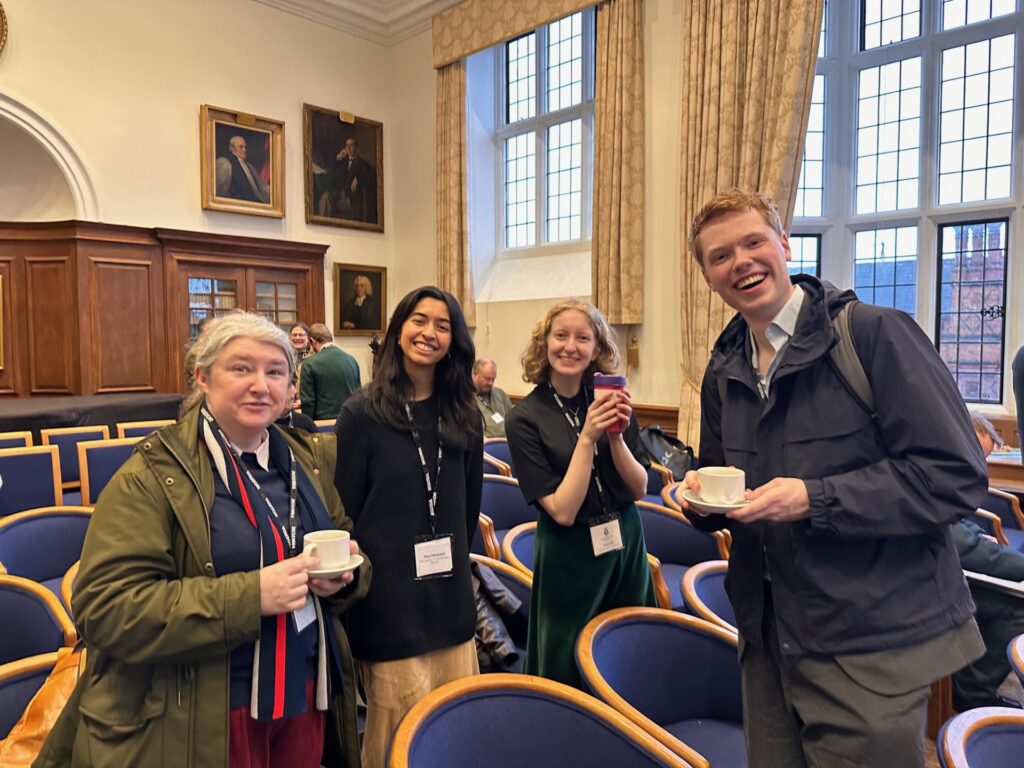

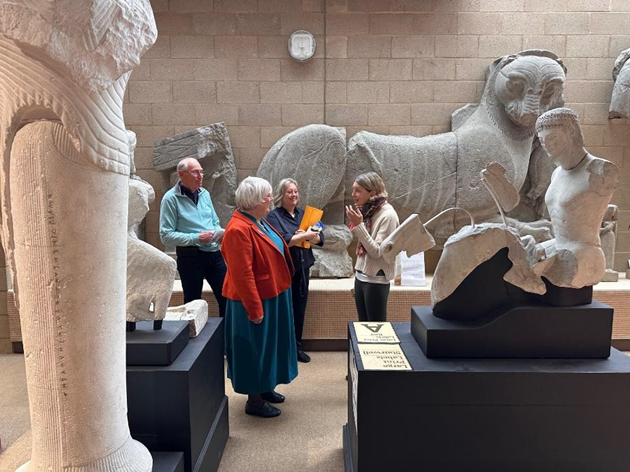


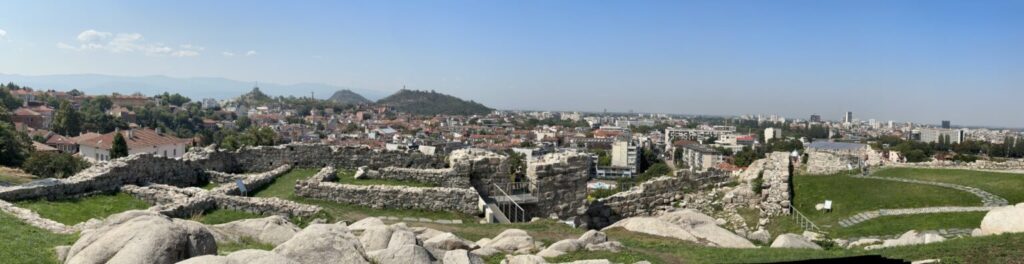

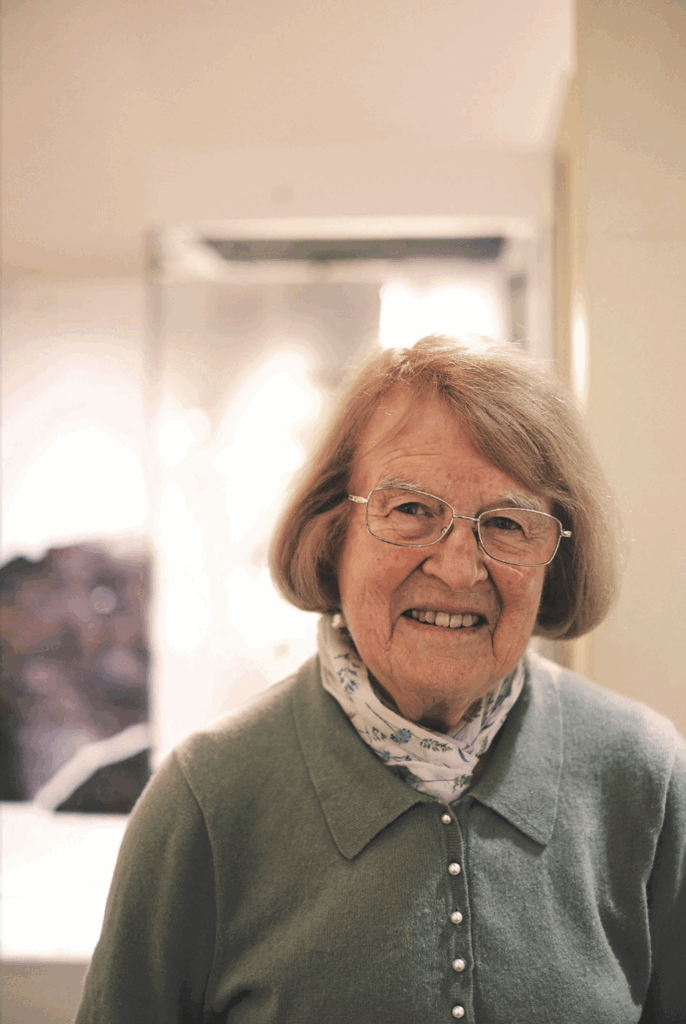


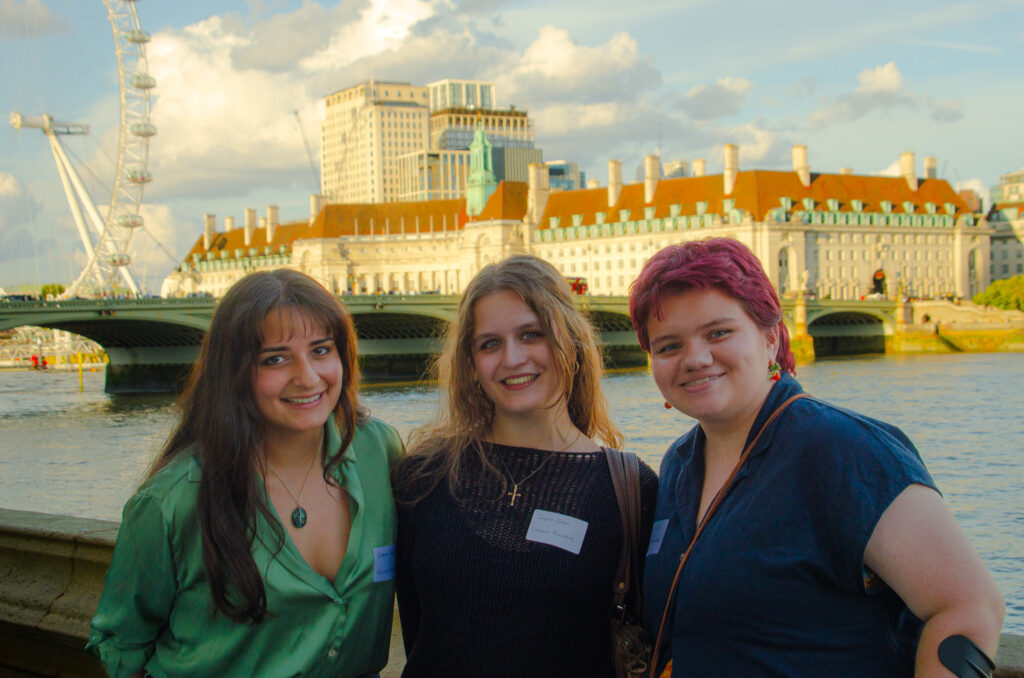

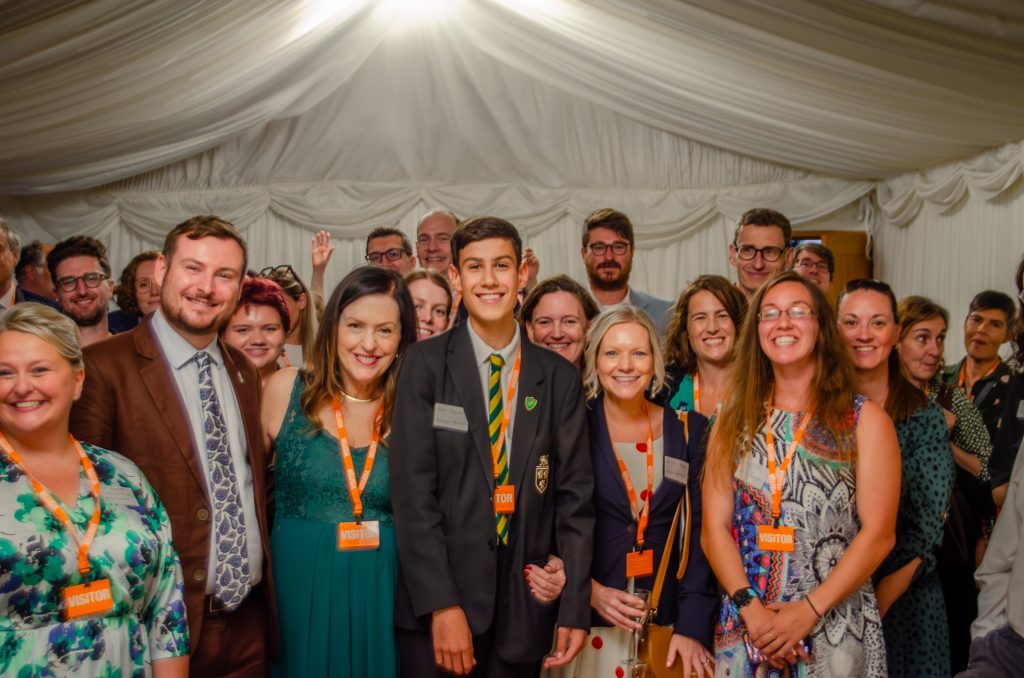
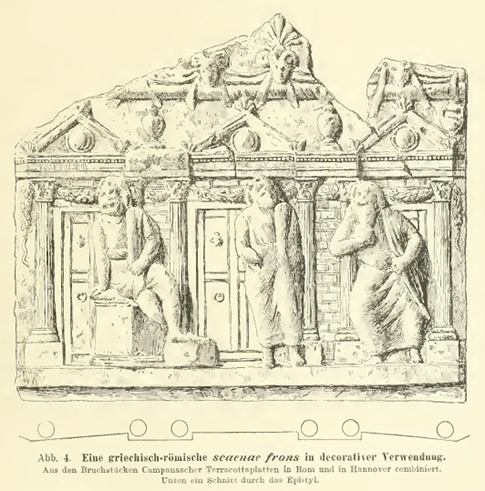





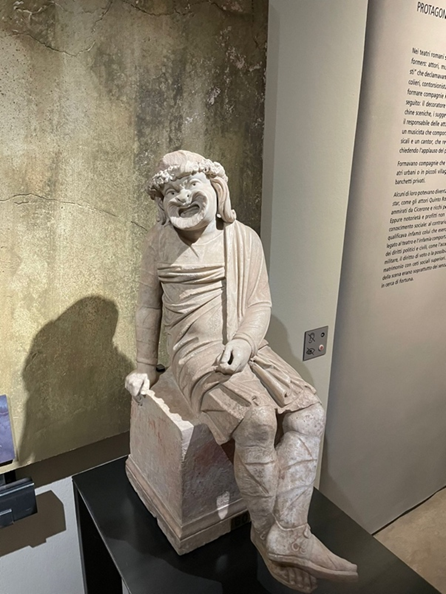


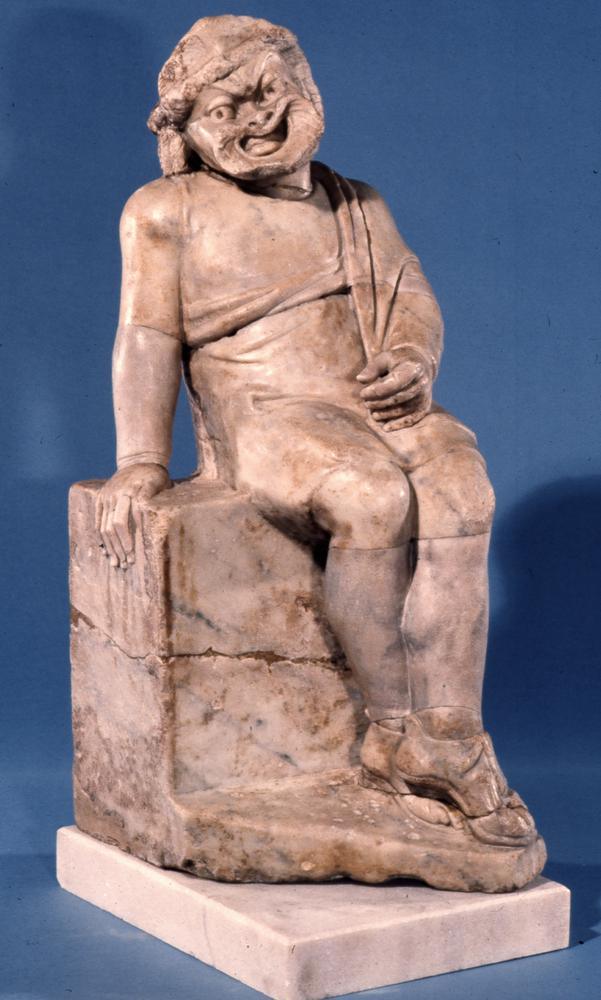


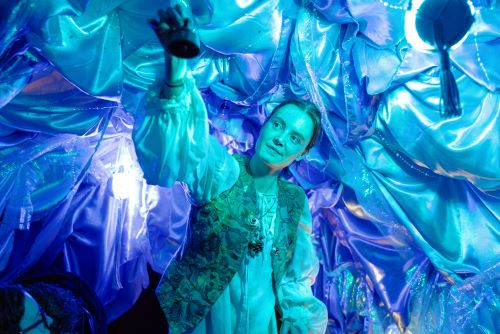

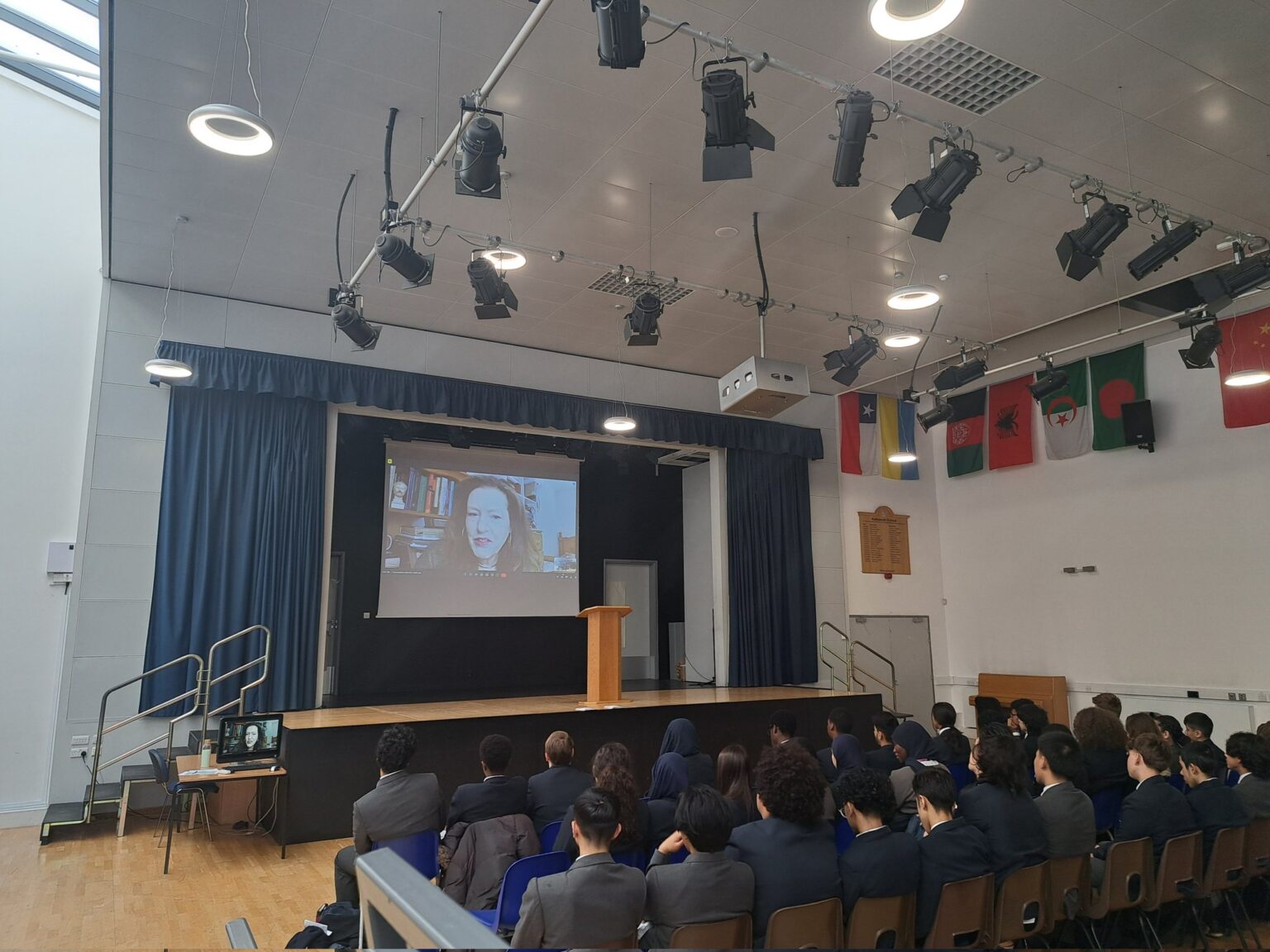
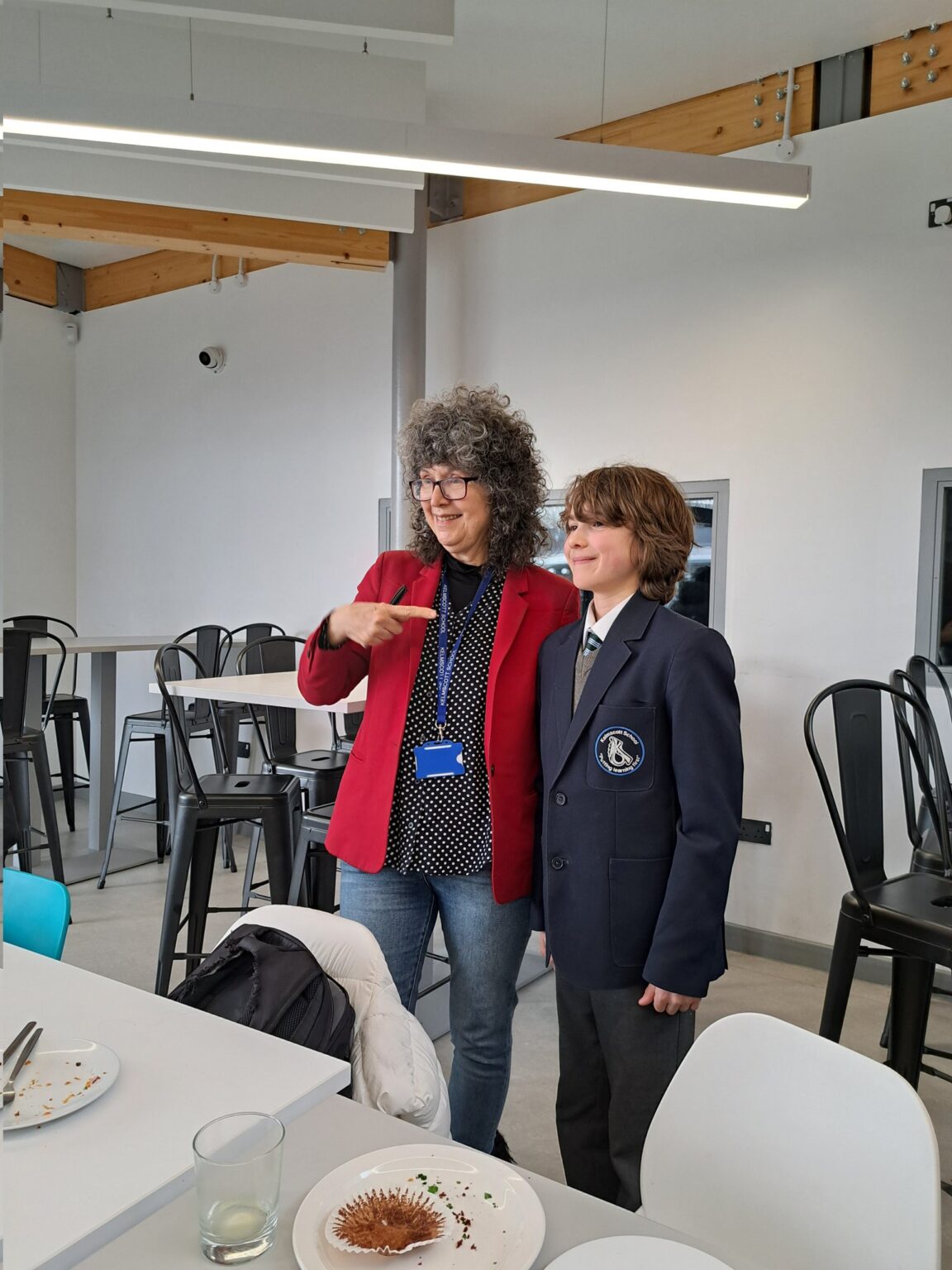
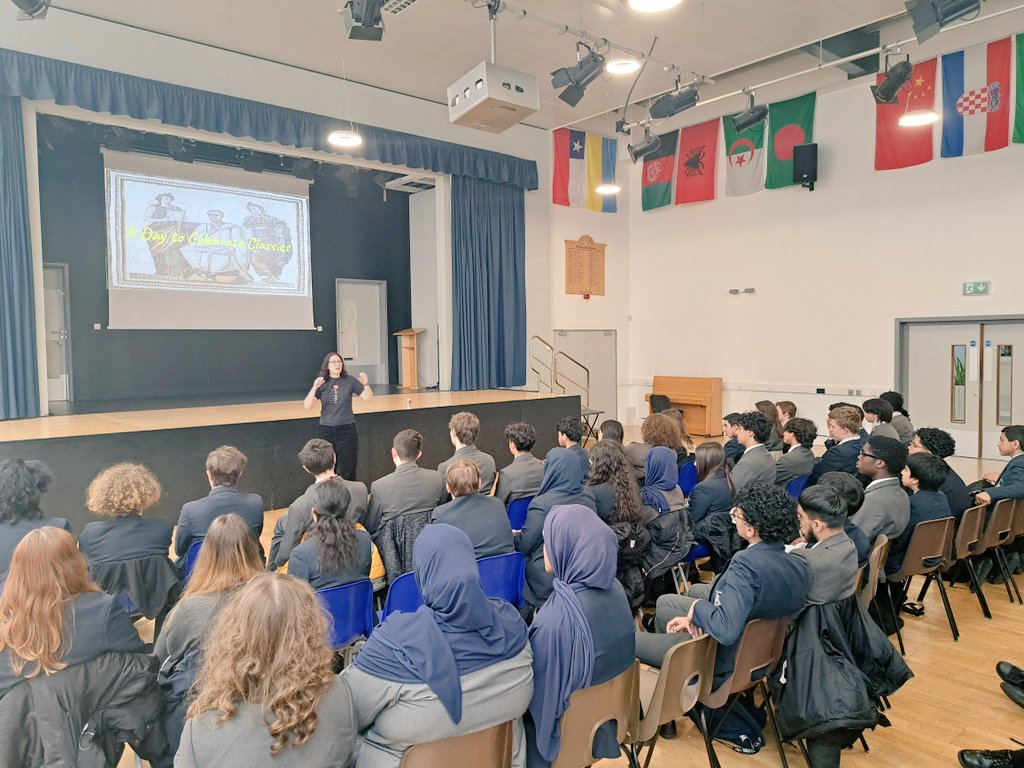
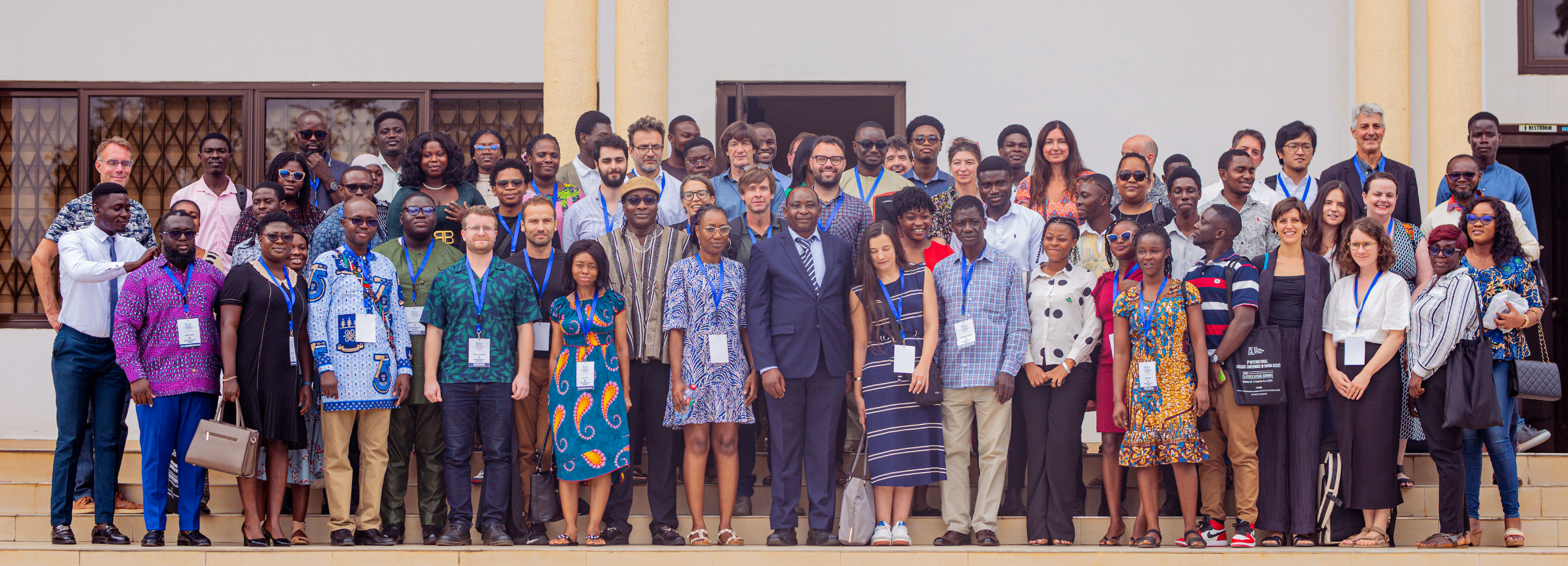
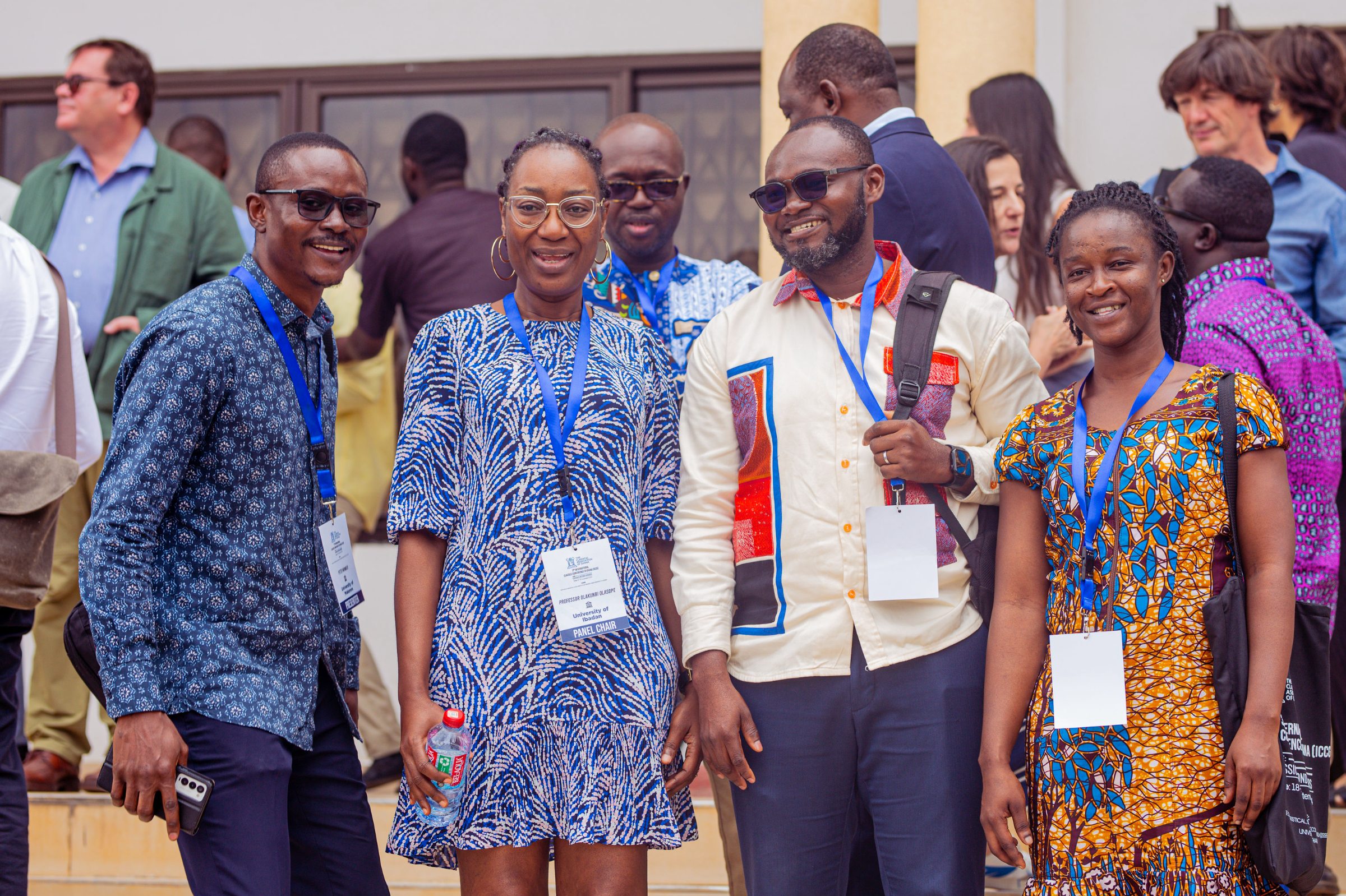
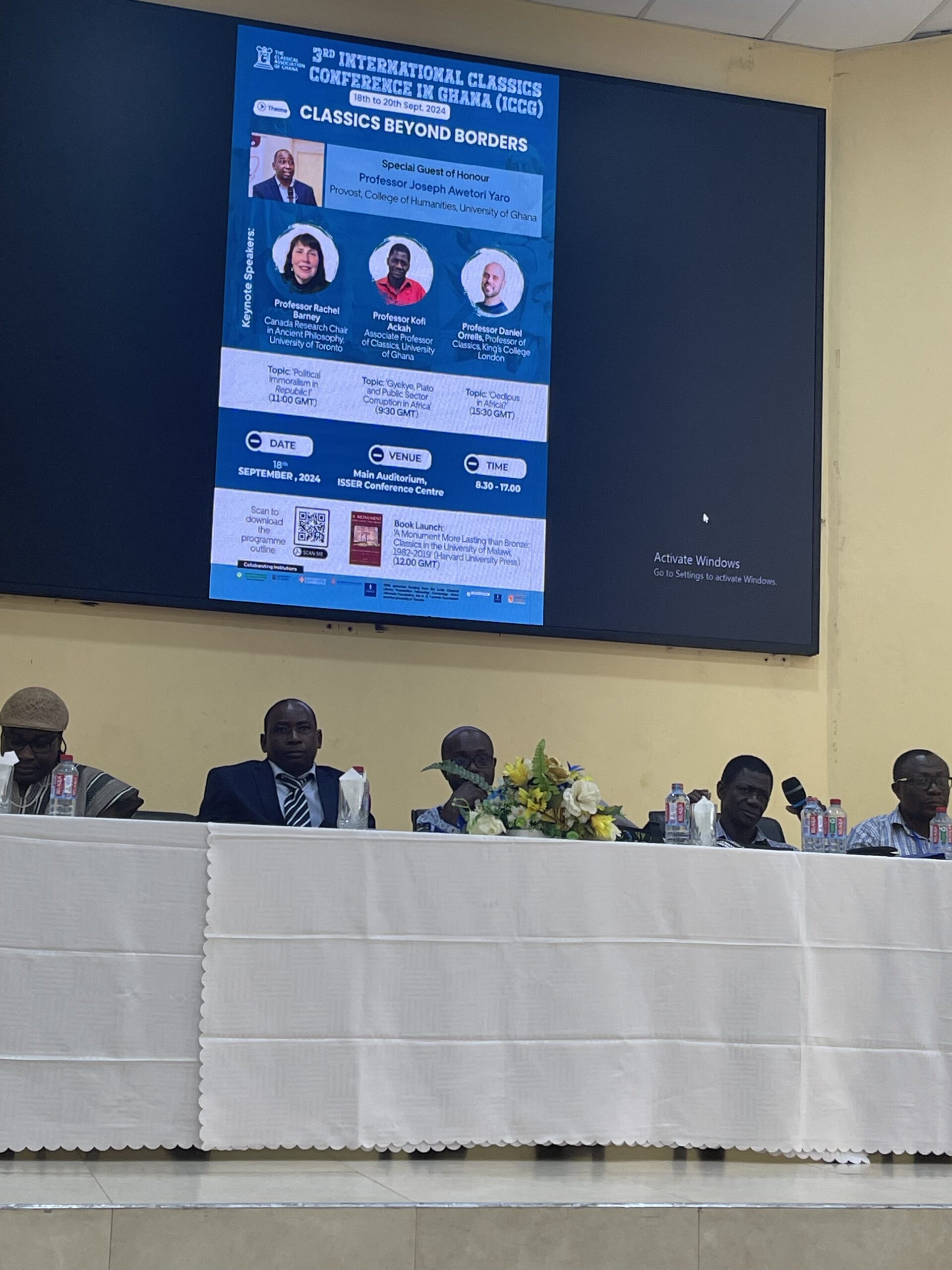
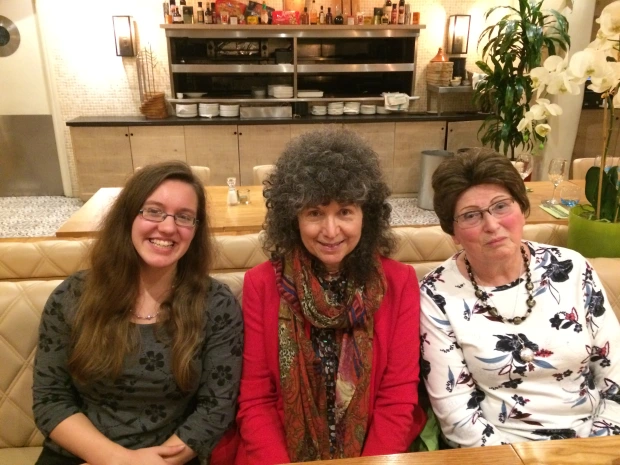
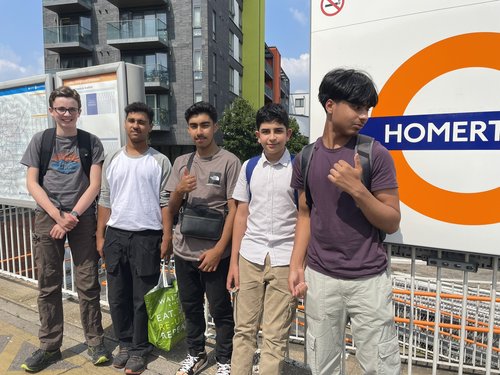
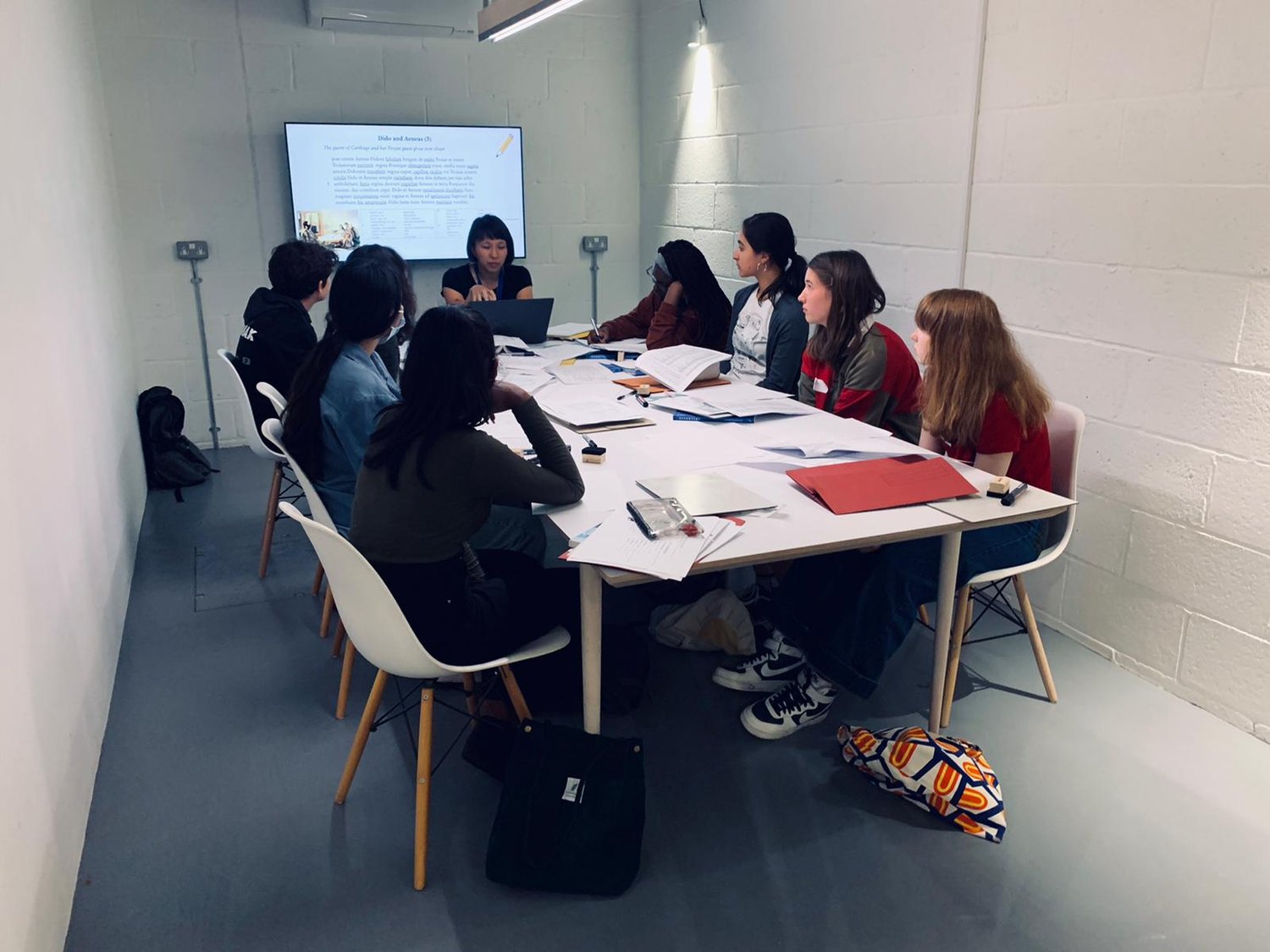
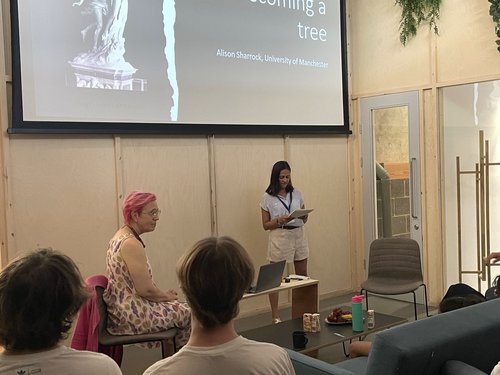

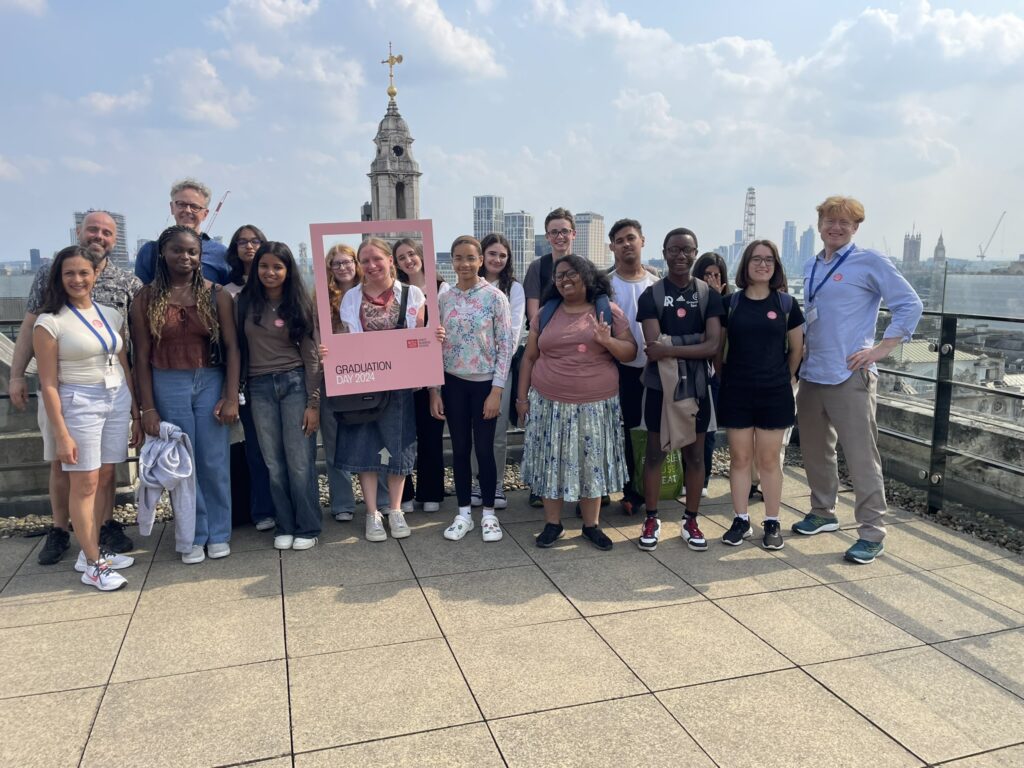
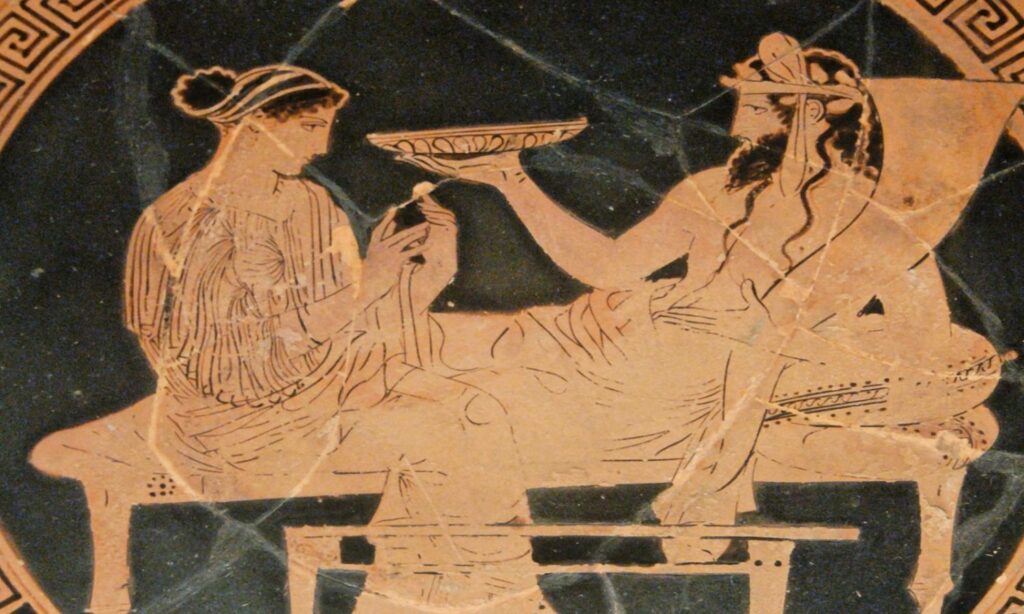
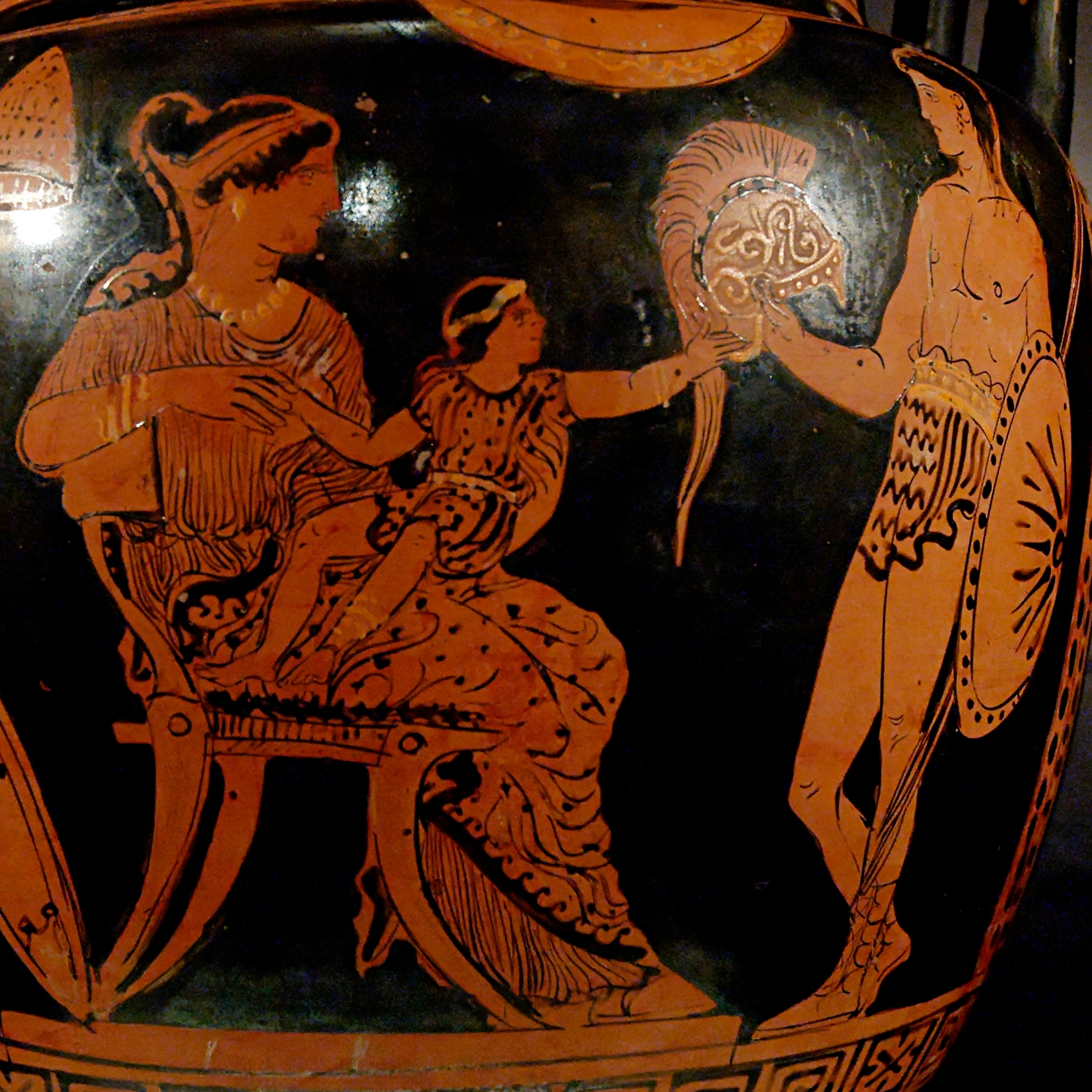
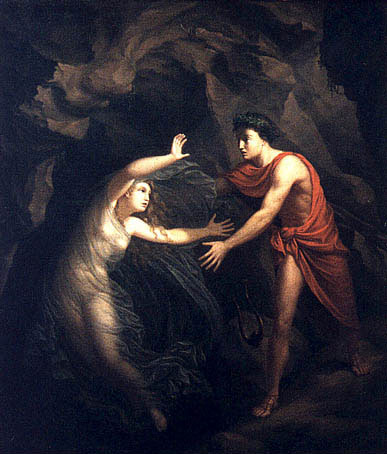
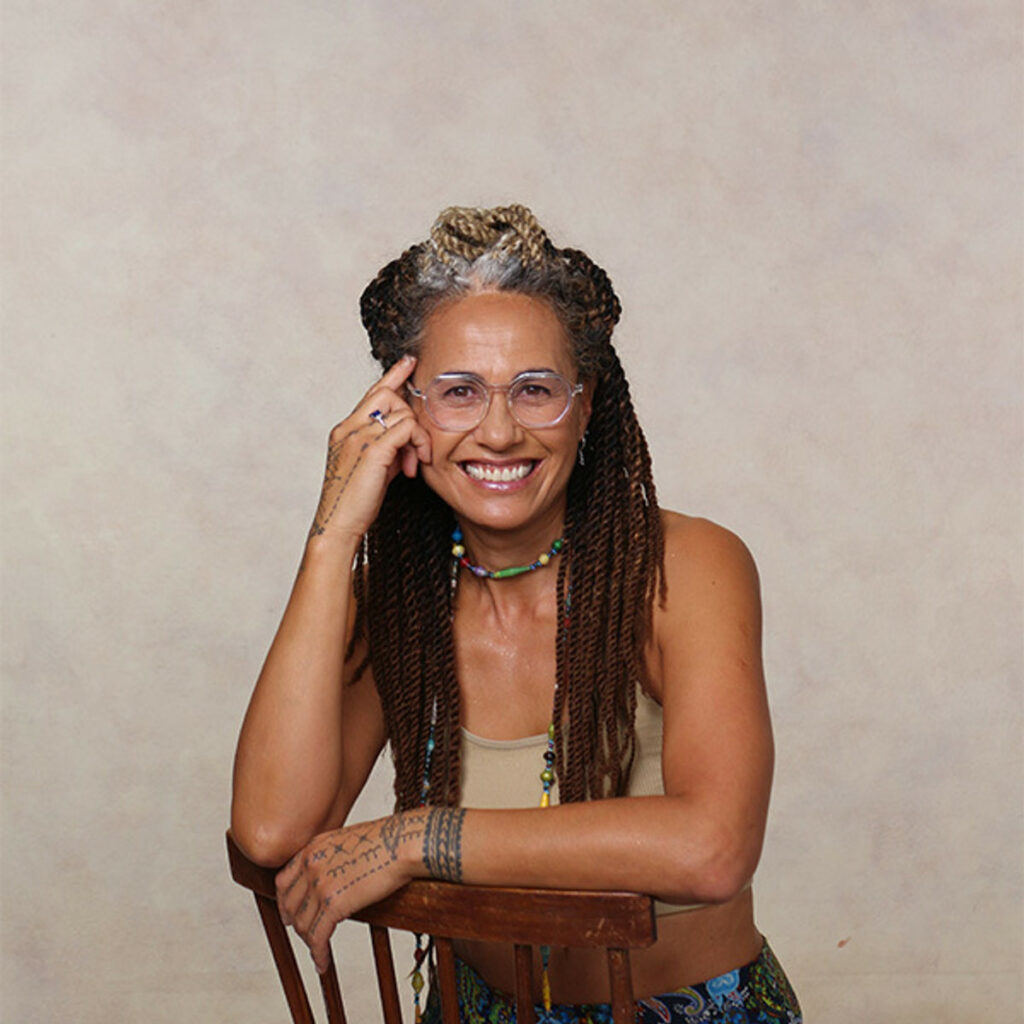
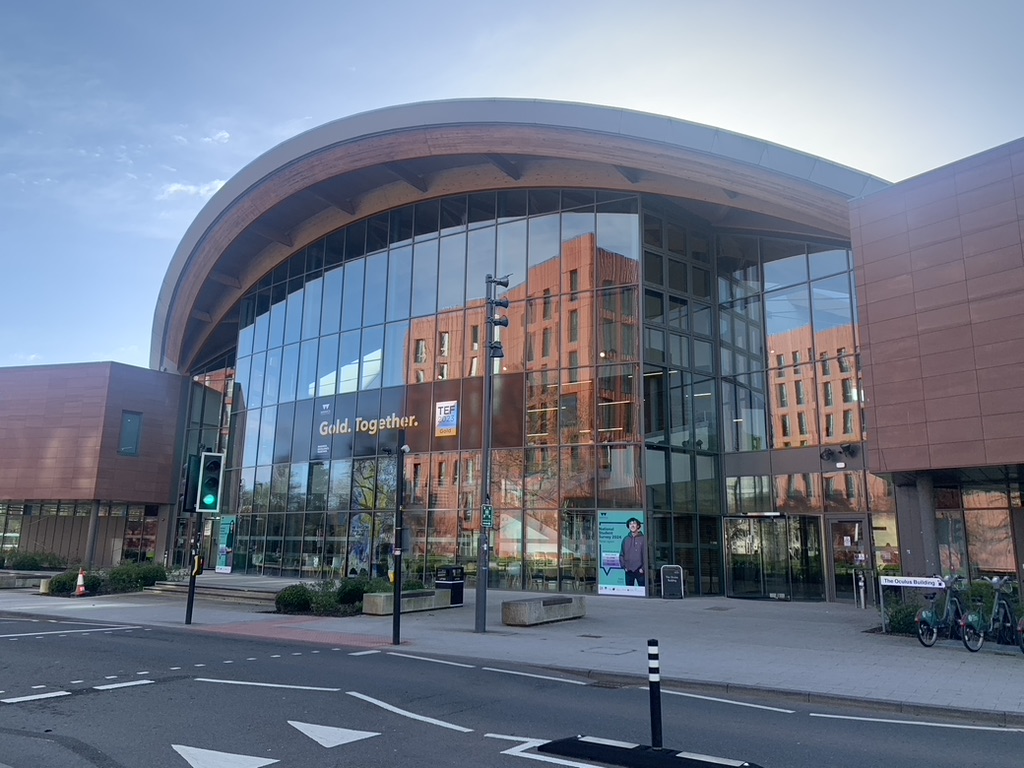
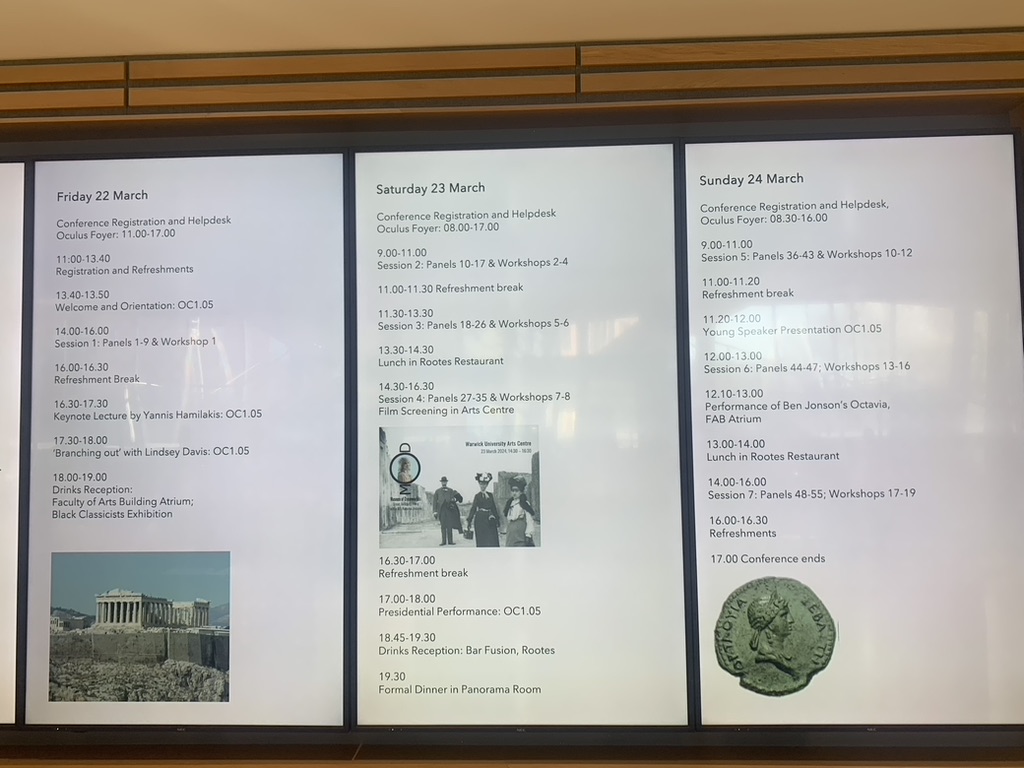
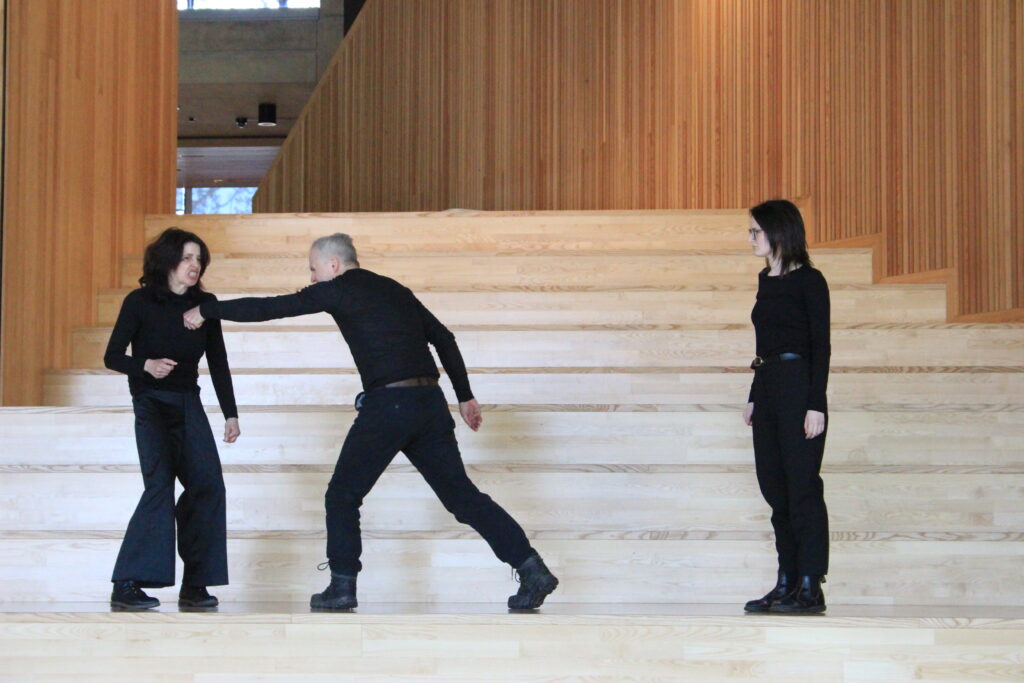
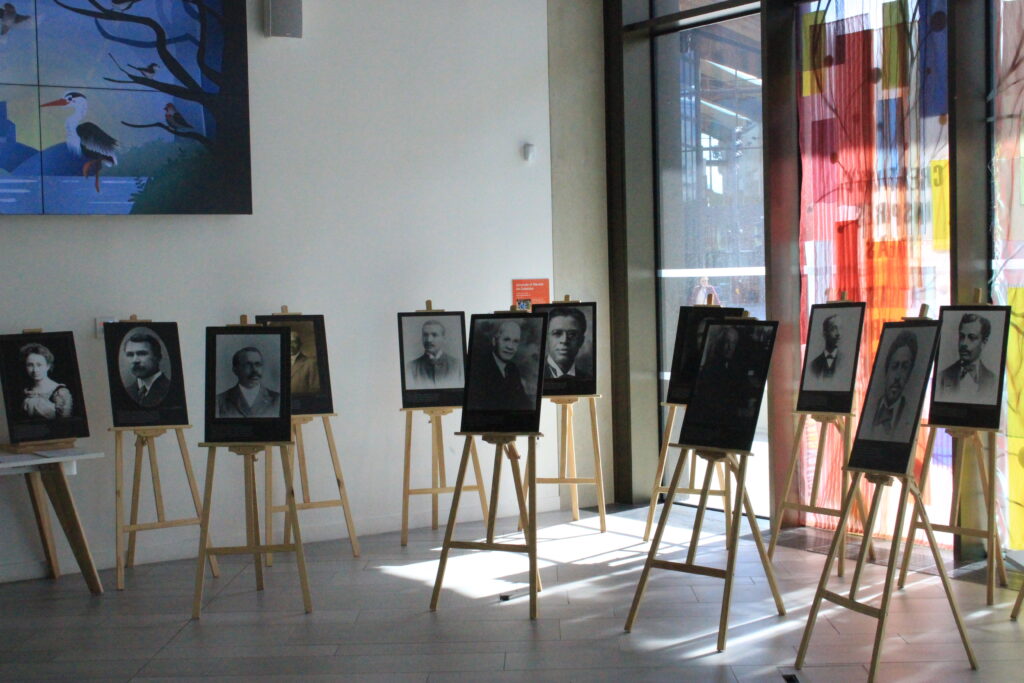


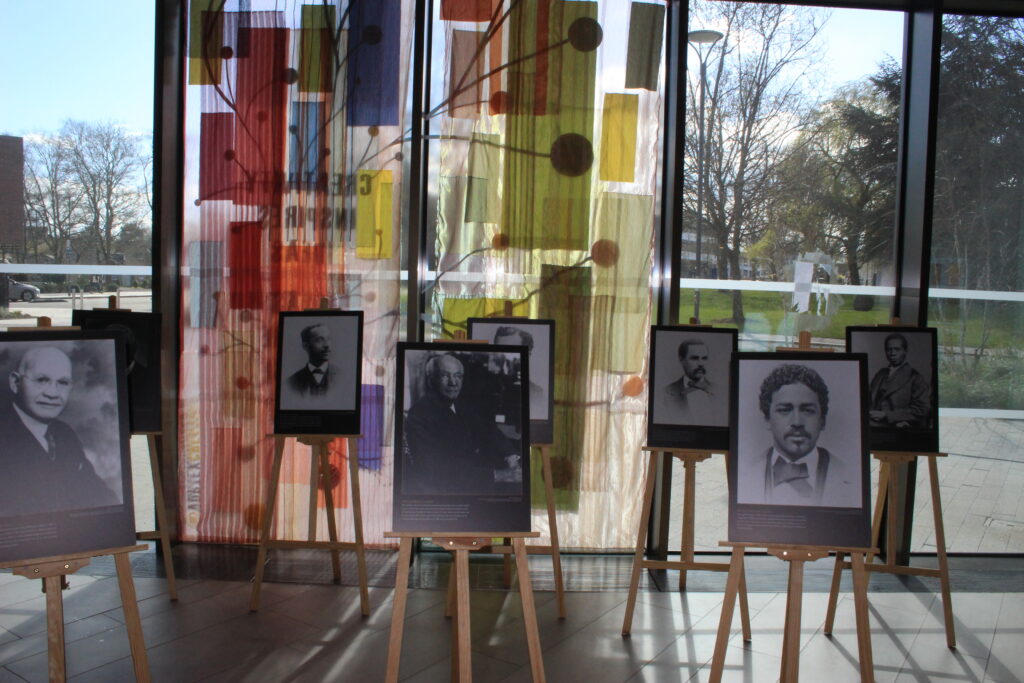
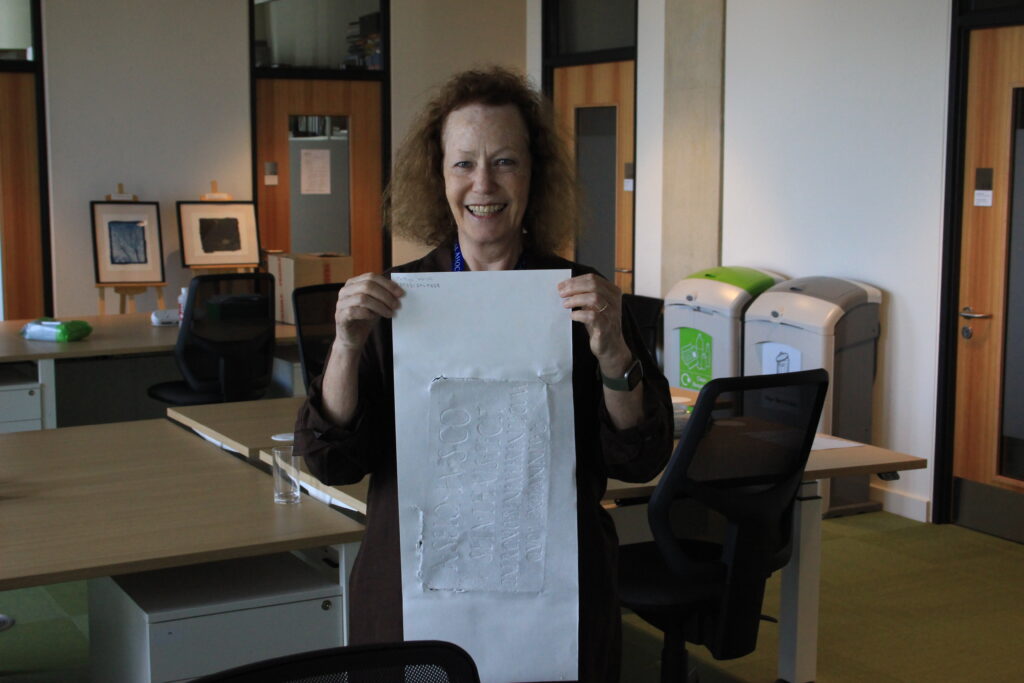

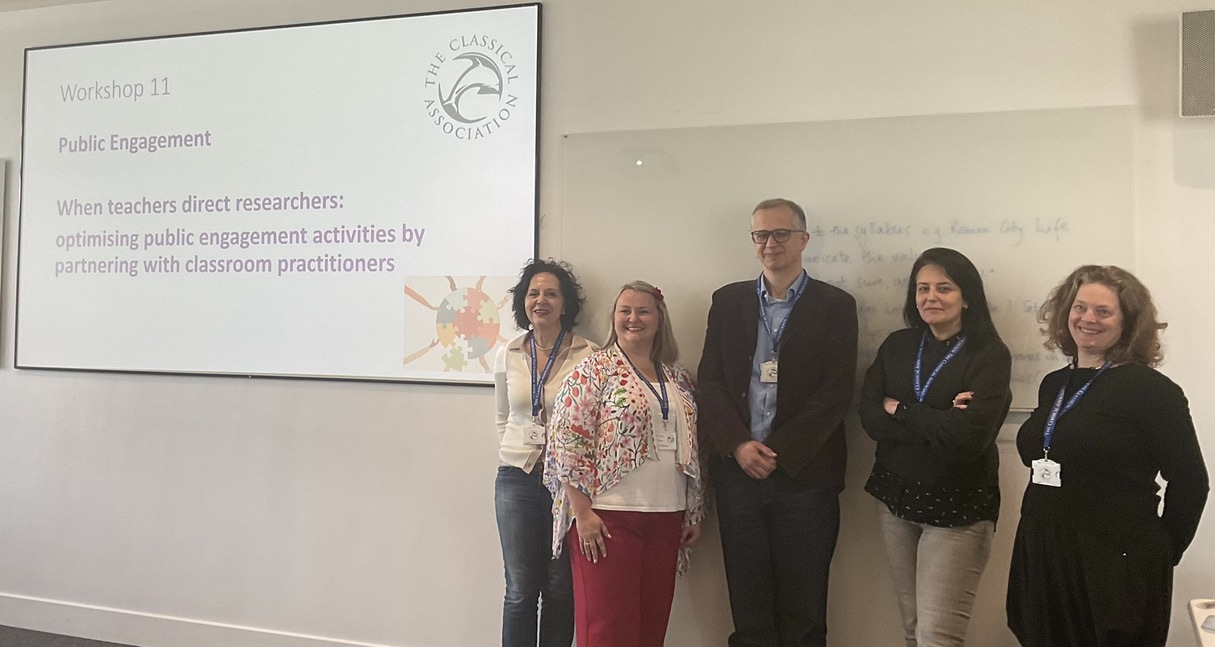
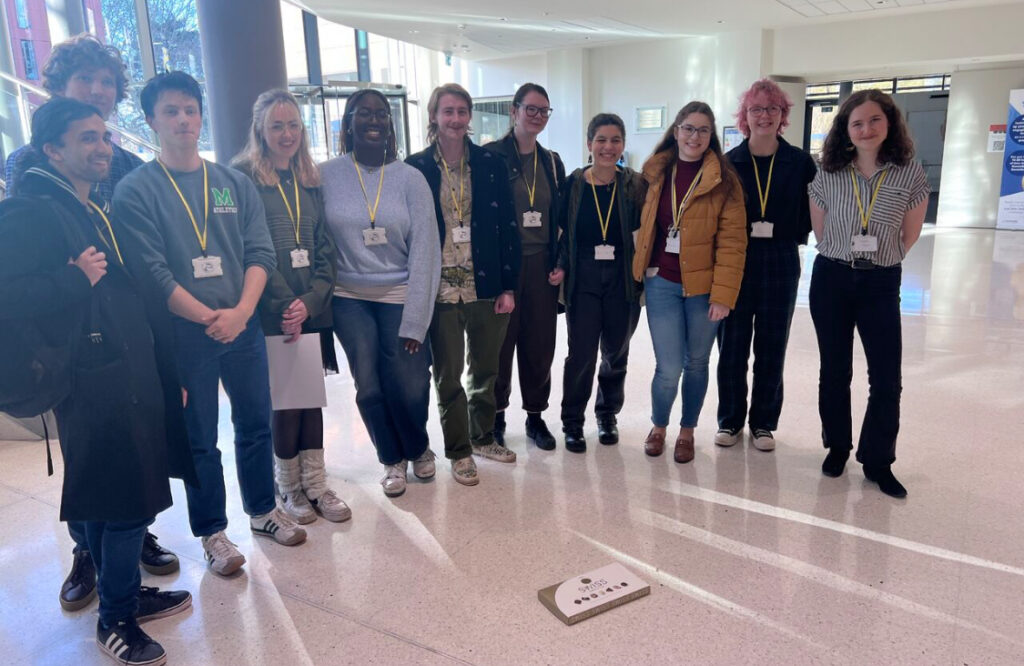
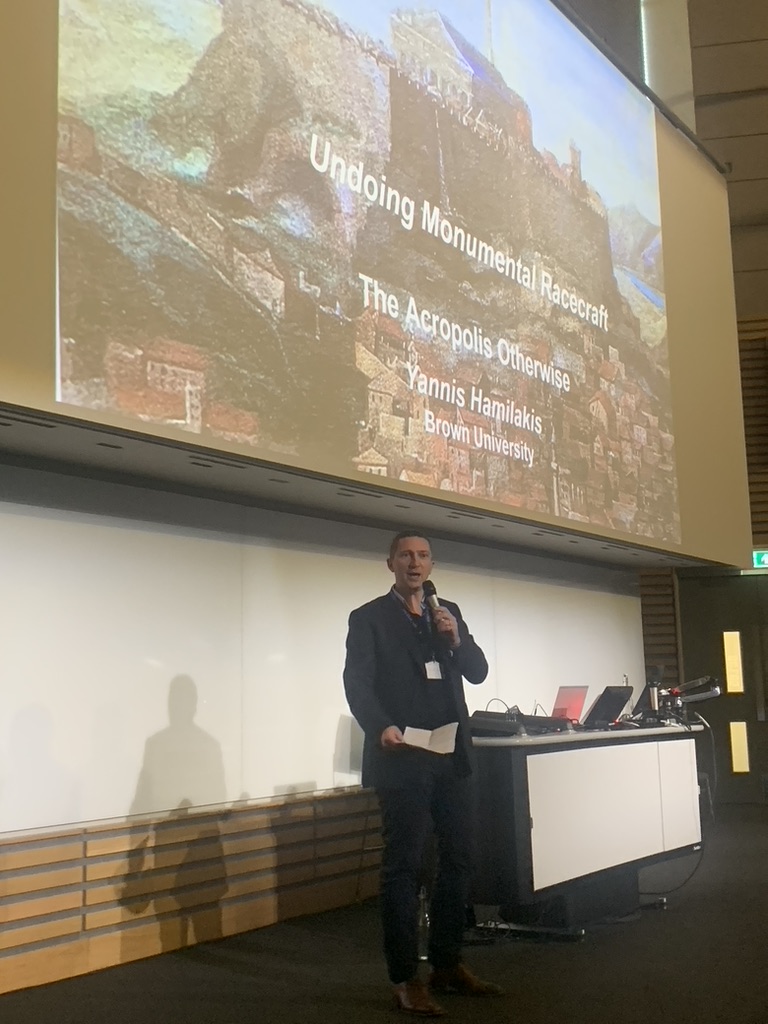

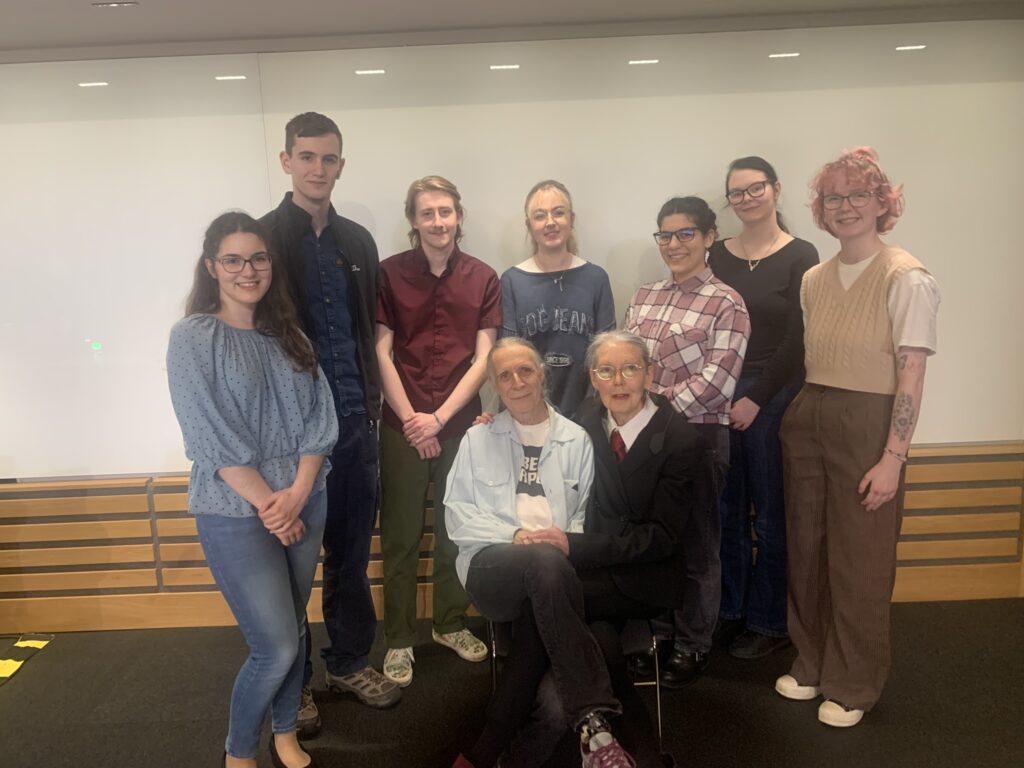
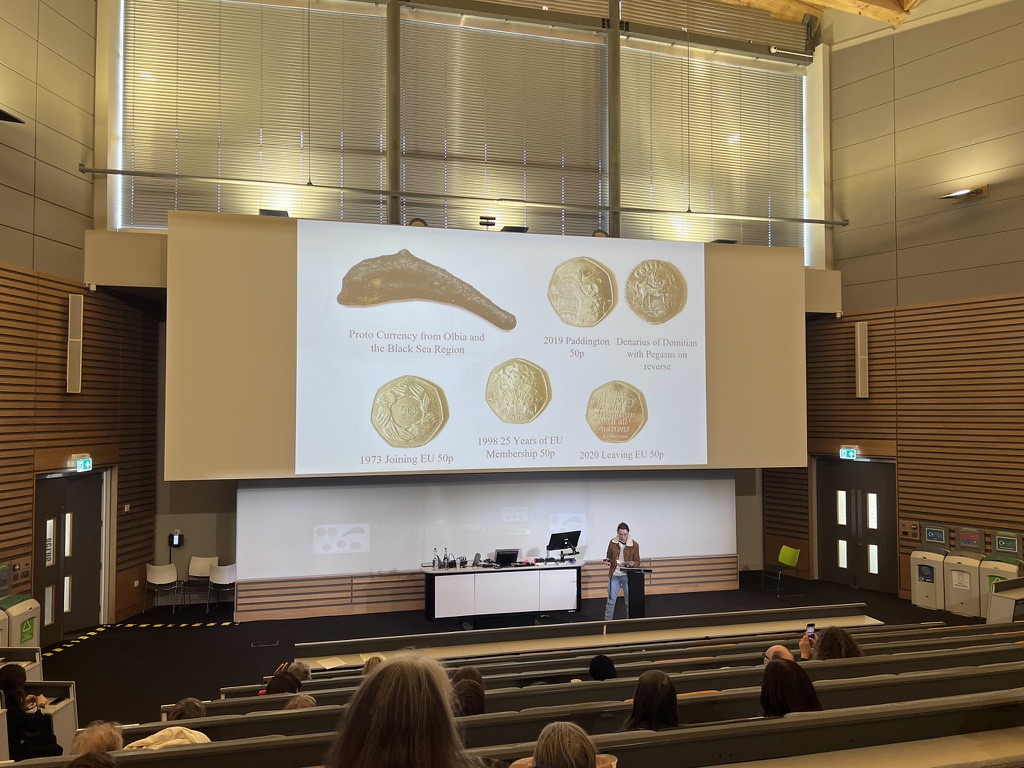
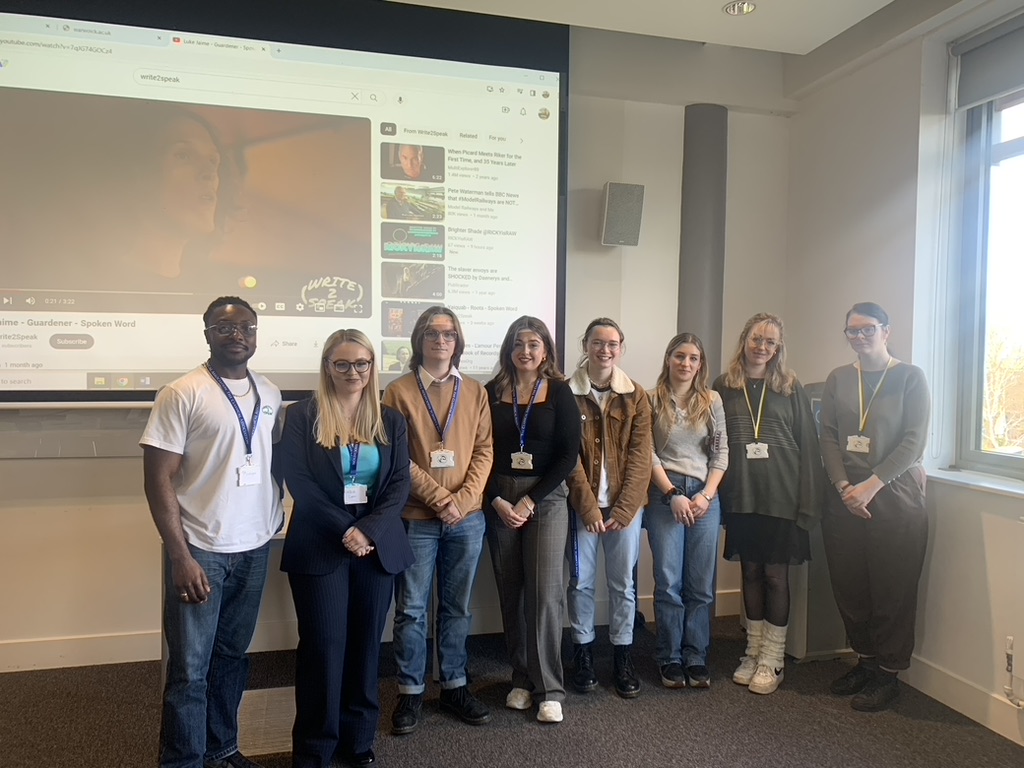

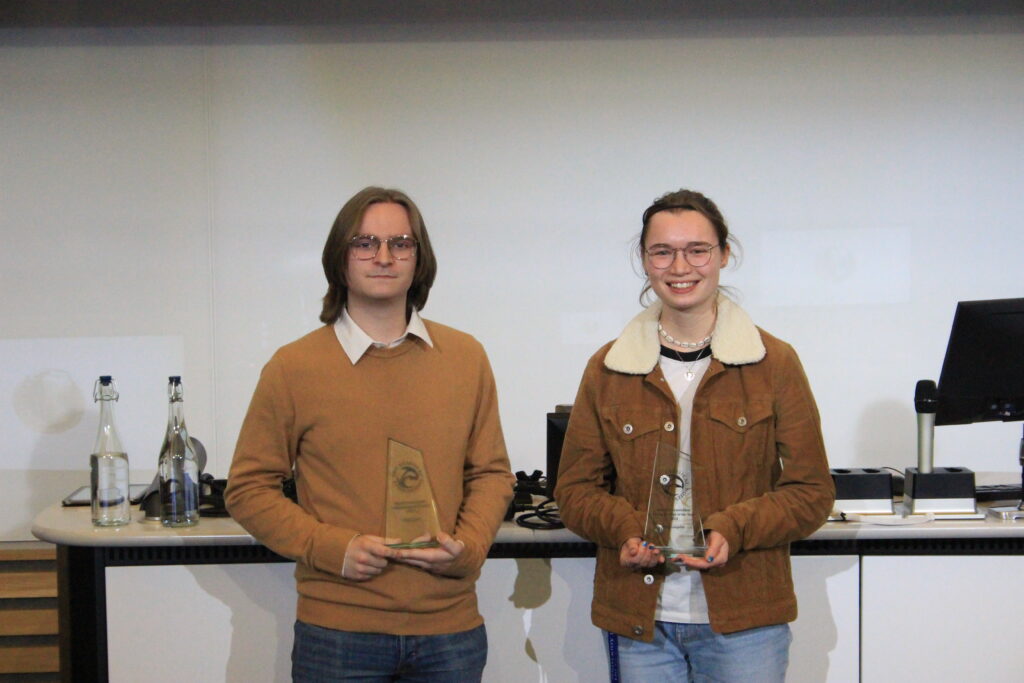


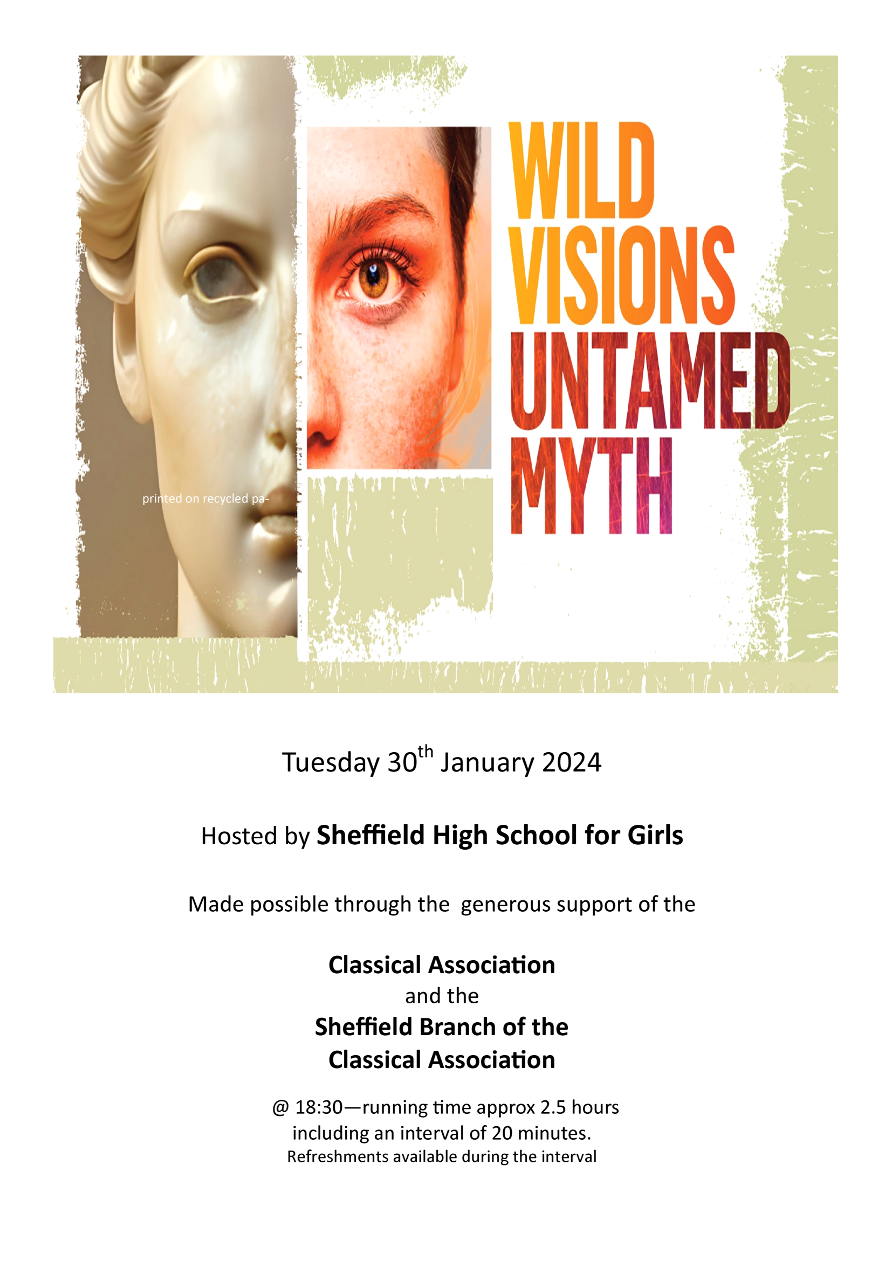
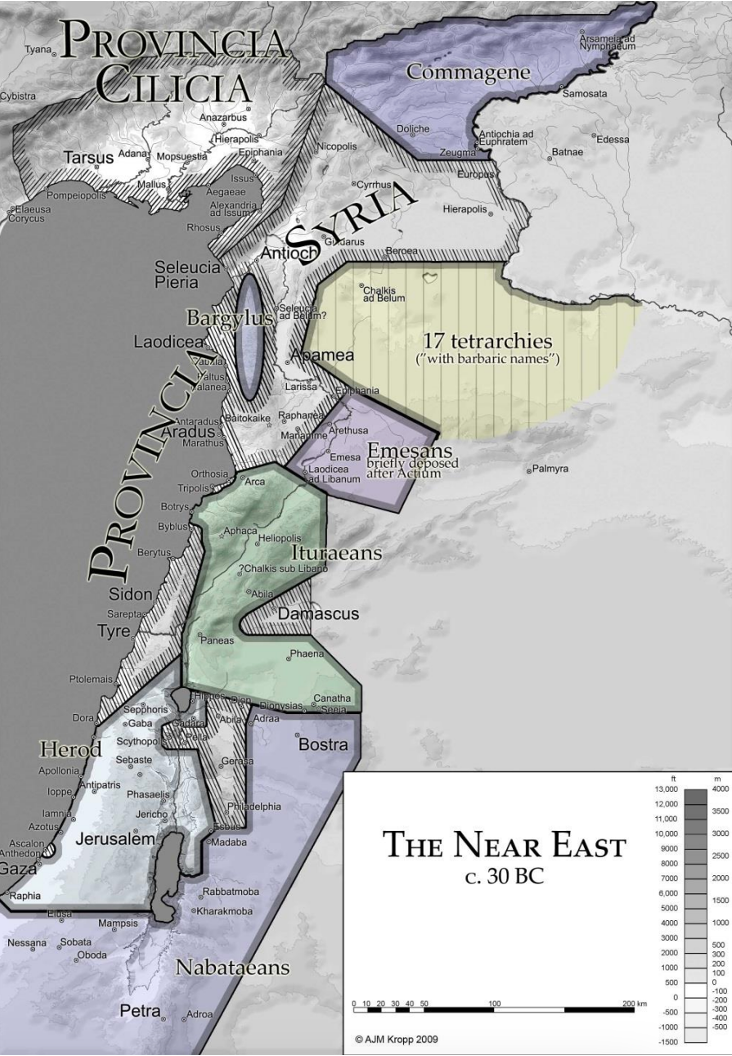
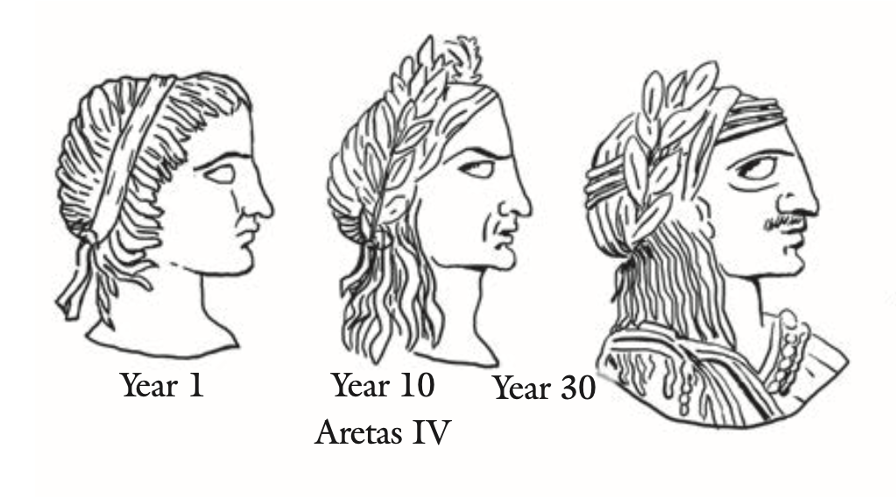
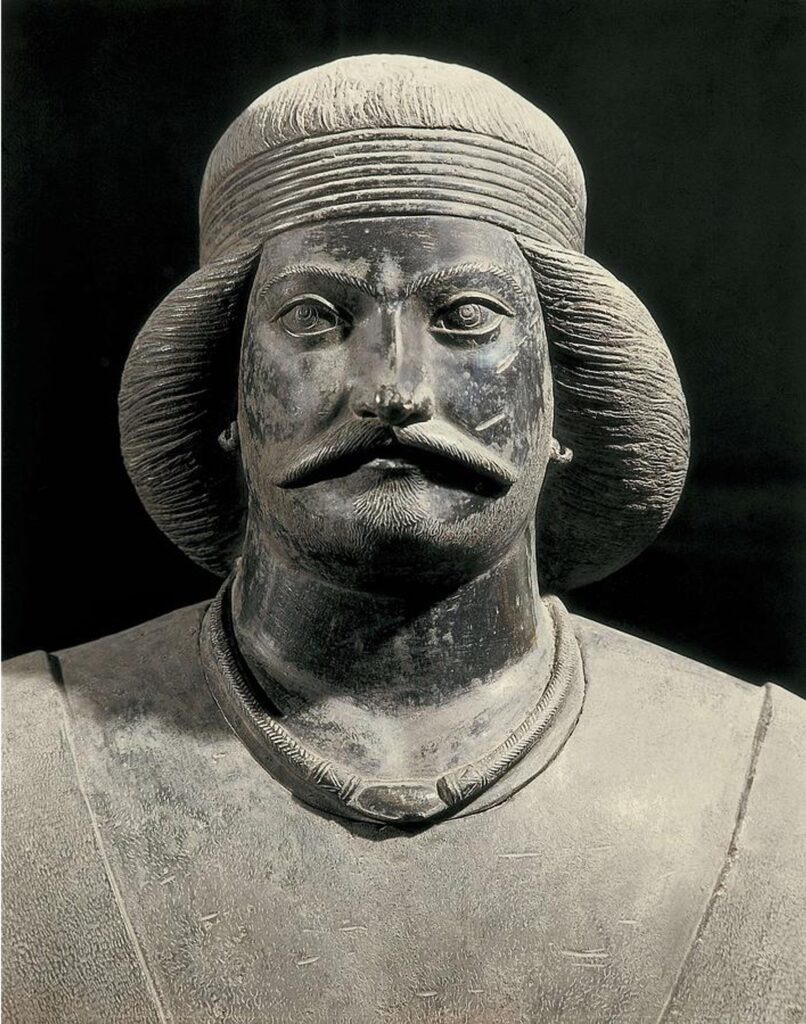
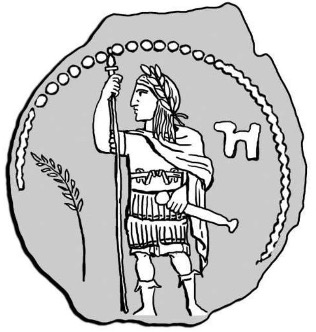
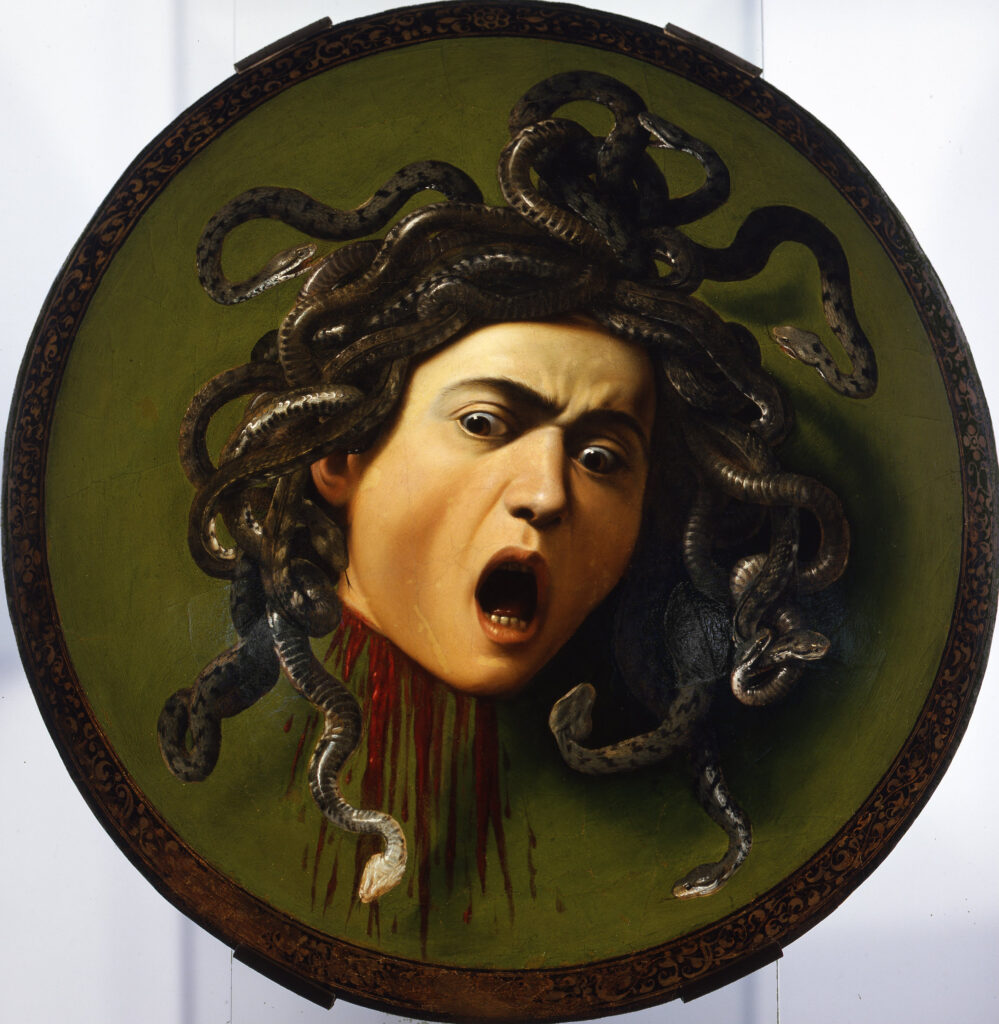

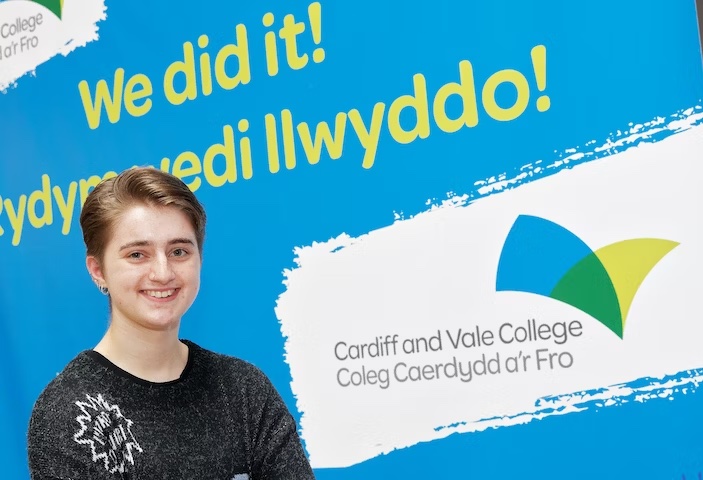
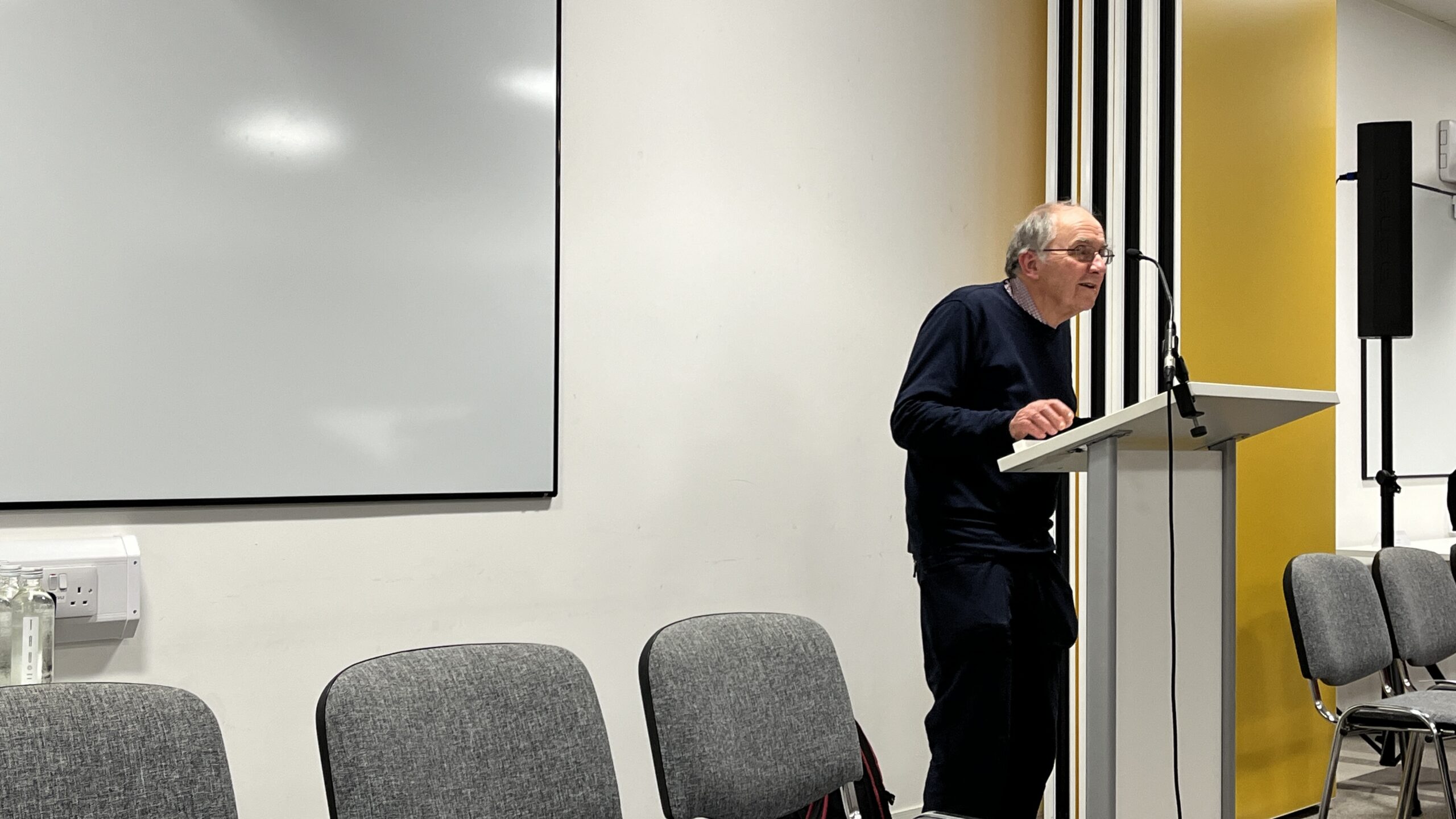
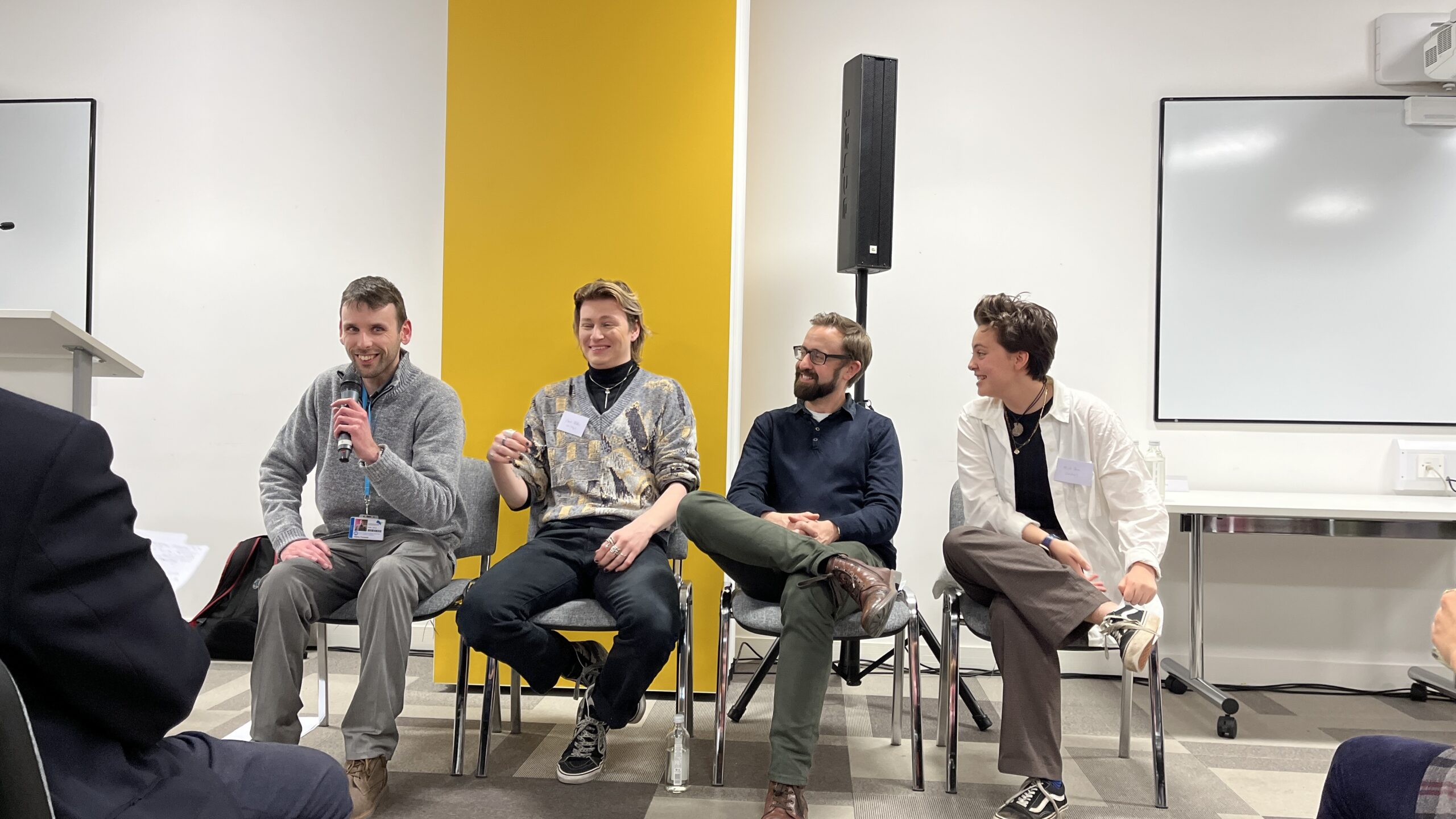
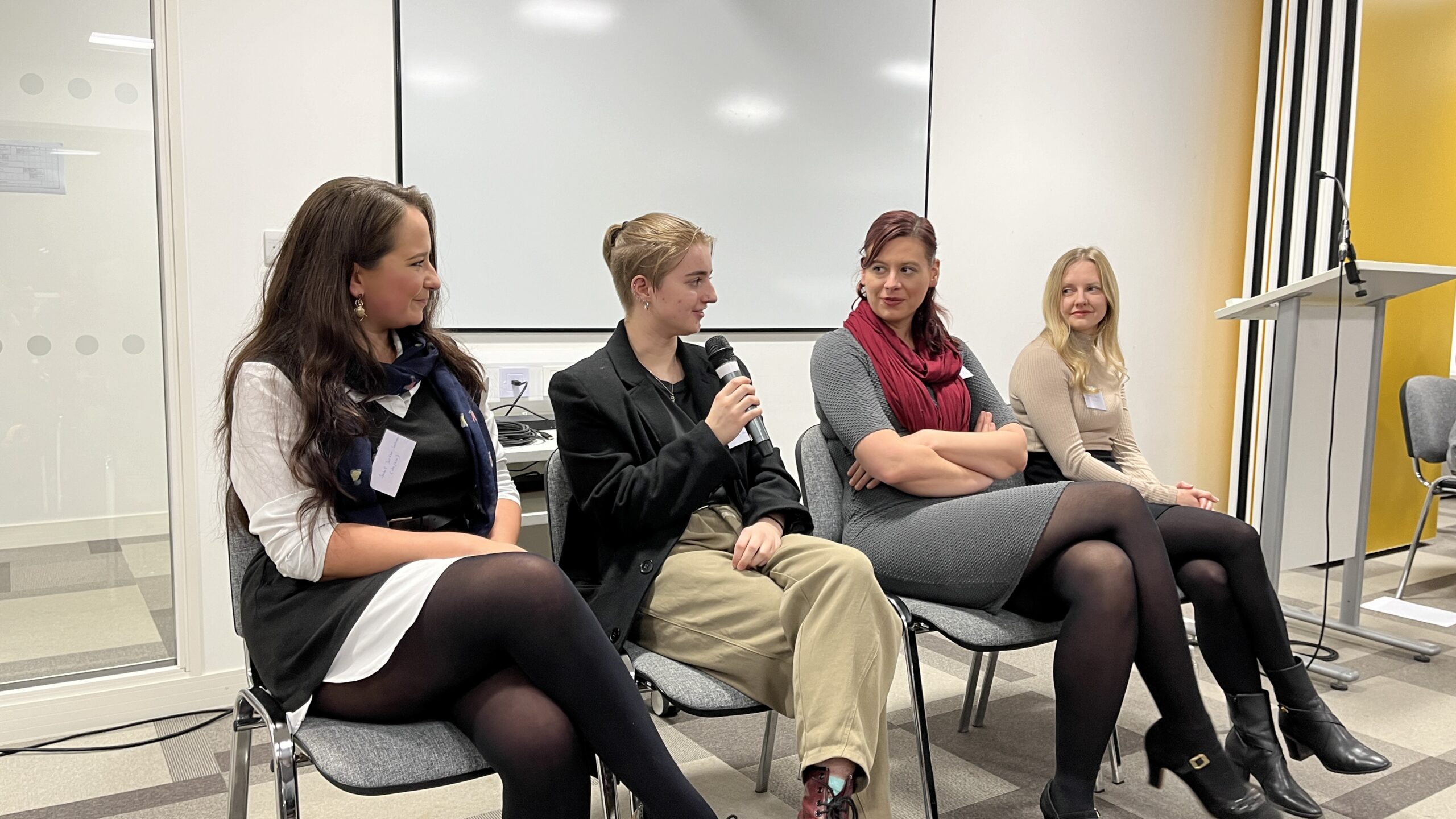
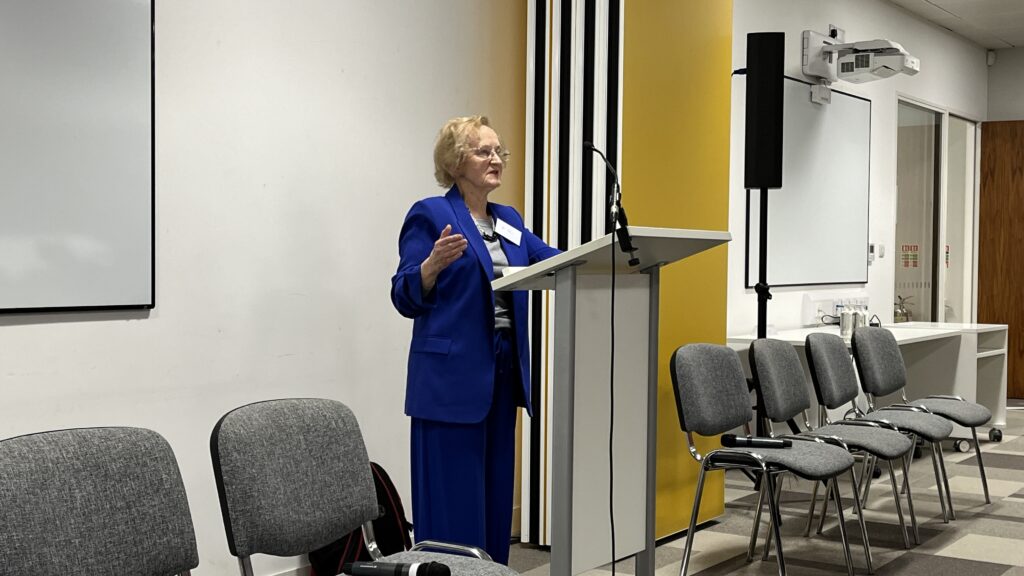
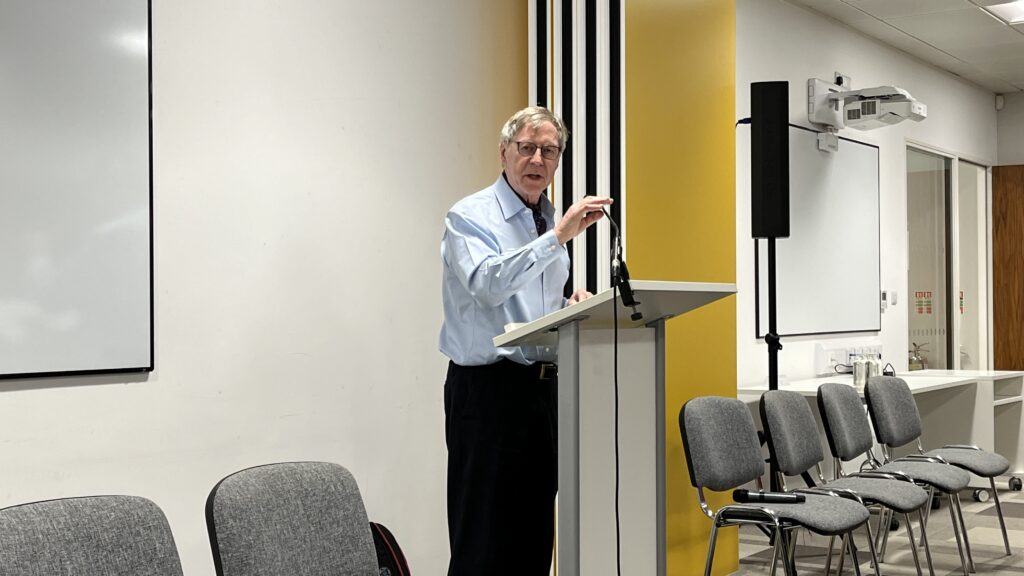


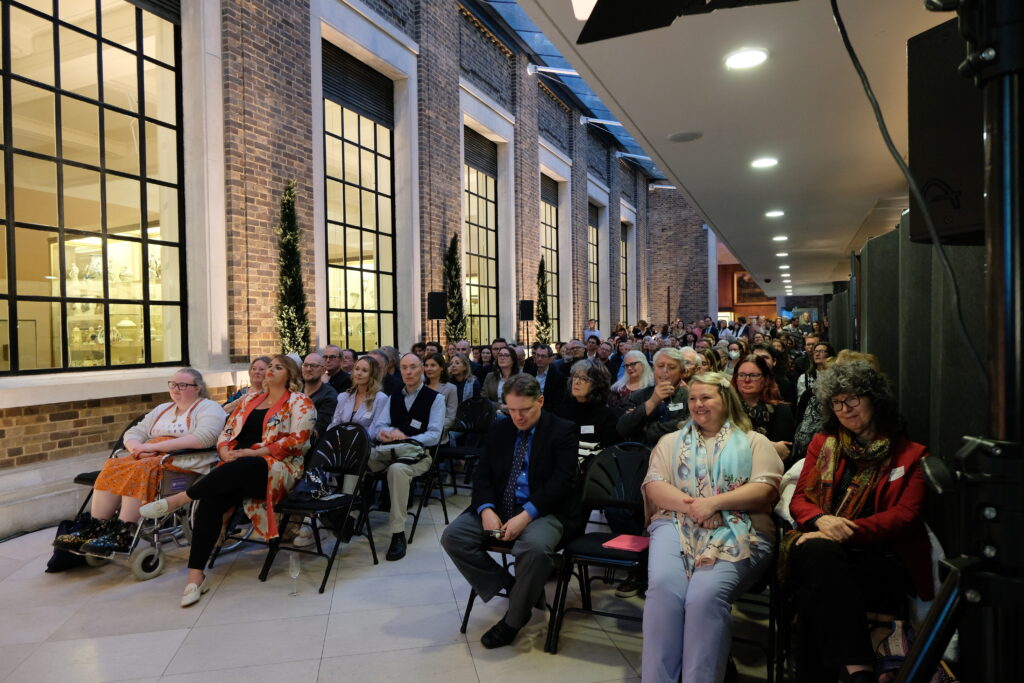
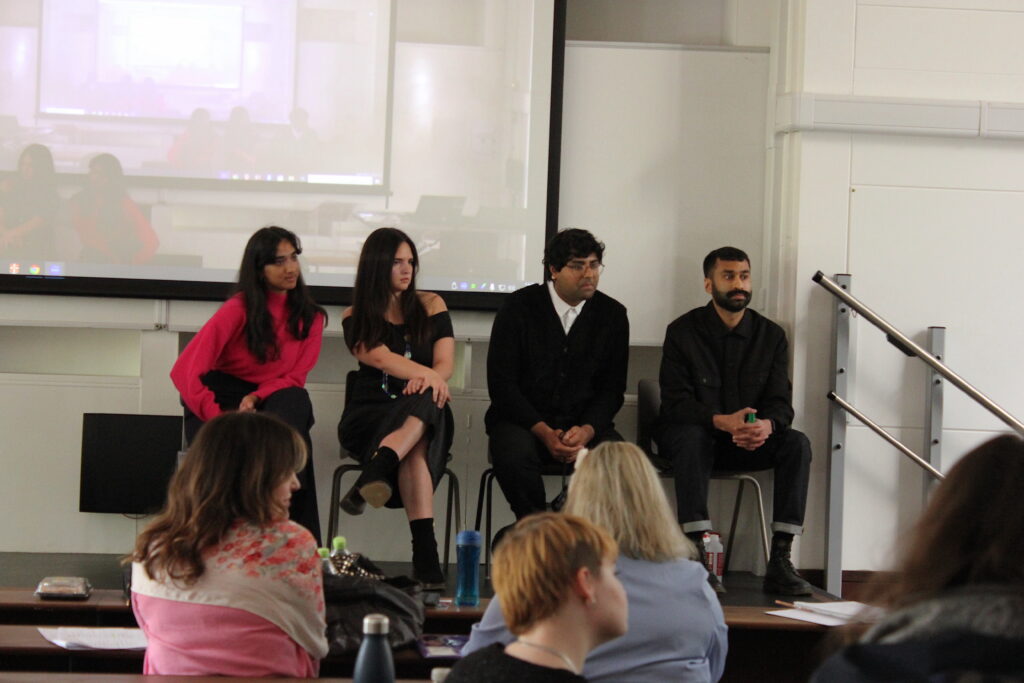
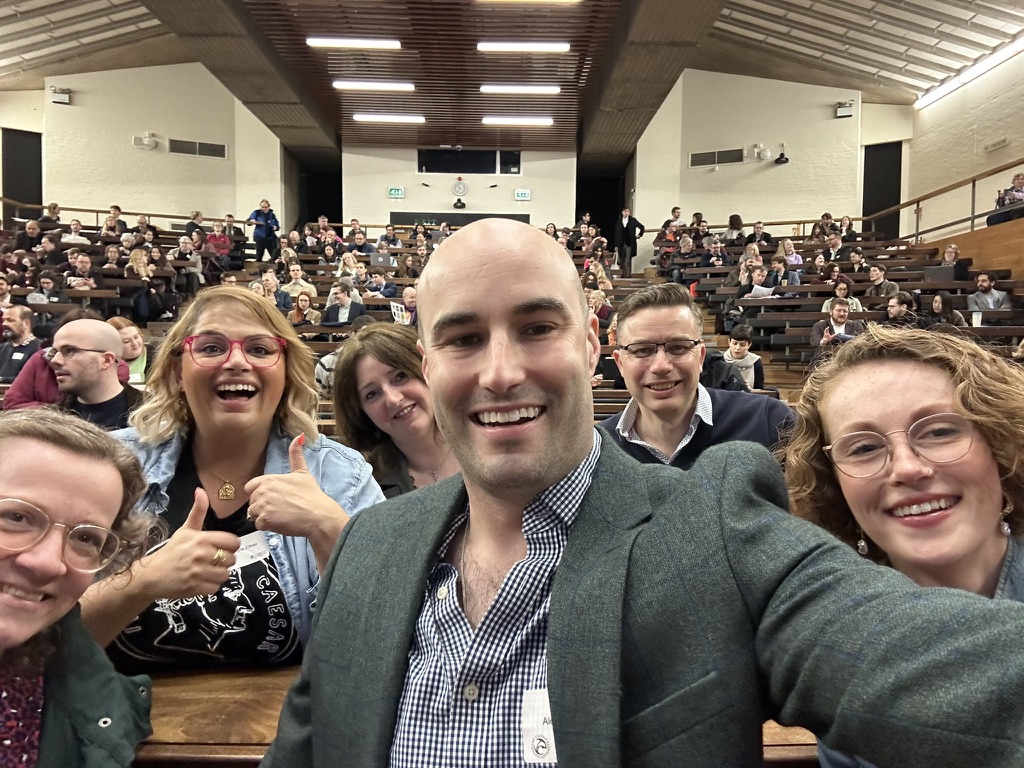
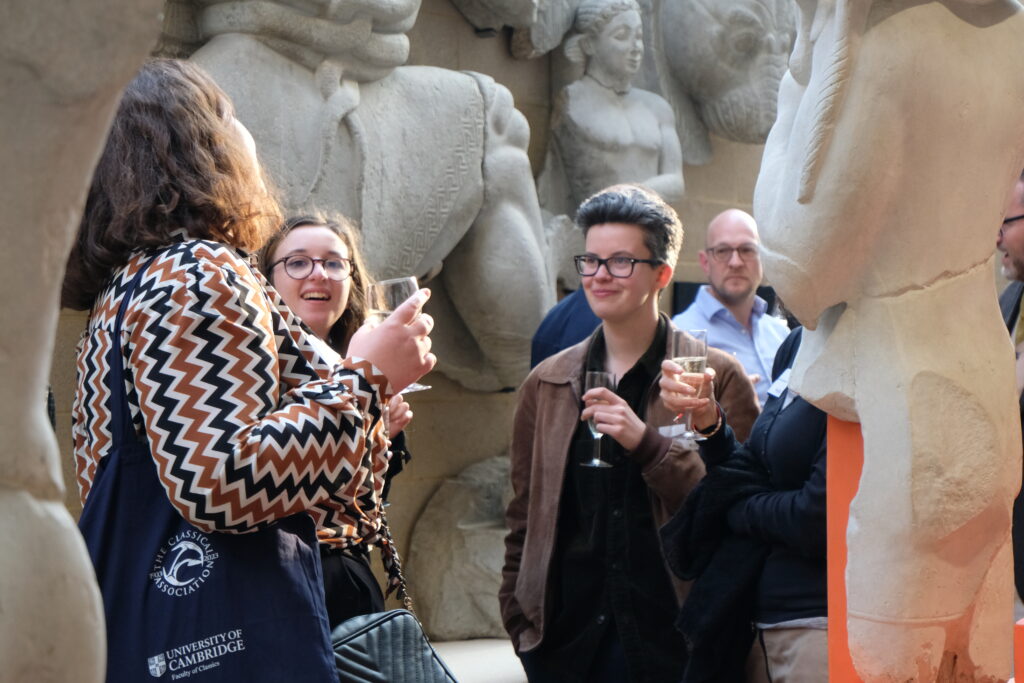
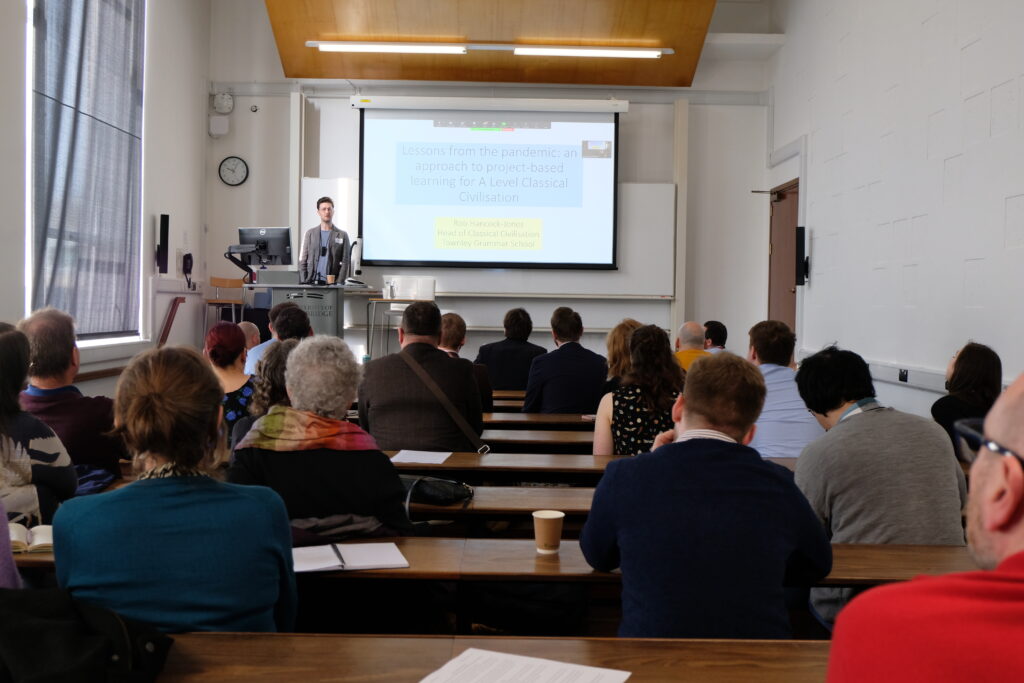
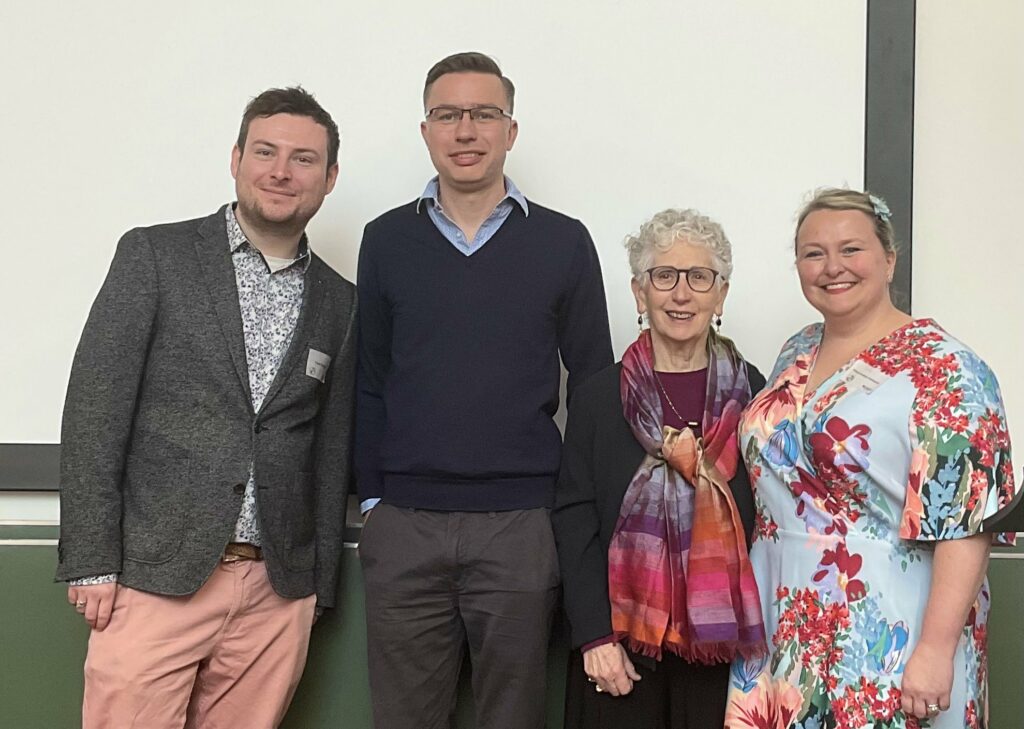

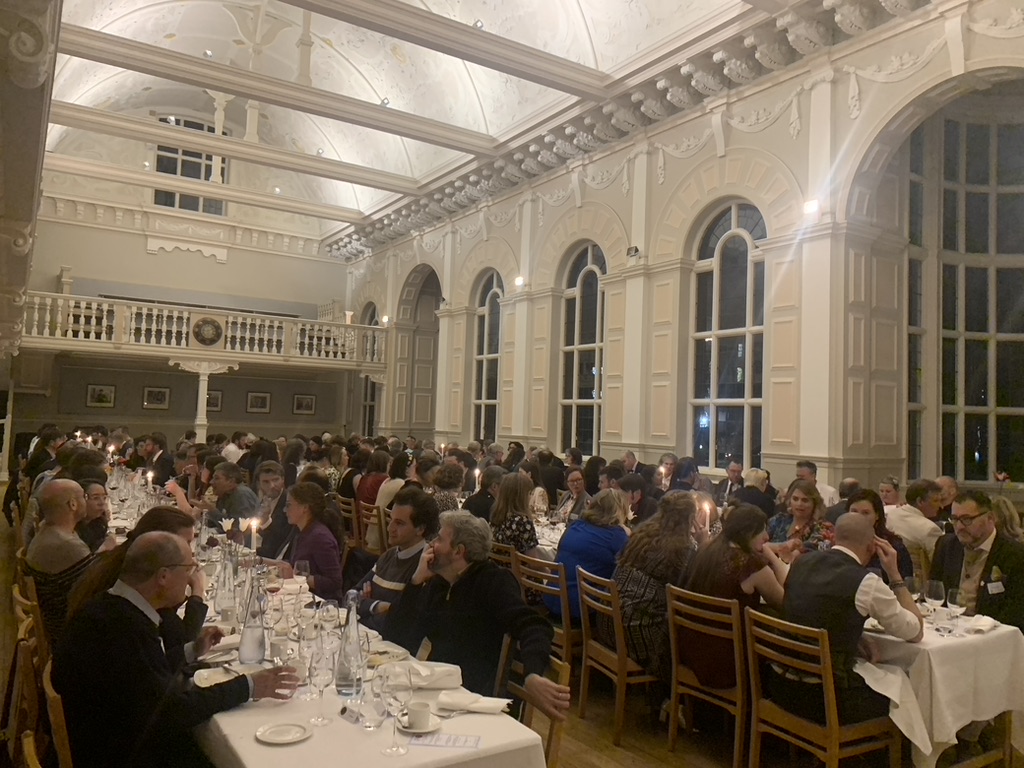
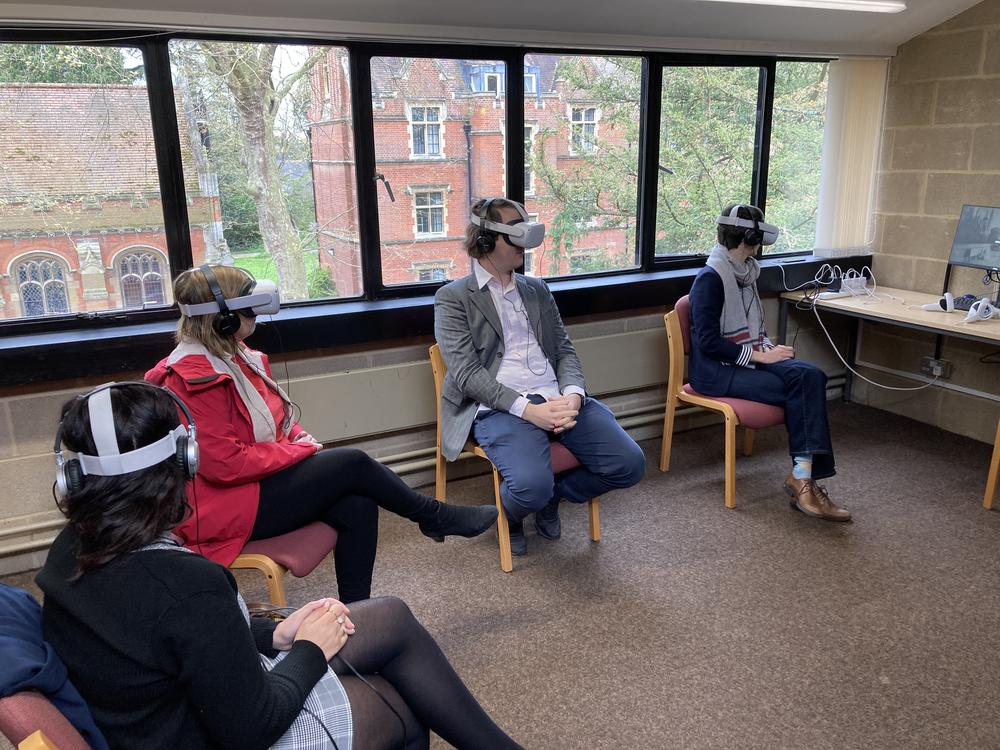
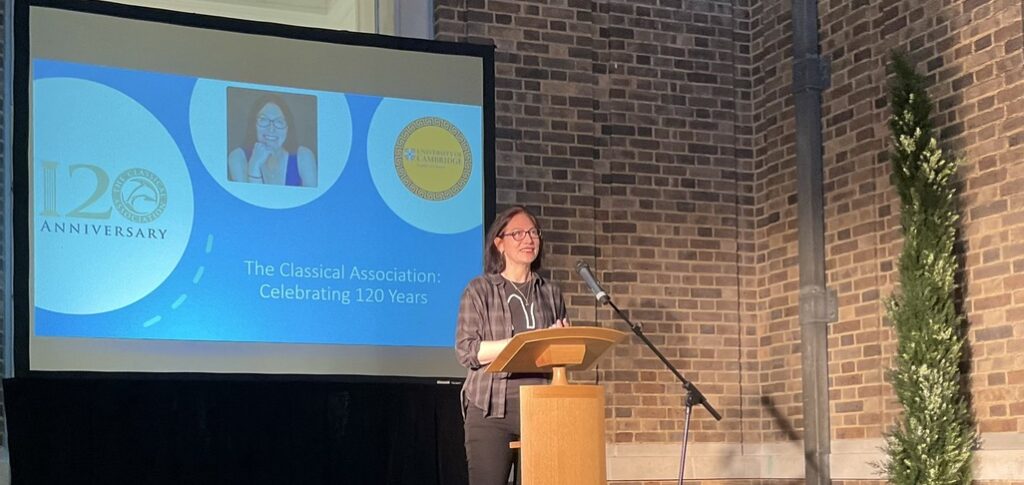
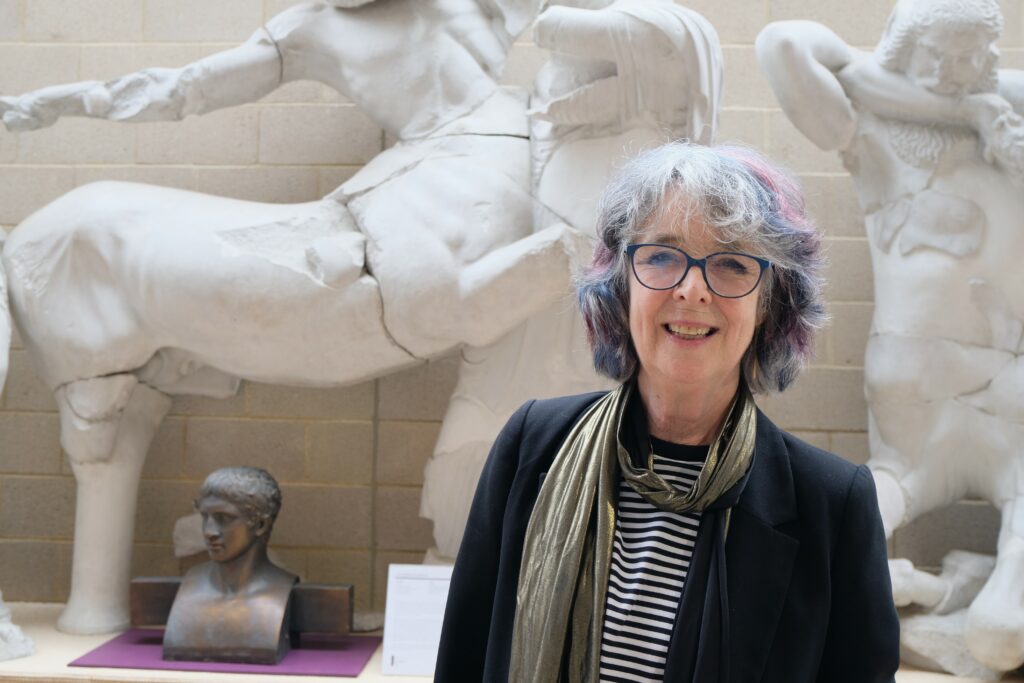
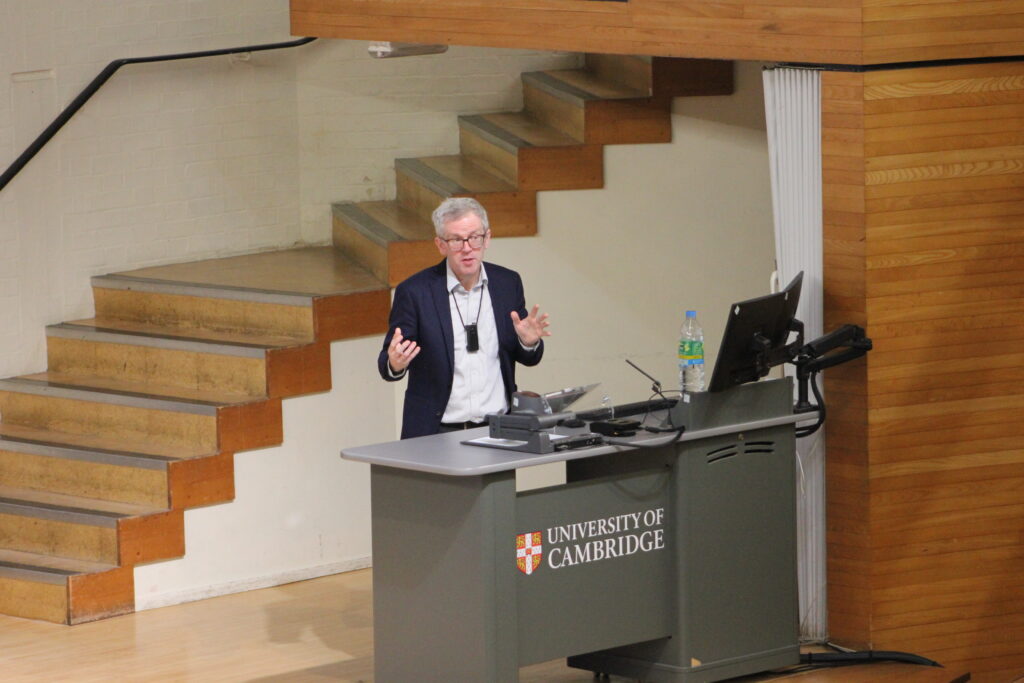
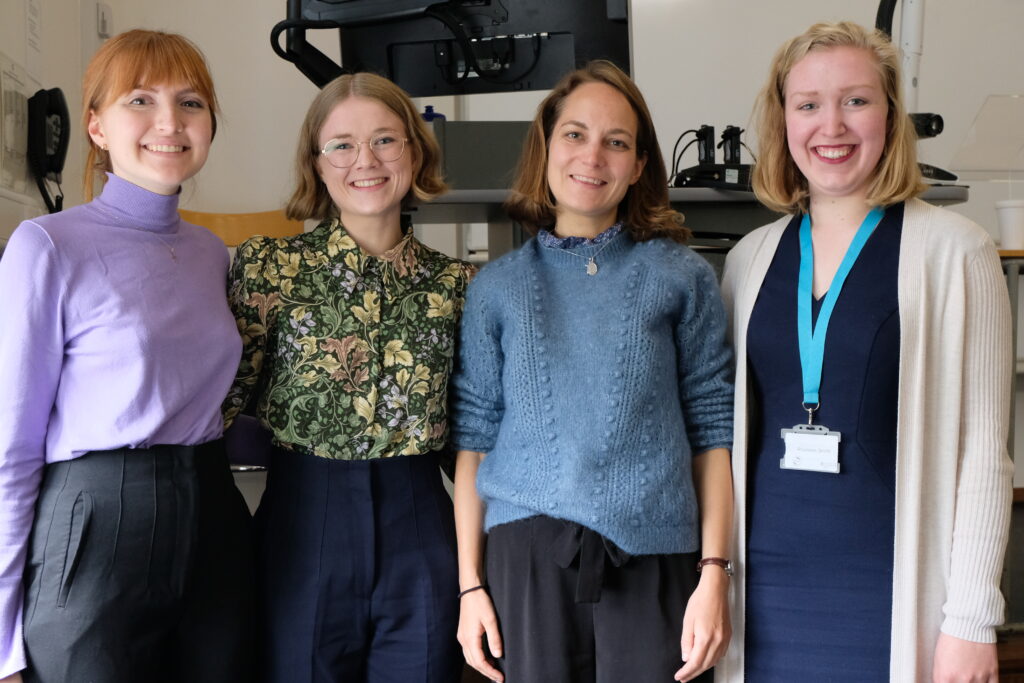
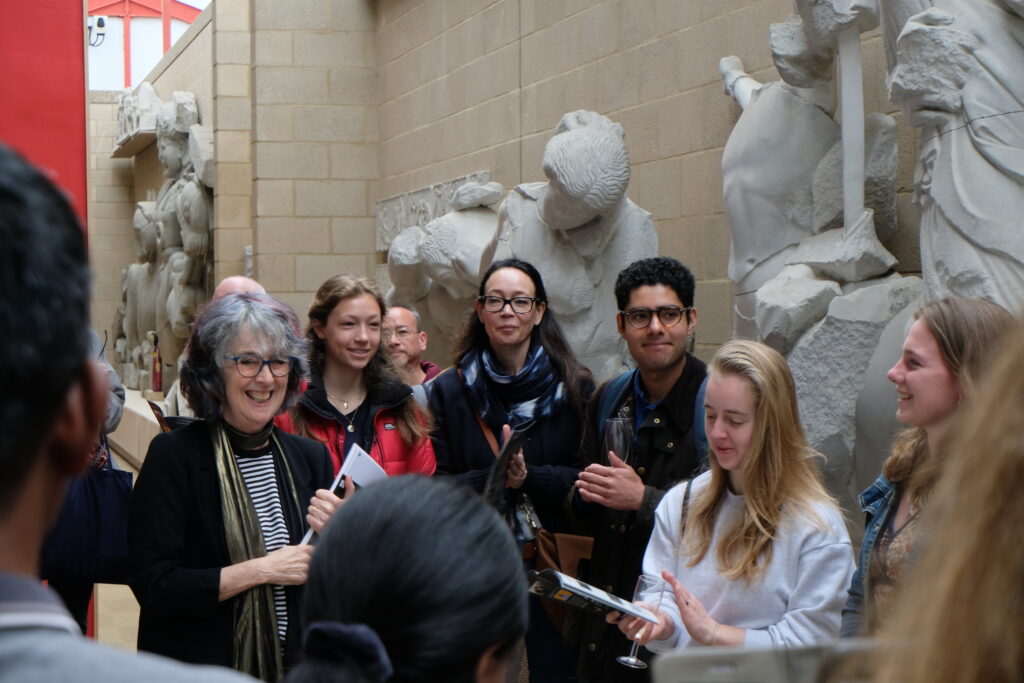
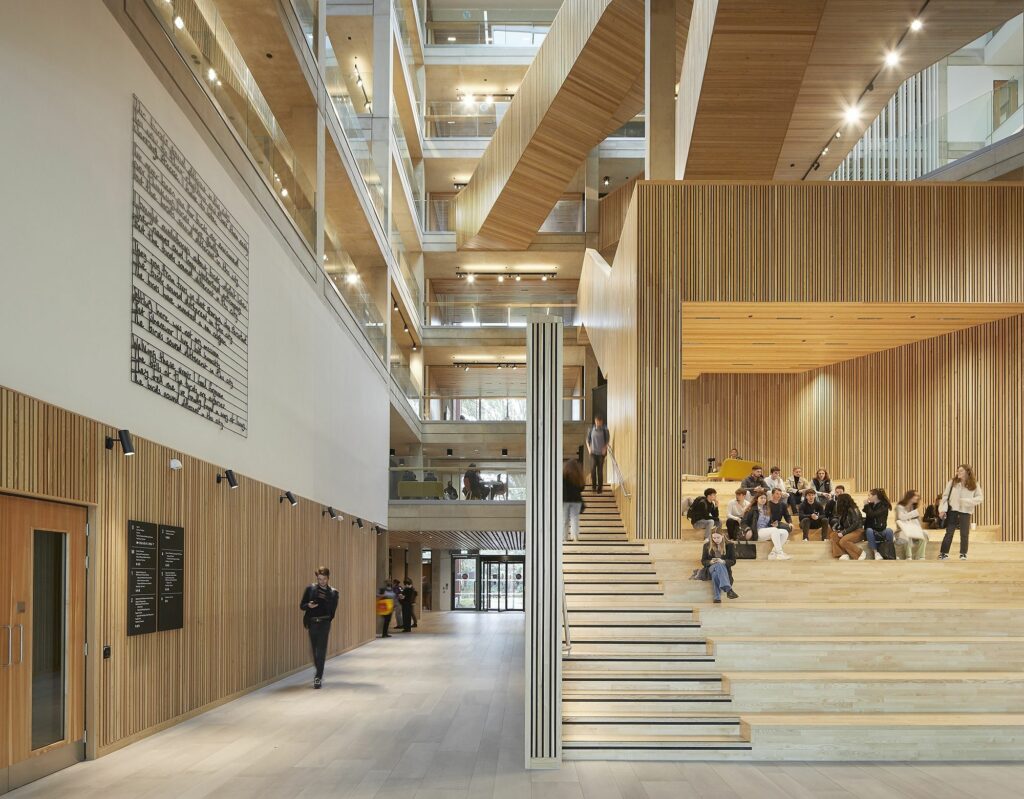

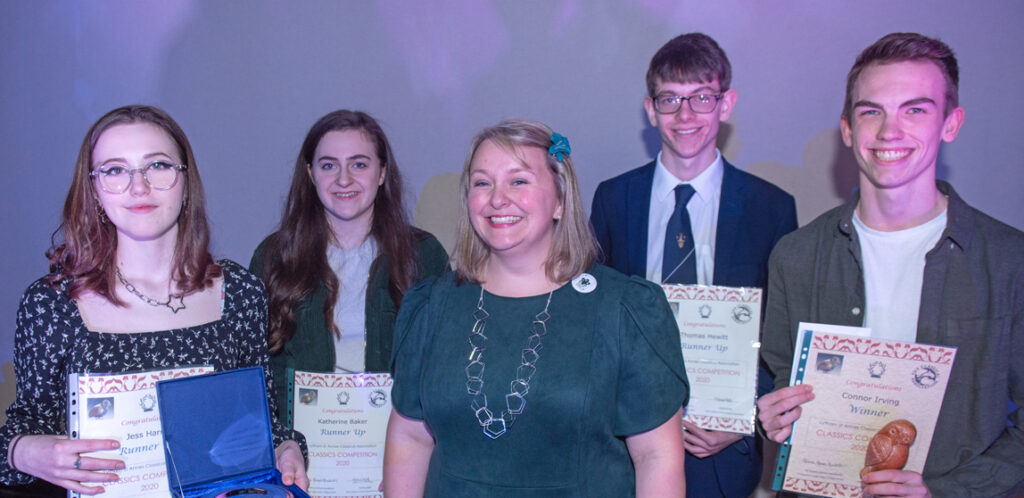
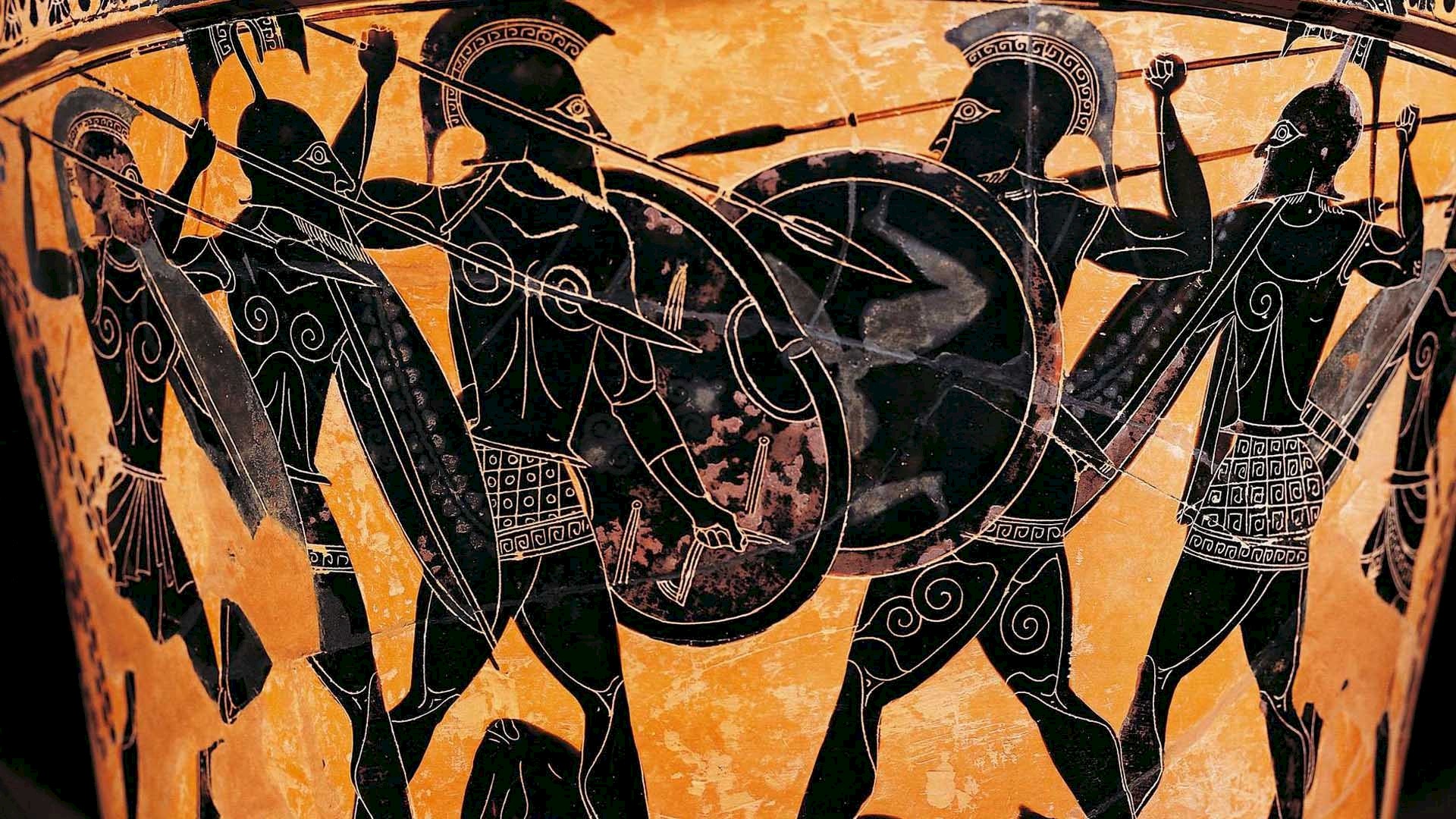
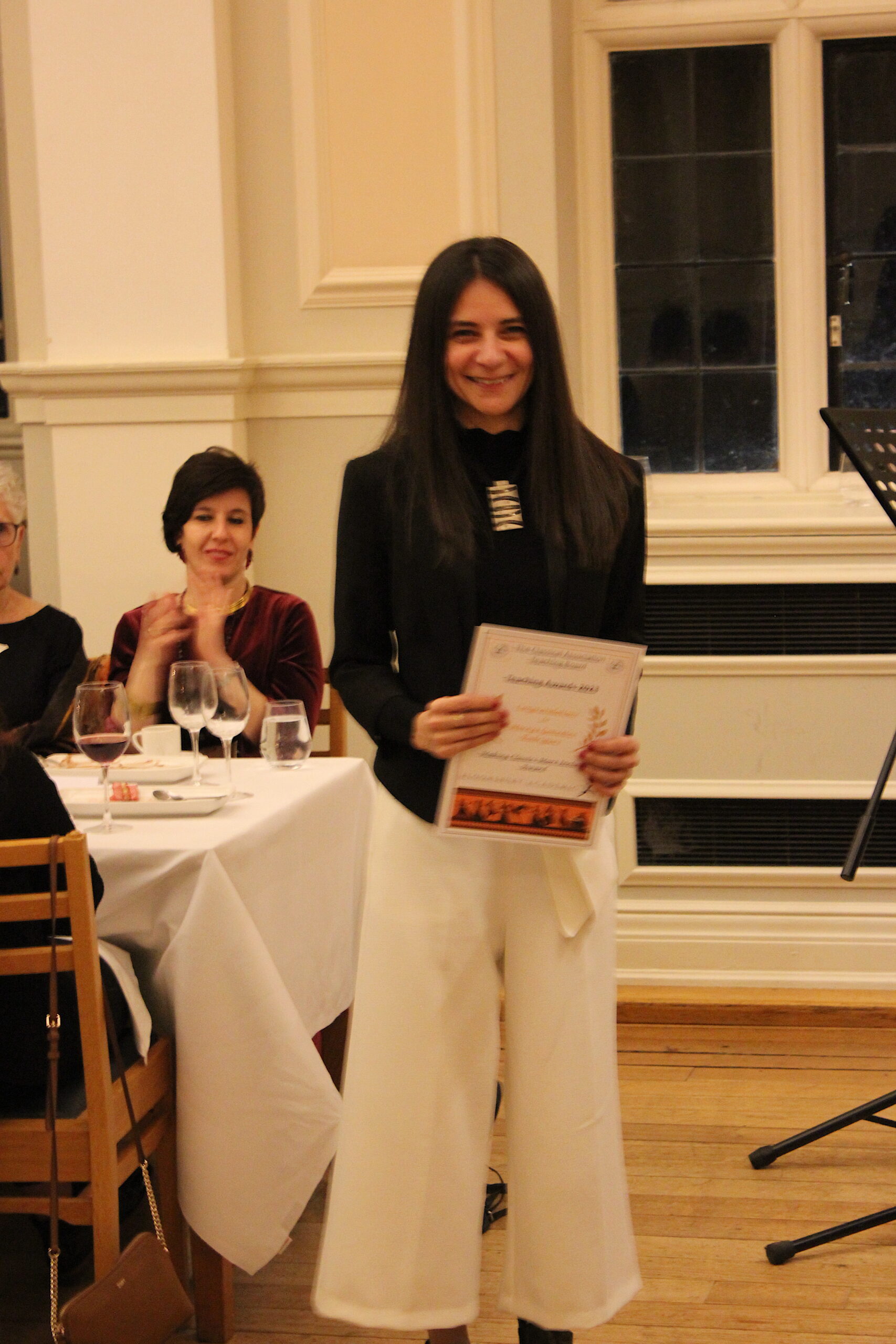
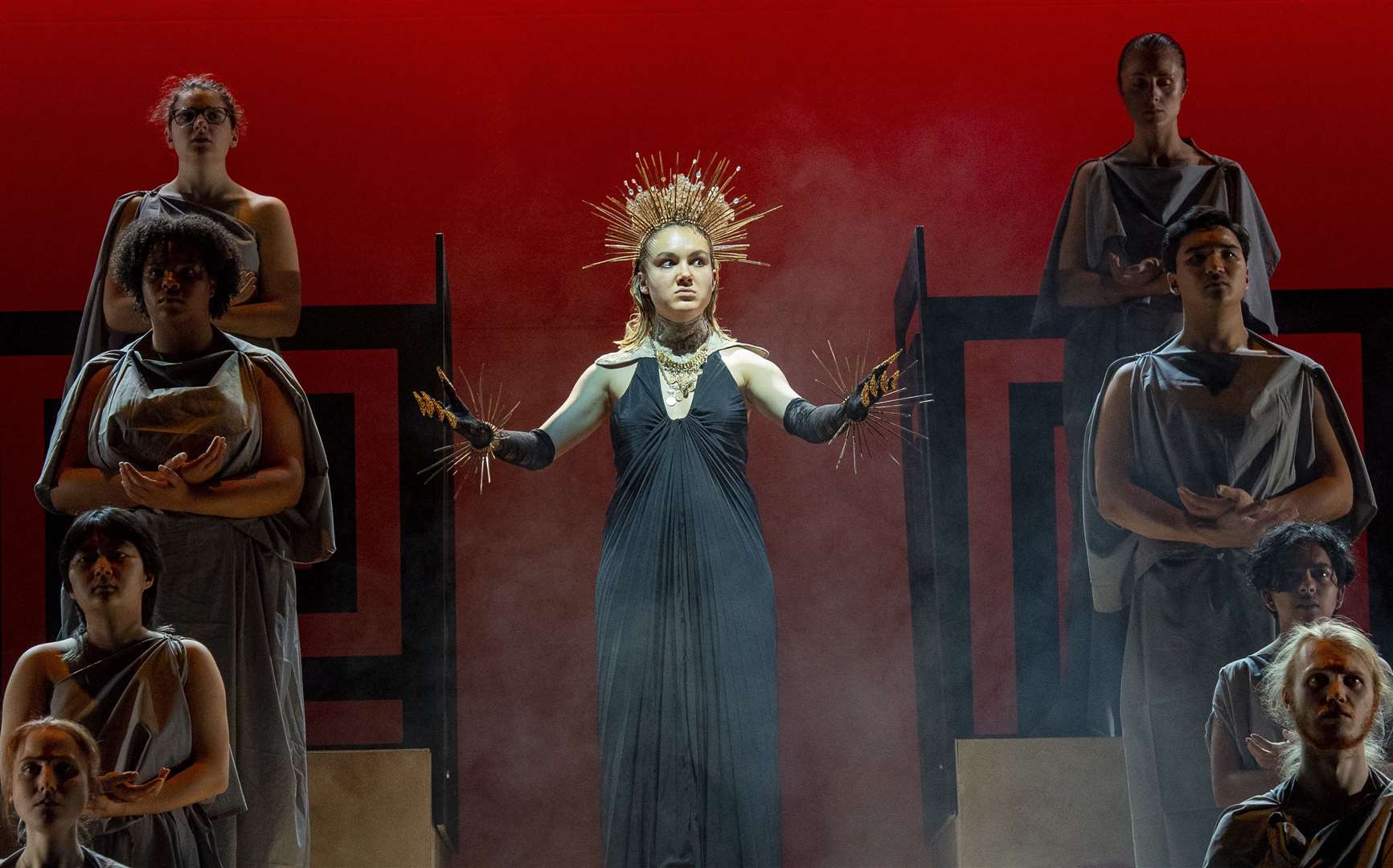
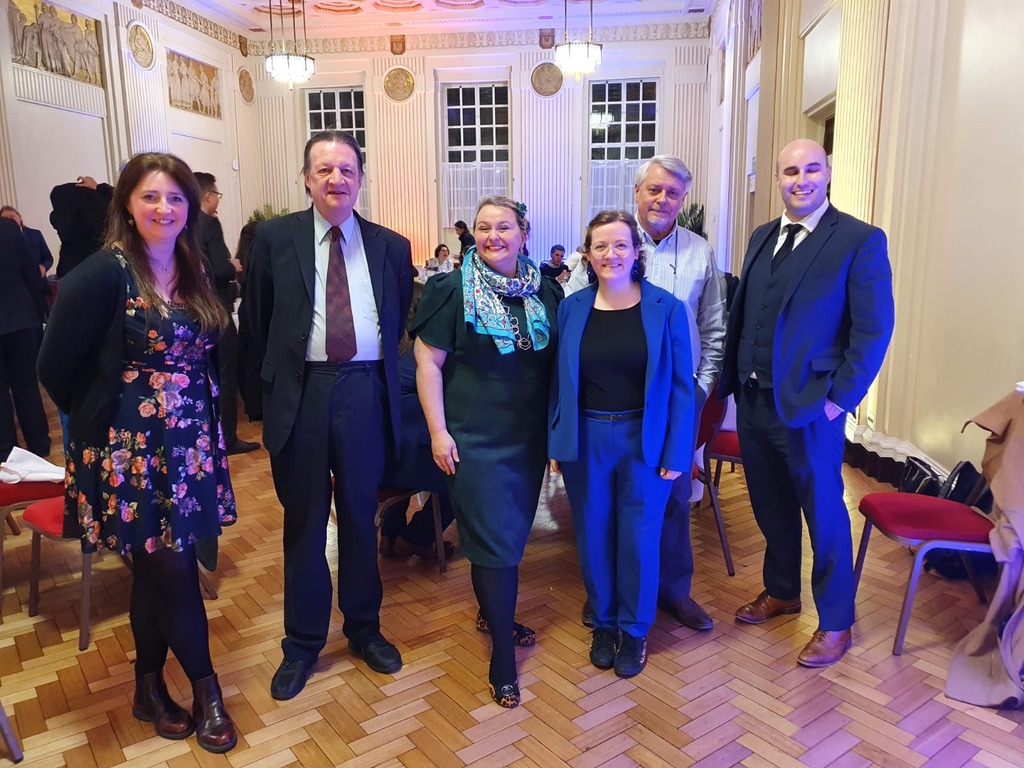
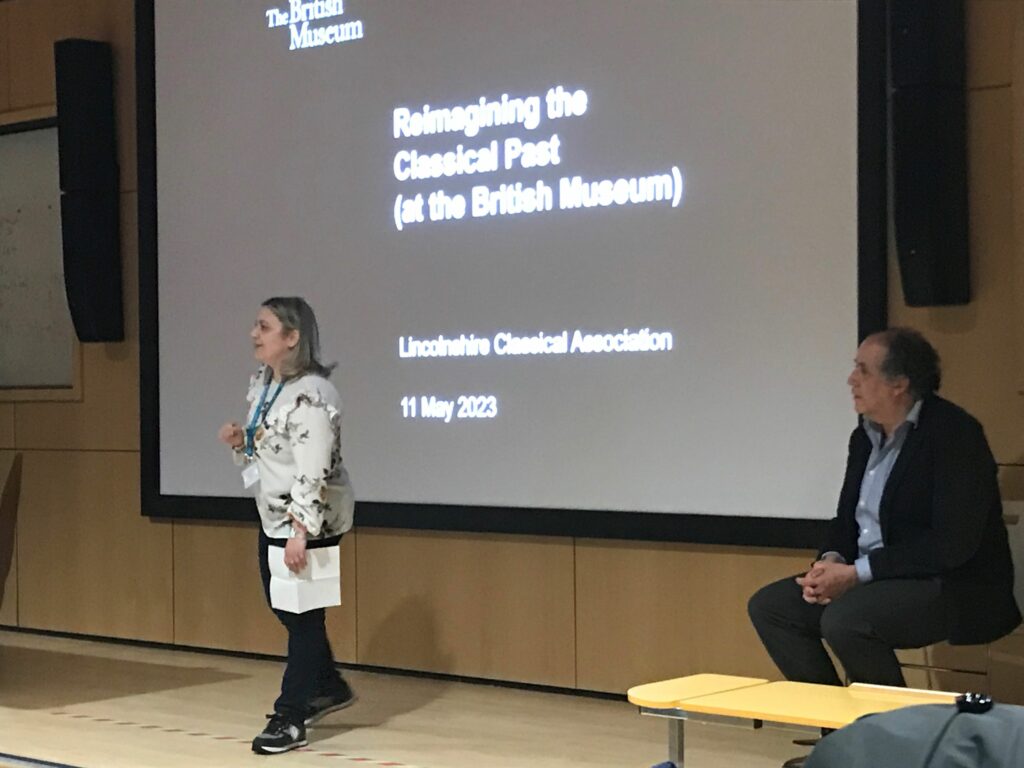
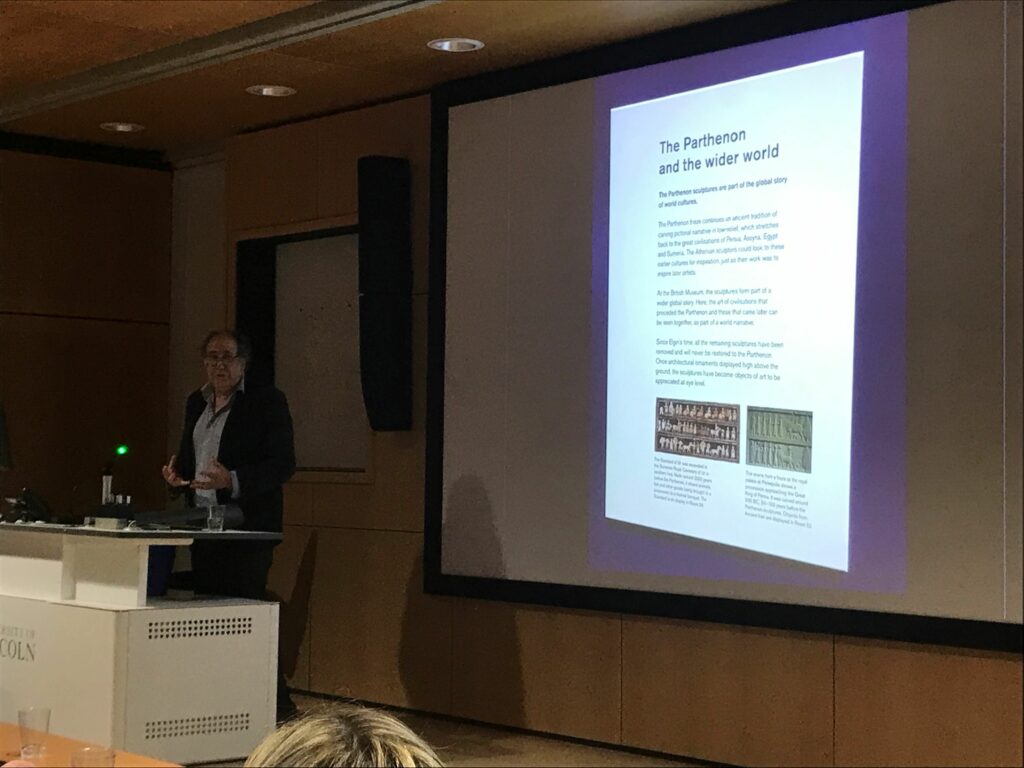
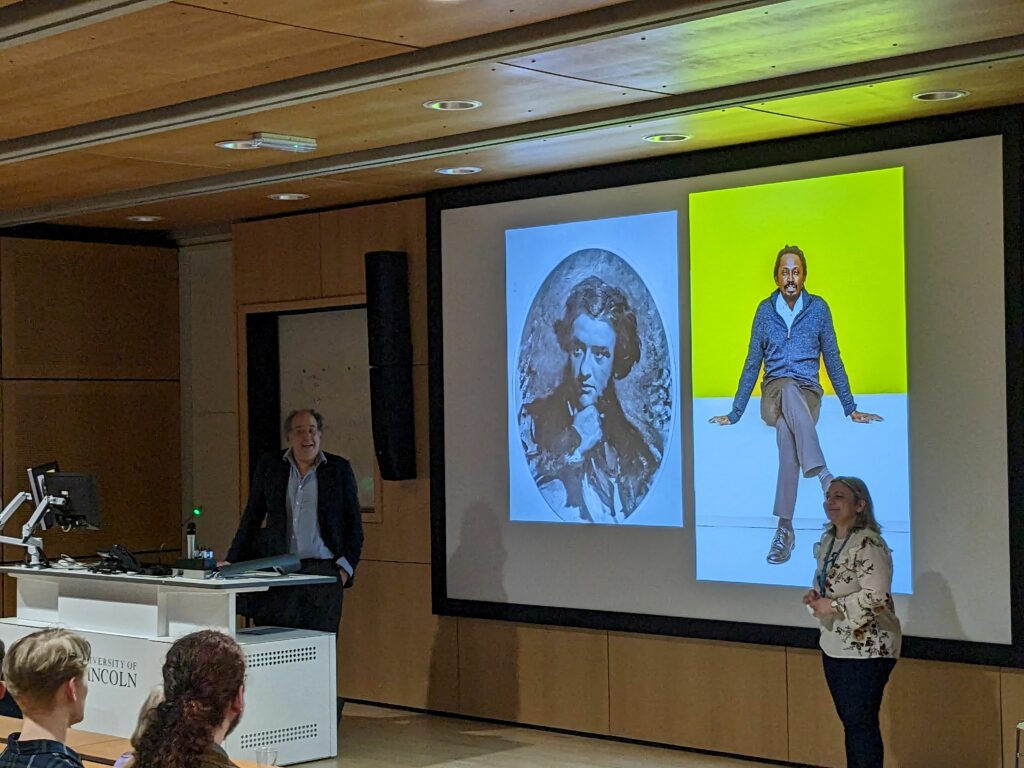
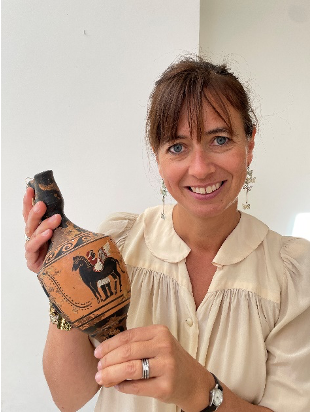
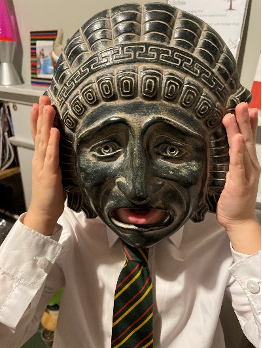
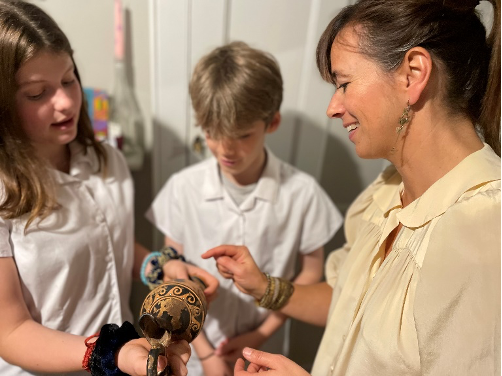
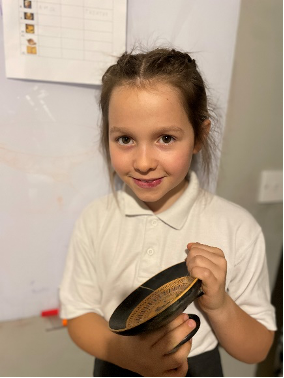
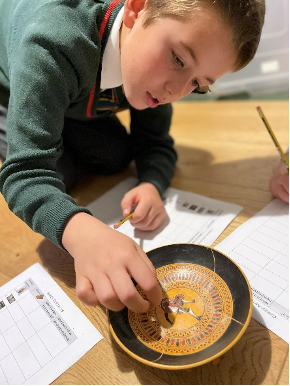
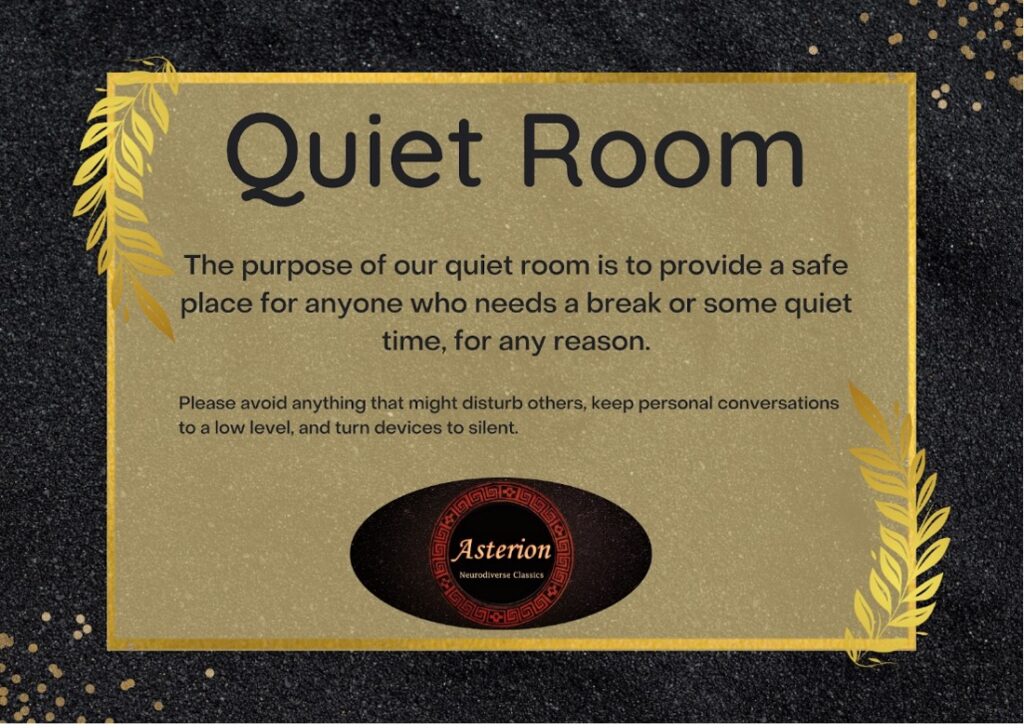


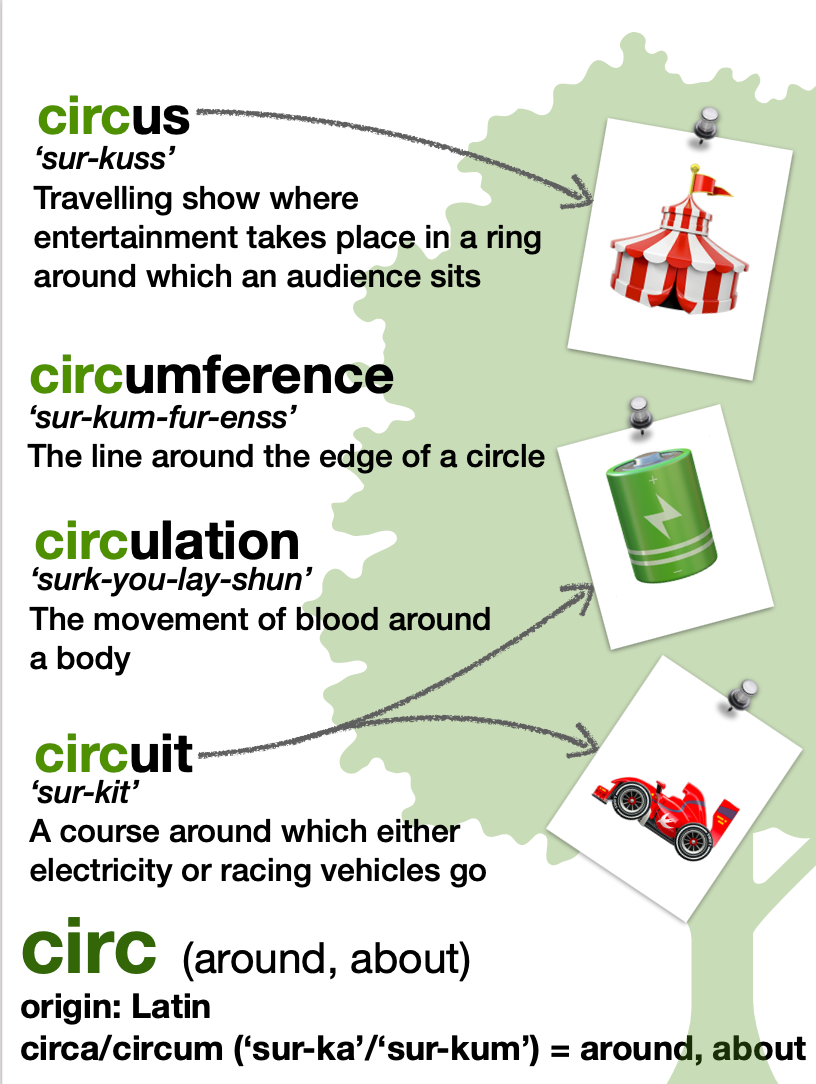



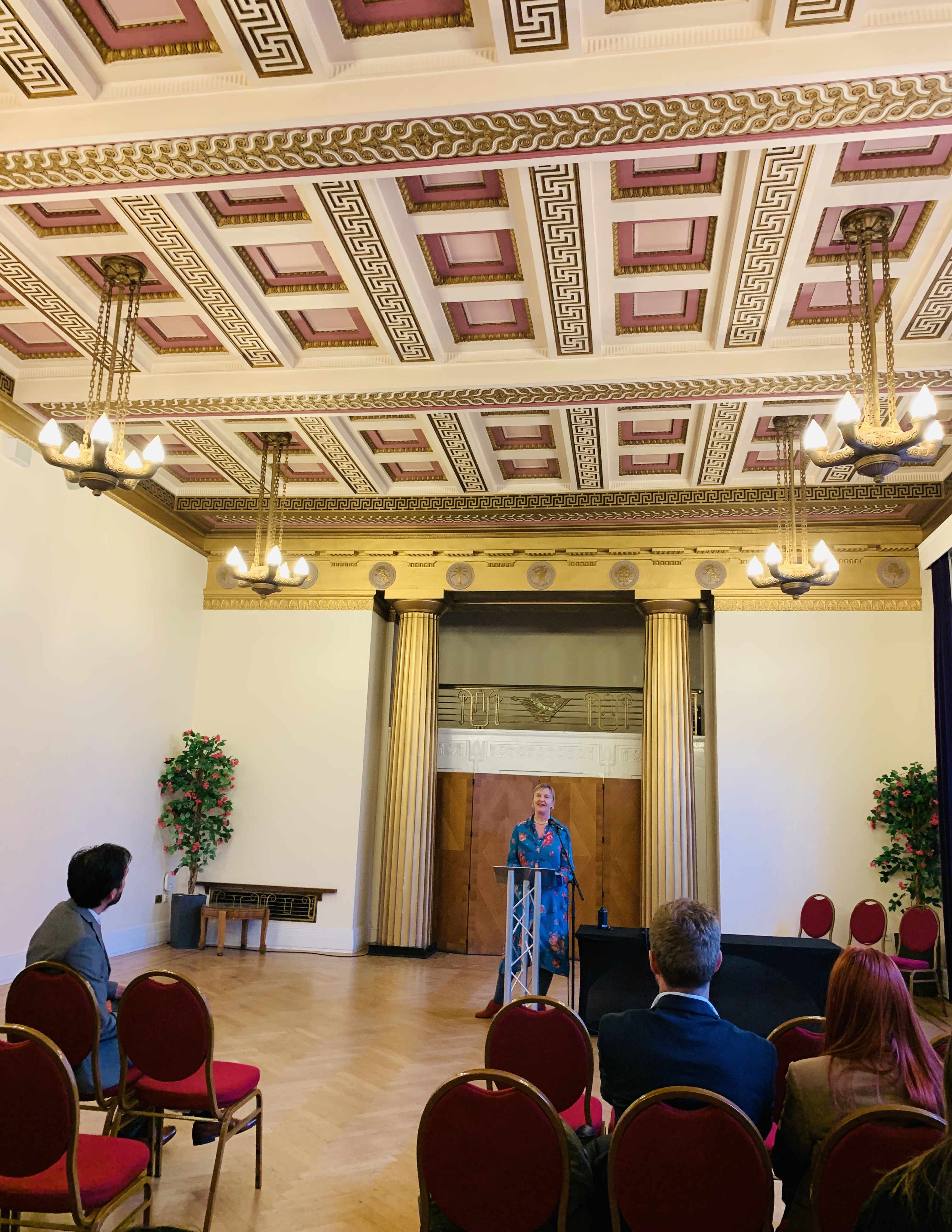



Recent Comments