For Students
EDUCATION FOR EVERYONE
It is our mission to help students of all ages and backgrounds find out more about Classical subjects and discover which aspects of the ancient world might interest you. Scroll down for resources, competitions, our student Classics magazine, and to find a local CA branch near you – check out our map!


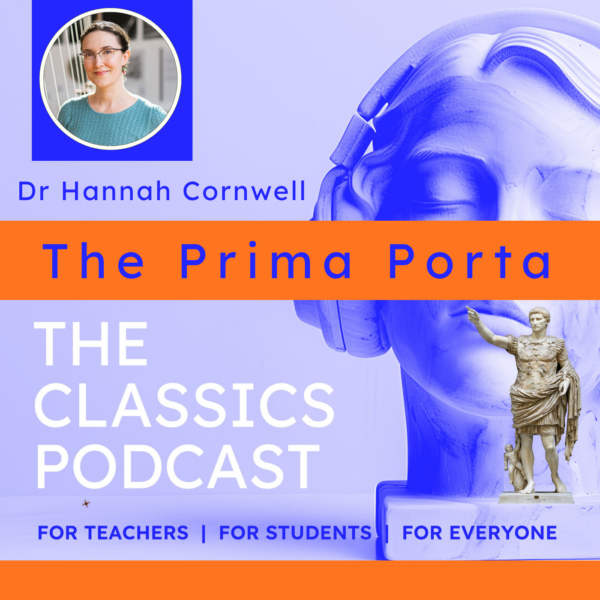
The Prima Porta with Hannah Cornwell
We’re going back to school! The Prima Porta is an exceptional piece of Roman Imperial imagery and we unpack its key features and symbolism with Dr Hannah Cornwell (University of Birmingham) in this two-part...
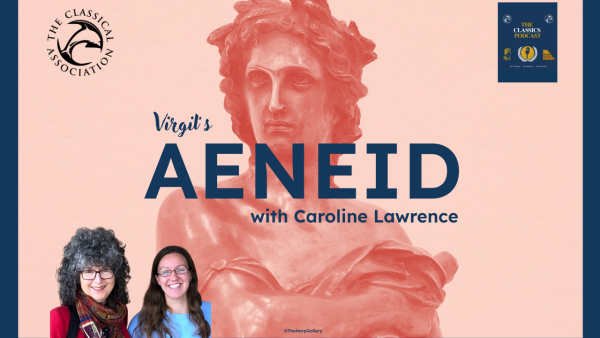
Virgil’s Aeneid – Ep 13 with Prof. Llewelyn Morgan
Our final episode is a special one with Oxford don and Virgil super expert, Prof. Llewelyn Morgan of Brasenose College, Oxford. Find out what he thinks about our traitor theories and Aeneas’ character...
Virgil’s Aeneid Ep 12 – Book 3
This penultimate episode has a summary of the series to date and then jumps into Book 3 as Katrina explains why ‘The Wanderings’ is a bit of a misnomer, and Caroline takes us...
Virgil’s Aeneid – Ep 11 ‘The Colour Purple’
Virgil’s Purple Prose? No, definitely not, but the Aeneid is replete with interesting uses of the word ‘purpureus’ and in this episode we look at purple as a colour of beauty, death, danger...
Virgil’s Aeneid – Ep 10 ‘lacrimae’
Is the Aeneid fundamentally a melancholy poem? We revisit the Optimists and Pessimists whilst looking at examples of ‘tears’ and weeping, learning about the scholar Adam Parry, exploring Virgil’s use of apostrophes and...
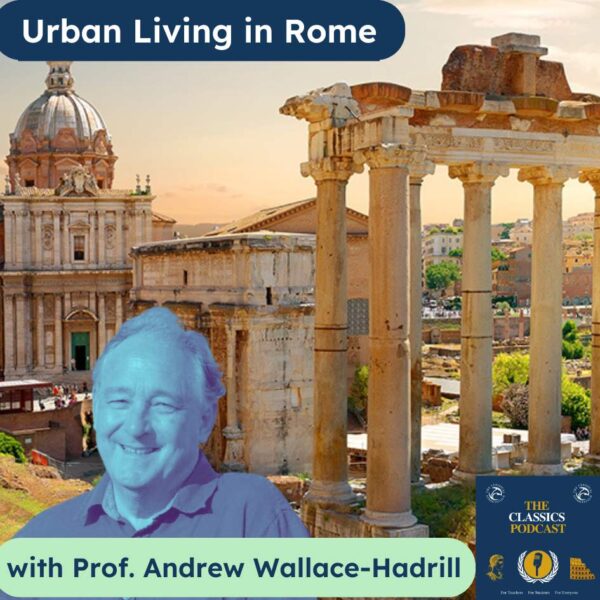
Roman Urban Living – Claudius and Nero
“That doesn’t work for an Emperor – you’ve got to be popular!” In this final episode looking at the Julio-Claudians’ impact on urban living in Rome, Andrew considers how Claudius had to fight...
Roman Urban Living – Augustus, Tiberius and Caligula
“Being an emperor is like holding a wolf by the ears” In these summary sections looking at the Julio-Claudians’ impact on urban living in Rome, Andrew explains Augustus’ transformation of the urban environment...
Roman Urban Living – Who Benefitted?
A short summary for the thematic section of this mini-series, as Andrew shares whom he thinks benefitted from these developments in urban living that we’ve been exploring. Prof. Andrew Wallace-Hadrill (formerly University of...
Roman Urban Living – Bread and Circuses
This is bitesize episode in our mini-series covers ‘panem et circenses’, entertainment for the people of Rome and the imperial response to ancient rioting. Prof. Andrew Wallace-Hadrill (formerly University of Cambridge and Director...
Roman Urban Living – Local Government
This is a super bitesize episode in our mini-series on Urban Life in Ancient Rome, in which Andrew tells James about methods of local government. Prof. Andrew Wallace-Hadrill (formerly University of Cambridge and...
Roman Urban Living – Fire and Housing
In part four of our bitesize episode mini-series on Urban Life in Ancient Rome, it’s time to talk fire hazards, life in the insulae, and the social impact of Roman housing. Prof. Andrew...
Roman Urban Living – Water and Health
In part three of our bitesize episode mini-series on Urban Life in Ancient Rome, it’s time to talk aqueducts, daily baths, whether the Romans did their recycling, and just what was the Cloaca...
Roman Urban Living – Food
Prof. Andrew Wallace-Hadrill (formerly University of Cambridge and Director of the British School at Rome) chats with James Renshaw in the second part of our bitesize episode mini-series on Urban Life in Ancient...
Roman Urban Living – Population
Prof. Andrew Wallace-Hadrill (formerly University of Cambridge and Director of the British School at Rome) chats with James Renshaw in the first part of our bitesize episode mini-series on Urban Life in Ancient...
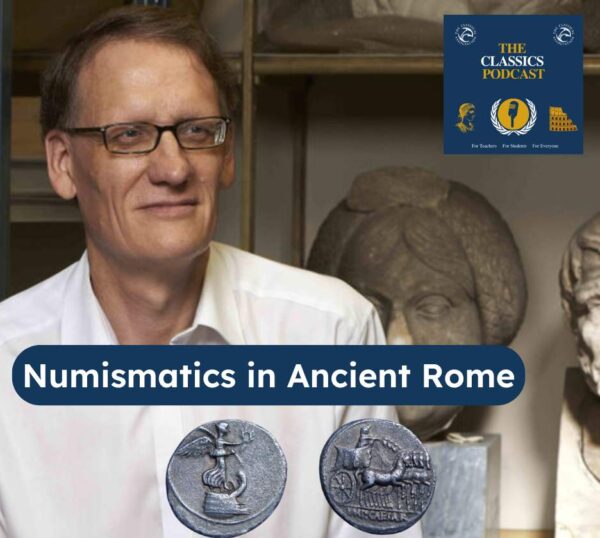
Neronian Coins
In the final episode of this mini-series, Sam discusses several coins that reflect the different periods of Nero’s rule – from his accession through to the Vindex rebellion, covering his mother’s influence and...
Tiberian Coins
Tiberian, Caligulan, Claudian Coins In Episode 3, Sam tells James about how coin imagery developed across these three very different imperial reigns. Look out for the following time stamps: 6.05 & 9.08 Gaius Caligula’s...
Augustan Coins
Episode 2 focuses on Augustus, and how his coinage changed to reflect his victory in the civil war, his creation of the principate, his military victories and self-image as ‘father of the homeland’....
Intro to Roman Coins
Dr Sam Moorhead gives us the perfect introduction to Roman coins: what were they made from, where were they made, what did they depict and how were they spread across the empire? What...
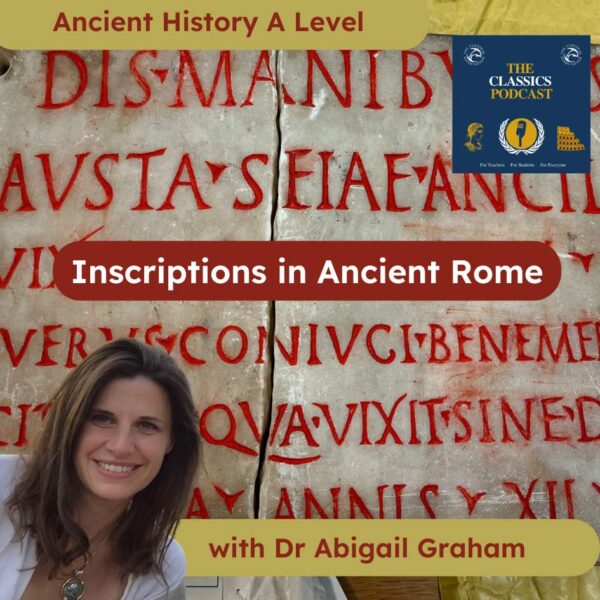
Roman Inscriptions – Claudius
In the third and final episode of this mini series designed to support the OCR Ancient History A Level, Dr Abigail Graham (Institute of Classical Studies) explores the Emperor Claudius’ use of epigraphy,...
Roman Inscriptions – Tiberius
In the second episode of this mini series designed to support the OCR Ancient History A Level, Dr Abigail Graham (Institute of Classical Studies) moves on from Augustus to explore how Tiberius presented...
Roman Inscriptions – Augustus
After an introduction to Roman epigraphy (what do we mean by inscriptions and how can we go about reading them?), Dr Abigail Graham (Institute of Classical Studies) explores how we should analyse these...
Omnibus 92
Content: Macedon at the navel of the earth? Philip II’s Delphic designs – Emma Aston Who was Electra? – Patrick Finglass An encounter with Cephalus – Jenny Bryan The myth of the servant: a...
Omnibus 91
Content: The dark side of Augustus’ ‘Imperial image’ – Christopher Burden-Strevens Gladiators in the Roman east – Zahra Newby The simile in Homer – Robert Philp ‘For some, war becomes home’: the pain of...
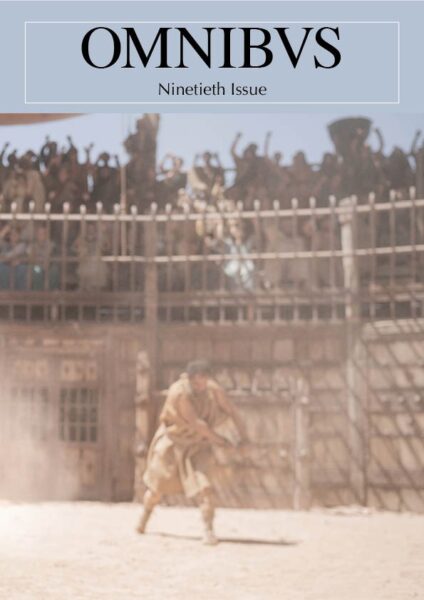
Omnibus 90
Content: What did Herodotus think he was doing? – Robin Osborne Fiction in Aristophanes and Lucian – Jenni Glaser Forms transformed into new bodies: Ovid and the many forms of epic – Henry Tang...

Omnibus 89
Contents: Meat is murder? Food and drink in the Odyssey – John Weeds Cicero and the ‘EnCyropedia’: mathematical optics and Roman builders – Thomas Kelly The greatest king Assyria never had – Robert Rohland...

Omnibus 88
Contents: Authoritarian elections in imperial Rome – Timothy Smith Diogeiton’s daughter and the silence of Athenian women – Giulia Maltagliati Erotophobia and gender ambiguity in Euripides’ Hippolytus – Sarah Cullinan Herring Helen, the gods,...
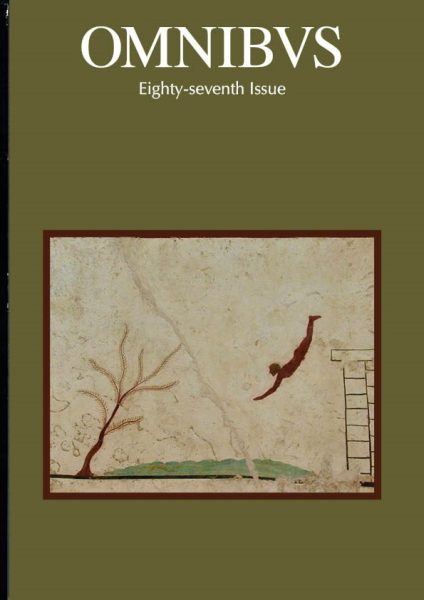
Omnibus 87
Contents: Being Roman: live in the Roman Empire – Mary Beard Identity politics, Greek-style – Emily Clifford A suspicious reading of Aeneas – Dan Jolowicz Strabo’s colossal Geography: writing the world of Rome –...
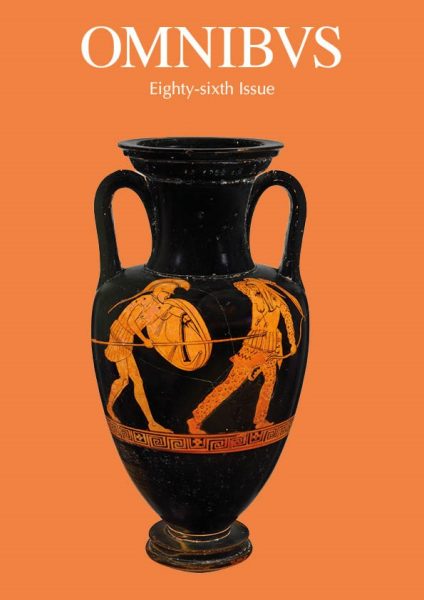
Omnibus 86
Contents: Cruel fate and the beginning of the end in Iliad 16 – Hugo Shakeshaft Acting up and owning up in the Roman world – Justine Potts Ancient slavery and the modern museum –...
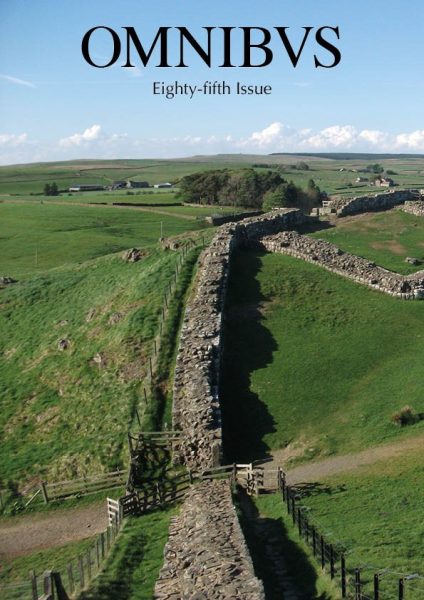
Omnibus 85
Contents: ‘No second Troy’: Virgil’s Aeneid and the fall of cities – Bruce Gibson Why are there frogs in Frogs? – Matthew Hosty The emperor in the provinces – what coins can tell us...
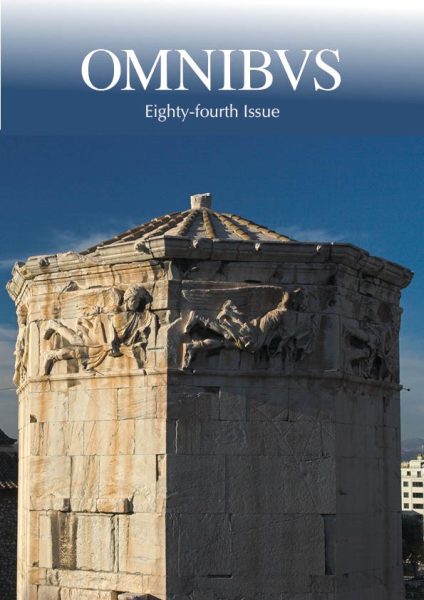
Omnibus 84
Contents: Colonial encounters: reading the Homeric Cyclops with Derek Walcott – Matthew Ward Family matters: dynastic struggles in Tacitus Annals 4 – Panayiotis Christoforou Play it forward: Greece and Rome in digital games –...
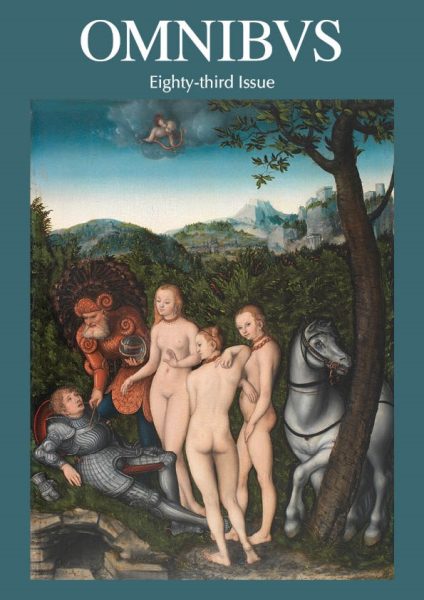
Omnibus 83
Contents: What was it like to consult the oracle at Dodona? – Hugh Bowden, Esther Eidinow, and Richard Cole Aeneas – the empty protagonist – David Butterfield Kissing the doorposts: Virgil’s Aeneid and the...

Omnibus 82
Contents: #MeToo Medusa – Helen Morales Archaeology, Roman Britain, and the Brigantes – Martin Millett Achilles’ heel: (im)mortality in the Iliad – Thomas Nelson Mary Beard on the imperial image Ancient automata between myth...
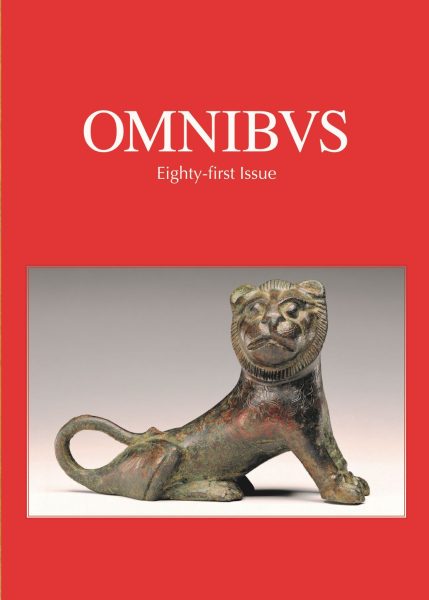
Omnibus 81
Contents: The worst journey in the world – Tim Rood Sam Hood Translation Prize 2020 – Dylan Brookes Octavian’s gifts – Richard Alston The Odyssey and its predecessors – Henry Spelman Performing the epic...
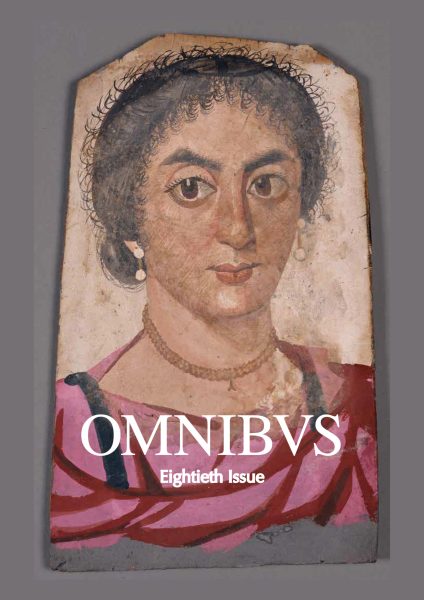
Omnibus 80
Contents: Imagining Virgil: bibliography, fiction and the Aeneid – Talitha Kearey Odysseus’ western wanderings – Jessica Lightfoot Saving the Roman Empire in Late Antiquity – John Weisweiler Cinadon’s conspiracy and Sparta’s police state – William...

Omnibus 79
Contents: Ancient views on Homer and humour – Oliver Thomas Sam Hood Translation Prize 2019 Dark Comedy in Frogs – Natalia Tsoumpra Making leaders great again? Xenophon on leadership – Fiona Hobden Cicero, Demosthenes,...

Omnibus 78
Contents: Death in bloom: Pallas and Camilla in Virgil’s Aeneid 11 – Siobhan Chomse Antinous: a boy made god in the Roman Empire – R. R. R. Smith Euripides’ Medea and sympathy’s dangerous power...

Omnibus 77
Contents: All the world’s a… Mapping the Shield of Aeneas – Maya Feile Tomes The moral landscape of Herodotus’ Histories – Katherine Clarke Celebrating the ‘good life’ in Aristophanes’ Peace – Naomi Scott Sappho,...
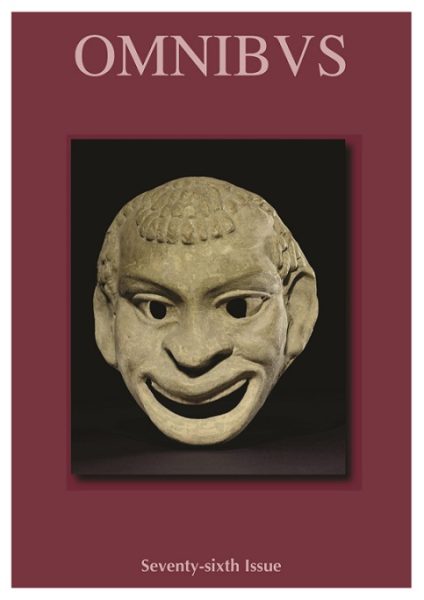
Omnibus 76
Contents: Viewing Achilles’ shield – Richard Rutherford Classical Athens counts – Serafina Cuomo The meanings of mutiny: Tacitus Annals 1 – Christopher Whitton Homer and the Near East – Christopher Metcalf A day in...
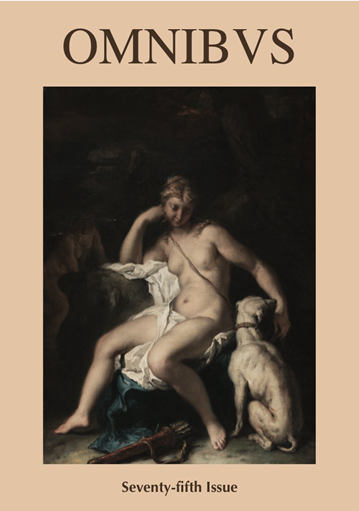
Omnibus 75
Contents: Sophocles’ Oedipus the King: a tragedy of compassion – Patrick Finglass ‘Da ya think it’s sexy?’ Horace Odes 2.5 – John Henderson Women in their own words in pre-Roman Italy – Katherine McDonald...

Omnibus 74
Contents: Homer: the first jazz musician? – Howard Peacock Codebreakers and Groundbreakers: from the breaking of the Enigma Codes to the decipherment of Linear B Telling stories on Etruscan pots – Tom Rasmussen Sappho...

Omnibus 73
Contents: Continuity and conflict: classical and contemporary warfare – Jason Crowley Ovid and abortion – Ian Fielding Matthew Nicholls’s Ancient Rome MOOC Classical Greek art – a matter of content as well as style? ...
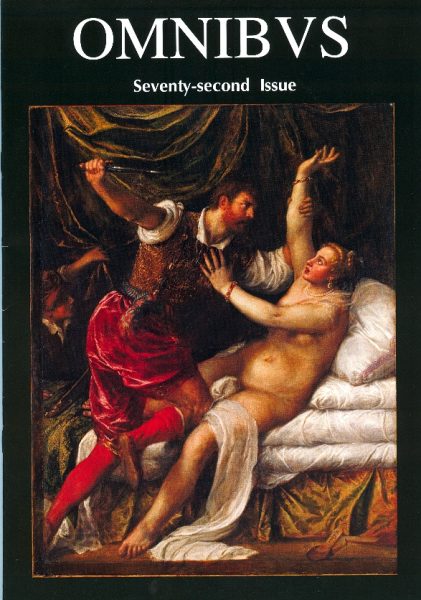
Omnibus 72
Contents: Shakespeare and the Classics – Judith Mossman Greek sanctuaries and Russian dolls: walls and religious experience – Michael Scott Liking it long: Catullus’ Carmina maiora – Ingo Gildenhard The ‘textile scene’ in Aeschylus’...

Mythology Competition 2026
The Results! Congratulations to all entrants, and especially to our prize winners: KS2 Animation 1st prize – Alex (Wellington College Prep) 2nd prize – Chris (Royal Grammar School Guildford Prep) 3rd prize – Emily (Beechwood Park) ...

Verse and Voice Competition
We were delighted to work in collaboration with the Sir John Soane’s Museum for our 2026 Competition, which was free for everyone to enter, of any age. We received hundreds and hundreds of...
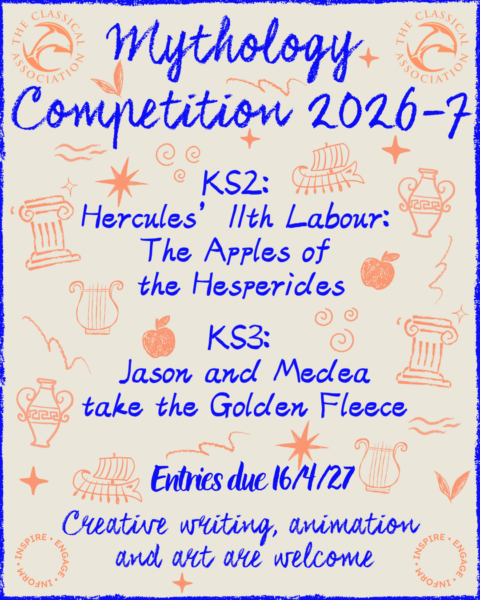
Mythology Competition 2027
Information for our 2027 Competition is now available and entries will open soon!

Omnibus Competitions
Every year, our Omnibus magazine runs two competitions for students aged under 19 in full-time education: a translation prize and an essay prize. PLEASE NOTE THAT ENTRIES FOR 2026 ARE NOW CLOSED. Details for 2027...
U25 Competition 2025
As part of our Celebrating Classics Campaign, we launched a brand new competition which was open to everybody, across the world, and celebrated how and why we study the ancient past. Scroll down to...
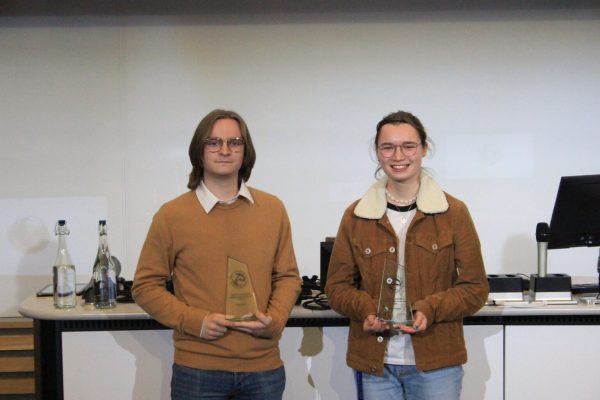
Young Speaker of the Year 2024
We are delighted to announce the winners of our Competition. Oscar Coupe (Hornsea School and Language College) and Kitty Langdon (Tiffin Girls’ School) were selected as joint winners of the Competition and...
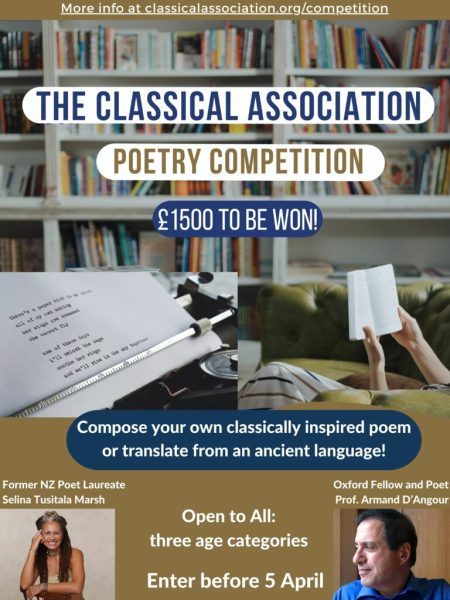
Poetry Competition 2024
RESULTS Congratulations to all of the entrants in our 2024 Poetry Competition, held in honour of our former CA President Anne Carson, and particularly to those who were highly commended, shortlisted and longlisted....
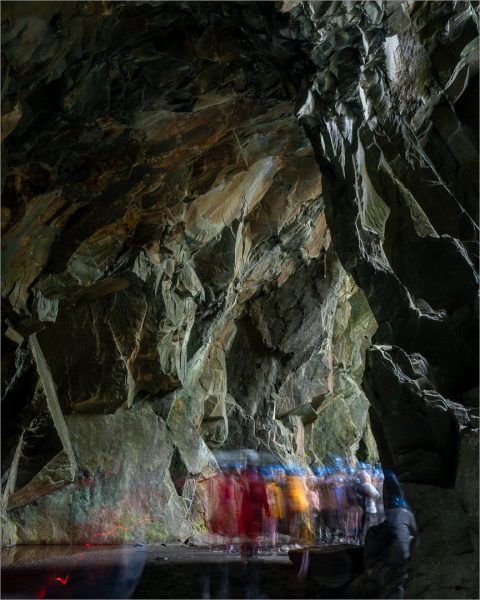
Photography Competition 2023
Congratulations to all entrants in our 2023 Competition and to those shortlisted and awarded prizes. Scroll to view the winning photographs. The Overall Winner – Shadows in the Cave by David Travis In...
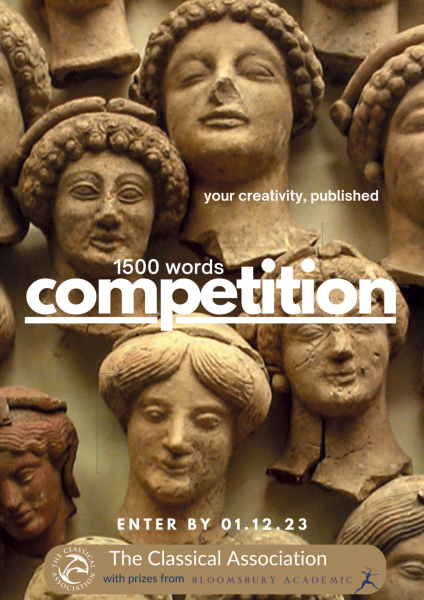
Bloomsbury Writing 2023
In 2023, in partnership with Bloomsbury Publishing, we ran a creative writing competition to give girls, young women and non-binary writers aged 19 or under the opportunity to have their creative work appear...
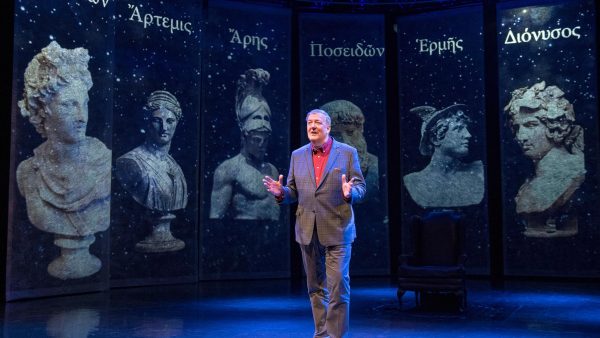
Creative Writing Competition 2022
To celebrate the appointment of actor, broadcaster, narrator and writer Stephen Fry as the CA’s Honorary President for 2021-22, we held a nationwide Creative Writing competition for writers and classicists of all ages....
Internships
Our digital Internship Scheme is now CLOSED for applications. All applicants will be informed about the outcome of their application by the end of June 2026. Are you passionate about the ancient world and working…

Student Societies
FOR STUDENTS Are you a member of a UK-based University Classics Society (or similar student body)? Speak to your current committee to find out if you have a CA Ambassador. If your society doesn’t yet…